Hinduism for Kids: A Simple Guide to What Hindus Believe
Quick answer: Hinduism is one of the oldest religions in the world. Hindus often call it Sanatana Dharma, "the eternal way". Hindus believe in one supreme reality, called Brahman, which can be worshipped in many forms such as Vishnu, Shiva, Devi, Ganesha, Rama and Krishna. They believe everyone has
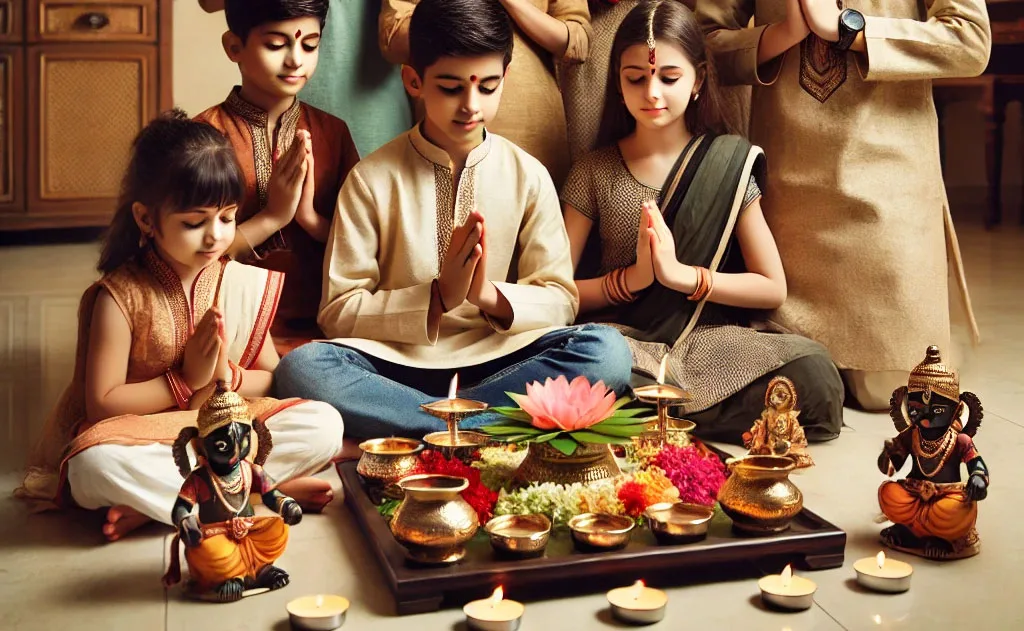
Quick answer: Hinduism is one of the oldest religions in the world. Hindus often call it Sanatana Dharma, "the eternal way". Hindus believe in one supreme reality, called Brahman, which can be worshipped in many forms such as Vishnu, Shiva, Devi, Ganesha, Rama and Krishna. They believe everyone has a soul (atman) that never dies, that our actions have results (karma), and that we should live by dharma, doing what is right. Hindus pray at home and in temples, celebrate festivals like Diwali and Holi, and try to be kind, truthful and helpful.
This page is written for children aged about 8 to 12, and for the parents, grandparents and teachers who read with them. Grown-ups looking for ideas on teaching can also read How to Teach Hinduism to Children.
Hinduism in Ten Facts
| No. | Fact |
|---|---|
| 1 | Hinduism began in India thousands of years ago. It has no single founder. |
| 2 | More than a billion people in the world are Hindus. Most live in India and Nepal. |
| 3 | Hindus believe in one supreme God who can take many forms. |
| 4 | The oldest Hindu holy books are the four Vedas. |
| 5 | The Ramayana and Mahabharata are two great Hindu story-books (epics). |
| 6 | The Bhagavad Gita, part of the Mahabharata, is Krishna's teaching to Arjuna. |
| 7 | Om is the most sacred sound and symbol in Hinduism. |
| 8 | Hindus worship at home shrines and in temples (mandirs). |
| 9 | Big festivals include Diwali, Holi, Navaratri and Ganesh Chaturthi. |
| 10 | Important values are kindness, truth, respect for elders and caring for all living things. |
One God, Many Forms
Children often ask: "Do Hindus have lots of gods?" Here is a simple way to think about it.
Think of water. It can be ice, steam, rain, a river or the ocean, but it is all water. Hindus believe God is like that: one supreme reality that shows itself in many forms. Each form helps people understand a different side of God.
| Form | What he or she is known for |
|---|---|
| Ganesha | The elephant-headed god who removes obstacles; prayed to first |
| Vishnu | The protector, who comes to earth as avatars such as Rama and Krishna |
| Shiva | The great yogi, who destroys what is old so that the new can begin |
| Brahma | The creator |
| Lakshmi | Goddess of wealth and good fortune |
| Saraswati | Goddess of learning, music and wisdom |
| Durga | The mother goddess who protects her children and defeats evil |
| Hanuman | Rama's devoted helper, famous for strength and courage |
Read more in Trimurti: Brahma, Vishnu and Shiva and The Significance of Vishnu's Avatars: Stories for Children.
Big Ideas Explained Simply
Atman: the soul
Hindus believe you are not just your body. Inside you is the atman, your true self, which never dies. When we die, the body is left behind but the soul goes on.
Karma: actions have results
Karma means action. Good actions bring good results and harmful actions bring harmful results, sometimes now and sometimes later. It is like planting seeds: what you plant is what grows.
Dharma: doing the right thing
Dharma means doing what is right: being honest, keeping promises, helping others and doing your own duties well. A student's dharma is to learn and to respect teachers. See What Is Dharma?.
Samsara and moksha
Hindus believe the soul is born again and again in different bodies. This cycle is called samsara. The highest goal is moksha, freedom from the cycle, when the soul is united with God or rests in God forever.
Holy Books
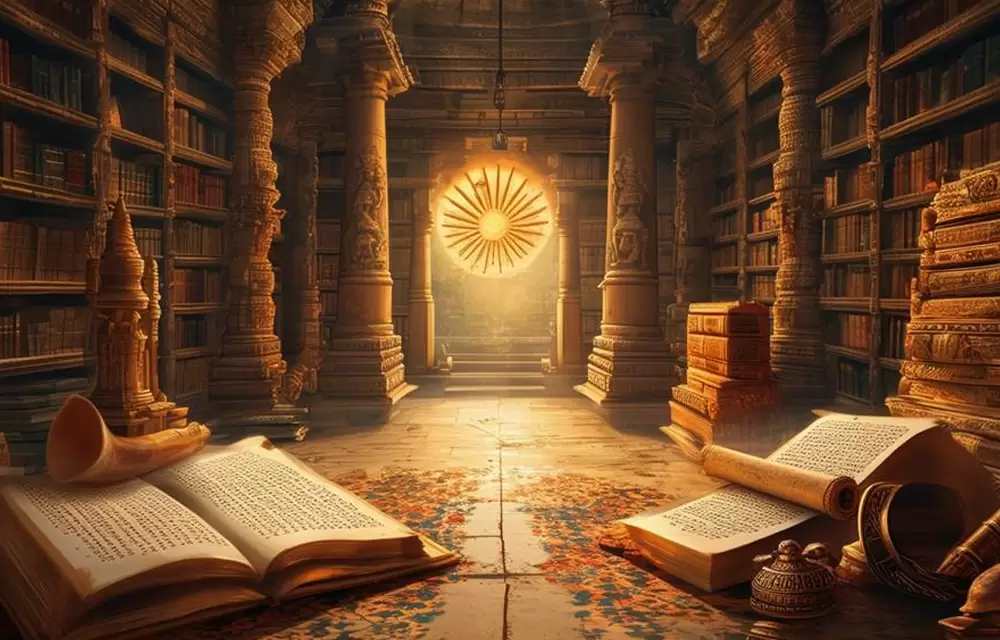
- The Vedas: the oldest holy books, full of hymns and prayers. There are four: Rig, Yajur, Sama and Atharva. See The Four Vedas Explained.
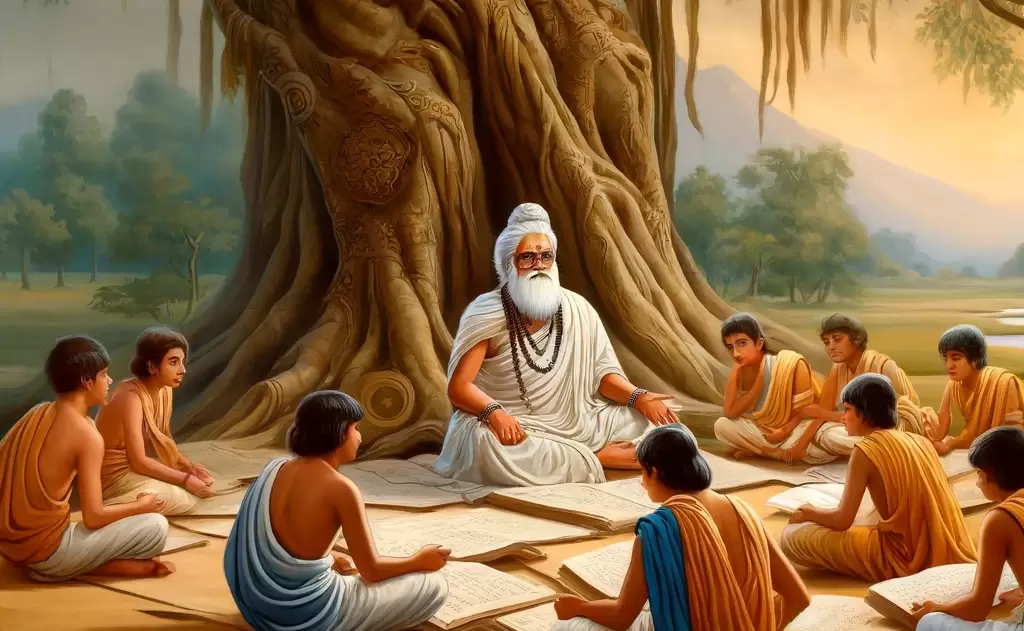
- The Upanishads: wise conversations between teachers and students about the soul and God.
- The Ramayana: the story of Prince Rama, Sita, Lakshmana and Hanuman, and Rama's victory over Ravana.
- The Mahabharata: the story of the five Pandava brothers and their cousins, the Kauravas. It contains the Bhagavad Gita.
- The Puranas: books of stories about the gods, sages and kings, such as the story of Prahlada and Narasimha.
Great stories to start with are collected in Top 10 Hindu Mythological Stories Every Child Should Know.
How Hindus Worship
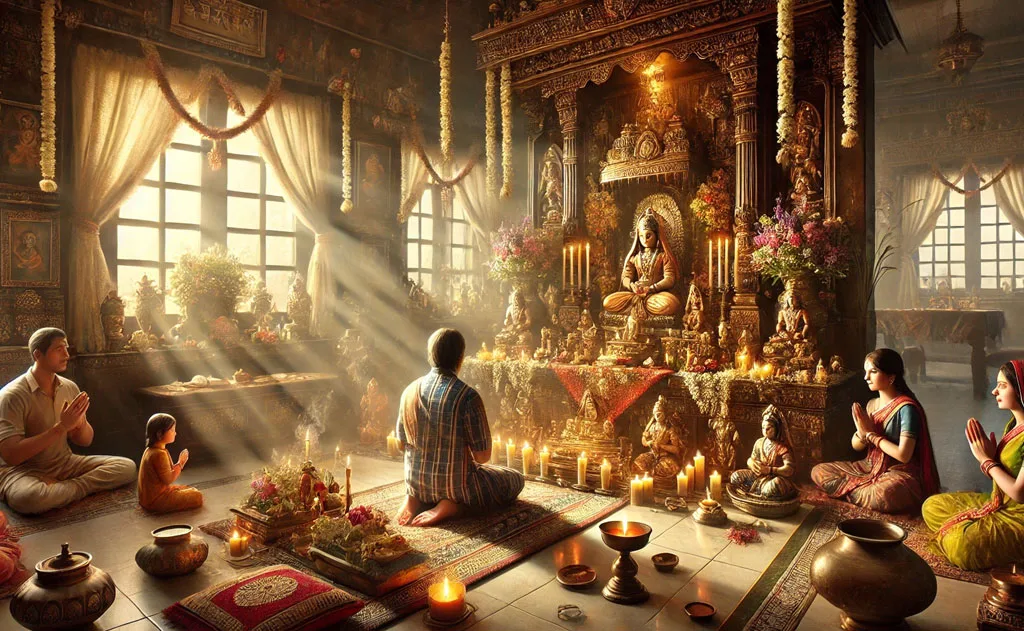
- At home: most Hindu homes have a small shrine with pictures or statues (murtis) of God. Families light a lamp, offer flowers and food, and say prayers.
- At the temple: people visit the mandir to see the deity, pray, join the aarti (waving of lamps) and receive prasada, blessed food.
- Namaste: Hindus greet others by joining their palms. It means "I bow to you", showing respect to the divine in every person.
- Mantras and bhajans: short prayers and devotional songs. Om is chanted at the beginning of many prayers.
Why do Hindus pray before statues? A murti is like a doorway that helps the mind focus on God. Hindus do not believe the stone or metal itself is all of God. Read Why Hindus Worship Murtis.
Festivals Kids Love
| Festival | What it celebrates | What families do |
|---|---|---|
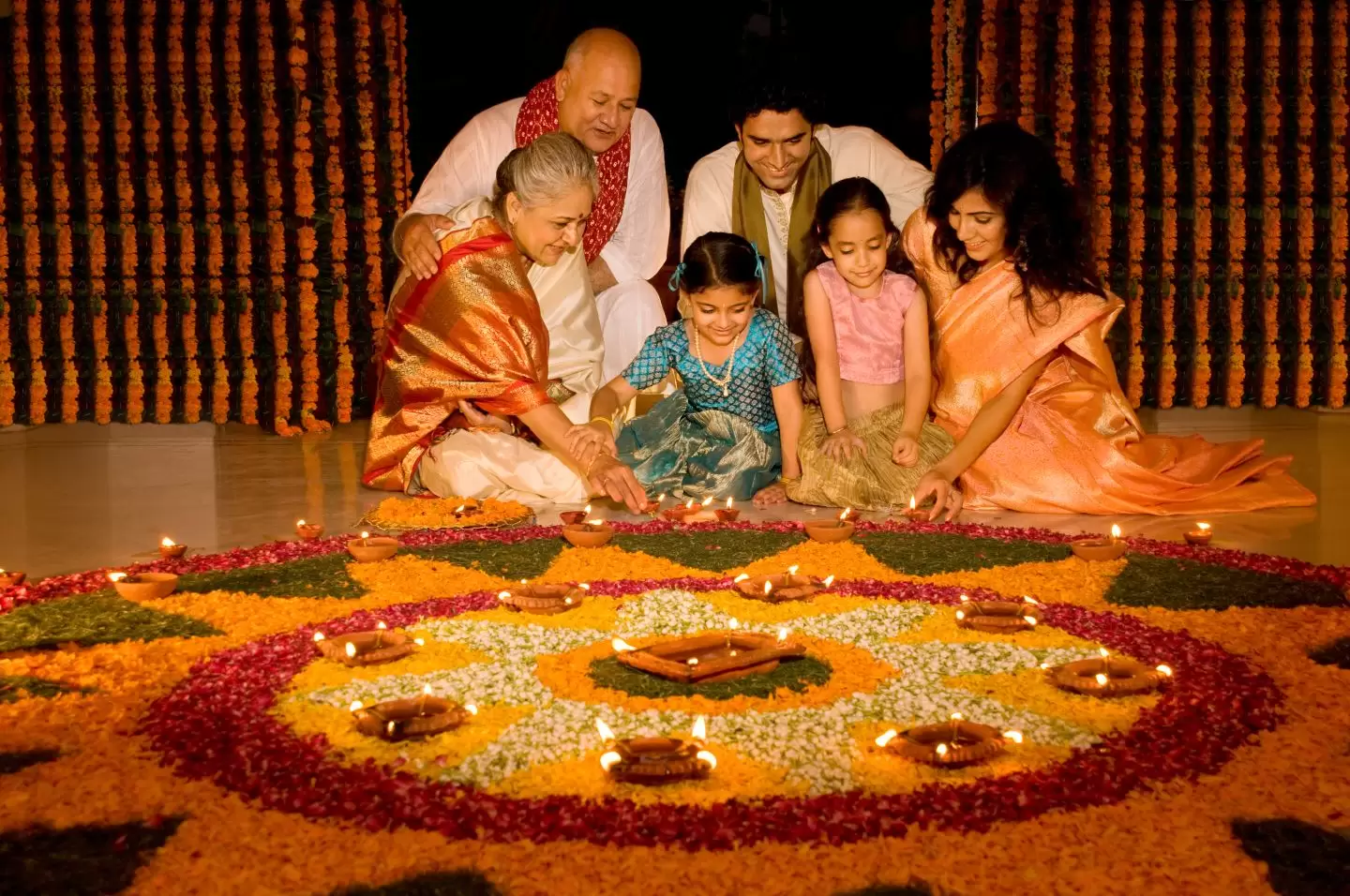
| Diwali | Light winning over darkness; Rama's return to Ayodhya; worship of Lakshmi | Lamps, rangoli, sweets, new clothes |
| Holi | The coming of spring; the story of Prahlada | Playing with colours |
| Navaratri and Dussehra | The Goddess Durga and good winning over evil | Dance, puja, Rama's victory over Ravana |
| Ganesh Chaturthi | Ganesha's birthday | Bringing Ganesha home, modaks |
| Janmashtami | Krishna's birthday | Midnight puja, songs, dressing up as little Krishna |
| Raksha Bandhan | The bond of brothers and sisters | Tying a rakhi |
Values Hindu Children Learn
- Ahimsa: not hurting any living being.
- Satya: telling the truth.
- Seva: helping others without wanting a reward.
- Respect: for parents, teachers, elders and nature. Many children touch their elders' feet to receive blessings.
- Sharing: food, toys and time.
- Gratitude: thanking God, nature and the people who look after us.
Simple Things You Can Do
- Say a short prayer when you wake up and before you sleep.
- Join your family when they light the lamp.
- Learn one shloka by heart; your parents or grandparents can teach you. Some easy ones are in 10 Essential Prarthana Slokas.
- Read one story a week from the Ramayana or Mahabharata.
- Do one kind thing every day.
Questions Kids Ask
Is Hinduism the oldest religion?
It is one of the oldest living religions. Its oldest book, the Rigveda, is thousands of years old, and Hinduism has no single starting date or founder.
Why do some Hindus not eat meat?
Many Hindus are vegetarian because of ahimsa, not harming living beings. Not all Hindus are vegetarian; families follow different customs.
Why do Hindus respect cows?
The cow gives milk and helps on farms, and is seen as a gentle, giving mother. Krishna grew up among cowherds and loved cows.
Why is there a dot on some people's foreheads?
It is a tilak or bindi. It is a sign of worship, a blessing, or for married women in many communities, of marriage. Different traditions use different marks. See Hindu Symbols and Their Meanings.
Can I be Hindu and have friends of other religions?
Of course. Hinduism teaches respect for all paths to God. Learning about your friends' festivals is a lovely thing to do.
For Parents and Teachers
- Keep it simple and story-led; children remember stories better than rules.
- Answer "why" questions honestly. It is fine to say "Let's find out together."
- Connect ideas to daily life: a lamp lit together teaches more than a lecture.
- If your child faces questions at school, the FAQs above give short, friendly answers. See also Raising Hindu Children in a Western Country.
Related Reading on HinduTone
- What Is Sanatana Dharma? A Complete Beginner's Guide
- Top 5 Hindu Mythology Stories Every Child Should Know
- The Importance of Sanskrit Slokas in Child Development
- A Hindu Day: Daily Practices from Waking to Sleep
- 33 Crore Gods: What 33 Koti Devatas Really Means
Sources
- Pew Research Center, How the Global Religious Landscape Changed From 2010 to 2020 (2025), Hindu population figures: pewresearch.org
- Gavin Flood, An Introduction to Hinduism, Cambridge University Press, 1996.
- Vedic Heritage Portal (Government of India), Introduction: vedicheritage.gov.in/introduction/
Last reviewed: 12 November 2026.
Share this with family and friends
Send it on WhatsApp, post it, or copy the link.
More from Hinduism
- Dvaita Philosophy Explained: Madhvacharya's Vedanta of Difference
- Vishishtadvaita Explained: Ramanuja's Philosophy of Qualified Non-Dualism
- The Swastika in Hinduism: Meaning and History
- Hindu Symbols and Their Meanings
- Shiva Purana: Structure and Main Stories