Hindu Temple Worship: The Daily Rituals Explained
Quick answer: In a traditional Hindu temple the deity is worshipped several times a day according to the temple's Agama, its ritual manual. The day usually begins before dawn with waking the deity (suprabhatam), followed by abhisheka (sacred bath), alankara (dressing and decoration), naivedya (food
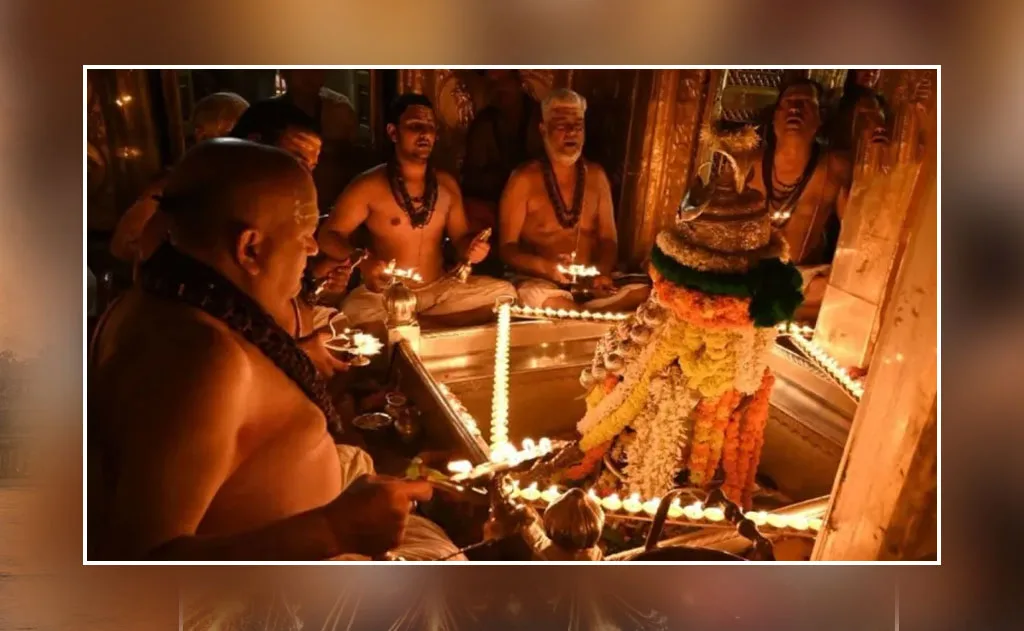
Quick answer: In a traditional Hindu temple the deity is worshipped several times a day according to the temple's Agama, its ritual manual. The day usually begins before dawn with waking the deity (suprabhatam), followed by abhisheka (sacred bath), alankara (dressing and decoration), naivedya (food offering) and aarti (waving of lamps). Further pujas follow at noon and in the evening, and the day ends with a night rite in which the deity is put to rest. Trained priests (archakas) perform these rites on behalf of the whole community; devotees take part through darshan, pradakshina, prayer and offerings.
Temple worship is often described as treating God as an honoured royal guest who lives in the temple. Each service mirrors the care given to a beloved king or guest: waking, bathing, dressing, feeding, entertaining with music and lamps, and putting to rest. This guide explains the pattern, which most temples share, and the variations between traditions. For the meaning of the building itself, see Hindu Temple Architecture and Symbolism.
The Temple Day at a Glance
| Time (typical) | Ritual | What happens |
|---|---|---|
| Before dawn | Waking the deity | Suprabhatam or wake-up hymns, the sanctum doors open, the first aarti |
| Early morning | Abhisheka | The murti is bathed with water, milk, curd, honey, ghee and other offerings |
| Morning | Alankara and archana | Fresh clothes, jewels, flowers; chanting of the deity's names |
| Mid-morning | Naivedya | Cooked food offered, then distributed as prasada |
| Noon | Midday puja | A major worship; many temples close the sanctum afterwards |
| Evening | Sandhya puja and aarti | Lamps at dusk, often the best-attended service |
| Night | Closing rite | Final offering, lullabies or music; the deity is put to rest |
Exact times and the number of services vary from temple to temple, and festival days follow a different schedule. Always check the temple's own timings.
Who Performs Temple Worship
- Archakas (priests) are trained in the temple's Agama and usually serve by hereditary right or appointment. Only they enter the sanctum (garbhagriha) in most temples.
- Paricharakas and other staff prepare flowers, lamps and the offering kitchen.
- Musicians, in many large temples, play the nadaswaram, drums or bells at fixed services.
- Devotees sponsor sevas, bring offerings, and take part in darshan and aarti.
The Agamas: Rulebooks of Temple Worship
Temple ritual is not improvised. It follows texts called Agamas (also Tantras or Samhitas), which lay down how to build a temple, consecrate the murti and worship it daily. The main families are:
| Tradition | Agama | Where you will see it |
|---|---|---|
| Shaiva | The 28 Shaiva Agamas (such as Kamika and Karana) | Most Shiva temples of Tamil Nadu |
| Vaishnava | Pancharatra | Srirangam, Melkote and many Vishnu temples |
| Vaishnava | Vaikhanasa | Tirumala and many Venkateswara temples |
| Shakta | Shakta Tantras | Many Devi temples |
| Kerala | Kerala Tantric manuals such as the Tantrasamuccaya | Kerala temples |
Read more in Vaikhanasa Agamas: Rules, Principles and Temple Worship.
1. Waking the Deity
Before dawn the priest purifies himself, opens the sanctum and wakes the deity with hymns. At Tirumala and many Venkateswara temples this is the Suprabhatam; in Tamil Shiva temples the Thiruppalliyezhuchi hymns are sung. The night's flowers are removed, a lamp is lit and the first aarti is offered. See Sri Venkatesa Suprabhatam: Text and Meaning.
2. Abhisheka: The Sacred Bath
The murti, or in many temples a smaller processional or utsava murti, is bathed while Vedic hymns are chanted. Common substances are water, milk, curd, ghee, honey, sugar, coconut water, sandal paste and turmeric; Shiva lingas in particular receive abhisheka many times a day. The water that has bathed the deity is given to devotees as tirtha.
3. Alankara and Archana
After the bath the deity is dried, dressed in fresh cloth, adorned with jewels, sandal paste and flower garlands. Then comes archana, the offering of flowers or kumkum while chanting 108 or 1,008 names of the deity. Devotees can usually request an archana in their own name and family lineage (gotra), which the priest recites.
4. Naivedya: Offering Food
Food prepared in the temple kitchen, under strict rules of purity, is offered behind a screen or closed door. Famous temple prasadams include the Tirupati laddu, the Puri Jagannath mahaprasad and the Guruvayur payasam. After the offering, the food is distributed as prasada, God's grace in edible form.
5. Aarti and Deeparadhana
Lamps of ghee or camphor are waved before the deity in a set pattern, with bells, drums and chanting. In the North this is called aarti; in the South, deeparadhana or harathi. Afterwards the flame is brought to devotees, who pass their hands over it and touch their eyes.
The Sixteen Offerings (Shodasha Upachara)
Full puja in temples and homes is built from a set of hospitable offerings, traditionally sixteen. Lists differ slightly between texts; a common one is:
| No. | Offering | Meaning |
|---|---|---|
| 1 | Dhyana / Avahana | Meditating on and inviting the deity |
| 2 | Asana | Offering a seat |
| 3 | Padya | Water to wash the feet |
| 4 | Arghya | Water for the hands |
| 5 | Achamaniya | Water to sip |
| 6 | Snana | Bath |
| 7 | Vastra | Clothing |
| 8 | Yajnopavita / Abharana | Sacred thread or ornaments |
| 9 | Gandha | Sandal paste |
| 10 | Pushpa | Flowers |
| 11 | Dhupa | Incense |
| 12 | Deepa | Lamp |
| 13 | Naivedya | Food |
| 14 | Tambula | Betel leaves and nut |
| 15 | Nirajana | Waving the lamp (aarti) |
| 16 | Pradakshina and Namaskara | Circling and bowing |
For a home version, see How to Perform Hindu Puja at Home.
How Many Pujas a Day?
It depends on the temple's size, Agama and endowment:
- Small village temples may have one or two services a day.
- Many Tamil Shiva temples follow six daily services (aaru kala puja), from dawn (Ushathkalam) to the night service (Arthajamam).
- Kerala temples follow their own Tantric schedule, with services such as the Usha puja at dawn, the Ucha puja at noon and the Athazha puja at night.
- Great pilgrimage temples such as Tirumala hold sevas from before dawn until late at night.
The Night Rite
The last service puts the deity to rest. In many Shiva temples a processional image of Shiva is carried to the bedchamber (palliyarai) of the goddess. At Tirumala the night service is the Ekanta Seva, after which the sanctum is closed. Lullabies, music and a final offering of milk are common.
Beyond the Daily Cycle
- Weekly and monthly: special abhishekas on particular weekdays, Pradosham, Ekadashi or full moon.
- Annual festivals: the Brahmotsavam and chariot festivals, when processional deities go out among the people.
- Kumbhabhishekam: the reconsecration of the temple, traditionally about every twelve years or after renovation.
How Devotees Take Part
- Prepare: bathe, dress modestly, remove footwear at the entrance.
- Pradakshina: walk clockwise around the shrine. See Pradakshina: Meaning and Benefits.
- Darshan: stand before the deity, see and be seen; pray quietly.
- Offerings: flowers, fruit, coconut, oil for the lamps; or sponsor an archana or seva.
- Receive tirtha, prasada and the aarti flame.
- Sit for a while before leaving, as many traditions advise.
Diaspora temples follow the same pattern, often compressed into weekend services. Many publish daily schedules and accept online seva bookings.
Frequently Asked Questions
Why is the deity woken up, bathed and fed?
Temple worship treats God as a living presence in the murti and offers Him the care given to an honoured guest or king. The rites express love and hospitality; they do not imply that God needs food or sleep.
Why are the sanctum doors closed at times?
The deity "rests" between services, and certain rites such as naivedya and dressing are done privately. Many temples also close in the afternoon.
Can anyone perform worship in the sanctum?
In most traditional temples only the temple's trained archakas enter the sanctum, following its Agama. Rules vary, and some temples allow devotees to offer worship themselves.
What is the difference between puja and archana?
Puja is the full service of offerings. Archana is one part of it: offering flowers or kumkum while chanting the deity's names, often on behalf of a devotee.
Why is camphor used for aarti?
Camphor burns completely and leaves no residue, which teachers often explain as a symbol of the ego burning away entirely in the light of God.
Related Reading on HinduTone
- Hindu Temple Architecture and Symbolism
- Why Hindus Worship Murtis
- Puri Jagannath Temple Darshan Guide
- A Hindu Day: Daily Practices from Waking to Sleep
- Shaiva, Vaishnava, Shakta and Smarta Traditions
Sources
- C. J. Fuller, Servants of the Goddess: The Priests of a South Indian Temple, Cambridge University Press, 1984.
- Richard H. Davis, Ritual in an Oscillating Universe: Worshipping Śiva in Medieval India, Princeton University Press, 1991.
- Gavin Flood, An Introduction to Hinduism, Cambridge University Press, 1996 (temple worship and the Agamas).
- Tirumala Tirupati Devasthanams, official site (daily sevas): tirumala.org
Last reviewed: 12 November 2026.
Share this with family and friends
Send it on WhatsApp, post it, or copy the link.
More from Temples
- Srisailam Karthika Masam 2026: Dates, Darshan Rules, Karthika Pournami Deepotsavam and Pilgrimage Guide
- Kedarnath Kapat Closing 2026: Portals Close on Bhai Dooj, 11 November, as Baba Kedar Enters Samadhi
- Hindu Temples in Georgia, USA: Complete City-Wise Directory
- Hindu Temples in Florida – Complete City-Wise Directory
- Hindu Temples in California – Complete City-Wise Directory
You might also like
Mahabharata Places Today: Kurukshetra, Hastinapur, Indraprastha and Dwarka
Ramayana Places in India: The Trail from Ayodhya to Rameswaram
Hinglaj Mata Mandir: Divine Glow of Diyas at the Shakti Peetha in Lasbela, Balochistan