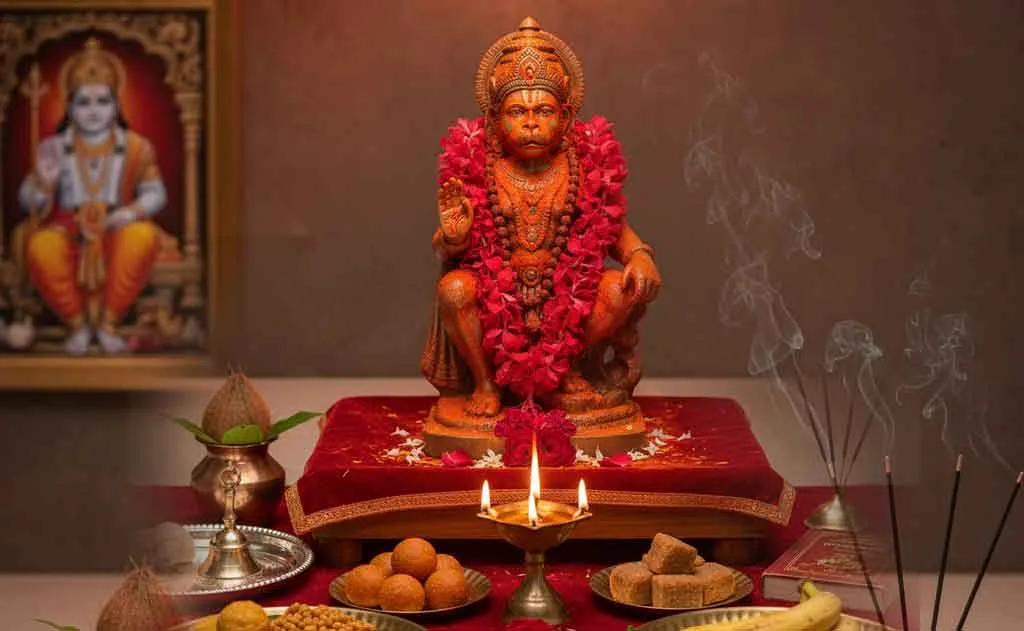
How to Perform Hindu Puja at Home: Items, Steps, Mantras and Daily Rituals
A home puja needs only a clean place, a lamp, water, a flower and a sincere mind. This beginner's guide explains what puja means, which items are essential and which are optional, a simple step-by-step daily sequence with mantras, regional differences, apartment and diaspora adaptations, lamp safety and a checklist.

A home puja needs only a clean place, a lamp, water, a flower and a sincere mind. This beginner's guide explains what puja means, which items are essential and which are optional, a simple step-by-step daily sequence with mantras, regional differences, apartment and diaspora adaptations, lamp safety and a checklist.
Quick answer: To perform puja at home, clean yourself and a small altar, light a lamp, invite the deity with a short prayer, offer water, a flower and a little food, chant a mantra or name, wave the lamp in aarti, and end with a quiet prayer and a bow. You need only a clean space, a lamp, water, a flower and something to offer. Everything else is traditional but optional, and ten minutes a day is enough to begin.
Last updated: 9 October 2026. This is a general beginner's guide. Families, regions and sampradayas (traditions) differ, so where your elders or your temple priest teach something different, follow them.
Below you will find what puja means, the essential and optional items, how to prepare a safe space, a simple step-by-step sequence with mantras, how traditions differ, apartment and diaspora adaptations, lamp safety and a printable checklist. For the full sixteen-step form of worship, see our Shodashopachara puja guide.
What puja means
Puja is loving, respectful worship offered to the divine, usually through an image (murti or picture) that the worshipper treats as an honoured guest. The traditional sequence of offerings, called upacharas, follows the logic of hospitality: you welcome the guest, offer water to wash and drink, adorn them with flowers, offer light and food, and take leave with gratitude.
The outer steps support an inner attitude: attention, gratitude and surrender. That is why a short puja done with focus is valued more than a long one done in a hurry. Daily household worship is often called nitya puja, the regular practice, as distinct from the larger pujas done on festivals or vows.
Essential vs optional puja items
You do not need to buy a full samagri kit to begin. Start with the essentials and add the rest over time.
| Item | Essential or optional | Notes |
|---|---|---|
| Image or murti of your deity | Essential | A framed picture is fine. Keep it clean and at or above eye level when seated. |
| Lamp (diya) with ghee or oil, and a wick | Essential | Brass, clay or steel. An LED diya can stand in where flames are not allowed. |
| Water in a small vessel, with a spoon | Essential | Used for achamana (sipping), offering and sprinkling. |
| Flowers or leaves | Essential | Any fresh, clean flower. Leaves such as tulasi or bilva where your tradition uses them. |
| Naivedya (food offering) | Essential | Fruit, sugar crystals, jaggery, milk, or a little freshly cooked food before the family eats. |
| Incense (agarbatti or dhoop) | Optional | Skip it if anyone at home has asthma or a smoke alarm sits close by. |
| Bell (ghanti) | Optional | Rung during aarti and naivedya in many homes. |
| Kumkum, turmeric, sandal paste | Optional | For tilak on the deity and yourself. |
| Akshata (unbroken rice, often mixed with turmeric) | Optional | Offered with mantras or as a blessing. |
| Camphor (karpur) for aarti | Optional | Use a tiny piece on a metal holder; see the safety section. |
| Puja plate (thali), small bowls, a cloth or mat to sit on | Optional | Keeps everything tidy and in one place. |
For a festival puja you may need more: a kalash, coconut, mango leaves, betel leaves and nuts, and so on. Our Lakshmi-Ganesh puja vidhi and samagri list shows a full festival kit, and the essential pooja items guide explains where families abroad usually find them.
Preparing a clean and safe space
- Choose a quiet, clean spot you can keep for worship: a shelf, a small cabinet mandir or a corner of a room. Many families prefer the north-east or a place where you can face east while sitting, but a clean, respected place matters more than direction.
- Keep the altar off the floor and free of clutter. Dust it and change the water and flowers daily.
- Place the lamp on a metal plate or tray on a stable, heat-safe surface, with nothing flammable above or beside it.
- Keep a mat or folded cloth to sit on, so worship has its own place and posture.
- Store matches, camphor and oil in a closed box out of children's reach.
- If you are short of space, see our apartment home mandir guide.
A simple daily puja for beginners (10 steps)
This is one common household sequence, a shortened form of the traditional upacharas. It takes 10 to 15 minutes. Use it as a starting point and adjust it to your family's practice.
- Prepare yourself. Bathe or at least wash your hands, feet and face. Sit facing the altar.
- Light the lamp. Light the diya first, and incense if you use it. The lamp is the witness of the puja.
- Begin with Ganesha. Most Hindu worship starts by remembering Ganesha, the remover of obstacles. Chant his mantra (given below the steps) once or three times.
- Achamana and intention (sankalpa). Sip a little water from the spoon, then say in your own words, in any language, what you are doing and why: for example, "I offer this worship for the well-being of my family."
- Invite and welcome. Fold your hands and mentally invite the deity to accept your worship, as you would welcome a guest.
- Offer water. Offer a few drops of water at the feet of the image (or into a small bowl in front of it) for washing and drinking.
- Adorn. Apply a little sandal paste or kumkum if you use them, and offer flowers or leaves with the deity's name.
- Chant. Chant the deity's name or a short mantra 11, 21 or 108 times, or read a few verses of a stotra you know.
- Offer food (naivedya). Place fruit or food before the deity, sprinkle a little water around it, and mentally offer it. After the puja, share it as prasad.
- Aarti and closing. Wave the lamp (or a small camphor flame) in clockwise circles before the deity while ringing the bell or singing an aarti. Then offer a final flower, bow, ask forgiveness for any mistakes, and sit quietly for a minute.
The Ganesha mantra for step 3:
ॐ गं गणपतये नमः॥
oṃ gaṃ gaṇapataye namaḥ||
Meaning: Salutations to Ganapati.
Some short mantras many families use in step 8:
ॐ नमः शिवाय॥
oṃ namaḥ śivāya||
Meaning: Salutations to Shiva.
ॐ नमो नारायणाय॥
oṃ namo nārāyaṇāya||
Meaning: Salutations to Narayana (Vishnu).
For more daily mantras with meanings and how to chant them, see our 10 Hindu mantras to chant daily. For the correct way to wave the lamp and what aarti means, read how to do aarti correctly. If you have only five minutes, the 5-minute daily puja for busy people shows a shorter version.
Offerings, lamps and flowers
Water and food
Offer what is clean and fresh. Food is offered before anyone at home has tasted it, which is why many families offer a little from the day's cooking before serving the meal. Vegetarian food is the norm for offerings in most traditions, and many households avoid onion and garlic in naivedya. Afterwards the food is prasad: eat it respectfully and share it, rather than throwing it away.
Lamps
Ghee and sesame oil are the most common lamp fuels. Cotton wicks come as round (pua) or long (batti) styles. Many families light a lamp at dusk as well as in the morning, even on days without a full puja. Let the lamp burn out by itself or, if you must leave the room, put it out gently; many families avoid blowing it out with the breath and use a snuffer or a flower instead.
Flowers and leaves
Use fresh flowers that have not been smelled or worn first. Many families follow deity-specific customs, such as tulasi for Vishnu and Krishna, bilva leaves for Shiva, and red flowers such as hibiscus for Devi and Ganesha. Ask your elders or temple priest about your family's practice. Old flowers are usually placed in a garden, a plant pot or compost rather than in the bin. Our daily tulasi puja guide explains worship of the tulasi plant itself.
Regional and sampradaya differences
There is no single correct home puja. Practices differ by region, language, family and sampradaya, and all of them are valid within their traditions. A few broad examples:
- Smarta households often keep the panchayatana, worshipping five deities together (Ganesha, Surya, Devi, Shiva and Vishnu), with one of them in the centre as the family's chosen deity.
- Vaishnava households centre worship on Vishnu, Krishna or Rama, often with tulasi, and the food offering is a central part of the day.
- Shaiva households may keep a small linga and offer water or milk abhishekam and bilva leaves.
- Shakta households worship the Devi in her many forms, often with kumkum archana and red flowers.
- Regional customs vary too: a kolam or rangoli at the door in many South Indian and Maharashtrian homes, an evening lamp at the tulasi plant, or a family deity whose worship is passed down through generations.
Tilak styles also signal tradition; see our guide to the types of tilak and their meaning.
Apartment and diaspora adaptations
- Small space: a wall shelf or a closed cabinet mandir works well. Close the doors when not in use to keep dust out.
- Smoke alarms and leases: check your lease and building rules about open flames and incense. Keep incense away from smoke detectors, use smokeless dhoop, or skip incense on weekdays.
- LED diyas: a battery lamp is a reasonable substitute where flames are not allowed or when no adult can stay in the room.
- Sourcing items: Indian grocery stores and temple shops abroad usually stock lamps, wicks, kumkum, camphor and incense. Fresh local flowers are perfectly acceptable.
- Time zones: use a panchang for your own city for festival dates and timings. Do not copy India's times to another country.
- Busy weekdays: keep a short daily lamp-and-prayer routine and do a fuller puja at the weekend.
- Neighbours: keep bells and chanting at a gentle volume early in the morning and late at night.
- Travel kit: a small picture, an LED lamp and a printed prayer let you keep the habit in hotels and dormitories.
For more help, read our daily pooja guide for Hindus in the USA and mantra recitation in a diaspora apartment.
Lamp, camphor and incense safety
Home lamps are a real fire risk. Follow these precautions every time:
- Never leave a lit lamp, camphor or incense unattended, and never go to sleep with a flame burning.
- Use a metal plate or tray under the lamp, on a stable surface, away from curtains, paper, dry flowers, garlands and shelves above.
- Keep long sleeves, dupattas, saree pallus and hair away from the flame during aarti.
- Burn camphor only in a small piece on a metal holder, and never hold it in the hand.
- Keep children at a safe distance from flames; let them ring the bell or offer flowers instead.
- Ventilate the room if you use incense, and avoid it around anyone with asthma or breathing problems.
- Do not top up a burning lamp with oil from a large bottle; let it cool first.
- Keep a damp cloth or a small fire extinguisher within reach, and know your building's fire exits.
How to make puja a daily habit
- Fix a time, such as right after bathing or just before dinner, and keep it short enough to do on your busiest day.
- Keep all items in one tray so set-up takes less than a minute.
- Involve children with simple jobs: lighting the lamp with an adult, offering flowers, ringing the bell. See how to teach Hinduism to children.
- Add one new mantra or verse at a time, and learn its meaning.
- On festival days, expand the daily routine rather than starting from scratch.
Home puja and temple worship support each other. When you visit, our Hindu temple visit guide explains darshan, dress and etiquette, and why temple bells ring explains a sound you will hear at home too.
Home puja checklist
- Hands, feet and face washed; clean clothes
- Altar dusted; yesterday's flowers and water removed
- Lamp on a metal plate, oil or ghee topped up while cool, wick ready
- Fresh water in the vessel, with a spoon
- Fresh flowers or leaves
- Naivedya: fruit, sugar crystals or freshly cooked food
- Optional: incense, bell, kumkum, turmeric, sandal paste, akshata, camphor
- Mantra or stotra you will chant, printed or memorised
- Matches and camphor stored away from children after use
- Lamp attended until it is put out
Frequently asked questions
What is the simplest way to do puja at home?
Clean your hands and the altar, light a lamp, offer water and a flower, chant a short mantra such as Om Gam Ganapataye Namah or the name of your chosen deity, wave the lamp in aarti, offer a little fruit or sweet, and end with a quiet prayer and a bow. Five to fifteen minutes is enough.
What items are essential for a home puja?
A clean space with an image or murti, a lamp (diya), water in a small vessel, flowers or leaves, and something to offer as naivedya, such as fruit, sugar crystals or cooked food from your kitchen. Incense, a bell, kumkum, turmeric, sandal paste and akshata (unbroken rice) are traditional but optional.
What is the best time to do puja at home?
Most families do puja in the morning after bathing and light a lamp again at dusk. The exact time matters less than doing it regularly. If mornings are rushed, a short evening lamp-lighting is a valid daily practice.
Can I do puja without a priest or Sanskrit?
Yes. Daily home worship has always been done by householders themselves. You can pray in any language. Learn one or two short Sanskrit mantras correctly over time, and call a priest for samskaras or larger pujas if your family prefers.
Is it safe to light a diya in an apartment?
It can be, with care. Place the lamp on a metal plate on a stable surface, away from curtains, shelves above and children's reach, never leave it burning unattended, and check your lease and building rules. Many renters use an LED diya on weekdays and a real flame only when someone is watching.
Which deity should I worship at home?
Follow your family tradition first. Many households begin with Ganesha and then worship their ishta devata (chosen deity) or kula devata (family deity). If you have no family practice, start with one deity you feel drawn to and keep the routine simple.
Related guides
- Shodashopachara puja: the 16 steps explained
- 10 Hindu mantras to chant daily
- Lakshmi-Ganesh puja vidhi and samagri list
- How to do aarti correctly
- Hindu temple visit guide: darshan, dress code and etiquette
Editor's note (9 October 2026)
This guide describes common household practice in general terms and does not replace the guidance of your family, guru or temple priest. Mantras are reproduced from our verified texts. Puja is an act of devotion; it does not guarantee any particular outcome. If you notice an error, please let us know.
You might also like
Shodashopachara Puja: The 16 Steps of Hindu Worship Explained, with a Simple Home Version

How to Do Aarti Correctly: Steps, Meaning, What You Need and Safety Tips
Must Perform Monday Rituals by Hindus: Somvar Vrat, Puja Vidhi, Mantras & Benefits