
Diwali 2026 Lakshmi Puja Samagri: Complete Checklist, Puja Vidhi and Mantras
Diwali Lakshmi Puja 2026 is on Sunday 8 November. This complete samagri checklist groups every item you need, from the altar, kalash, flowers and lamps to kumkum, naivedyam, coins and account books, with the purpose of each item, easy alternatives, a step-by-step Lakshmi-Ganesha puja for the home, verified mantras, and tips for apartments and families abroad.
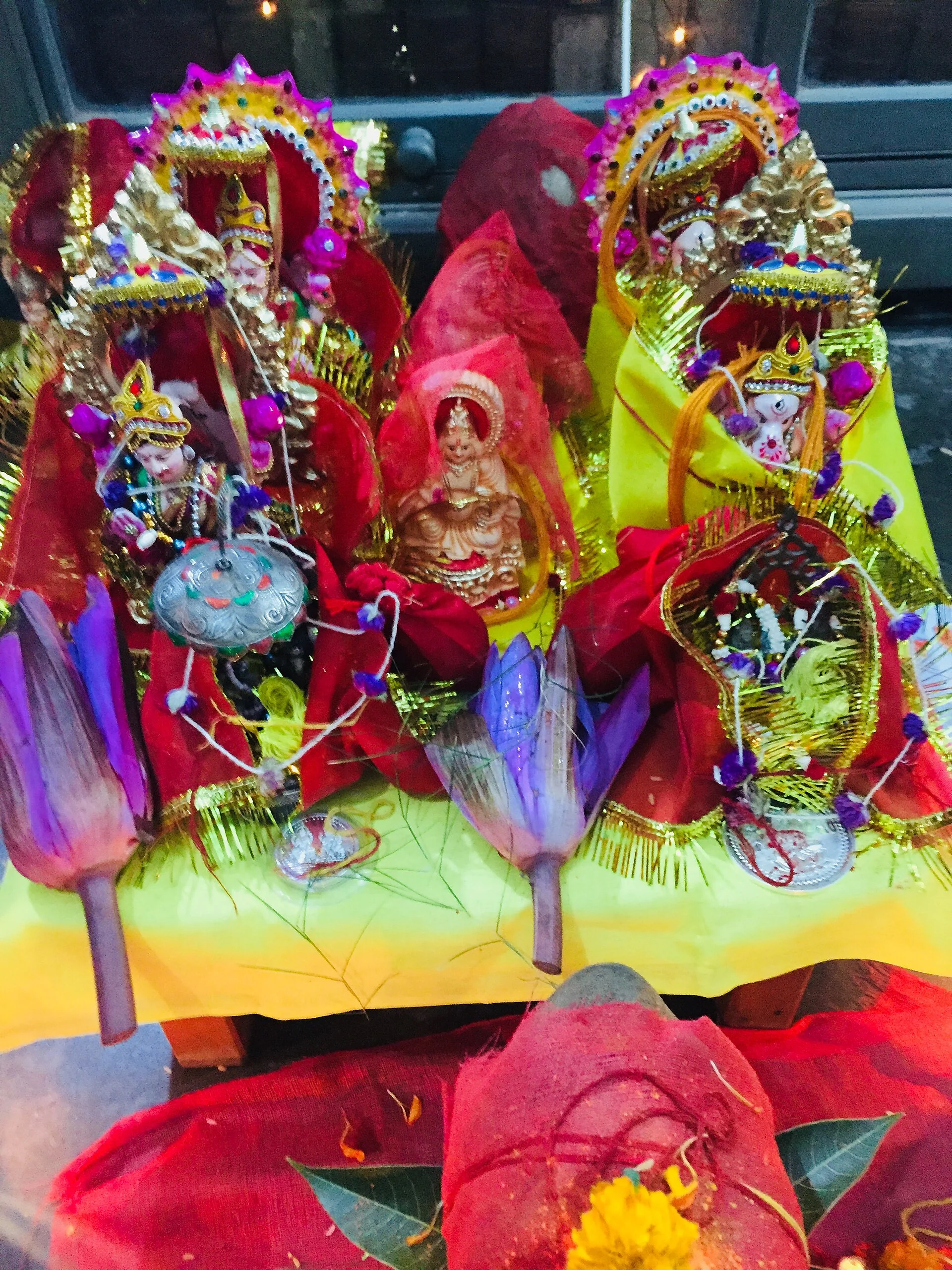
Diwali Lakshmi Puja 2026 is on Sunday 8 November. This complete samagri checklist groups every item you need, from the altar, kalash, flowers and lamps to kumkum, naivedyam, coins and account books, with the purpose of each item, easy alternatives, a step-by-step Lakshmi-Ganesha puja for the home, verified mantras, and tips for apartments and families abroad.
Quick answer: Diwali Lakshmi Puja 2026 is on Sunday 8 November 2026, in the evening Pradosh Kaal. For the puja at home you need a picture or idol of Lakshmi and Ganesha, a clean red or yellow cloth, a kalash with water, mango leaves and a coconut, kumkum, turmeric and akshata, fresh flowers, a ghee lamp and diyas, incense and camphor, sweets and fruits for naivedyam, and a few coins. The full checklist below groups every item, with what it is for and easy alternatives.
Last updated: 9 October 2026. For your city's exact puja time, see Diwali 2026 date and Lakshmi Puja muhurat and the city-wise pages linked below. For all five days, see our complete Diwali 2026 guide.
On Diwali night, Goddess Lakshmi and Lord Ganesha are worshipped together: Lakshmi for wealth and wellbeing, Ganesha for wisdom and an obstacle-free beginning. Families prepare for days, cleaning the home, drawing rangoli and shopping for the puja. This checklist helps you gather what you need without last-minute panic.
Diwali 2026 dates at a glance
| Day | Date | Guide |
|---|---|---|
| Dhanteras | Friday 6 November 2026 | Dhanteras 2026 |
| Kali Chaudas | Saturday 7 November 2026 | Observed the evening before Diwali in Gujarat and nearby regions |
| Naraka Chaturdashi (abhyang snan) | Sunday 8 November 2026, the morning of Diwali (in India) | Naraka Chaturdashi 2026 |
| Diwali, Lakshmi Puja | Sunday 8 November 2026 | Lakshmi Puja muhurat |
| Govardhan Puja, Annakut | Tuesday 10 November 2026 (in India) | Govardhan Puja 2026 |
| Bhai Dooj | Wednesday 11 November 2026 (in India) | Bhai Dooj 2026 |
Dates are from Drik Panchang for India. Abroad, some days shift: in the USA, Canada and the UK, Naraka Chaturdashi is on Saturday 7 November, Govardhan Puja on Monday 9 November and Bhai Dooj on Tuesday 10 November. Check the country pages linked from each guide.
Master Lakshmi Puja samagri checklist
You do not need every item. The essentials are marked in the notes; the rest depends on your family custom and what is available.
1. Deities and altar
| Item | Purpose | Notes and alternatives |
|---|---|---|
| Lakshmi and Ganesha idols or picture | Focus of worship | Essential. Clay, metal or a framed picture; a new Diwali picture is common |
| Low stool (chowki) or clean table | Raised altar | Any clean, stable surface facing east or north if possible |
| Red or yellow cloth | Altar cover | Any clean new cloth or a clean towel |
| Rice or wheat grains | Bed for the kalash and deities in some homes | A small heap on the cloth; optional |
| Kuber or Saraswati picture, account books | Extra worship in some families | Optional; see Chopda Puja below |
2. Kalash
| Item | Purpose | Notes and alternatives |
|---|---|---|
| Kalash (copper, brass or clay pot) | Symbol of fullness and the presence of the deities | Essential. A clean steel lota works |
| Water, a little Ganga jal | To fill the kalash | Plain clean water if Ganga jal is not available |
| Mango leaves (5) | Placed at the mouth | Betel leaves or ashoka leaves; a few clean green leaves abroad |
| Coconut with husk, red thread (mauli) | Placed on top of the kalash | Wrap with a red cloth or thread |
| Coin, supari, haldi, akshata | Dropped into the kalash | Any coin is fine |
3. Flowers and leaves
| Item | Purpose | Notes and alternatives |
|---|---|---|
| Lotus | Lakshmi's flower | Optional; rose or marigold if unavailable |
| Marigold and rose garlands | Decorating the deities and doorway | Any fresh flowers |
| Loose petals | Offering during the puja | Collect from your garden or buy one bunch |
| Durva grass | Offered to Ganesha | Optional; a few blades from any clean lawn |
| Betel leaves and supari | Traditional offering (tambulam) | Optional |
| Kamal gatta (lotus seeds) | Offered to Lakshmi in some homes | Optional; rose petals instead |
4. Lamps, ghee, wicks and incense
| Item | Purpose | Notes and alternatives |
|---|---|---|
| Main ghee lamp (akhand diya) | Lit for the puja | Essential. Brass or clay lamp; sesame oil if no ghee |
| Clay diyas (11, 21 or more) | Lighting the home and doorway | Electric or LED diyas in apartments |
| Cotton wicks | For the lamps | Long wicks for the main lamp, round wicks for diyas |
| Ghee or oil | Fuel | Ghee for the main lamp, mustard or sesame oil for diyas |
| Incense sticks or dhoop | Offering of fragrance | Skip or use one stick if smoke alarms are sensitive |
| Camphor (kapoor) | For the aarti | A small aarti plate and matches |
| Bell | Rung during the puja | Optional |
5. Kumkum, haldi, akshata and chandan
| Item | Purpose | Notes and alternatives |
|---|---|---|
| Kumkum or roli | Tilak for the deities and family | Essential |
| Haldi (turmeric) | Auspicious offering | Kitchen turmeric is fine |
| Akshata (unbroken rice mixed with kumkum) | Offered with prayers | Essential; make it at home |
| Chandan (sandalwood paste) | Offering of fragrance | Sandalwood powder mixed with water |
| Mauli (red thread) | Tied on the wrist after sankalpa | Optional |
| Small bowls and a puja thali | To hold the items | Any clean plates |
6. Fruits, sweets and naivedyam
| Item | Purpose | Notes and alternatives |
|---|---|---|
| Sweets | Naivedyam | Kheer, ladoo, kaju katli, or a home-made sweet |
| Kheel and batashe (puffed rice and sugar drops) | Traditional Diwali offering in North India | Optional; any simple sweet |
| Seasonal fruits | Offering | Bananas, apples, pomegranate, sugarcane in some regions |
| Panchamrit | Bathing or offering | Milk, curd, ghee, honey and sugar; or simply milk |
| Dry fruits | Offering | Optional |
| Water for achamana and a small spoon | Purification | Essential and simple |
7. Coins, wealth and account books (Chopda Puja)
| Item | Purpose | Notes and alternatives |
|---|---|---|
| Silver or regular coins | Worshipped as a symbol of Lakshmi | Coins bought on Dhanteras, or any coins at home |
| Jewellery or cash box | Placed before the deity in some homes | Optional |
| New account books (bahi-khata, chopda) | Chopda Puja for business families | Where customary; laptops or ledgers in some offices |
| Red pen or kumkum | To write 'Shubh' and 'Labh' or a swastika on the first page | Where customary |
Chopda Puja is especially observed by Gujarati and Marwari business families, who begin new account books on Diwali. If it is not your family's custom, you can skip it.
Optional regional items
- Gujarat and Rajasthan: new account books (Chopda Puja), and a Lakshmi charan (footprints) sticker or drawing at the entrance.
- Maharashtra: Lakshmi Puja with coins and jewellery, and naivedyam of dhane-gul (coriander seeds and jaggery) in some families.
- Bengal, Odisha and Assam: many households observe Kali Puja on Diwali night; Lakshmi Puja is done earlier, on Kojagari Purnima.
- Telugu and Kannada homes: oil-bath morning (Naraka Chaturdashi), and Lakshmi worship with the evening deepalu; rangoli or muggulu at the doorway.
- Tamil homes: Deepavali centres on the dawn oil bath and new clothes; some families do Lakshmi Kubera puja in the evening.
- Punjab: Diwali also marks Bandi Chhor Divas for Sikh families; many Hindu Punjabi homes do Lakshmi-Ganesha puja with diyas.
Step-by-step Lakshmi-Ganesha puja at home
- Clean the home and the puja space; draw a rangoli at the entrance and place a diya there.
- Bathe and wear clean or new clothes. Set up the altar, kalash and items before the muhurat.
- Achamana and sankalpa: sip water three times, then state your name, the day and your intention to worship Lakshmi and Ganesha for the wellbeing of the family. Light the main lamp.
- Worship Ganesha first: offer kumkum, akshata, durva and a flower, and chant the Ganesha mantra below.
- Kalash puja: apply kumkum to the kalash and offer akshata and a flower.
- Invoke Lakshmi: offer the shodashopachara (sixteen offerings) or a simple version: seat (aasana), water for the feet and hands (padya, arghya), bath (snana, a few drops of water or panchamrit), cloth (vastra, a thread or cloth), fragrance (gandha), akshata, flowers, incense (dhoop), lamp (deepa) and food (naivedyam).
- Worship the coins, jewellery and account books, if this is your custom.
- Chant the Lakshmi mantra 11 or 108 times, and recite the Mahalakshmi Ashtakam or Sri Suktam if you know it.
- Perform the aarti with camphor, ring the bell and sing the Lakshmi aarti together.
- Offer flowers with folded hands (pushpanjali), ask forgiveness for any mistakes, and share the prasad.
- Light diyas through the home, at the doorway, windows and balcony, to welcome Lakshmi.
For a longer vidhi with the stories and more mantras, see Lakshmi Puja Vidhi 2026: complete step-by-step guide.
Mantras for Lakshmi-Ganesha puja
These texts are taken from verified sources already published on HinduTone. Chant slowly and with attention.
Ganesha mantra
ॐ गं गणपतये नमः॥
oṃ gaṃ gaṇapataye namaḥ||
Meaning: "Om, salutations to Ganapati", with Gam as Ganesha's seed syllable.
Lakshmi mantra
ॐ श्रीं महालक्ष्म्यै नमः॥
oṃ śrīṃ mahālakṣmyai namaḥ||
Meaning: "Om, salutations to Mahalakshmi". Shreem is the seed syllable traditionally associated with Lakshmi.
Mahalakshmi Ashtakam, verse 1
नमस्तेऽस्तु महामाये श्रीपीठे सुरपूजिते ।
शङ्खचक्रगदाहस्ते महालक्ष्मि नमोऽस्तु ते ॥ १॥
namaste'stu mahāmāye śrīpīṭhe surapūjite |
śaṅkhacakragadāhaste mahālakṣmi namo'stu te || 1||
Meaning: "Salutations to you, Mahamaya, seated on the Shri Pitha and worshipped by the gods; to you who hold the conch, discus and mace, O Mahalakshmi, salutations." Read all eight verses in our Mahalakshmi Ashtakam with meaning.
Deepa shloka, while lighting the lamp
शुभं करोति कल्याणम् आरोग्यं धनसम्पदा। शत्रुबुद्धिविनाशाय दीपज्योतिर्नमोऽस्तु ते॥
Shubham karoti kalyanam arogyam dhana-sampada, shatru-buddhi-vinashaya deepa-jyotir namostu te.
Meaning: I bow to the light of the lamp, which brings what is auspicious and good, health and prosperity, and destroys ill-will.
More: Sri Suktam with meaning, Lakshmi mantra benefits and Maha Lakshmi aarti lyrics.
Common mistakes to avoid
- Starting late: set up the altar before sunset so you are ready when the Pradosh Kaal muhurat begins.
- Forgetting Ganesha: Ganesha is always worshipped first.
- Using a broken or chipped idol or lamp: replace it, or use a picture.
- Leaving lamps unattended near curtains, paper decorations or children.
- Buying more than you need: a simple, clean puja is complete.
- Using plastic flowers or synthetic colours for offerings: fresh flowers and natural colours are better for the home and the earth.
Last-minute shopping list
If it is Diwali afternoon and you are short of time, these ten items are enough for a complete home puja:
- A Lakshmi-Ganesha picture
- A clean cloth
- A steel or copper lota as kalash, with a coconut
- Kumkum, turmeric and rice
- One bunch of flowers
- A ghee lamp and a few diyas
- Incense and camphor
- One sweet and some fruit
- A few coins
- Matches
Budget and eco tips
- Reuse brass or steel lamps, kalash and thalis every year; buy only fresh items.
- Choose clay diyas and unpainted clay idols over plastic and plaster of Paris.
- Buy flowers loose and in season; compost them after the puja.
- Make akshata, panchamrit and a simple sweet at home.
- Use rice flour and flower petals for rangoli instead of synthetic colours.
- Skip firecrackers or keep them minimal; diyas are the heart of Diwali.
More ideas: Eco-friendly, cracker-free Diwali 2026, Diwali rangoli designs 2026 and Diwali decoration and diya ideas.
Apartment and abroad guidance
- Fire safety: many apartments and rental homes have sensitive smoke alarms. Keep one real lamp on a metal plate during the puja and use LED diyas for the rest of the evening.
- Incense: use one stick, near an open window, or skip it.
- Muhurat: use your own city's Lakshmi Puja time; do not convert Indian times. See the city-wise pages for the USA, UK, Canada, Australia, Europe and India below.
- Puja items abroad: Indian grocery stores and temple shops stock kumkum, camphor, wicks and Diwali pictures; order online a week early.
- Weekday or weekend: in 2026 Lakshmi Puja falls on a Sunday, which makes a family puja easier in most countries.
- Children: give them a job, such as lighting diyas with an adult, arranging flowers or drawing the rangoli.
City-wise Lakshmi Puja muhurat: India, USA, UK, Canada, Australia and Europe. For a day-by-day home plan, read how to celebrate Diwali at home in 2026.
Also read: How to celebrate Diwali at home in Canada.
Frequently asked questions
When is Lakshmi Puja on Diwali 2026?
Diwali Lakshmi Puja 2026 is on Sunday 8 November. The puja is done in the evening Pradosh Kaal, after sunset. Exact muhurat times differ by city, so check our city-wise Lakshmi Puja muhurat pages for India, the USA, UK, Canada, Australia and Europe.
What are the essential items for Lakshmi Puja?
The essentials are a picture or idol of Lakshmi and Ganesha, a clean cloth for the altar, a kalash of water with mango leaves and a coconut, kumkum, turmeric and akshata (rice), flowers, a ghee or oil lamp, incense, camphor, a sweet or fruit as naivedyam, and a few coins. Everything else is optional.
Can I do Lakshmi Puja without a priest?
Yes. Many families perform a simple Lakshmi-Ganesha puja at home without a priest: sankalpa, Ganesha first, then Lakshmi, the offerings, a mantra or stotra, aarti and lighting lamps. Sincerity matters more than an elaborate list.
How should Lakshmi and Ganesha be placed on the altar?
Seat them side by side on a clean cloth, facing east or north if your home allows, with the kalash in front or to one side. Exact placement differs between families and regions, so follow your family tradition; the essential point is that Ganesha is worshipped first.
Can I reuse last year's Lakshmi-Ganesha idols?
Many families bring new clay or metal idols every Diwali; others keep metal idols and simply clean them. Old clay idols can be respectfully immersed in a bucket of water at home and the clay returned to a garden. Follow your family custom.
What if I cannot find lotus flowers or kamal gatta abroad?
Use any fresh flowers, such as marigolds or roses, and a few rose petals in place of kamal gatta. A picture of a lotus or a lotus drawn in rangoli is a common substitute. No single item is compulsory.
Is it safe to keep lamps burning all night in an apartment?
Do not leave open flames unattended. In apartments, keep lamps on a metal plate away from curtains, use electric diyas or LED lights for the night, and check smoke-alarm rules in your building.
Sources
- Diwali 2026 dates and Lakshmi Puja muhurat: Drik Panchang, as used in our city-wise muhurat pages.
- Mantra texts: sanskritdocuments.org (Mahalakshmi Ashtakam) and the verified mantra list used across HinduTone.
- Puja steps and items: standard household Lakshmi-Ganesha puja practice; customs vary by region and family.
Editor's note (9 October 2026)
We expanded this guide on 9 October 2026 into a complete Diwali 2026 Lakshmi Puja samagri checklist, adding the purpose and alternatives for each item, regional items, a step-by-step home puja, verified mantras, budget and eco tips, and guidance for apartments and families abroad. The earlier step-by-step vidhi, the Chopda Puja note and the tips are kept within the new sections.
You might also like

November 2026 Hindu Festivals in Europe: Daily Tithi at Amsterdam Sunrise, Diwali Week and Karthika Dates by Region
November 2026 Hindu Festivals in Germany: Daily Tithi at Frankfurt Sunrise, Diwali Week and Karthika Masam Dates
Bathukamma 2026 Around the World: Celebrations by Country, Telangana Associations and Verified Events
