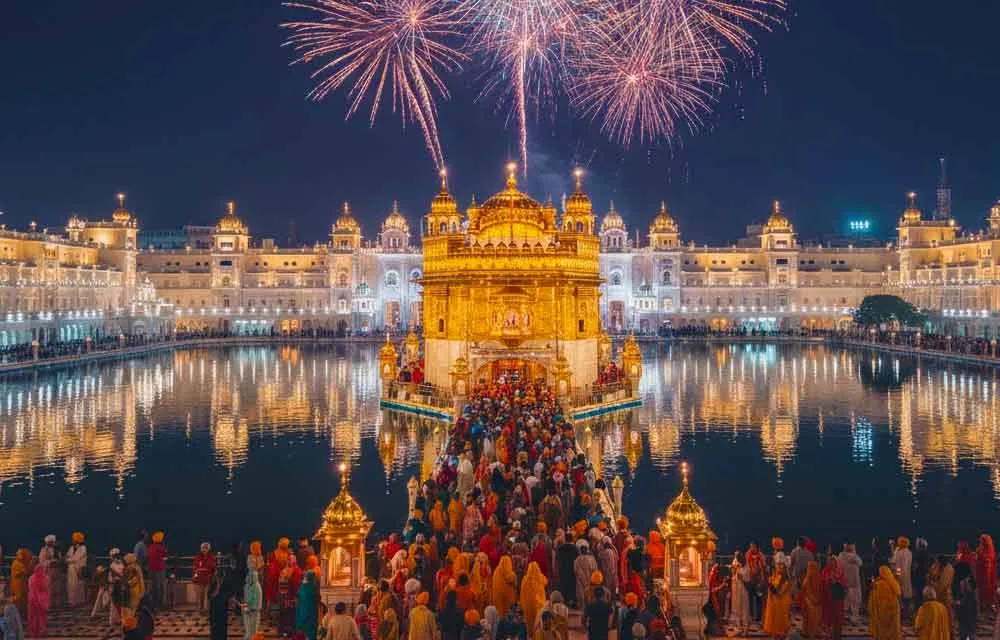
How to Celebrate Diwali in Canada in 2026: Home Puja, Traditions, Food and Family Guide
Diwali 2026 is on Sunday 8 November in Canada. This home guide covers the five days, preparing your home, a simple Lakshmi-Ganesha puja, sweets and vegetarian meals, condo-friendly lights, explaining Diwali to Canadian-born kids, interfaith families, puja supplies and fire safety.
Diwali 2026 is on Sunday 8 November in Canada. This home guide covers the five days, preparing your home, a simple Lakshmi-Ganesha puja, sweets and vegetarian meals, condo-friendly lights, explaining Diwali to Canadian-born kids, interfaith families, puja supplies and fire safety.
Quick answer: Diwali 2026 in Canada is on Sunday 8 November 2026. Lakshmi Puja is done that evening after sunset, inside your own city's muhurat (see our Diwali 2026 Canada Lakshmi Puja muhurat, city by city). You need no priest for a heartfelt home puja: clean the house, light lamps (electric diyas are fine in a condo), worship Ganesha and Lakshmi, share sweets with family and neighbours, and keep fire safety and your building's rules in mind.
Last updated: 9 October 2026. Dates follow Drik Panchang for Canada and our tithi-at-sunrise data for Toronto.
For many Hindu families in Canada, Diwali happens far from grandparents, in a dark and chilly November, with school and work the next morning. Yet it can still be the warmest night of the year. This guide is about celebrating at home: the rituals, food, decorations and conversations that make Diwali feel like Diwali in a Canadian house, condo or rental. For temple programmes, melas and fireworks displays, see our guide to Diwali 2026 temple celebrations and events across Canada.
When is Diwali 2026 in Canada?
Lakshmi Puja, the main day of Diwali, is on Sunday 8 November 2026 in every Canadian time zone. A Sunday Diwali is a gift for families: children are home, there is time to cook in the afternoon, and the puja can be done calmly in the early evening. Daylight saving time ends on Sunday 1 November, so the sun sets early, around 5 PM in Toronto and later on the clock in the west.
The exact Lakshmi Puja muhurat depends on your city's sunset, so we keep all the timings in one place: our Lakshmi Puja muhurat guide for Canadian cities. Please do not use India's muhurat converted to Canadian time; that lands on Sunday morning, which is the wrong time of day for this puja.
The five days of Diwali in Canada
| Day | Festival | Date in Canada | At home |
|---|---|---|---|
| 1 | Dhanteras | Friday 6 November | Buy a small metal item or a new broom; light a lamp at the door in the evening |
| 2 | Naraka Chaturdashi (Choti Diwali) | Saturday 7 November | Early oil bath; first diyas in the evening; many South Indian families keep this morning as their main Deepavali |
| 3 | Diwali, Lakshmi Puja | Sunday 8 November | Lakshmi-Ganesha puja in the evening muhurat; lights in every room |
| 4 | Govardhan Puja / Annakut | Monday 9 November | Offer a plate of home-cooked dishes to Krishna; Gujarati New Year |
| 5 | Bhai Dooj | Tuesday 10 November | Tilak and aarti for brothers, in person or by video call |
These are the Canadian dates. In India, Govardhan Puja is on Tuesday 10 November and Bhai Dooj on Wednesday 11 November, because the lunar day (tithi) that is running at local sunrise is different. Both are correct for their place. For the stories and rituals of each day in more depth, read our Diwali 2026 Canada 5-day celebration guide.
Preparing your home
Traditionally Lakshmi is welcomed into a home that is clean, bright and peaceful, so preparation starts in the week before Diwali.
- Clean and declutter: the weekend of 31 October and 1 November is a good time for a deep clean, before the busy week. Give away clothes and things you no longer use.
- Set up a puja space: a shelf, a low table or a corner of the living room is enough. Face east or north if you can; if not, a clean, quiet spot is what matters.
- Plan the lights: decide which lamps will be real flames (at the altar, watched) and which will be electric (windows, balcony, children's rooms).
- Shop early: flowers, sweets and puja items sell out on the Saturday before Diwali in many cities.
- New clothes: if not new, then clean and festive. Children love choosing their own outfit for the puja.
A simple home Lakshmi-Ganesha puja, step by step
Hindu families in Canada come from many regions, and each has its own Diwali customs. North Indian homes usually do Lakshmi-Ganesha puja on the Amavasya evening. Gujarati families often do Chopda Pujan, worshipping the account books. Bengali families worship Goddess Kali on Diwali night. Many Tamil and other South Indian families keep the Naraka Chaturdashi morning, with an oil bath and new clothes, as Deepavali itself, and Maharashtrian families add Lakshmi Puja and Padwa. If your family has its own order of worship, follow it. The steps below are a simple, widely used outline.
What you need
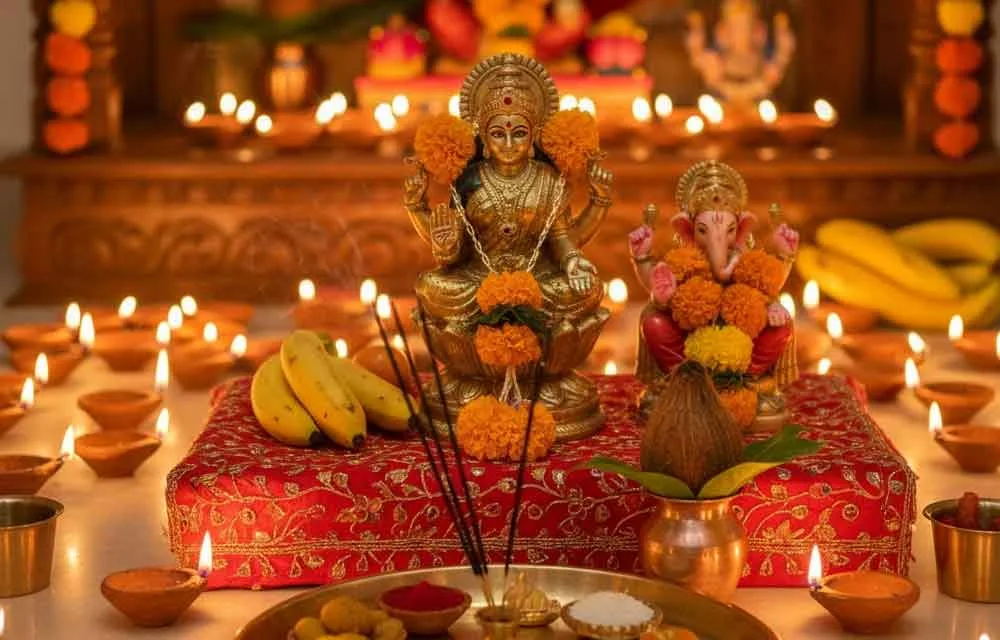
- A picture or small murti of Lakshmi and Ganesha on a clean cloth
- A kalash or small pot of water with a few leaves, and a coconut if you have one
- One oil or ghee lamp, plus electric diyas for the rest of the home
- Kumkum, turmeric, rice grains (akshat), flowers and incense
- Sweets and fruit for naivedya, and a few coins or a little cash
- A plate for aarti and a bell
The steps
- Prepare: bathe, wear clean clothes, and set the altar up before your city's muhurat begins.
- Light the lamp: light the main lamp and sit quietly for a moment as a family.
- Sankalpa: with water and rice in your right hand, say your name, the place (your city, Canada), the day (Diwali, Sunday 8 November 2026), and your prayer for the family's health, harmony and honest prosperity.
- Ganesha first: offer kumkum, rice, a flower and a sweet to Ganesha, chanting "Om Gan Ganapataye Namah".
- Lakshmi puja: invite the Goddess, offer kumkum, turmeric, flowers and incense, and chant "Om Shreem Mahalakshmyai Namah" 11, 21 or 108 times together.
- Honour your work: place coins, account books, a laptop or school books before her as a sign of honest effort.
- Naivedya: offer the sweets and fruit and pray that they are accepted.
- Aarti: wave the lamp in clockwise circles and let everyone receive its warmth. Sing your family's Lakshmi aarti from your own prayer book.
- Close: ask forgiveness for any mistakes, take blessings from elders, and share the prasad.
The whole puja can take 20 to 30 minutes. If you miss the exact muhurat, it is still good to do the puja in the evening after sunset; devotion matters more than precision.
Sweets and vegetarian meals
Diwali food is about sharing. Many families keep the day vegetarian and cook a few dishes from their own region, then send boxes of sweets to friends and neighbours.
- Sweets: besan laddoos, kaju katli, kheer or payasam, gulab jamun, coconut barfi, Mysore pak or adhirasam, depending on your region.
- Snacks: chakli or murukku, mathri, namak pare, chivda and shankarpali keep well for a week and are easy to gift.
- The Diwali dinner: puris, a paneer or chickpea curry, a dry vegetable, dal, rice and raita make a simple festive thali.
- Annakut plate: on Monday 9 November, offer a small plate of several home-cooked dishes to Krishna, then share it at dinner.
- Make it a team job: rolling laddoos or shaping karanji is a good way to involve children.
For step-by-step recipes, see our Diwali 2026 recipes: 35 traditional sweets and snacks.
Rangoli and condo-friendly decor
A rangoli at the door says "welcome, Lakshmi". In a Canadian November it often has to live indoors or in a building hallway, so adapt it.
- Indoor rangoli: draw on a large piece of card, a wooden board or a tray so it can be moved and does not stain floors. Coloured rice, flower petals and chalk are easy to clean up.
- Hallways and lobbies: condo corporations and landlords may have rules about decorations in shared areas and on doors. A small paper or felt rangoli on your own door mat is usually a safe choice; ask your property manager if unsure.
- Electric diyas: LED or battery diyas, fairy lights and electric candles are ideal for windows, balconies and children's rooms. They look lovely against early November darkness and do not set off smoke alarms.
- Balconies: many condo rules prohibit open flames on balconies. Use electric lights outside and keep real flames indoors and supervised.
- Smoke alarms: never cover, unplug or remove a smoke alarm to light lamps or incense. Keep flames and incense well away from detectors and sprinkler heads, and open a window slightly instead.
For ideas, browse our Diwali rangoli designs for 2026.
Explaining Diwali to Canadian-born kids
Children growing up in Canada often know Halloween and Christmas better than Diwali. The goal is not a perfect lesson but happy memories they will want to repeat.
- One sentence first: "Diwali is the festival of lights, when we light lamps to welcome goodness and Goddess Lakshmi into our home."
- One story a day: Dhanteras and the healer Dhanvantari; Krishna and Satyabhama defeating Narakasura; Rama, Sita and Lakshmana returning to Ayodhya; Krishna lifting Govardhan hill; Yamuna welcoming her brother Yama on Bhai Dooj.
- Give them a role: lighting the electric diyas, ringing the bell, holding the aarti plate with a parent, or handing out prasad.
- Connect to values: light over darkness, kindness over anger, sharing over keeping. Ask what "darkness" they want to clear this year.
- School: if your child wants to share Diwali in class, a short talk, a picture of a rangoli or a box of sweets (checking the class allergy rules) works well. Speak to the teacher first.
Interfaith families and neighbours
Many Canadian Hindu households include a partner or relatives from another faith, and almost all have neighbours who do not celebrate Diwali. The festival is naturally welcoming.
- Invite, don't instruct: an interfaith partner or friend can light a lamp, help with rangoli or simply join the meal. Nobody needs to perform a ritual they are not comfortable with.
- Explain the meaning: light, gratitude, family and new beginnings are values most traditions share.
- Neighbours: a small box of sweets with a note ("Happy Diwali! Today is our festival of lights.") builds goodwill, especially if your celebration means extra guests, parking or noise.
- Shared celebrations: Sikh families mark Bandi Chhor Divas on the same day, and Jain families observe Diwali as Mahavira's nirvana. Many friends of these communities celebrate together.
- Quiet hours: keep music and guests within your building's quiet hours or your municipality's noise rules.
Finding groceries and puja supplies
You will not need to bring everything from India. In most larger Canadian cities, South Asian grocery stores carry diyas, puja items, flowers, sweets and festival ingredients, and many supermarkets now have an international aisle with flours, lentils and spices.
- Your temple: many temples sell puja kits, diyas and prasad items, and their notice boards and newsletters often list local vendors.
- Community groups: local cultural associations and WhatsApp groups share where to find marigolds, banana leaves or fresh sweets.
- Online: puja kits, LED diyas and murtis can be ordered online; order by late October to avoid shipping delays.
- Substitutes: roses or chrysanthemums for marigolds, any clean steel bowl for a kalash, and a printed picture for a murti are all fine.
Rentals, condos and fire safety
November in Canada means windows shut and heating on, so indoor fire safety matters more than in India.
- Read your rules: leases and condo declarations or rules may restrict open flames, incense, balcony decorations or fireworks. If unsure, ask your landlord or property manager before Diwali.
- Supervise every flame: keep oil lamps on a metal plate or tray, away from curtains, paper decorations, children's reach and pets. Put them out before leaving home or going to bed.
- Working smoke alarms: test them before Diwali and never disable one. Keep a small fire extinguisher or a lid and baking soda near the kitchen.
- Fireworks: municipal bylaws decide when and where consumer fireworks are allowed. In Toronto, the City of Toronto's fireworks page says Victoria Day and Canada Day are the only days when a permit is not required, so Diwali fireworks on your own property need a permit. Rules differ in other municipalities, and many rentals and condos ban fireworks entirely; check your own municipality, or enjoy a public display instead.
- Winter safety: if you place diyas outside the door, use electric ones; candles in snow and wind are unreliable and a hazard on shared walkways.
School and work: Diwali on a Sunday
Diwali is not a statutory holiday in Canada, so a Sunday Diwali in 2026 is welcome news: most families can do the evening puja and the family dinner without missing school or work. Monday 9 November (Govardhan Puja) and Tuesday 10 November (Bhai Dooj) are regular school and work days.
- If you want Dhanteras evening or Bhai Dooj off, ask early; many employers and school boards recognise major faith days and can accommodate a religious observance with notice.
- Do the Bhai Dooj tilak in the morning before school or in the evening, or by video call with siblings in other cities.
- Plan the food on Saturday so Sunday afternoon is calm, and keep Monday's lunch boxes simple with Diwali leftovers.
A closing message
Diwali in Canada may be colder and quieter than the Diwali your parents remember, but its heart is the same: a lamp lit with love, a family gathered in prayer, and sweets shared with whoever is near. May Maa Lakshmi and Lord Ganesha bless your home with health, harmony and honest prosperity. Happy Diwali 2026!
Celebrating with family across the border? See our Diwali 2026 in the USA: date, Lakshmi Puja and city-wise guide.
Frequently asked questions
When is Diwali 2026 in Canada?
The main day of Diwali, Lakshmi Puja, is Sunday 8 November 2026 across Canada. Dhanteras is Friday 6 November, Naraka Chaturdashi Saturday 7 November, Govardhan Puja Monday 9 November and Bhai Dooj Tuesday 10 November. Use your own city's Lakshmi Puja muhurat, never India's time converted to Canadian time.
Can I do Lakshmi Puja at home without a priest?
Yes. A clean home, a lamp, a picture of Lakshmi and Ganesha, a few flowers, a sweet and a sincere prayer are enough. Worship Ganesha first, then Lakshmi, finish with aarti and share the prasad. Follow your family's own regional custom where it differs.
Can I light real diyas in a condo or apartment?
Many families keep one oil or ghee lamp at the altar only while someone is in the room, and use LED or battery diyas everywhere else. Check your condo rules or lease first, keep flames away from smoke alarms, curtains and sprinkler heads, and never leave a lamp burning unattended.
Can I set off fireworks on Diwali in Toronto?
Not without a permit. The City of Toronto says Victoria Day and Canada Day are the only days when a permit is not required to set off consumer fireworks on your own property. Rules differ in other municipalities, so check your own city's website before you buy anything.
Is Diwali a public holiday in Canada?
No. Diwali is not a federal or provincial statutory holiday. In 2026 it falls on a Sunday, which makes the evening puja easier for most families. For Dhanteras or Bhai Dooj on weekdays, ask your school or employer early about a religious observance day.
How do I explain Diwali to my Canadian-born children?
Keep it simple and hands-on: Diwali is the festival of lights, when we welcome goodness and Goddess Lakshmi into our home and remember Lord Rama's return to Ayodhya. Let children draw the rangoli, place the diyas and hand out sweets, and tell one short story each day.
Editor's note (9 October 2026)
Dates are from Drik Panchang for Canada and match our tithi-at-sunrise data for Toronto (Chaturdashi on 7 November, Amavasya on 8 November, Pratipada on 9 November, Dwitiya on 10 November). City muhurats are kept in our Canada muhurat guide. The Toronto fireworks rule is from the City of Toronto's fireworks page as read on 9 October 2026; bylaws can change, so check your municipality. This guide names no stores or events; for temple and community programmes, see our province-by-province guide.
Related guides
- Diwali 2026 temple celebrations and events across Canada
- Diwali 2026 Canada: Lakshmi Puja muhurat city by city
- Diwali 2026 Canada: complete 5-day celebration guide
- Diwali 2026 in the USA: date, Lakshmi Puja and city-wise guide
- Diwali 2026 recipes: traditional sweets and snacks
- Diwali rangoli designs 2026
You might also like
How to Celebrate Diwali at Home in 2026: A Day-by-Day Plan from Cleaning to Bhai Dooj

Diwali 2026 — Date, Significance & How to Celebrate in USA, UK, Canada & Australia
Diwali 2026 in Bihar and Jharkhand: Lakshmi-Ganesh Puja, Kali Puja, Sohrai, Chitragupta Puja and the Road to Chhath