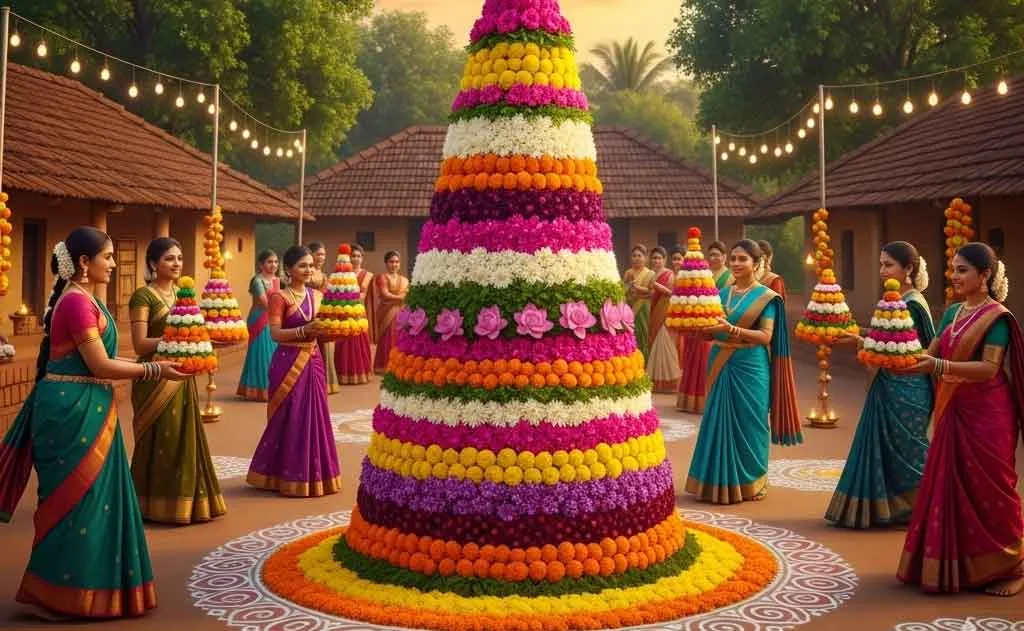
Diwali 2026 Rangoli Designs: Traditional Patterns, Lakshmi Footprints and Easy Ideas for Beginners
Diwali 2026 rangoli made simple: the traditional pattern types (kolam, muggulu, alpana, mandana), Lakshmi footprints, lotus and diya motifs, six beginner designs explained step by step with dot-grid sizes, materials including eco options, doorway and apartment tips, and a section for kids. Lakshmi Puja is on Sunday 8 November 2026.

Diwali 2026 rangoli made simple: the traditional pattern types (kolam, muggulu, alpana, mandana), Lakshmi footprints, lotus and diya motifs, six beginner designs explained step by step with dot-grid sizes, materials including eco options, doorway and apartment tips, and a section for kids. Lakshmi Puja is on Sunday 8 November 2026.
Quick answer: For Diwali 2026, draw your rangoli at the doorway before Lakshmi Puja on Sunday 8 November. Easy traditional choices are a lotus, Lakshmi's footprints walking into the home, a diya motif and a dot-grid kolam or muggulu. Beginners can start with a 5 by 5 or 7 by 7 dot grid, rice flour or white rangoli, two or three colours and some flower petals. Six step-by-step designs follow below.
Last updated: 9 October 2026. For the whole festival, see our complete Diwali 2026 guide.
A vibrant rangoli at the doorway is one of the most beautiful traditions of Diwali: a welcome to Goddess Lakshmi and a celebration of colour. Rangoli is drawn at the entrance and around the home to invite Lakshmi, greet guests and mark the house as clean and festive. Use rangoli powder, flower petals or rice flour, whatever you have.
Traditional rangoli pattern types
Floor art is drawn across India under different names. Knowing the style of your region helps you choose a design that feels like home.
| Style | Region | How it is drawn | Typical Diwali motifs |
|---|---|---|---|
| Kolam | Tamil Nadu | Rice flour lines around a grid of dots (pulli), drawn by hand; some styles loop continuously around the dots | Lamps, lotus, geometric stars |
| Muggulu | Andhra Pradesh, Telangana | Rice flour or white stone powder on a dot grid, often filled with colour; large designs at Sankranti and in Karthika | Lamps, lotus, borders of loops |
| Alpana | Bengal, Odisha, Assam | Freehand, with a paste of soaked rice using a finger or a small cloth; mostly white | Lakshmi's footprints, paddy stalks, lotus; especially for Kojagari Lakshmi Puja |
| Mandana | Rajasthan, Madhya Pradesh | White lime or chalk lines on a base of red ochre (geru) on floors and walls | Lakshmi's footprints, lamps, geometric squares |
| Rangoli / rangavalli | Maharashtra, Gujarat, North India | Coloured powders, often outlined in white and filled with shades | Peacocks, diyas, lotus, Shubh-Labh |
Read more on the meaning behind these forms in the significance of rangoli in Hindu tradition, and about Bengal's alpana in our Kojagari Lakshmi Puja guide.
Lakshmi footprints, lotus and diya motifs
- Lakshmi paduka (footprints): small pairs of feet walking from the door towards the puja room, as if the goddess is entering the home. Always draw them pointing inwards.
- Lotus: Lakshmi's seat and a symbol of purity; an eight-petal lotus is the most common Diwali centrepiece.
- Diya: the lamp of Diwali; a simple bowl shape with a flame, often placed at the centre or the four corners of a design.
- Kalash and swastika: auspicious symbols drawn by many families near the puja place.
- Borders: loops, waves or small dots around a design frame it and hide uneven edges.
Six easy Diwali rangoli designs for beginners
Dot spacing of about 5 cm (2 inches) works for most doorways. Mark dots lightly with chalk first if you are nervous; rice flour can be swept and redrawn.
1. Diya in a square (5 by 5 dot grid)
- Make a 5 by 5 square grid of dots (25 dots).
- Join the outer 16 dots to make a square border.
- In the middle three rows, draw a bowl shape (the diya) curving through the centre dots of the bottom two rows.
- Draw a flame shape rising from the centre dot towards the middle of the top row.
- Fill the bowl with orange or brown and the flame with yellow; outline with white.
- Place a real diya at each corner in the evening.
2. Eight-point star (7 by 7 dot grid)
- Make a 7 by 7 grid of dots (49 dots).
- Join the four corner dots to make a large square.
- Join the middle dot of each side (the fourth dot) to make a diamond over the square. Together they form an eight-point star.
- Draw a small circle around the centre dot and fill it with yellow.
- Colour the eight triangle points in two alternating colours, for example red and green.
- Add a dot of white in each empty corner space.
3. Eight-petal lotus (1 centre dot and 8 guide dots)
- Place one centre dot. Around it, place 8 dots in a circle about 10 cm away, like the points of a clock at every 45 degrees.
- From the centre, draw a petal (a pointed oval) reaching out to each of the 8 dots.
- Draw a second ring of 8 larger petals between the first ones.
- Fill the inner petals with pink and the outer petals with a lighter shade or white.
- Make the centre yellow and draw a few short lines for the stamens.
- Add a ring of small dots around the outside.
4. Lakshmi footprints path (no grid)
- Mix rice flour with a little water into a smooth paste, or use white rangoli powder.
- Dip the side of your closed fist (the little-finger edge) in the paste and press it on the floor for the sole of the foot.
- Add five toe dots with a fingertip at the wider end.
- Make the second foot beside it, slightly ahead, as if walking.
- Repeat in pairs from the threshold towards the puja place, always pointing into the home.
- Optionally add a red kumkum dot in the centre of each footprint.
5. Flower-petal circle (plate as guide)
- Place a dinner plate on the floor and trace around it with chalk or rice flour. Trace a smaller bowl in the centre.
- Fill the centre circle with yellow marigold petals.
- Fill the ring between bowl and plate with orange marigold petals.
- Add a border of rose petals or green leaves around the outside.
- Place a diya or a small brass lamp in the centre.
- Sprinkle a little water on the petals in the morning to keep them fresh.
6. Diamond kolam with loops (1-3-5-3-1 dots)
- Make a diamond of dots in rows of 1, 3, 5, 3 and 1 (13 dots), each row centred under the one above.
- Draw a small diamond around each dot with straight lines, so that the diamonds touch at their corners.
- Round off the outer corners into loops for a softer look.
- Fill alternate diamonds with red and yellow, leaving white outlines.
- Repeat the same diamond on both sides of the door for a matching pair.
Once you are confident, enlarge any design to a 9 by 9 or 11 by 11 grid, or combine a lotus centre with a star border.
Materials for rangoli
| Material | Best for | Notes |
|---|---|---|
| Rangoli colours (powder) | Bright filled designs | Buy small packets of 4 to 6 colours; keep white for outlines |
| Rice flour | Outlines, kolam and muggulu | Traditional and eco-friendly; also feeds ants and birds |
| Rice paste | Alpana and footprints | Soak rice, grind with water; dries white and lasts longer |
| Flower petals and leaves | Eco rangoli, apartments | Marigold, rose, chrysanthemum, mango or betel leaves |
| Turmeric and kumkum | Yellow and red accents | Natural colours from the kitchen and puja box |
| Coloured salt, sand or sawdust | Large designs | Mix with food colour or powder paint at home |
| Chalk | Marking dots and guides | Washes off easily |
| Stencils, rangoli mats | Quick designs, rentals | Reusable mats avoid stains |
Eco-friendly rangoli
Use natural, biodegradable materials (flower petals, rice flour, turmeric and leaves) for a beautiful rangoli that pleases both the goddess and the earth. Avoid synthetic powders with lead or chromium-based pigments, glitter and plastic decorations. Sweep flower rangolis into compost after the festival.
Doorway and apartment tips
- Sweep and mop the spot, and let it dry fully before you start.
- Draw at the threshold, just outside or inside the main door; many families also draw a small one before the puja altar.
- In apartments, keep corridors and fire exits clear. A rangoli mat, a petal design on a tray or a decal can be moved.
- Test colours on a small corner of marble, tiles or wood; turmeric and kumkum can stain light stone.
- Outdoors, finish the design close to evening, or protect it with a cardboard cover from wind and rain.
- Place diyas around, not on, powder designs; keep flames away from petals, cloth and children.
- Use LED diyas in buildings with sensitive smoke alarms.
For more ideas, see 10 Diwali decoration ideas inspired by traditional rangoli and symbols and Diwali home decoration and diya lighting ideas.
Rangoli with kids
- Give each child one section of a big design to fill, rather than their own small one.
- Use rice flour, flower petals and chalk for young children; keep synthetic powders away from mouths and eyes.
- Let them press Lakshmi's footprints with their own small fists; it becomes a family memory.
- Teach counting with the dot grid: 5 by 5 makes 25 dots, 7 by 7 makes 49.
- Use cookie cutters or bottle caps dipped in rice paste for flowers and circles.
- Photograph each year's rangoli; children love comparing designs over the years.
More ideas: Diwali crafts and quiz for kids and a day-by-day plan to celebrate Diwali at home.
Share the Diwali 2026 blessing
Every rangoli drawn at the doorway is a quiet prayer in colour, a welcome laid out for Maa Lakshmi's gentle footsteps. As the diyas around its petals begin to glow, we remember that the truest lamp burns within, and that light always triumphs over darkness. This Diwali 2026, as you finish your lotus or kolam, pause for a moment of gratitude and share a blessing with your family, letting your home and heart both shine with her grace.
Deepa shloka: the lamp prayer
शुभं करोति कल्याणम् आरोग्यं धनसम्पदा। शत्रुबुद्धिविनाशाय दीपज्योतिर्नमोऽस्तु ते॥
Shubham karoti kalyanam arogyam dhana-sampada, shatru-buddhi-vinashaya deepa-jyotir namostu te.
Meaning: I bow to the light of the lamp, which brings what is auspicious and good, health and prosperity, and destroys ill-will. Many families recite it as they light the evening diya.
Lakshmi mantra for Diwali
ॐ श्रीं महालक्ष्म्यै नमः॥
oṃ śrīṃ mahālakṣmyai namaḥ||
Meaning: Salutations to Mahalakshmi. Shreem is the seed syllable traditionally associated with Lakshmi.
Diwali 2026 messages to share
🌸 May the colours of our rangoli fill our family's home with love, laughter and Maa Lakshmi's grace. Happy Diwali 2026! 🪔 Share on WhatsApp
🙏 To my dear parents and elders: just as you taught me my first rangoli dots, may your blessings keep guiding my life. Shubh Deepavali! 🪔 Share on WhatsApp
✨ Friends are the brightest colours in life's rangoli! Wishing you a Diwali full of light, sweetness and togetherness. 🌸 Share on WhatsApp
🪔 Warm Diwali wishes to you and your team. May the year ahead be as well-designed and harmonious as a festive rangoli. ✨ Share on WhatsApp
🌸 Maa Lakshmi, may your lotus feet drawn at our door be a sign of your presence within. Bless every home with peace and purity. 🙏 Share on WhatsApp
🪔 Just as Ayodhya glowed to welcome Lord Rama home, may our doorways shine with diyas and rangoli to welcome goodness into our lives. Happy Diwali! ✨ Share on WhatsApp
A short Diwali prayer
Maa Lakshmi and Lord Ganesha, as I draw these colours at my threshold, I offer them to you with a humble heart. Lord Ganesha, clear the path of my thoughts and actions. Maa Lakshmi, let the light of this lamp awaken kindness, health and harmony in my home. Grant me gratitude for what I have and the strength to give my honest best effort each day. Let my home be clean, my heart be pure, and my life reflect your grace.
Also read: Diwali 2026 Lakshmi Puja samagri checklist and eco-friendly, cracker-free Diwali 2026.
Frequently asked questions
Why is rangoli made on Diwali?
Rangoli at the doorway welcomes Goddess Lakshmi and guests, marks the home as clean and festive, and is an offering of beauty. Many families draw Lakshmi's footprints leading into the house on Lakshmi Puja evening, which in 2026 is Sunday 8 November.
What is the easiest Diwali rangoli for beginners?
A lotus around a single centre dot, a diya inside a square on a 5 by 5 dot grid, or an eight-point star on a 7 by 7 grid. All three need only one colour plus white, and take 15 to 30 minutes.
How do I draw Lakshmi footprints?
Dip the side of a closed fist in rice-flour paste or white rangoli and press it on the floor for the sole, then add five toe dots with a fingertip. Make pairs walking into the home, from the door towards the puja place.
What is the difference between kolam, muggulu, alpana and mandana?
They are regional names for floor art. Kolam (Tamil Nadu) and muggulu (Andhra Pradesh and Telangana) are usually dot-based line patterns in rice flour; alpana (Bengal) is drawn freehand with rice paste; mandana (Rajasthan and Madhya Pradesh) is white lime or chalk work on a red-ochre base.
How can I make an eco-friendly rangoli?
Use rice flour, turmeric, kumkum, flower petals and leaves instead of synthetic colours. Rice flour also feeds ants and birds, which many families see as part of the tradition. Sweep the petals into compost afterwards.
Can I make a rangoli in a rented apartment?
Yes. Use a reusable rangoli mat, a flower rangoli on a large tray, or chalk on a balcony floor. Avoid colours that stain grout or carpet, keep corridors clear, and use LED diyas near doors.
How big should a doorway rangoli be?
For most front doors, 45 to 60 cm (18 to 24 inches) across is enough. A 7 by 7 dot grid with dots about 5 cm apart gives a design roughly 30 cm square, which you can frame with a border.
Editor's note (9 October 2026)
We expanded this guide on 9 October 2026 with the traditional pattern types, Lakshmi footprints, lotus and diya motifs, six beginner designs with dot-grid sizes, a materials table, doorway and apartment tips, and a kids section. The lamp prayer, Lakshmi mantra, share messages and prayer from the earlier version are kept.
You might also like
November 2026 Hindu Festivals in Europe: Daily Tithi at Amsterdam Sunrise, Diwali Week and Karthika Dates by Region
November 2026 Hindu Festivals in Germany: Daily Tithi at Frankfurt Sunrise, Diwali Week and Karthika Masam Dates

Madhvacharya Jayanti 2026: Date, Life of Sri Madhvacharya, Dvaita Philosophy and Udupi