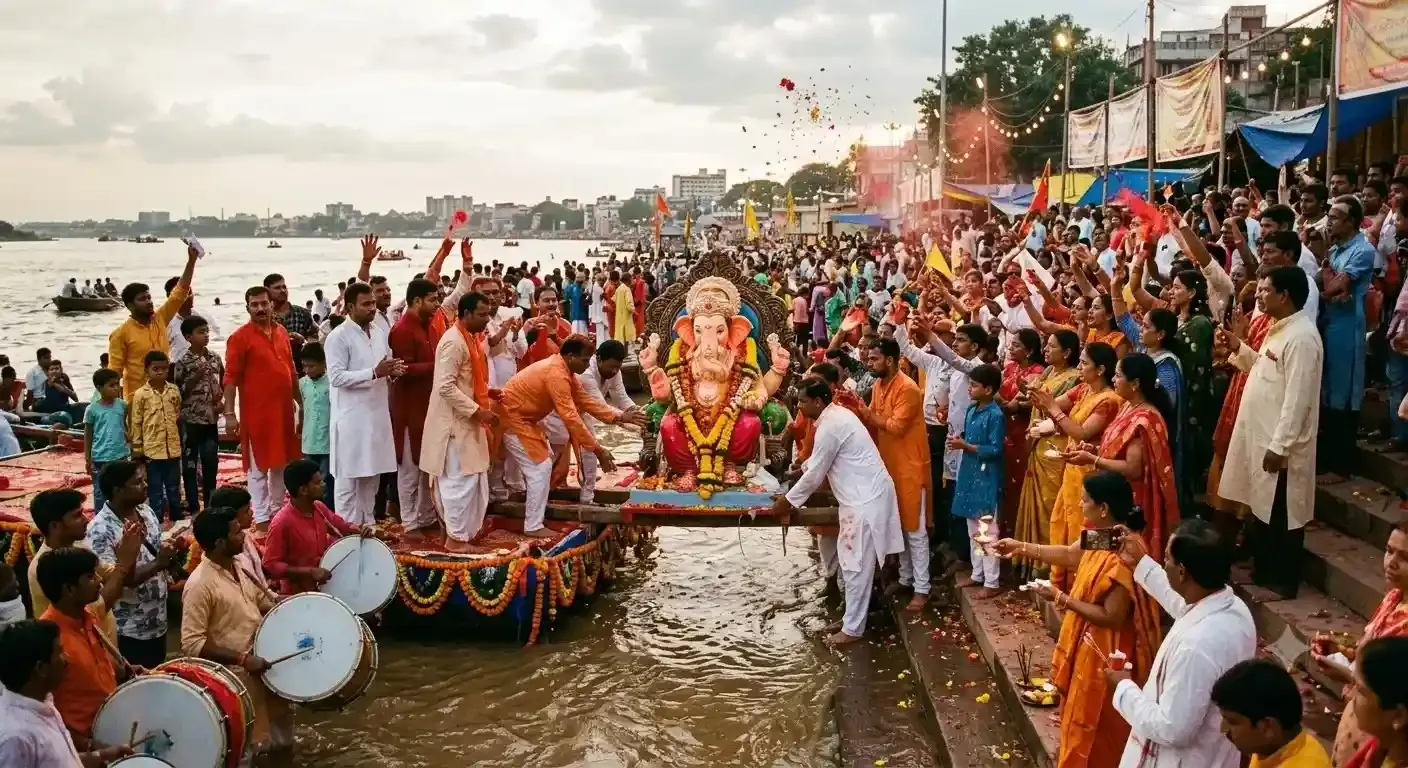
How to Celebrate Raksha Bandhan Devotionally 2026: Puja Vidhi, Mantra & Muhurat
Observe Raksha Bandhan 2026 as a genuine act of devotion — the correct muhurat, step-by-step puja vidhi, the Sanskrit Raksha Sutra mantra to recite while tying the thread, and the wider Shravana Purnima observances that share this sacred day.
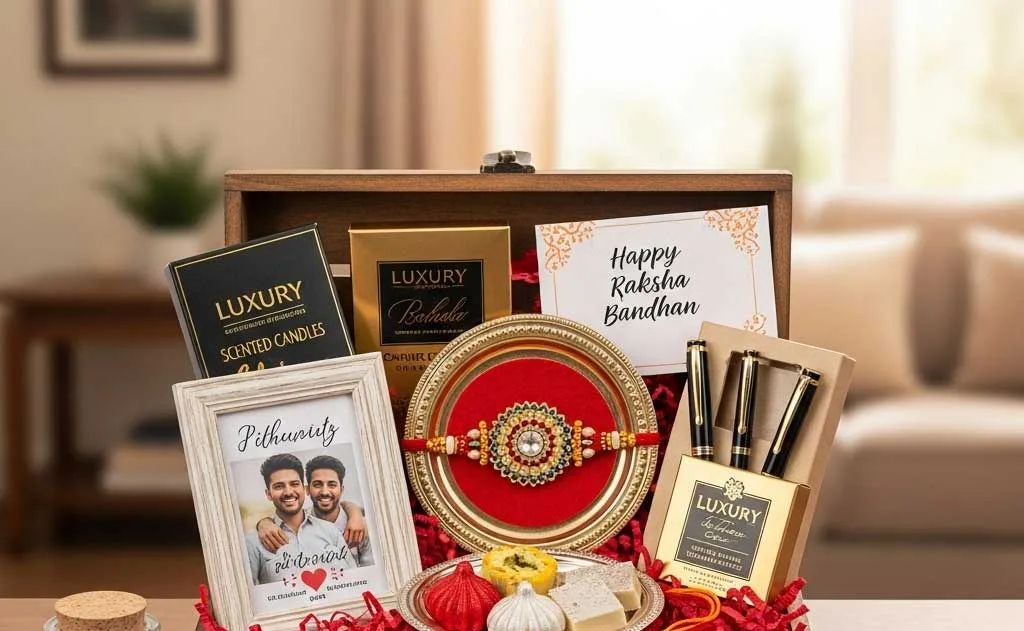
Observe Raksha Bandhan 2026 as a genuine act of devotion — the correct muhurat, step-by-step puja vidhi, the Sanskrit Raksha Sutra mantra to recite while tying the thread, and the wider Shravana Purnima observances that share this sacred day.
Quick answer: Raksha Bandhan 2026 falls on Friday, 28 August, on the Shravana Shukla Purnima. The shubh muhurat for tying the rakhi in New Delhi runs from 5:57 AM to 9:48 AM IST, and because the Purnima Tithi prevails at sunrise on the 28th and Bhadra concludes before that sunrise, the morning window carries no Bhadra restriction this year. Observe it devotionally: consecrate the rakhi before your deity, offer the first thread to Krishna, Hanuman or Ganesha, then tie it on the right wrist while reciting the Raksha Sutra mantra three times.
Raksha Bandhan is often reduced to a rakhi, a box of sweets and a gift envelope. In its original form it is something far larger — a Raksha Sutra, a consecrated thread of protection tied with mantra, invoking divine safeguarding over a life. The siblings' bond is the most beautiful expression of that ritual, but it is not the whole of it.
This guide shows you how to observe Raksha Bandhan 2026 as a genuine act of devotion: the correct muhurat, the step-by-step puja vidhi, the Sanskrit mantra to recite while tying the thread, and the wider Shravana Purnima observances that share this sacred day.
Quick Answer: Raksha Bandhan 2026 at a Glance
| Detail | Timing |
|---|---|
| Festival date (India) | Friday, 28 August 2026 |
| Occasion | Shravana Shukla Purnima (full moon of Shravana) |
| Shubh Muhurat (Delhi) | 5:57 AM to 9:48 AM IST |
| Purnima Tithi begins | 9:08 AM IST, 27 August 2026 |
| Purnima Tithi ends | 9:48 AM IST, 28 August 2026 |
| Bhadra Kaal | Concludes before sunrise on 28 August; the morning window is clear |
Raksha Bandhan 2026 falls on Friday, 28 August, observed on the Purnima Tithi of the Hindu month of Shravana, with the thread ceremony window for New Delhi running from 5:57 AM to 9:48 AM — a duration of three hours and fifty-one minutes. Because the Purnima Tithi is present at sunrise on the 28th and Bhadra concludes before that sunrise, the morning ceremony carries none of the usual Bhadra restriction this year. If the morning window is missed, the Aparahna period in the afternoon is the next acceptable option; the ritual retains its validity through the day, but the earlier, the better.
A note on the date confusion: because the Purnima Tithi spans both 27 and 28 August, some calendars display the 27th. The governing principle is udaya vyapini — the tithi must prevail at sunrise. In India, that points cleanly to the 28th.
Why Raksha Bandhan Is a Spiritual Observance, Not Only a Sibling Festival
The word raksha means protection. Bandhan means binding. What is being bound is not a wrist — it is a vow.
In the Vedic worldview, a thread charged with mantra becomes a kavacha, an armour. The same principle governs the sacred thread of Upanayana, the kankana bound at a wedding, and the protective thread a priest ties around your wrist at a temple. Raksha Bandhan is the annual, householder-scale expression of that idea: a family gathers, invokes the Divine, and asks that a shield be placed over someone they love.
Understood this way, the festival is not limited to brothers and sisters. A thread may be tied by a priest to a patron, by a wife to a husband, by a daughter to a father, by a disciple to a guru, or by a devotee to the deity itself. The love is the vehicle; the protection is the point.
The Scriptural Roots of the Raksha Sutra
Four accounts anchor the tradition, and any devotional observance is enriched by reading them aloud to children on the morning of the festival.
Goddess Lakshmi and King Bali
The most celebrated of the Puranic accounts describes Goddess Lakshmi tying a cotton string around the wrist of King Bali in order to secure the return of Lord Vishnu — establishing that the rakhi is not an ornament but a Raksha Sutra, a thread of protection. This is the episode invoked in the traditional mantra recited while tying the rakhi.
Indrani and Devendra
Before a decisive battle against the asuras, Sachi Devi — on the counsel of Brihaspati — bound a thread consecrated with mantra around Indra's wrist. He returned victorious. This is the earliest form of the ritual: a wife's protective vow, not a sister's.
Draupadi and Krishna
When Sri Krishna's finger bled, Draupadi tore a strip from her garment and bound the wound without hesitation. The debt was repaid at the Kaurava court, when cloth became endless. The lesson is precise: a small act of protection offered in love is repaid by the Divine beyond all proportion.
Yamuna and Yama
Yamuna tied a thread on her brother Yama, the lord of death, who granted her immortality in return and declared that any brother who receives a rakhi from his sister and pledges her protection shall be granted long life.
Raksha Bandhan Puja Vidhi: Step by Step
Perform this in the morning muhurat, after bathing, in front of your home altar.
1. Prepare the space
Bathe before sunrise. Wash the puja area, draw a small rangoli, and light a lamp. Wear traditional clothing — yellow, red or saffron is customary for Shravana Purnima.
2. Assemble the puja thali
Arrange on a steel or brass plate:
- The rakhi (or several)
- Roli / kumkum and chandan (sandalwood paste)
- Akshata — unbroken rice grains mixed with a pinch of turmeric
- A ghee diya and incense
- Sweets — preferably homemade, offered first to the deity
- A kalash of water with a few tulsi leaves
- Fresh flowers, and a coconut if available
3. Invoke Ganesha
Every auspicious act begins here. Offer durva grass and modak or any sweet, and recite the Ganesha mantra three times, asking that the observance proceed without obstruction.
4. Sanctify the rakhi
Place the rakhi on the thali before the deity. Sprinkle it with kumkum and akshata, pass it gently through the incense smoke, and let it rest at the feet of the murti for the duration of the puja. This is the step most families skip — and it is the step that turns a decorative band into a Raksha Sutra. An unconsecrated rakhi is jewellery. A consecrated one is armour.
5. Tie the first rakhi to the Divine
Before any human wrist, offer the first rakhi to your ishta devata. Traditionally:
- Sri Krishna — for the Draupadi connection, the most classical choice
- Hanuman — for protection, courage and the removal of fear
- Ganesha — for obstacle-free family harmony
- Shiva — especially fitting in the closing days of Shravana
Tie it to the wrist of the murti, or place it at the feet if the form does not permit.
6. Perform aarti for your sibling
Have your brother sit facing east or north. Apply a tilak of roli and chandan on his forehead, press akshata onto it, and perform aarti with the lit diya in three clockwise circles.
7. Tie the rakhi with the mantra
Tie the thread on the right wrist while reciting:
येन बद्धो बली राजा दानवेन्द्रो महाबलः। तेन त्वामनुबध्नामि रक्षे मा चल मा चल॥
Yena baddho balī rājā dānavendro mahābalaḥ, tena tvām anubadhnāmi rakṣe mā cala mā cala.
Meaning: By that very thread which bound Bali, the mighty king of the daityas, I now bind you. O Raksha, do not waver, do not waver. Recite it three times. If Sanskrit is difficult, say it slowly and imperfectly — intention carries the mantra.
8. Offer sweets and receive blessings
The sister offers the first sweet to her brother's mouth. The brother offers his pledge of protection, gives a gift, and — if he is elder — places his hand on her head in blessing. Younger brothers touch the elder sister's feet.
9. Close with prayer and prasad
Recite the Vishnu Sahasranama, the Hanuman Chalisa, or a family stotra. Distribute prasad. Do not let the diya be extinguished by blowing — let it burn down or fan it out.
The Wider Shravana Purnima: What Else This Day Carries
Raksha Bandhan does not stand alone. Shravana Purnima is one of the densest days in the Hindu calendar, and knowing what your own tradition observes deepens the day considerably.
- Upakarma (Avani Avittam / Janeu Purnima): Brahmin communities perform the annual renewal of the yajnopavita, the sacred thread, with prayaschitta for lapses in daily observance. Gayatri Japam follows on the next day — 1,008 recitations of the Gayatri mantra. If your family observes Upakarma, the sacred thread ceremony precedes the rakhi.
- Narali Purnima: in Konkan and coastal Maharashtra, fisherfolk offer coconuts to Varuna, lord of the waters, marking the safe reopening of the seas after the monsoon.
- Jhulan Purnima: in Bengal, Odisha and Vrindavan, the swing festival of Radha-Krishna concludes on this day, the divine couple gently rocked on a decorated jhula amid kirtan.
- Pavitropana: in Gujarat, devotees offer a pavitra — a thread garland — to Lord Shiva, closing the Shravana observances with the ritual purification of any incompleteness in the month's worship.
- Kajari Purnima: in Madhya Pradesh, Bihar and eastern Uttar Pradesh, mothers observe a vrat for the wellbeing of their sons, sowing barley shoots seven days prior.
- Satyanarayana Vrata: every Purnima is fit for the Satyanarayana Puja, and Shravana Purnima especially so. Many families perform the katha in the evening after the morning rakhi ceremony.
Devotional Practices That Deepen the Day
- Observe a partial fast until the rakhi is tied. Take only water or fruit in the morning; break the fast with the sweet your sibling offers you.
- Visit a temple together. Have the rakhi blessed at the sanctum before tying it. Krishna, Hanuman and Shiva temples are the natural choices; in the closing days of Shravana, a Shiva temple carries particular weight.
- Perform daan. Donating white items — milk, rice or sugar — at a Shiva temple is a traditional Shravana Purnima offering, as is feeding the needy. Sponsor a meal, contribute to a goshala, or fund a child's school year in your sibling's name.
- Tie a rakhi where there is no one to tie it — soldiers, hospital staff, temple priests, elderly neighbours living alone, children in shelters. The Raksha Sutra was never meant to be exclusive.
- Read the katha aloud. Children who grow up hearing why the thread exists carry the festival differently than children who grow up receiving gifts on it.
If You Have No Brother, or No Sister
The tradition holds regardless.
- Tie the rakhi to Sri Krishna, Hanuman or Ganesha and treat the Divine as your brother. This is a complete and classical observance, not a substitute.
- Tie a rakhi to a cousin, a close friend, a mentor, a colleague — the vow of protection defines the relationship, not blood.
- Sisters may tie rakhis to each other; the practice has grown widely and rests comfortably within the spirit of the day.
- Tie a rakhi to a tulsi plant or a peepal tree, invoking the protection of nature — an old village custom now returning.
Raksha Bandhan 2026 for NRI Families
This is where most diaspora families go wrong, and the correction is simple. The rule: the tithi should prevail at your local sunrise. Because Purnima Tithi ends at 9:48 AM IST on 28 August — early UTC morning — the correct local date differs by region.
| Region | Likely local observance date |
|---|---|
| India, Nepal, Sri Lanka | Friday, 28 August 2026 |
| UAE, Oman, Qatar, Saudi Arabia | Friday, 28 August 2026 |
| Singapore, Malaysia | Friday, 28 August 2026 |
| Australia, New Zealand | Friday, 28 August 2026 |
| UK and Europe | Thursday, 27 August 2026 |
| USA and Canada | Thursday, 27 August 2026 |
For families in the UK, Europe and North America, Purnima prevails at local sunrise on 27 August rather than 28 August, which is why North American and British panchangas typically list Rakhi a day earlier than Indian ones. Confirm with your local temple or the panchanga your family follows — regional traditions vary, and many diaspora households deliberately keep the Indian date so that the ceremony is shared with relatives back home over a video call.
If you are following India timings from abroad, the 5:57 AM to 9:48 AM IST window converts to:
| Location | Window (local time) |
|---|---|
| New York / Toronto (EDT) | 8:27 PM, 27 Aug to 12:18 AM, 28 Aug |
| Chicago (CDT) | 7:27 PM to 11:18 PM, 27 Aug |
| San Francisco (PDT) | 5:27 PM to 9:18 PM, 27 Aug |
| London (BST) | 1:27 AM to 5:18 AM, 28 Aug |
| Dubai (GST) | 4:27 AM to 8:18 AM, 28 Aug |
| Singapore (SGT) | 8:27 AM to 12:18 PM, 28 Aug |
| Sydney (AEST) | 10:27 AM to 2:18 PM, 28 Aug |
Posting a rakhi overseas? Have it consecrated at your home altar before mailing. When it arrives, the recipient can perform the tilak and aarti themselves, or a parent can tie it on their behalf while the sister watches on video — a practice temples now readily endorse.
What to Avoid on Raksha Bandhan
- Do not tie during Bhadra Kaal. Traditional practice avoids the ceremony during Bhadra entirely. This year, the morning window is free of it.
- Do not use a black thread or black rakhi. Black is inauspicious for a protective binding.
- Do not tie on the left wrist. The right is prescribed for males.
- Avoid non-vegetarian food and alcohol — it remains Shravana Masam until the day closes.
- Do not discard last year's rakhi in the bin. Immerse it in flowing water, bury it at the root of a tree, or return it at a temple.
- Avoid arguments and harsh words with siblings on this day above all others. The vow is made hollow by it.
Closing Thought
Strip away the shopping and what remains is startlingly simple: once a year, on the full moon that closes the most sacred month of the year, a family stands before its deity and asks that someone be kept safe. The thread is only the receipt. Tie it in the morning light. Say the mantra even if the Sanskrit stumbles. Offer the first one to the Lord. The rest will take care of itself. Shubh Raksha Bandhan from all of us at Hindutone.
Frequently Asked Questions
Is Raksha Bandhan 2026 on 27 or 28 August?
In India it is Friday, 28 August 2026. The confusion arises because the Purnima Tithi spans both dates — but the tithi is present at sunrise on the 28th, which settles it. Families in North America and the UK will generally observe it on 27 August by local reckoning.
What is the shubh muhurat for tying rakhi in 2026?
The auspicious window begins after sunrise, at approximately 5:57 AM, and continues until 9:48 AM IST, with no Bhadra Kaal obstruction this year. Regional panchangas may set the start anywhere between 5:28 AM and 6:23 AM depending on the calendar tradition your family follows.
Can I tie a rakhi after 9:48 AM?
Yes. The tithi's conclusion ends the most auspicious window, not the festival. The Aparahna period in the afternoon is the recommended alternative.
Which mantra should be recited while tying the rakhi?
Yena baddho balī rājā dānavendro mahābalaḥ, tena tvām anubadhnāmi rakṣe mā cala mā cala — recited three times as the thread is bound to the right wrist.
Can a sister tie a rakhi to a deity?
Yes, and it is a complete observance in itself. Krishna, Hanuman and Ganesha are the traditional recipients.
What should the rakhi be made of?
Cotton, silk or a simple mauli thread in red, yellow or saffron. Ornamentation is optional; consecration is not. The original Raksha Sutra of the Lakshmi-Bali account was a plain cotton string.
Do brothers need to give a gift?
The scriptural obligation is a pledge of protection, not a purchase. A gift is customary and warm, but it is the vow that constitutes the ritual.
You might also like
Ganesh Chaturthi 2026 in Fahaheel: Mandapam Ideas, Where to Buy & Visarjan
Ganesh Chaturthi 2026 in Salmiya: Mandapam Ideas, Where to Buy & Visarjan
Ganesh Chaturthi 2026 in Doha: Mandapam Ideas, Where to Buy & Visarjan