Garba Playlist for UK Hindus 2026: Multi-Language Navratri Songs for London, Leicester & Beyond
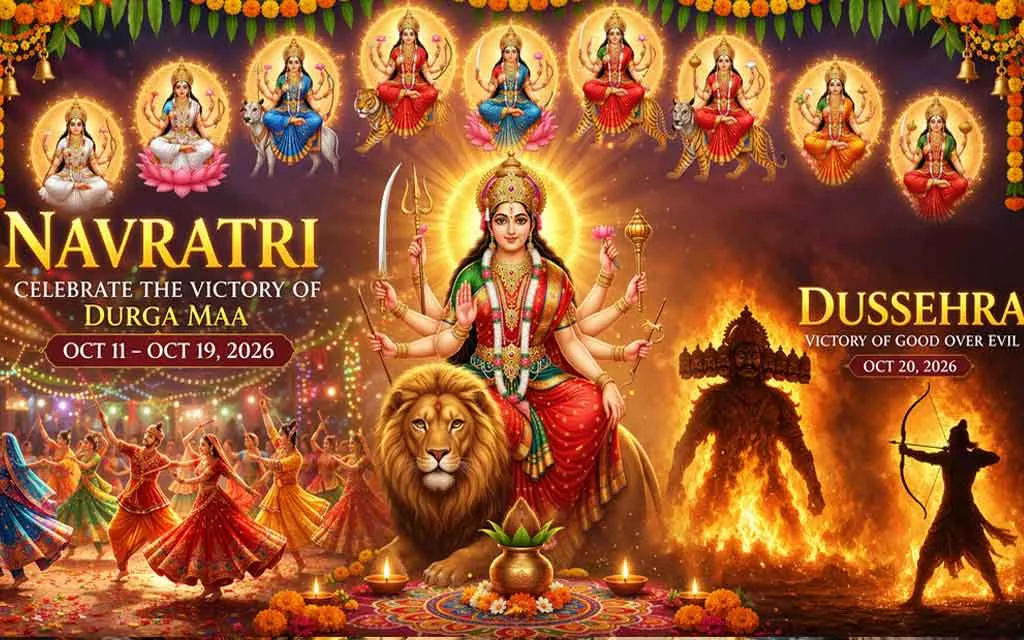
Navratri 2026 runs from Sunday 11 to Monday 19 October, while the UK is still on British Summer Time. Here is a multi-language Garba playlist plan for London, Leicester, Birmingham, Manchester, Bolton, Preston and Coventry, with hall licensing, timing and family tips.
Navratri 2026 runs from Sunday 11 to Monday 19 October, while the UK is still on British Summer Time. Here is a multi-language Garba playlist plan for London, Leicester, Birmingham, Manchester, Bolton, Preston and Coventry, with hall licensing, timing and family tips.
Quick answer: Navratri 2026 runs from Sunday 11 to Monday 19 October, with Dussehra on Tuesday 20 October. The UK is still on British Summer Time, 4 hours 30 minutes behind India, until 25 October. The busiest Garba nights fall on 10-11 and 17-18 October. A good UK playlist starts with aarti and traditional garbis, builds through Gujarati folk and non-stop sets, adds a short Bollywood peak, and gives other communities a devotional slot.
Last updated: 9 October 2026. Song credits were checked against film soundtrack listings and music catalogues; clock-change and Temporary Event Notice details are from GOV.UK. Local arrangements differ, so confirm them with your mandir or organiser.
This is the UK edition of our Garba playlist for USA Hindus, alongside the Canada and Australia versions. The song lists here are short; for the full lists see our Gujarati Garba songs playlist and our Bollywood Garba and Dandiya playlist.
Nine nights, not just weekends
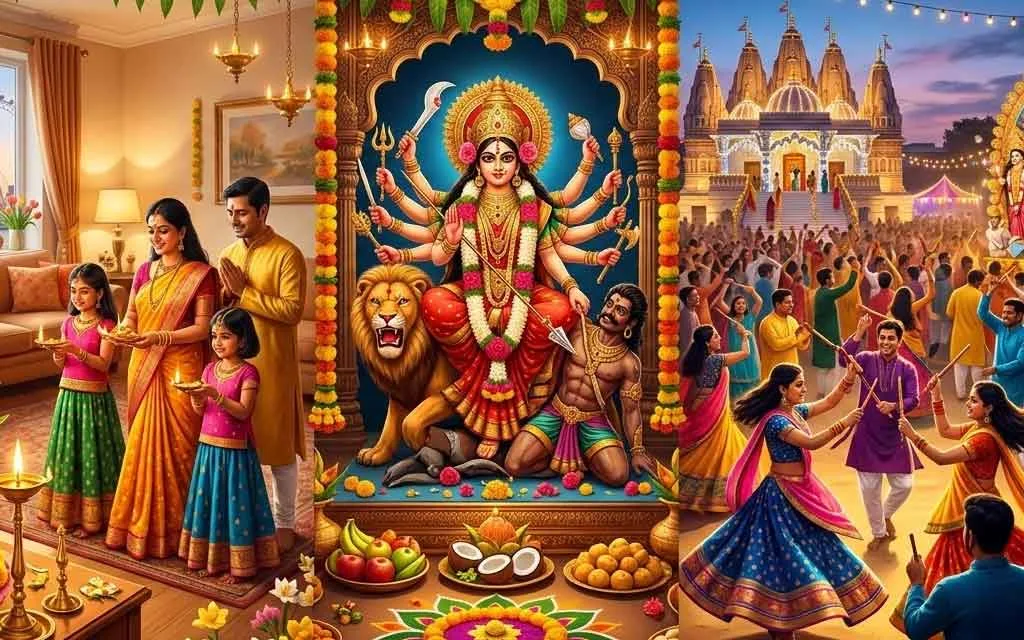
Britain's Gujarati community has deep roots, and in many towns Navratri is still kept as a nine-night festival rather than a weekend party. Mandirs and community centres often run Garba every evening from Ghatasthapana on Sunday 11 October to the ninth night on Monday 19 October. Weeknight sessions are shorter and more devotional, with families coming after work and school. The weekend nights of 10-11 and 17-18 October draw the biggest crowds and the longer playlists.
Because the clocks do not go back until Sunday 25 October 2026, every Navratri night this year is on BST. Families who follow muhurat and tithi times published for India should subtract 4 hours 30 minutes, not the winter gap of 5 hours 30 minutes. Our complete Navaratri 2026 guide for Hindus in the UK has the day-wise dates.
Where Garba happens across the UK
- London: Wembley, Harrow, Southall and Croydon host mandir Garbas and large hall events through all nine nights. See Garba 2026 in London.
- Leicester: the city's large Gujarati community holds Garba at mandirs, community centres and larger venues. See Garba 2026 in Leicester.
- Birmingham and Coventry: mandir and community-centre Garbas, often combined with Durga Puja events for Bengali families.
- Manchester, Bolton and Preston: long-established Gujarati communities in the North West hold regular Navratri Garbas at mandirs and community halls.
For listings and Ghatasthapana times, see our Navratri 2026 UK city-by-city guide, the Garba 2026 UK hub and how Gujaratis and South Indians celebrate Navratri in the UK.
Halls, licensing and councils
- Premises licence: many mandirs, community centres and hired halls already hold a premises licence. Ask the venue what it covers.
- Temporary Event Notice: if a licensable activity, such as selling alcohol or entertainment that the venue's licence does not cover, is involved, organisers may need a TEN from the local council. A TEN is only for events with fewer than 500 people at all times, including staff; larger events need other arrangements.
- Noise conditions: councils and licences can set limits on sound levels and finish times. Keep doors closed and bass moderate in residential streets.
- School halls and leisure centres: expect fixed hire times, rules about shoes on sports floors and a strict clear-out. Plan slower songs for the last 15 minutes while volunteers stack chairs.
Mandir Garba vs hall night
| Mandir Garba | Hall or ticketed night | |
|---|---|---|
| When | All nine nights, after aarti | Mainly Friday and Saturday |
| Music | Traditional garbis and folk songs | Non-stop sets and a Bollywood block |
| Length | 1.5 to 2.5 hours | 3 to 4 hours |
| Crowd | Families and elders | Families, students and young professionals |
Short song lists
Traditional Gujarati garbis
- Ramti Aave Maadi
- Gori Radha Ne Kalo Kaan
- Tara Vina Shyam
- Kesariyo Rang
- Dholi Taro Dhol Baaje (Hum Dil De Chuke Sanam, 1999)
Modern Gujarati non-stop
- Rangtaali (Aishwarya Majmudar)
- Zankaar (Geeta Rabari)
- Tahukar (Kirtidan Gadhvi)
- Garbe Ghumta (Umesh Barot, 2026)
- Khalasi (Aditya Gadhvi and Achint, Coke Studio Bharat)
Bollywood Garba and Dandiya
- Nagada Sang Dhol (Ram-Leela, 2013)
- Chogada (Loveyatri, 2018)
- Dholida (Gangubai Kathiawadi, 2022)
- Kamariya (Mitron, 2018)
- Udi Udi Jaye (Raees, 2017)
- Shubhaarambh (Kai Po Che!, 2013)
Punjabi devotional bhents
For Punjabi Hindu families in Southall, Birmingham and beyond, a short block of dhol-heavy Mata ki bhents keeps the energy devotional; see our Punjabi Mata bhents and jagran songs guide. If bhangra-style dhol tracks are mixed in at a hall night, choose clean versions and keep them brief.
Bengali, Telugu and Tamil segments
- Bengali families: a few minutes of dhak and dhunuchi, as at Durga Puja. See our Durga Puja 2026 dates guide.
- Telugu families: traditional Bathukamma folk songs around the flower stack. See Bathukamma 2026 in the UK.
- Tamil families: a short devotional interlude for Navaratri Golu, the home doll display for the Devi.
Running order for a UK Garba night
- Aarti: aarti to Amba at the start, as most mandirs do.
- Opening garbis: Ramti Aave Maadi and slow traditional songs; elders lead the first rounds.
- Middle: folk favourites and a Gujarati non-stop set, with a beginners' circle.
- Peak (weekends): a Bollywood block, faster non-stop tracks and a short dhol, dhak or Bathukamma segment.
- Close: slow down for the final aarti and prasad before the hall's finish time.
Organiser tips for the UK
- Mix: as a rule of thumb, about 50% Gujarati, 30% Bollywood and 20% devotional and other languages. Weeknight mandir sessions can be almost all traditional.
- Clean versions: use original soundtracks or radio edits at mandirs and family nights, and preview remixes in full.
- Weeknights: keep school-night sessions shorter and finish on time so families with children can come every evening.
- Generations: many UK families have three or four generations on one floor; give elders a slower circle and seating close to the dancing.
- Weather: October evenings are cool and often wet; provide a coat area and a mat for wet shoes.
Helping UK-born children join the circle
- Practise the basic two-clap step at home; our Garba for beginners guide explains it.
- Bring children to a weeknight mandir Garba first, then to a weekend hall night.
- Explain the aarti and the Garbo lamp at the centre so the dance has meaning, not only steps.
For Dussehra, see Dussehra 2026 in the UK, region by region. We also have a Garba playlist for Dubai and the UAE.
Frequently asked questions
When are the main Garba nights in the UK in 2026?
Sharad Navratri 2026 runs from Sunday 11 to Monday 19 October, and Dussehra is Tuesday 20 October. Many UK mandirs and community groups hold Garba on all nine nights, with the busiest nights on the weekends of 10-11 and 17-18 October.
What is the time difference between the UK and India during Navratri 2026?
The UK is on British Summer Time until the clocks go back on Sunday 25 October 2026, so throughout Navratri the UK is 4 hours 30 minutes behind India. After 25 October the gap becomes 5 hours 30 minutes.
Does a Garba night in a hall need a licence?
It depends on the venue and activities. Many halls already hold a premises licence. If a licensable activity such as selling alcohol, or entertainment not covered by the venue's licence, is involved, organisers may need a Temporary Event Notice (TEN), which covers events with fewer than 500 people at all times, including staff. Check with the venue and the local council.
What songs are played at Garba in Leicester and London?
UK Garbas usually open with traditional garbis to Amba such as Ramti Aave Maadi, continue with folk favourites and non-stop sets like Rangtaali and Tahukar, and include film songs such as Nagada Sang Dhol, Chogada and Dholida. Many mandir Garbas stay mostly traditional.
What time do Garba nights finish in the UK?
Finish times are set by the venue, its licence conditions and the local council. School halls and leisure centres often need the hall cleared by a fixed time, so ask the hirer and plan the final aarti before it.
How can UK-born children learn Garba?
Practise the basic two-clap step at home to a few songs, join a weeknight mandir Garba where the pace is gentler, and dance in an inner circle with an adult. Many mandirs and dance groups run short workshops before Navratri.
Editor's note (9 October 2026)
This page is based on the site owner's draft and rewritten for UK readers on 9 October 2026. We verified song credits, the BST end date and Temporary Event Notice limits, removed romantic film songs that are not Garba songs, and kept the Punjabi section devotional. We list song titles only, not lyrics. Licensing and venue conditions vary by council, so confirm them locally.
You might also like
Garba Playlist for Australia Hindus 2026: Multi-Language Navratri Songs for Sydney, Melbourne & Beyond
Garba Playlist for Canada Hindus 2026: Multi-Language Navratri Songs for Toronto, Vancouver & Beyond
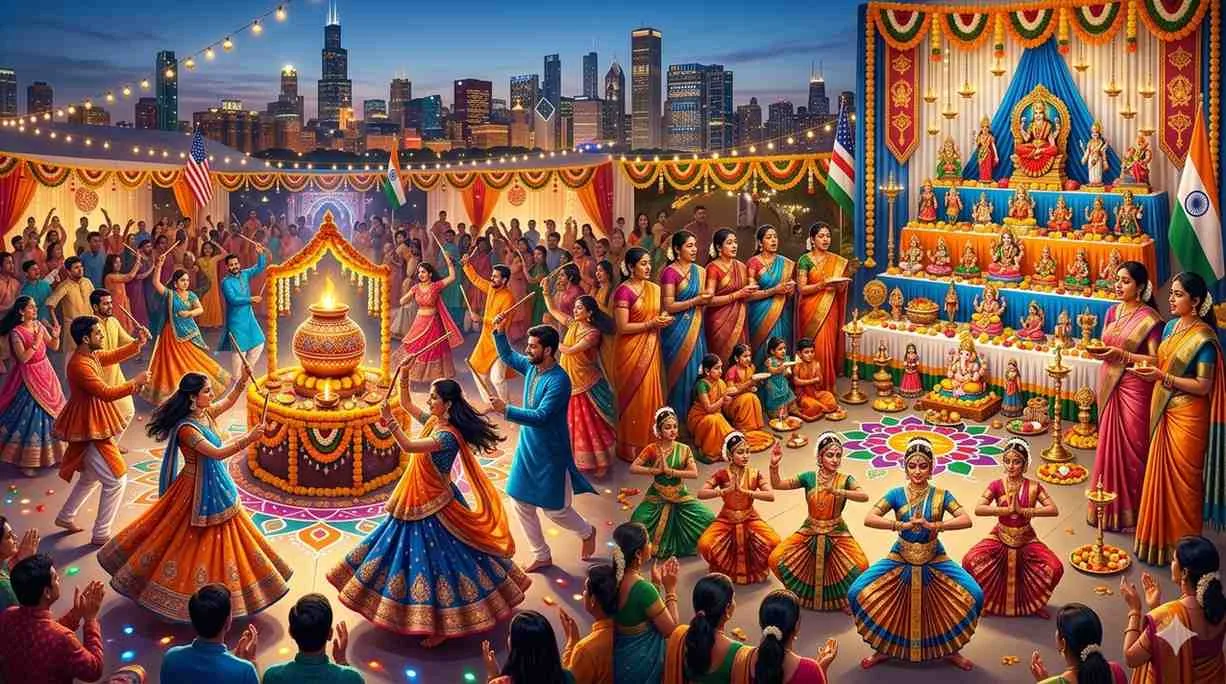
Garba Playlist for USA Hindus 2026: Multi-Language Navratri Songs for Community Garba Nights