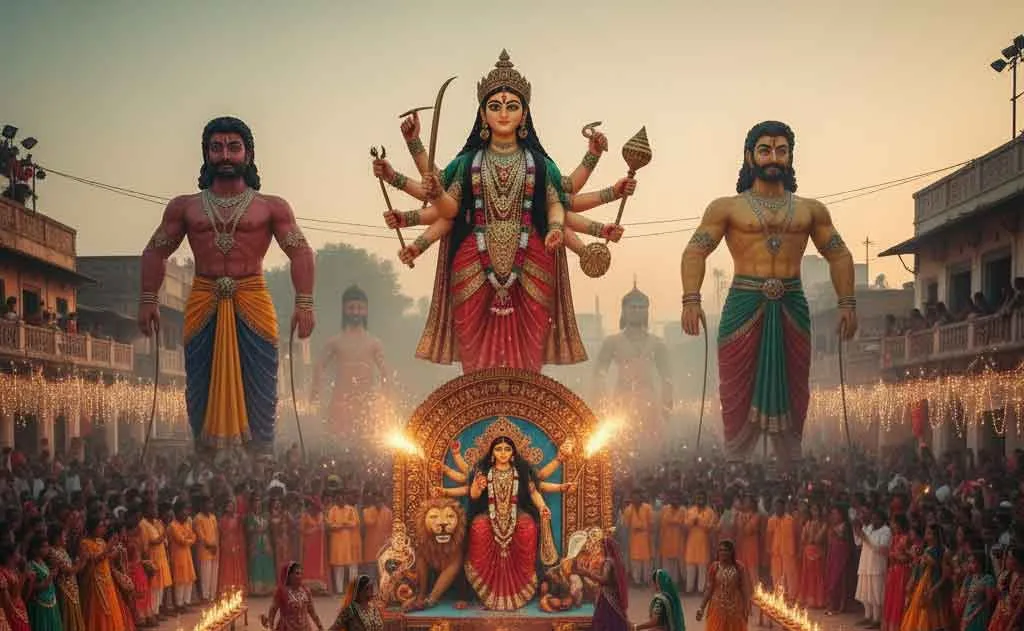
Garba for Beginners: Easy Steps, Circle Etiquette and Garba with Kids (Navratri 2026)
A friendly first-timer's guide to Garba: the basic two-clap and three-clap steps explained simply, how to join and move with a circle, inner and outer rings, etiquette around Mataji's image and the aarti, Garba with children and elders, how non-Gujarati and non-Hindu friends can join respectfully, and staying safe on long Navratri nights.
A friendly first-timer's guide to Garba: the basic two-clap and three-clap steps explained simply, how to join and move with a circle, inner and outer rings, etiquette around Mataji's image and the aarti, Garba with children and elders, how non-Gujarati and non-Hindu friends can join respectfully, and staying safe on long Navratri nights.
Quick answer: Garba is a circular devotional dance for the Goddess during Navratri. As a beginner, learn the two-clap step first, then the three-clap (teen taali) pattern; join an outer, slower circle and move with it (in many circles this is anticlockwise around the Mataji's image or lamp). Bow to the Mataji, stand for the aarti, never cross the centre, and keep it alcohol-free. Navratri 2026 is Sunday 11 to Monday 19 October in India (Drik Panchang); many Garba nights abroad fall on the weekends of 10 to 11 and 16 to 18 October.
Your first Garba can feel overwhelming: hundreds of people moving in perfect rhythm, the drums getting faster, and everybody seemingly born knowing the steps. The good news is that Garba is one of the most beginner-friendly dances there is. The steps repeat, the circle carries you, and people are generally happy to help a newcomer. This guide is for anyone stepping into a circle for the first time, whether you grew up in a Gujarati home abroad and never learned, come from another Indian community, or are a friend who has been invited for the first time.
What Garba is, in one minute
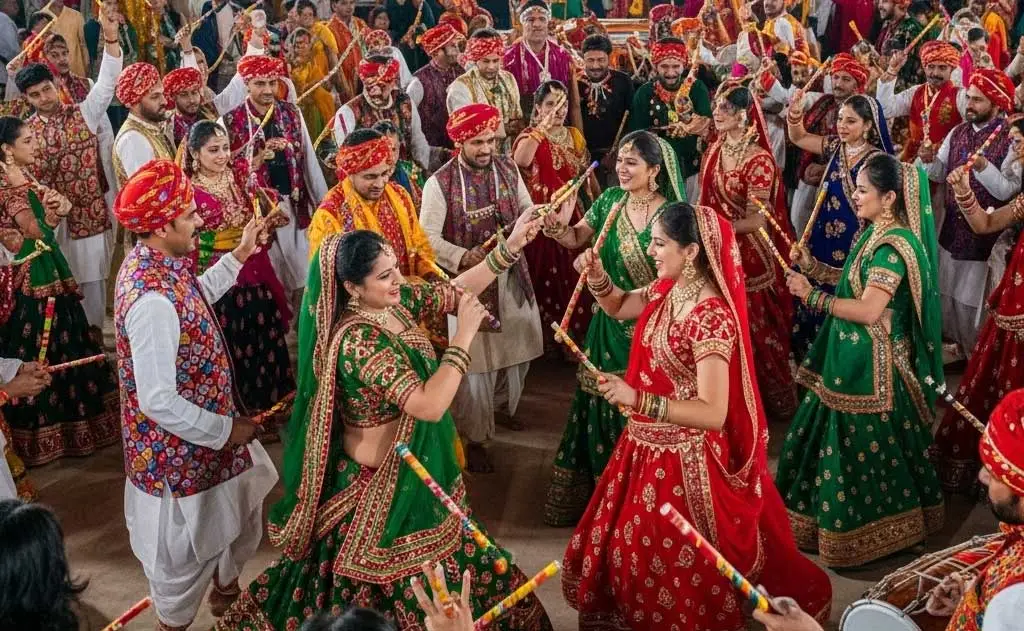
Garba is danced in a circle around a Garbo (a clay pot with a lamp inside) or an image of the Goddess, called Mataji or Ma Amba in Gujarat. As traditionally told, the lamp in the pot represents life and the Divine within, and the dance is an offering to Durga, Amba or Shakti during the nine nights of Navratri. That is why most Garba evenings begin with an aarti and why it is treated as worship, not just a party. For the deeper meaning, read Garba meaning and spiritual significance.
The basic steps, described simply
Steps and names vary between families, regions and teachers, so treat these as starting points. Watch the people in front of you and copy them.
1. The two-clap step (be taali). This is where nearly everyone begins.
- Step forward with your right foot, and as it lands, bring your hands together for a clap on the right side.
- Step forward with your left foot, and clap on the left side.
- Add a gentle turn: as you step, let your body open slightly toward the outside of the circle, then back toward the centre, with your hands sweeping down and up.
- Keep moving forward around the circle the whole time. Small steps are fine.
2. The three-clap step (teen taali). Once two claps feel natural, the three-clap pattern adds one more beat.
- Step and clap, step and clap, then a third step and clap, often with a little turn or a tap of the foot.
- Then repeat the pattern, leading with the other side if the circle does so.
- Many dancers make a small full turn every few counts. Skip turns until your footing is confident.
3. Following the tempo. Garba songs usually start slow and speed up. When the music gets fast, take smaller steps and keep the claps light; it is perfectly fine to step to the outside of the circle and rejoin when the pace drops.
As the night goes on you may see more complex patterns and, later in the evening, Dandiya Raas with sticks. Learn the difference in our guide to Garba vs Dandiya Raas.
How to join a circle
- Wait for a gap. Watch the circle for a few rounds, then step in where there is space, matching the direction and rhythm.
- Move with the circle. In many circles, dancers move anticlockwise around the centre, but direction customs vary. Never move against the flow.
- Choose your ring. Large events often form several concentric circles. In many venues the outer circles are slower and simpler, and the inner circles are faster with more complex steps. Beginners usually feel most at ease on the outside.
- Leave the same way. Step outward, not across the circle, when you need a break.
- Bring a friend. Dancing behind someone who knows the steps is the quickest way to learn.
| Circle | Typical pace (varies by venue) | Who it suits |
|---|---|---|
| Outer ring | Slower, simpler steps | Beginners, children with parents, elders |
| Middle rings | Moderate pace, three-clap and turns | Confident dancers |
| Inner ring | Fastest, complex steps and spins | Experienced dancers |
| Side of the hall | Clapping and singing along | Anyone resting, elders, families with babies |
Garba etiquette: the devotional basics
Garba is joyful, but it is also worship of the Goddess. A few simple habits show respect:
- Bow to Mataji. When you arrive, fold your hands or bow before the Mataji's image or the Garbo before joining the circle.
- Respect the aarti. Most evenings begin, and many end, with an aarti. Stand still, face the Goddess, join the clapping or singing if you know it, and put your phone away. See Navratri mantras and prayers before Garba.
- Do not cross the centre. The centre belongs to the Goddess. Walk around the circle, not through it, and do not put bags, drinks or shoes near the shrine.
- Alcohol-free and smoke-free. Garba is a sacred space. Do not arrive drunk or bring alcohol.
- Mind your space. Keep elbows and claps within your space, avoid swinging bags, and leave heels and sharp jewellery at home.
- Follow the venue's rules on footwear, photography, prasad and parking. School gyms and community halls abroad often have strict rules.
Garba with kids and elders
Garba is a family celebration, and children often learn faster than adults. A few tips:
- Practise the two-clap step at home for a few days beforehand, to a Garba song.
- Keep toddlers and young children in the outer circle or at the edge, holding a parent's hand.
- Agree on a meeting point (for example, near the entrance or a particular pillar) in case anyone gets separated.
- Take breaks every few songs for water and a snack; children tire suddenly.
- Tell children the story behind it, so the aarti and the Mataji's image mean something to them.
For the story behind the festival, our parents' guide to explaining Navratri and Dussehra to children helps. Elders may prefer to dance a few rounds in the outer circle, clap and sing from the side, or join only for the aarti. All of these are part of Garba.
First Garba abroad: for non-Gujaratis and non-Hindu friends
Across the UK, North America, Australia, the Gulf and beyond, Garba nights are held in temple halls, community centres, school gyms and university halls, and many welcome friends from every background. If you have been invited:
- You are welcome. Garba is a celebration, and people are usually delighted to see newcomers join in.
- Ask your host what to wear; a kurta or a modest, bright outfit is enough.
- Garba is held in alcohol-free spaces, and the evening usually starts with prayer.
Our Garba dress guide explains chaniya choli, kediyu and footwear. Beyond clothes, a few simple courtesies help: stand respectfully at the aarti, even if you do not join the singing; try the outer circle and do not worry about mistakes; accept prasad with your right hand, or both hands; and ask questions. Most people love explaining what the Goddess and the Garbo mean.
For locations and calendars by city, see our Navratri 2026 USA city-by-city guide, the UK guide, the Canada guide and the overall Navratri 2026 NRI guide.
How to learn before Navratri
- Local classes. Many community groups and dance schools in cities with Gujarati communities run short Garba workshops in the weeks before Navratri.
- Temple sessions. Some temples hold practice evenings or simply welcome learners on the quieter early nights.
- Online videos. Beginner tutorials for the two-clap and three-clap steps are widely available; practise at slow speed first.
- Family and friends. An aunt, uncle or cousin who dances is the best teacher you will find.
- Go early in the evening. Circles are usually smaller and slower at the start, which is ideal for beginners.
Health and safety on long Garba nights
- Hydrate. Drink water before you go and between songs. Halls get hot quickly.
- Fasting dancers. If you are keeping a Navratri vrat, eat permitted foods before dancing, pace yourself and stop if you feel dizzy. See Navratri day-wise vrat recipes.
- Footwear. Dance barefoot only where allowed and the floor is clean; otherwise wear flat, soft-soled shoes. Avoid heels.
- Warm up. A few minutes of stretching helps calves, knees and ankles survive the fast songs.
- Listen to your body. Anyone pregnant, recovering from illness, or with heart or joint conditions should check with their doctor and dance gently.
- Getting home. Late finishes abroad mean cold car parks and late transport. Arrange a lift and carry a warm layer.
Navratri 2026 dates for Garba
Navratri 2026 runs from Sunday 11 October to Monday 19 October 2026 in India, with Durga Ashtami and Maha Navami both on Monday 19 October and Dussehra on Tuesday 20 October 2026 (Drik Panchang). Abroad, many community Garba nights fall on the weekends of 10 to 11 and 16 to 18 October; check your temple or organiser for their exact nights. Many dancers also follow the Navratri 2026 colours of the day. For Garba in its home state, see our Navratri 2026 Gujarat Garba guide.
Also read: Garba 2026 worldwide: all countries.
Frequently asked questions
How do you do Garba steps for beginners?
Start with the two-clap step: step forward with the right foot and clap, step with the left foot and clap, then turn slightly outward and inward with the hands following, all while moving gently around the circle. Once that feels natural, try the three-clap (taali) pattern. Watch the dancers in front of you and copy their feet; nobody expects perfection on the first night.
Which direction do you move in Garba?
In many circles, dancers move anticlockwise around the centre, with the Mataji's image or the lamp on their left. Customs vary by community and venue, so simply join in the direction the circle is already moving and never cut against it.
Can non-Gujaratis and non-Hindus dance Garba?
Yes. Garba circles are usually open and welcoming, and many community, temple and university Garba nights abroad warmly invite friends, neighbours and colleagues. Join respectfully: stand quietly for the aarti, follow the venue's dress and footwear rules, and keep the evening alcohol-free.
What should I not do at Garba?
Do not walk across the centre of the circle or near the Mataji's image without care, do not cut against the direction of a moving circle, do not film or talk loudly during the aarti, and do not bring alcohol. Avoid heels, swinging bags and loose sharp jewellery that can hurt neighbours.
Is Garba safe for kids and elders?
Yes, with some care. Keep young children in a slower outer circle or near the edge with an adult, agree a meeting point, and take regular water breaks. Elders and anyone with a health condition can dance at their own pace, rest often, or simply clap from the side, which is still part of Garba.
When is Navratri 2026 Garba?
Navratri 2026 runs from Sunday 11 October to Monday 19 October in India (Drik Panchang), with Dussehra on Tuesday 20 October. Abroad, many Garba nights fall on the weekends of 10 to 11 and 16 to 18 October; check your local temple or community organiser for their exact nights.
Editor's note (7 October 2026)
We wrote this beginner's guide in October 2026. Step names, circle directions and venue rules vary between communities and organisers; we describe common practice only. Dates follow Drik Panchang for India. We do not list specific events, organisers, venues or prices; check your local temple or community group.
Related guides
You might also like
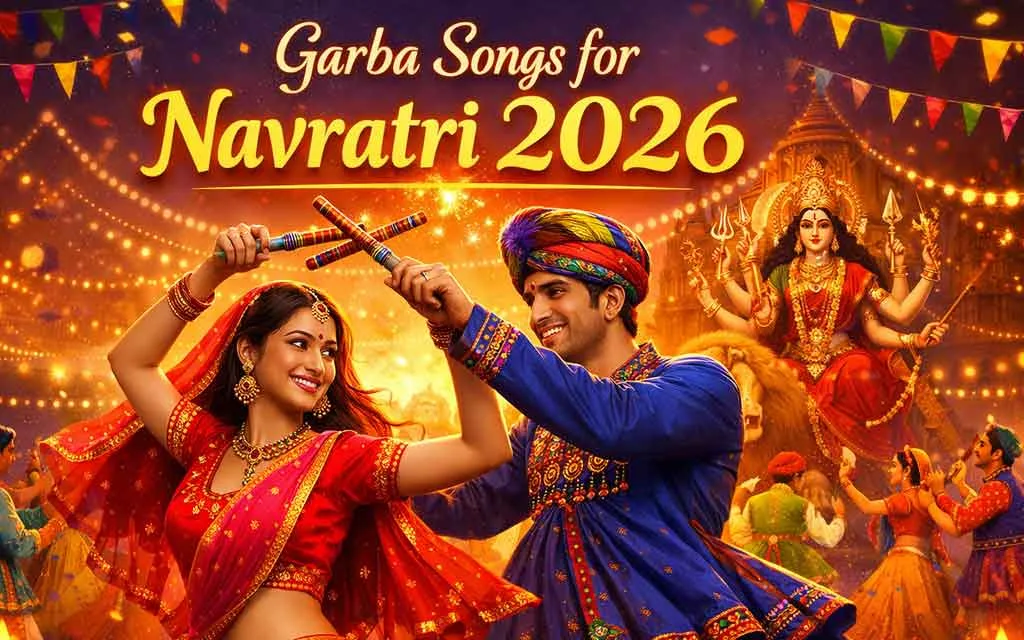
Garba vs Dandiya Raas: The Difference Explained for Navratri 2026
Navratri 2026 Wishes, Messages, Quotes and Instagram Captions: Day-Wise, Family, Work and Garba
Garba Meaning and Spiritual Significance: Why We Dance Garba in Navratri