Explaining Navratri and Dussehra to Children: A Parent's Guide
When your child asks "What is Navratri?" or "Why do we celebrate Dussehra?", you want to give them an answer that's both meaningful and age-appropriate.
When your child asks "What is Navratri?" or "Why do we celebrate Dussehra?", you want to give them an answer that's both meaningful and age-appropriate.
When your child asks "What is Navratri?" or "Why do we celebrate Dussehra?", you want to give them an answer that's both meaningful and age-appropriate. Whether you're raising children in India or abroad as part of the NRI community, these festivals offer beautiful opportunities to connect kids with their cultural heritage.
The Simple Story: Good Always Wins
The easiest way to explain both festivals to children is through the universal theme of good defeating evil - something every child understands from their favorite stories and movies.
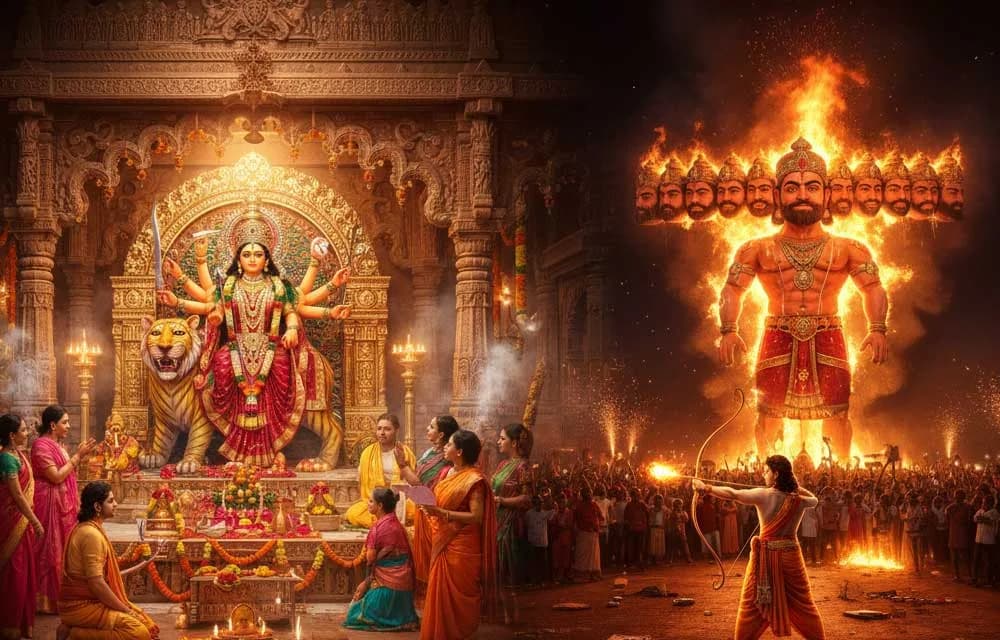
For Navratri: "Navratri means 'nine nights' when we celebrate a brave goddess named Durga who fought a terrible demon to protect everyone. Just like superheroes in your movies, she was strong and good, and she won!"
For Dussehra: "Dussehra celebrates when Prince Rama defeated the ten-headed demon king Ravana who had kidnapped Rama's wife, Sita. It shows us that no matter how powerful bad people seem, good always wins in the end."
Age-Appropriate Explanations
For Ages 3-6: Keep it Simple
Use familiar concepts your child already knows:
- "It's like when the good guys beat the bad guys in cartoons"
- "We dress up in pretty clothes and dance to celebrate"
- "Families come together to eat special food and have fun"
- "We light lamps to chase away darkness, just like turning on lights in a scary room"
For Ages 7-12: Add More Details
Children this age can handle slightly more complex ideas:
- Explain the nine forms of Goddess Durga and what each represents
- Tell the full story of Ramayana in simple chapters
- Connect the festivals to values like courage, truth, and family bonds
- Discuss how different regions celebrate these festivals differently
Making it Relatable for NRI Children
Living abroad can make cultural festivals feel distant. Here's how to bridge that gap:
Use Local Examples: "Just like how Americans celebrate the 4th of July or how people here celebrate Christmas, Navratri and Dussehra are our special celebration times when families come together."
Connect to Their Daily Life:
- "Remember when you stood up to that bully at school? That's like what Durga did - she was brave and protected others."
- "When you choose to tell the truth even when it's hard, you're being like Rama."
Create Traditions at Home:
- Set up a small altar or decoration area
- Cook traditional foods together
- Watch age-appropriate movies about these stories
- Video call grandparents in India during celebrations
Fun Activities to Make Learning Memorable
For Navratri:
- Dress-up Day: Let children wear Indian clothes and explain the significance
- Dance Time: Teach simple Garba or Dandiya steps
- Craft Projects: Make paper diyas or rangoli with colored sand
- Story Time: Act out the story with toys or puppets
For Dussehra:
- Good vs. Evil Chart: Help them identify "good" and "bad" behaviors
- Rama's Journey Map: Draw the path from Ayodhya to Lanka and back
- Effigy Burning Explanation: "We burn the bad king's statue to show that good wins"
Recommended Resources
Books for Different Ages:
Ages 3-6:
- "The Ramayana for Children" by Anant Pai
- "Devi and the Demon" (picture book series)
- "My First Book of Hindu Festivals"
Ages 7-12:
- "The Mahabharata: A Child's View" by Samhita Arni
- "Indian Festivals" by Roshen Dalal
- "Stories from the Ramayana" by Rohini Chowdhury
Animated Content:
- Movies: "Ramayana: The Legend of Prince Rama"
- Web Series: "Devi Tales" on YouTube
- Apps: "Indian Mythology for Kids"
Addressing Common Questions
"Why do we need so many gods and goddesses?" "Different forms help us understand different good qualities - like how you might have a superhero for strength, one for kindness, and one for wisdom."
"Why don't my friends celebrate this?" "Every family has their own special celebrations. This is ours, and it makes us who we are. Your friends probably have their own special festivals too."
"Is this just pretend?" For older children: "These stories teach us important lessons about life. Whether they happened exactly as told isn't as important as what they teach us about being good people."
Making it Stick: Beyond the Festival Days
The real goal is helping children internalize the values these festivals represent:
- Daily Connections: When they face challenges, remind them of Durga's courage
- Moral Decisions: Reference Rama's choices when discussing right and wrong
- Family Values: Use festival stories to talk about loyalty and love
- Cultural Pride: Help them share their knowledge with friends at school
Special Considerations for NRI Families
Language Barriers:
If your child doesn't speak Hindi or your regional language well, don't worry. The values and stories translate beautifully into English or any language.
Community Connection:
Seek out local Indian communities, temples, or cultural centers. Many organize child-friendly celebration events.
Balanced Approach:
Help children appreciate both their Indian heritage and their current country's culture. It's not about choosing sides but embracing a rich, multicultural identity.
The Deeper Message
While the stories and rituals are important, the core message you want children to remember is simple: these festivals celebrate the triumph of good over evil, light over darkness, and truth over falsehood. These aren't just ancient stories - they're timeless lessons about how to live a good life.
When children understand that Navratri and Dussehra are fundamentally about choosing to be brave, kind, and truthful, they'll carry these values with them long after the festivities end. Whether they're in Mumbai or Manhattan, these lessons remain just as relevant and powerful.
Remember, you don't need to be a religious scholar to share these traditions with your children. Your love, enthusiasm, and simple explanations are enough to plant the seeds of cultural connection and moral understanding that will grow with them throughout their lives.
Frequently Asked Questions
When is Explaining Navratri and Dussehra to Children?
Explaining Navratri and Dussehra to Children is observed on its traditional tithi in the Hindu lunar calendar; refer to the year's panchang for the exact date in your region.
What is the significance of Explaining Navratri and Dussehra to Children?
When your child asks "What is Navratri ?" or "Why do we celebrate Dussehra?", you want to give them an answer that's both meaningful and age-appropriate. Whether you're raising children in India or abroad as part of the NRI community, these festivals offer beautiful opportunities to connect kids with their cultural heritage.
How is Explaining Navratri and Dussehra to Children celebrated?
Devotees observe it with puja, fasting or special offerings, visiting temples, chanting mantras, and gathering with family. Customs vary by region and tradition.
What should devotees do on Explaining Navratri and Dussehra to Children?
Take a sacred bath, perform the day's puja and charity (dana), observe any prescribed fast, and chant mantras with sincere devotion.
You might also like
Dussehra / Vijayadashami 2026: Complete Guide — Date, Muhurat, Rituals & Meaning
Hindu Festival Calendar 2026 — Complete Guide for NRIs (Dates, Tithis, Puja)
June 2026 Hindu Festival Calendar — Complete Dates, Vrat & Puja Guide for NRIs