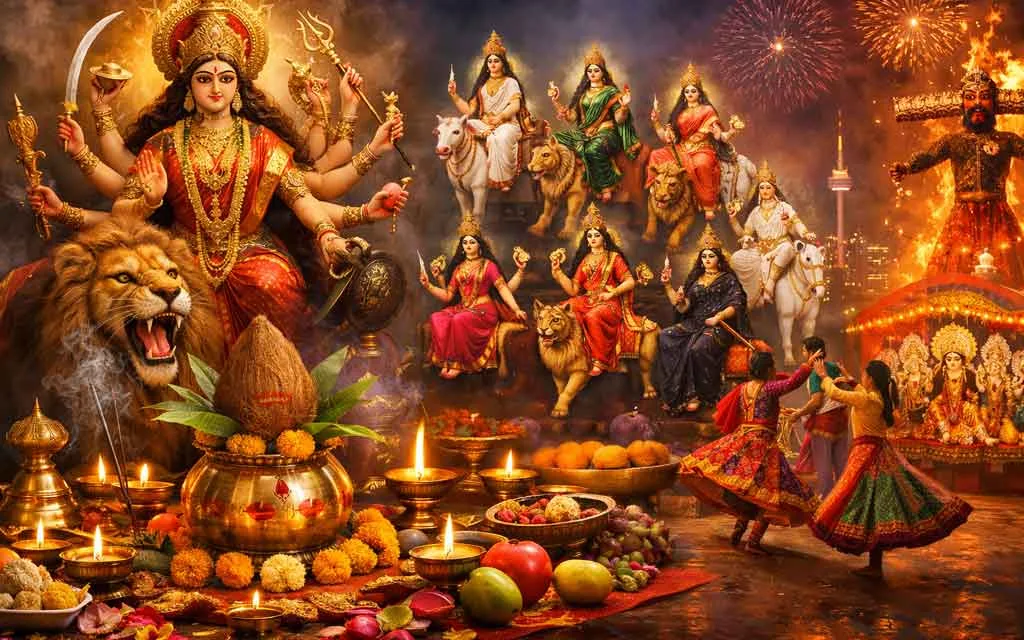
Top Punjabi Mata Bhents & Jagran Songs for Navratri 2026
Sharad Navratri 2026 runs from Sunday 11 to Monday 19 October. Here are 17 Mata bhents and jagran songs with verified singer and film credits, how a Mata ki Chowki and an all-night Jagrata flow, the Tara Rani di Katha, kanjak puja, and a ready playlist for a home chowki.
Sharad Navratri 2026 runs from Sunday 11 to Monday 19 October. Here are 17 Mata bhents and jagran songs with verified singer and film credits, how a Mata ki Chowki and an all-night Jagrata flow, the Tara Rani di Katha, kanjak puja, and a ready playlist for a home chowki.
Quick answer: Sharad Navratri 2026 runs from Sunday 11 October (Ghatasthapana) to Monday 19 October 2026, when Durga Ashtami and Maha Navami are both observed; Dussehra is on Tuesday 20 October (Drik Panchang, India). For a Punjabi-style Mata ki Chowki or Jagrata, start with a Ganesh vandana, sing Mata bhents such as Chalo Bulawa Aaya Hai (Narendra Chanchal, Avtaar, 1983) and Tu Ne Mujhe Bulaya (Mohammed Rafi and Narendra Chanchal, Aasha, 1980), tell the Tara Rani di Katha, and close with the aarti. Below are 17 bhents with verified credits and a home playlist.
Last updated: 9 October 2026. Every film and singer credit below was checked against published soundtrack listings. We list song titles only, never lyrics.
Navratri in Punjab, Haryana, Jammu and Punjabi homes across Delhi, Mumbai and the diaspora sounds different from the Garba circles of Gujarat. Here the nights belong to the Mata ki Chowki and the Jagrata: a decorated darbar for Sherawali Mata, a burning akhand jyot, a singer with a dholak and harmonium, and a room answering every line with Jai Mata Di. If you want dance music for Garba instead, see our Garba songs playlist for Navratri 2026. For the nine Devi forms and daily puja, see the Navaratri 2026 dates and nine Devi names guide.
What is a Mata bhent?
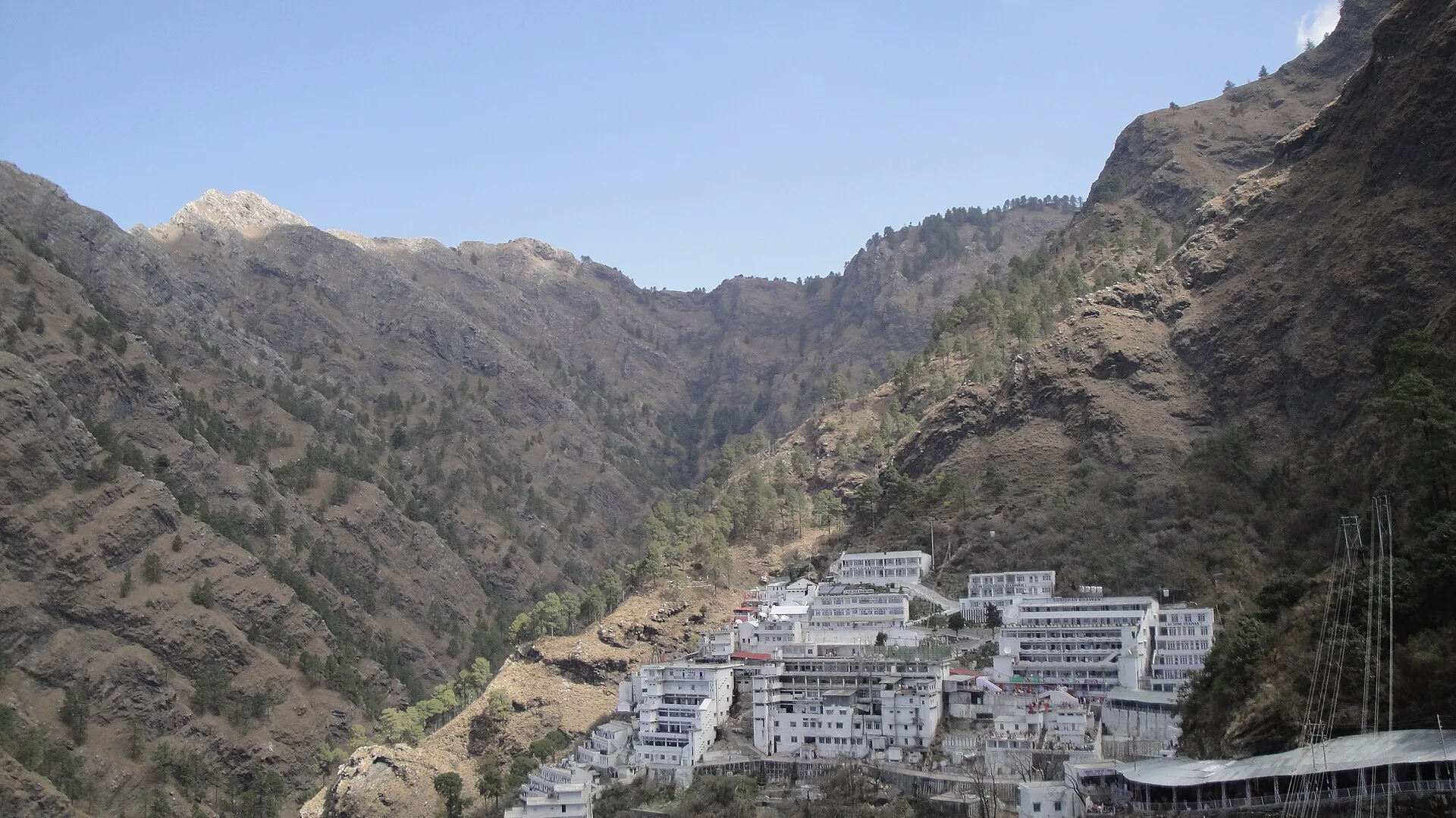
A bhent (also written bhet or bhenta) literally means an offering. In North Indian and Punjabi devotion it is a song offered to the Mother Goddess, most often addressed to Sherawali Mata (the Devi who rides the lion), Mata Rani or Vaishno Devi, whose shrine in the Trikuta hills above Katra is the emotional centre of this tradition. Bhents are simple and repetitive by design: the lead singer sings a line and the gathering answers, so even children and first-timers can join.
Many of the best-loved bhents came from Hindi and Punjabi films of the 1970s to 1990s and from devotional cassette albums, and then passed into the repertoire of local jagran mandalis. Others are traditional, sung for generations with no known composer. Singer Narendra Chanchal (1940 to 2021) became the voice most associated with Mata bhents; he performed at Katra every year on 29 December, ahead of the last day of the year.
Mata ki Chowki vs Jagrata: how a night flows
According to the Navaratri article on Wikipedia, the jagrata is a popular Navratri tradition among Punjabi Hindus: an all-night vigil to Durga, known in Punjab as Sheranwali Mata and often shown with Hanuman (Bajrang Bali) and Bhairo Baba. The two gatherings differ mainly in length.
| Mata ki Chowki | Jagrata (jagran) | |
|---|---|---|
| Length | Two to four hours, usually in the evening | All night, ending at sunrise |
| Where | Home, community hall or temple | Larger hall, open ground or temple |
| Who leads | Family, friends or a small bhajan group | Usually a jagran mandali with a lead singer |
| Kathas | Optional | Tara Rani di Katha and Bhole da Vyah are customary |
| Closing | Aarti and prasad | Sunrise aarti 'Bhor Bhai Din Chad Geya Meri Ambe' |
The order of a typical night
- Jyot lighting. The host ties a long red sacred thread to a spoon or stick, lights its end and uses it to kindle the akhand jyot (lamp) before the Devi.
- Ganesh vandana. As at most Hindu gatherings, singers commonly open by invoking Lord Ganesha for an obstacle-free night.
- Mata bhents. Hours of call-and-response bhents, rising from gentle invocations to fast jaikara rounds where people dance.
- Tara Rani di Katha. A Punjabi folk story about two devout women: Tara, a queen, and Rukman, a humble devotee who performed a jagrata for the Goddess. It is usually told late in the night. Bhole da Vyah, the marriage of Shiva and Parvati, is the other popular katha.
- Aarti and prasad. A chowki ends with the aarti; a jagrata ends at sunrise with the Punjabi aarti 'Bhor Bhai Din Chad Geya Meri Ambe' (morning has come, the day has dawned, O my Mother Ambe), followed by prasad.
17 Mata bhents and jagran songs with verified credits
Credits come from published film soundtrack listings. Where a bhent is folk or a standard aarti, we say traditional. Listen on official channels and licensed streaming services.
| Song | Singer | Film/album and year | Best moment |
|---|---|---|---|
| Chalo Bulawa Aaya Hai, Mata Ne Bulaya Hai | Narendra Chanchal, Asha Bhosle, Mahendra Kapoor | Avtaar (1983) | The call to the Devi's darbar; ideal opener after Ganesh vandana |
| Tu Ne Mujhe Bulaya (Sherawaliye) | Mohammed Rafi, Narendra Chanchal | Aasha (1980) | Early bhents, as the jyot settles |
| O Sherawaaliye Teri Jai, Pahaadawaaliye Teri Jai | Narendra Chanchal | Farebi (1974) | Jaikara rounds; easy chorus for everyone |
| Fulla Da Banaia Haar | Narendra Chanchal | Jai Mata Di (1977, Punjabi film) | Offering the flower garland to the Mata |
| O Maata Sherawali | Mohammed Rafi, Asha Bhosle | Suhaag (1979) | Mid-evening, when the hall is full |
| Sherawali Tera Darbar | Asha Bhosle | Durgaa (1985) | Darbar decoration and darshan |
| Devi Mata Rani | Kishore Kumar | Swarg Se Sunder (1986) | A gentle family bhent before the katha |
| Leke Pooja Ki Thali | Suresh Wadkar | Jai Maa Vaishno Devi (1994, T-Series) | Arranging the puja thali |
| O Aaye Tere Bhawan | Anuradha Paudwal, Sonu Nigam | Jai Maa Vaishno Devi (1994) | Vaishno Devi yatra memories |
| Main Hoon Daasi Teri Daatiye | Anuradha Paudwal | Jai Maa Vaishno Devi (1994) | Quiet, prayerful stretch |
| Aaja Maa Tainu Ankhiyan Udeek Diyaan | Anuradha Paudwal (female); Sonu Nigam (male) | Jai Maa Vaishno Devi (1994) | Punjabi invocation; welcoming the Devi |
| Sun O Sherawali | Vinod Rathod, Kavita Krishnamurthy | Ek Phool Teen Kante (1997) | Personal prayer moments |
| Aaja Sherawaliye | Anand Raj Anand, Lakhbir Singh Lakkha | Heeralal Pannalal (1999) | High-energy bhent for dancing |
| Maa Sherawali | Payal Dev, Sachet Tandon | Satyameva Jayate 2 (2021) | A newer bhent for younger devotees |
| Ambe Tu Hai Jagdambe Kali | Traditional aarti; a well-known rendition by Narendra Chanchal | Traditional | Evening aarti at a chowki |
| Jai Ambe Gauri | Traditional aarti | Traditional | Closing aarti at a home chowki |
| Bhor Bhai Din Chad Geya Meri Ambe | Traditional Punjabi aarti | Traditional | Sunrise close of an all-night jagrata |
Sources include the soundtrack listings for Avtaar (1983) and Aasha (1980). Jai Maa Vaishno Devi (1994) was produced by Gulshan Kumar through T-Series, whose founder was a devoted worshipper of Vaishno Devi.
Punjabi bhent albums worth looking up
Two Punjabi voices with long Mata catalogues on T-Series and other labels are Master Saleem and the late Sardool Sikander. We could verify their album titles but not every individual track, so we list the albums rather than songs:
- Master Saleem: Mela Maiya Da (T-Series, 2006), Aaj Hai Jagrata (T-Series, 2007), Maa Meharan Kardi (T-Series, 2010).
- Sardool Sikander: Darsh Maiya Da Keeta (T-Series, 2004), Mayee Ne Kunda Kholeya (Saaga, 2009), Maa Raniye Amrit Se Meetha Tera Naam (T-Series, 2013).
A playlist for your home Navratri chowki
A two to three hour home chowki works well in four parts. Keep the jyot burning, seat elders near the darbar and give children the jaikaras to lead.
- Opening (15 minutes): light the jyot, a Ganesh vandana, then Chalo Bulawa Aaya Hai and Aaja Maa Tainu Ankhiyan Udeek Diyaan.
- Bhents (60 to 90 minutes): Tu Ne Mujhe Bulaya, O Sherawaaliye Teri Jai, Leke Pooja Ki Thali, O Aaye Tere Bhawan, Sherawali Tera Darbar, Devi Mata Rani, Fulla Da Banaia Haar.
- Dancing round (20 minutes): O Maata Sherawali, Aaja Sherawaliye and Maa Sherawali.
- Katha and close (30 minutes): tell the Tara Rani di Katha in your own words, sing Main Hoon Daasi Teri Daatiye, then the aarti Ambe Tu Hai Jagdambe Kali or Jai Ambe Gauri, and distribute prasad.
Hosting an all-night jagrata? Add more bhents between the katha and dawn, and finish with Bhor Bhai Din Chad Geya Meri Ambe at sunrise. For daily mantras to pair with the bhents, see Navratri day-wise mantras, and start the festival with the Day 1 Maa Shailaputri puja guide.
Etiquette for hosts and guests
- Remove shoes near the darbar and keep the jyot area clear.
- Bring a chunni, flowers, fruit or coconut as your own bhent to the Mata if you wish.
- In apartments and abroad, check building rules on open flames and keep the volume down after 10 PM.
- Share song titles on a screen or sheet; do not print full film lyrics.
Punjabi Navratri customs: kanjak on Ashtami and Navami
In Punjab, Navratri is called Naurate. Families sow barley in clay pots on the first day, and many women make a clay image of Sanjhi Mata on a courtyard wall and sing to her each evening.
The high point at home is kanjak (kanjakan), known elsewhere as Kanya puja. Usually nine young girls, honoured as the nine forms of Durga, are invited, their feet washed, a red thread tied on their wrists and a meal of puri, kala chana and sooji halwa served. Each girl receives red bangles, a bindi and a mata di chunni. Hosts who fast break it only after the girls have eaten.
In 2026, Durga Ashtami and Maha Navami both fall on Monday 19 October (see the panchangam for 19 October 2026), so families who keep Ashtami and those who keep Navami will mostly do kanjak the same day. Follow our Kanya pujan 2026 vidhi and the halwa, puri and chana prasad recipe. The day's Devi forms are covered in the Day 8 Maa Mahagauri and Day 9 Maa Siddhidatri guides, and Navratri ends with Dussehra on Tuesday 20 October 2026.
Navratri 2026 key dates
| Observance | Date (India) |
|---|---|
| Ghatasthapana, Navratri day 1 | Sunday, 11 October 2026 |
| Durga Ashtami and Maha Navami (kanjak) | Monday, 19 October 2026 |
| Vijayadashami / Dussehra | Tuesday, 20 October 2026 |
Dates from Drik Panchang for India. Outside India, check local panchang dates for your city.
Vaishno Devi: where the bhents point
Nearly every bhent calls the devotee to the Mata's bhawan, and for many Punjabi families a yatra to Vaishno Devi is a cherished pilgrimage. Read our Vaishno Devi temple guide, what to expect at Vaishno Devi during Navratri 2026, and the best time to visit Vaishno Devi for NRIs. More festival guides are in our Navratri hub.
Frequently asked questions
What is a Mata bhent?
A bhent (also written bhet or bhenta) is a devotional song offered to the Mother Goddess, usually Sherawali Mata or Vaishno Devi, in Punjabi or Hindi. The word means an offering. Bhents are sung in call and response at a Mata ki Chowki or Jagrata, with the singer leading and devotees answering with Jai Mata Di.
What is the difference between a Mata ki Chowki and a Jagrata?
A Mata ki Chowki is a shorter evening gathering of a few hours, often held at home or in a hall. A Jagrata (jagran) is an all-night vigil that traditionally ends at sunrise with the aarti 'Bhor Bhai Din Chad Geya Meri Ambe'. Both centre on lighting the jyot and singing bhents to the Devi.
What is the Tara Rani di Katha?
It is a Punjabi folk story told during jagratas about two devout women, Tara, a queen, and Rukman, a humble devotee who performed a jagrata for the Goddess. Bhole da Vyah, the story of the marriage of Shiva and Parvati, is the other katha commonly told at jagratas.
Who sang 'Chalo Bulawa Aaya Hai'?
'Chalo Bulawa Aaya Hai, Mata Ne Bulaya Hai' is from the 1983 film Avtaar. It was sung by Narendra Chanchal with Asha Bhosle and Mahendra Kapoor, composed by Laxmikant-Pyarelal with lyrics by Anand Bakshi.
When is kanjak (Kanya) puja in Navratri 2026?
Punjabi families traditionally hold kanjak on Ashtami. In 2026, Durga Ashtami and Maha Navami both fall on Monday 19 October (Drik Panchang, India), so most families will do kanjak that day. Dussehra is on Tuesday 20 October 2026.
Can I play these bhents at a home chowki?
Yes. Play them from official releases on licensed streaming platforms, keep the volume considerate after 10 PM, and if you print song sheets, use only titles; do not copy full lyrics, which are copyrighted for film songs.
Editor's note (9 October 2026)
This post grew from a reader-shared list of Punjabi songs, which we reframed as a devotional guide. We kept only Mata bhents whose singer and film or album we could confirm in published soundtrack listings, marked folk bhents and aartis as traditional, and dropped several popular titles whose credits we could not verify. We give song titles only, no lyrics. If you have an official credit for a bhent you would like added, write to us. Jai Mata Di!
You might also like
Garba Playlist for UK Hindus 2026: Multi-Language Navratri Songs for London, Leicester & Beyond
Garba Playlist for USA Hindus 2026: Multi-Language Navratri Songs for Community Garba Nights
Garba Playlist for Australia Hindus 2026: Multi-Language Navratri Songs for Sydney, Melbourne & Beyond