Which Hindu Mantra Should I Chant Daily? 7 Core Mantras (+ More), Meanings and a Beginner's Guide
There is no single mantra every Hindu must chant. Here are seven widely used daily mantras, from Om Namah Shivaya and the Gayatri to the Hare Krishna Maha Mantra, with their meanings, the deity each one addresses, how to begin, how many times to chant and a simple daily routine for beginners and families.

Quick answer: There is no single mantra that every Hindu must chant. The right daily mantra depends on your tradition, the deity you worship and the guidance of your family or teacher. If you are starting fresh, a short name mantra such as Om Namah Shivaya, Om Namo Narayanaya or Om Shri Ganeshaya Namah, chanted 11 or 108 times at a fixed time each day, is a simple and widely followed beginning.
Last updated: 9 October 2026. This guide replaces our earlier list of top mantras for 2026. It explains seven core daily mantras, a few more short prayers, how to choose between them and how to build a small routine at home.
Hinduism has no single prayer book and no single rule for daily chanting. A Shaiva family in Tamil Nadu, a Sri Vaishnava household in Andhra, a Gaudiya Vaishnava devotee in London and a Ganesha devotee in Pune may each chant something different, and all are following genuine traditions. The seven mantras below are among the most widely used, which makes them a good place to understand your options. If you live in a flat or a shared home abroad, also see our beginner's guide to mantra recitation in a diaspora apartment.
Why do Hindus chant mantras?
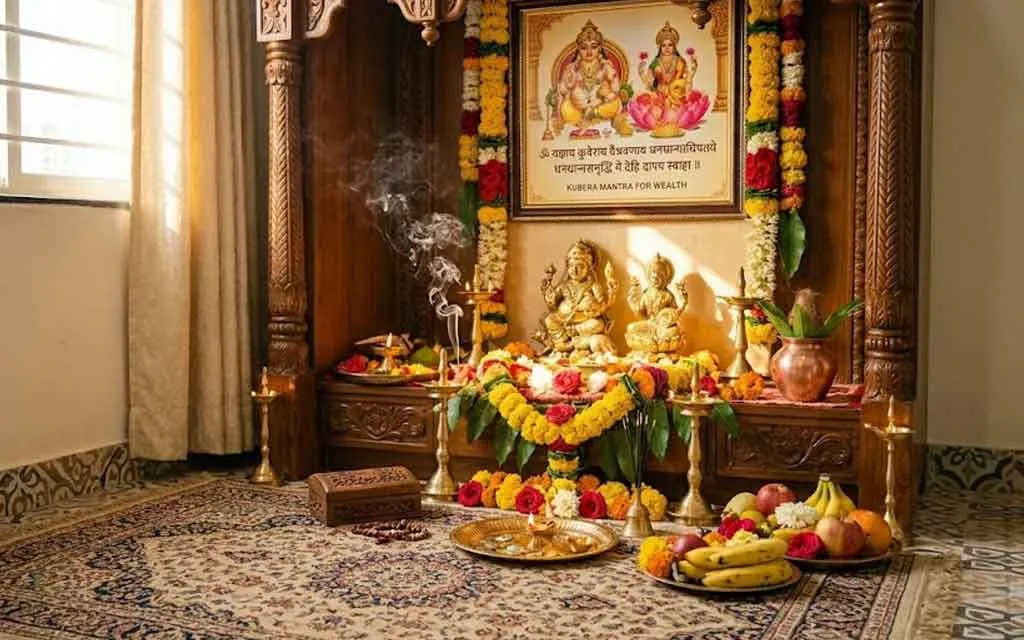
A mantra is a sacred sound, word or verse that is repeated with attention. Hindus chant mantras for several overlapping reasons:
- Devotion (bhakti): calling on a chosen deity by name, as one would greet someone loved and respected.
- Focus: repetition, often counted on a mala, gives the mind one thing to rest on.
- Daily rhythm: a mantra at sunrise, before meals or at the evening lamp marks the day with prayer.
- Tradition and continuity: many mantras are passed from grandparents, priests and teachers, linking a family to its lineage.
- Study and reflection: Vedic and Upanishadic mantras carry ideas about light, the mind, life and liberation that people contemplate over a lifetime.
Japa, the repeated chanting of a mantra, is one part of daily worship. For the wider structure of home worship, see our guide to Shodashopachara puja, the 16 steps. For the sacred syllable that begins most mantras, read our guide to Om (Aum).
The 7 core daily mantras
The Devanagari and transliteration below are copied from verified sources and not retyped. Learn the pronunciation from a family elder, priest or a reliable recording if you can.
1. Om Namah Shivaya (Shiva)
ॐ नमः शिवाय॥
oṃ namaḥ śivāya||
Meaning: "Om, salutations to Shiva." Known as the Panchakshari, the five-syllable mantra (na-mah-shi-va-ya), it is central in Shaiva traditions, and the words namah shivaya appear in the Sri Rudram of the Yajurveda.
How to begin: Chant it 11 or 108 times in the morning or at the evening lamp, silently or softly. It is one of the most widely chanted mantras and is commonly taken up without formal initiation. See our Om Namah Shivaya 108-times guide and the Shiva hub.
2. Om Namo Narayanaya (Vishnu)
ॐ नमो नारायणाय॥
oṃ namo nārāyaṇāya||
Meaning: "Om, salutations to Narayana." This is the Ashtakshari, the eight-syllable mantra of Vishnu, especially important in Sri Vaishnava practice.
How to begin: Many devotees chant it on a tulsi mala in the morning or on Ekadashi. Families with a Vaishnava teacher may receive it formally; others chant it simply as a name prayer. More in the Vishnu hub.
3. Gayatri Mantra (Savitar, the solar deity)
ॐ भूर्भुवः स्वः । तत्सवितुर्वरेण्यम् । भर्गो देवस्य धीमहि
धियो योनः प्रचोदयात् ॐ ॥
oṃ bhūrbhuvaḥ svaḥ | tatsaviturvareṇyam | bhargo devasya dhīmahi
dhiyo yonaḥ pracodayāt oṃ ||
Source: Rig Veda 3.62.10, a verse addressed to Savitar, the divine power of the sun, traditionally associated with the sage Vishvamitra. The opening Om bhur bhuvah svah (the vyahritis) is added in recitation. The text above is the Gayatri as given in the Rigvedic Sandhyavandanam on sanskritdocuments.org, which closes with Om as recited in that rite.
Meaning: "We meditate on the adorable radiance of the divine Savitar; may he inspire our thoughts." It is above all a prayer for a clear, awakened mind.
How to begin: Rules differ by tradition. In many families the Gayatri is taught at the upanayana (sacred thread ceremony) and recited within sandhyavandanam at dawn, noon and dusk with specific rules; other teachers and movements share it openly with everyone. Follow your family custom or ask a teacher. For a word-by-word explanation, read our Gayatri Mantra meaning guide.
4. Mahamrityunjaya Mantra (Shiva as Tryambaka)
ॐ त्र्यम्बकं यजामहे सुगन्धिं पुष्टिवर्धनम्। उर्वारुकमिव बन्धनान्मृत्योर्मुक्षीय माऽमृतात्॥
oṃ tryambakaṃ yajāmahe sugandhiṃ puṣṭivardhanam| urvārukamiva bandhanānmṛtyormukṣīya mā'mṛtāt||
Source: Rig Veda 7.59.12, also found in the Yajurveda. It is addressed to Tryambaka, the three-eyed one, understood as Shiva.
Meaning: "We worship the three-eyed one, fragrant, who increases nourishment. As a ripe cucumber is released from its stalk, may I be released from death, not from immortality." The ripe-fruit image describes a gentle, natural letting go, not a violent end.
How to begin: Families often chant it 11 or 108 times on Mondays, in times of illness or for a loved one. It is a prayer for strength and well-being, not a substitute for medical care: keep following your doctor's advice.
5. Om Shri Ganeshaya Namah (Ganesha)
ॐ श्री गणेशाय नमः
Meaning: "Om, salutations to the revered Ganesha." Ganesha is honoured first in most Hindu worship as the remover of obstacles and the lord of beginnings.
How to begin: Say it once or 11 times before starting a puja, study, a journey or a new task. It is one of the easiest mantras for children to learn. More in the Ganesha hub.
6. Om Shreem Mahalakshmyai Namah (Lakshmi)
ॐ श्रीं महालक्ष्म्यै नमः॥
oṃ śrīṃ mahālakṣmyai namaḥ||
Meaning: "Om, Shreem, salutations to Mahalakshmi." Shreem is the bija (seed) syllable associated with Lakshmi, goddess of prosperity, well-being and auspiciousness.
How to begin: Many families chant it on Fridays and during Diwali Lakshmi puja, often 108 times. Some traditions treat bija mantras as practices to receive from a teacher, so check your family custom. See the Lakshmi hub.
7. Hare Krishna Maha Mantra (Krishna and Rama)
हरे कृष्ण हरे कृष्ण कृष्ण कृष्ण हरे हरे। हरे राम हरे राम राम राम हरे हरे॥
hare kṛṣṇa hare kṛṣṇa kṛṣṇa kṛṣṇa hare hare| hare rāma hare rāma rāma rāma hare hare||
Source and meaning: The sixteen-word mantra is found in the Kali-Santarana Upanishad. It calls on Hare (understood as Radha, the divine energy), Krishna and Rama, and is a prayer of loving devotion.
How to begin: It can be sung in kirtan or chanted softly on a mala, and is open to everyone. In ISKCON, initiated devotees vow to chant 16 rounds a day, but beginners often start with one round of 108. More in the Krishna hub.
Which mantra should you choose?
| If you... | Consider | Notes |
|---|---|---|
| have a family deity or guru | the mantra your family or teacher gives | This comes first in most traditions |
| feel drawn to Shiva | Om Namah Shivaya | Simple, widely chanted by all |
| worship Vishnu, Venkateswara or Rama | Om Namo Narayanaya | Often chanted on a tulsi mala |
| want a morning prayer for a clear mind | Gayatri Mantra | Follow your family's rules on recitation |
| are praying for a sick family member | Mahamrityunjaya Mantra | A prayer, alongside proper medical care |
| are starting a task, puja or school day | Om Shri Ganeshaya Namah | Easy for children |
| are doing Friday or Diwali Lakshmi puja | Om Shreem Mahalakshmyai Namah | Bija mantra; check family custom |
| love kirtan and group singing | Hare Krishna Maha Mantra | Sung or chanted on a mala |
It is fine to keep one main mantra and add others on festival days. Many people stay with one mantra for years rather than switching often.
How many times should you chant?
- 108 times: the traditional full round, counted on a mala of 108 beads plus the guru bead (meru), which you do not cross; turn the mala and go back.
- 11 times: a practical daily count for busy mornings or for children.
- Once, with attention: a single sincere recitation before a meal or a task is still prayer.
No single count is compulsory. Some traditions prescribe numbers for particular vows, so follow those when they apply to you; otherwise choose a count you can keep every day.
A simple 6-step daily routine
- Wash, or at least wash your hands, feet and face, and sit in a clean, quiet spot facing your altar or the east.
- Light a lamp or incense if your home allows it. Use a stable holder on a non-flammable surface, keep it away from curtains, papers and children, and never leave a flame unattended. An electric diya is a good choice in rented flats and dorms.
- Begin with Om Shri Ganeshaya Namah or a short prayer to your family deity.
- Chant your main mantra 11 or 108 times on a mala, softly or silently, keeping the meaning in mind.
- Sit quietly for a minute and offer a prayer in your own words, for yourself, your family and all beings.
- Put out the lamp or move it somewhere safe before you leave, and keep the same time tomorrow.
For noise, smoke-alarm and space tips in apartments abroad, see our diaspora apartment mantra guide.
Sanskrit or your own language?
Most traditions keep the mantra itself in its original Sanskrit form, because mantra practice gives weight to the exact sound and wording. That does not mean you must be a Sanskrit scholar. Learn the meaning in your own language, listen to a reliable recording or an elder for pronunciation, and chant at a pace that lets you pronounce each syllable clearly.
Prayers, bhajans and stotras in Hindi, Telugu, Tamil, Kannada, Bengali, Gujarati, English or any other language are equally valid ways of speaking to God. Many families combine both: a Sanskrit mantra for japa and a prayer in their mother tongue.
Can beginners chant any mantra?
Yes, beginners can start today with name mantras such as Om Namah Shivaya, Om Namo Narayanaya, Om Shri Ganeshaya Namah and the Hare Krishna Maha Mantra. Some practices are different:
- Formal Vedic recitation, including sandhyavandanam with the Gayatri, has its own rules of accent and context in many families.
- Some bija (seed) mantras and tantric mantras are traditionally given by a guru through initiation (diksha).
- Particular vows, such as a 40-day japa, are best begun with guidance from a priest or teacher.
If you are unsure, ask a temple priest or a respected elder in your community. You can also browse our Hindu FAQs for common questions about practice.
More daily mantras
The earlier version of this page also listed these short prayers. They are kept here because their text is verified.
Om Gam Ganapataye Namah (Ganesha)
ॐ गं गणपतये नमः॥
oṃ gaṃ gaṇapataye namaḥ||
"Om, Gam, salutations to Ganapati." Gam is the bija syllable of Ganesha. Many devotees chant it before new work or study; as a bija mantra, some families prefer to receive it from a teacher.
Karagre Vasate (morning prayer on waking)
कराग्रे वसते लक्ष्मीः करमध्ये सरस्वती ।
करमूले तु गोविन्दः प्रभाते करदर्शनम् ॥
karāgre vasate lakṣmīḥ karamadhye sarasvatī |
karamūle tu govindaḥ prabhāte karadarśanam ||
"Lakshmi dwells at the fingertips, Saraswati in the middle of the palm and Govinda at its base; look at your hands in the morning." It is said on waking while looking at one's palms. Text from sanskritdocuments.org.
Om Sarvesham Svastir Bhavatu (prayer for all)
ॐ सर्वेषां स्वस्तिर्भवतु । सर्वेषां शान्तिर्भवतु ।
सर्वेषां पूर्णं भवतु । सर्वेषां मङ्गलं भवतु ।
oṃ sarveṣāṃ svastirbhavatu | sarveṣāṃ śāntirbhavatu |
sarveṣāṃ pūrṇaṃ bhavatu | sarveṣāṃ maṅgalaṃ bhavatu |
"May there be well-being for all; may there be peace for all; may there be fullness for all; may there be auspiciousness for all." A short peace prayer often said at the end of puja or a gathering. Text from sanskritdocuments.org.
For Hanuman and Durga devotees, see our 11 Hanuman mantras for daily chanting and the 108 names of Durga with meanings, or visit the Hanuman and Durga hubs and our complete list of Hindu deities.
Starting your own daily practice
Choose one mantra that feels right, ideally one your family already uses, learn its meaning, and chant it at the same time each day for a few weeks before adding more. Be patient and gentle with yourself: a missed day is simply a reason to begin again tomorrow. Mantra practice is about steady devotion and a quieter mind, not about guaranteed results.
Frequently asked questions
Which Hindu mantra should I chant daily?
There is no single mantra that every Hindu must chant. Many families chant a mantra of their family deity (kula devata) or the deity they feel closest to, such as Om Namah Shivaya for Shiva, Om Namo Narayanaya for Vishnu or Om Shri Ganeshaya Namah for Ganesha. If you have a guru or follow a sampradaya, follow their guidance.
How many times should I chant a mantra?
108 times with a mala is the most common traditional count, but 11 repetitions, or even one attentive recitation, is a sincere start. No single count is compulsory; regular, attentive practice matters more than the number.
Can I chant mantras without initiation?
Simple name mantras such as Om Namah Shivaya, Om Namo Narayanaya and the Hare Krishna Maha Mantra are widely chanted by anyone. Some practices, including formal Vedic recitation of the Gayatri and certain bija and tantric mantras, are traditionally taught by a teacher, so follow your family custom or ask a priest or teacher.
Can I chant mantras in English or my own language?
Many traditions keep the mantra itself in Sanskrit, because sound and wording matter in mantra practice, while you can understand its meaning and pray in your own language. Prayers in Hindi, Telugu, Tamil, English or any language are equally sincere forms of devotion.
Does chanting a mantra guarantee success?
No. Mantra chanting is a devotional and contemplative practice, not a guarantee of exam results, a job, wealth or good health. Many people find it steadies the mind, but it does not replace effort, study, medical care or professional advice.
What is the best time to chant mantras?
Early morning after a bath, and the evening lamp time (sandhya), are traditional choices. A fixed, quiet time that fits your day, even ten minutes before work or school, is more useful than an ideal time you cannot keep.
Can women and children chant these mantras?
Yes. Women and children across Hindu families chant name mantras such as Om Namah Shivaya, Om Namo Narayanaya and Om Shri Ganeshaya Namah every day. For practices with specific rules, such as formal Vedic recitation, follow your own tradition and teacher.
Editor's note (9 October 2026)
This page was rewritten in October 2026 from our earlier 'top 10 mantras' list. The full Devanagari and transliteration of the Gayatri, Karagre Vasate and Sarvesham Svastir Bhavatu texts come from sanskritdocuments.org; other mantra texts come from HinduTone's verified mantra list. We removed claims that chanting guarantees health, wealth or success, and a mantra (Om Shivoham) whose text we could not verify. Practices differ between traditions; when in doubt, follow your family custom, guru or temple priest.
Share this with family and friends
Send it on WhatsApp, post it, or copy the link.
More from Pooja, Slokas and Mantras
- Sri Durga Parameshwari Stotram: Sanskrit Verses, Meaning and Devotional Significance
- Sri Venkatesa Vijayarya Saptavibhakti Stotram: Full Text in Telugu, Sanskrit and IAST with Meaning
- Deeparadhana: Significance of Lighting the Lamp, Deepam Jyoti Parabrahma Meaning, Oil and Wicks
- Narmadashtakam (Sabindu Sindhu) by Adi Shankaracharya: Full Text in Sanskrit with Meaning
- Hari Stotram (Jagajjalapalam) by Swami Brahmananda: Full Text in Sanskrit with Meaning
You might also like

Top 10 Powerful Hindu Mantras to Chant in 2026: A Practical Guide for NRIs in the USA | HinduTone

Powerful Mantras for Maha Shivaratri Jagran 2026

Powerful Hindu protective mantras