Sri Durga Parameshwari Stotram: Sanskrit Verses, Meaning and Devotional Significance
The Sri Durga Parameshwari Stotram, published by the Sringeri Sharada Peetham as the work of the Sringeri Jagadguru: five Sanskrit verses praying to the Goddess as a mother, with IAST, meaning in simple words, when devotees recite it and FAQs.

Om Shri Matre Namah
In short: the Sri Durga Parameshwari Stotram is a five-verse Sanskrit prayer that addresses the Goddess as a mother. The Sringeri Sharada Peetham published it as a work of the Sringeri Jagadguru (Sri Bharati Tirtha Mahaswamigal). Below are all five verses in Sanskrit with IAST, the meaning in simple words, notes on when devotees recite it, and FAQs.
Jaganmata Sri Durga Parameshwari is the Mother of the entire universe. She is the compassionate one who protects devotees from dangers, removes their troubles and leads them along the path of dharma.
Our spiritual tradition teaches that just as a mother forgives her children's mistakes and holds them up in trouble, the Divine Mother showers boundless compassion on her devotees.
The Sri Durga Parameshwari Stotram, attributed to the Sringeri Jagadguru Sri Sri Sri Bharati Tirtha Mahaswamigal, is a heartfelt prayer that regards the Goddess as one's own mother.
In this stotram the devotee prays that the country and its people be protected from calamity, that disease and hardship be removed, and that the Mother's compassion flow over all.
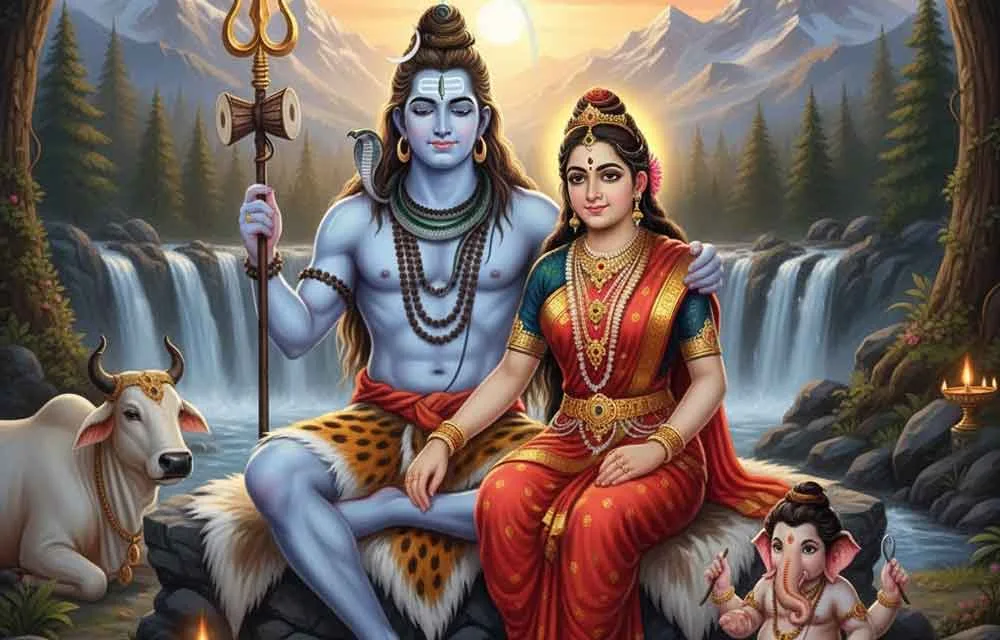
Image caption: May the grace of Jaganmata Sri Durga Parameshwari be upon the whole world.
Let us learn the five verses of this stotram and their meaning with devotion.
Source and context
The Sanskrit below follows the text published by the Sringeri Sharada Peetham itself, in a PDF with Sanskrit, IAST transliteration and an English translation, uploaded to the Peetham's website in March 2020. The PDF is headed "Sringeri Jagadguru-viracitam" (composed by the Sringeri Jagadguru) and begins with a resolve to recite the stotram for relief from the disease named Corona, then spreading across the world. The verses themselves ask the Mother to protect the country from disease and other calamities.
Sringeri's PDF names the author only as "the Sringeri Jagadguru". The Jagadguru at that time was Sri Bharati Tirtha Mahaswamigal, so the stotram is attributed to him.
Sri Durga Parameshwari Stotram: the five verses
॥ Sri Durga Parameshwari Stotram ॥
Verse 1: a prayer to protect the country
Verse 1
एतावन्तं समयं सर्वापद्भ्योऽपि रक्षणं कृत्वा ।
देशस्य परमिदानीं ताटस्थ्यं केन वहसि दुर्गाम्ब ॥ १ ॥
etāvantaṃ samayaṃ sarvāpadbhyo'pi rakṣaṇaṃ kṛtvā |
deśasya paramidānīṃ tāṭasthyaṃ kena vahasi durgāmba || 1 ||
Meaning: O Durgamba, you have protected the country from every danger all this time. Why do you now remain indifferent towards it?
O Mother of the world, turn your gracious glance on us and protect the country from all hardships.
Verse 2: a reminder of a mother's compassion
Verse 2
अपराधा बहुशः खलु पुत्राणां प्रतिपदं भवन्त्येव ।
को वा सहते लोके सर्वांस्तान्मातरं विहायैकाम् ॥ २ ॥
aparādhā bahuśaḥ khalu putrāṇāṃ pratipadaṃ bhavantyeva |
ko vā sahate loke sarvāṃstānmātaraṃ vihāyaikām || 2 ||
Meaning: Children make many mistakes, at nearly every step. But apart from the mother, who else in this world can bear all of them?
So, O Mother, receive us, your children, with compassion, mistakes and all.
Verse 3: a plea not to ignore the helpless
Verse 3
मा भज मा भज दुर्गे ताटस्थ्यं पुत्रकेषु दीनेषु ।
के वा गृह्णन्ति सुतान्मात्रा त्यक्तान् वदाम्बिके लोके ॥ ३ ॥
mā bhaja mā bhaja durge tāṭasthyaṃ putrakeṣu dīneṣu |
ke vā gṛhṇanti sutānmātrā tyaktān vadāmbike loke || 3 ||
Meaning: O Goddess Durga, do not be indifferent towards your children who are in distress.
Who in this world will take in children whom their mother has abandoned? O Ambika, do not abandon us; protect us with your compassion.
Verse 4: a prayer for the country's health and peace
Verse 4
इतः परं वा जगदम्ब जातु देशस्य रोगप्रमुखापदोऽस्य ।
न स्युस्तथा कुर्वचलां कृपामित्यभ्यर्थनां मे सफलीकुरुष्व ॥ ४ ॥
itaḥ paraṃ vā jagadamba jātu deśasya rogapramukhāpado'sya |
na syustathā kurvacalāṃ kṛpāmityabhyarthanāṃ me saphalīkuruṣva || 4 ||
Meaning: O Mother of the world, may diseases and other calamities not come upon this country from now on. Show your steady compassion so that it is so.
May the people of the country live in health, peace and happiness. O Mother, make this prayer of mine bear fruit.
Verse 5: the compassionate one who protects even the sinful
Verse 5
पापहीनजनतावनदक्षाः सन्ति निर्जरवरा न कियन्तः ।
पापपूर्णजनरक्षणदक्षां त्वां विना भुवि परां न विलोके ॥ ५ ॥
pāpahīnajanatāvanadakṣāḥ santi nirjaravarā na kiyantaḥ |
pāpapūrṇajanarakṣaṇadakṣāṃ tvāṃ vinā bhuvi parāṃ na viloke || 5 ||
Meaning: There may be many deities who protect people free of sin.
But I see no one in this world other than you who can protect even those full of faults. O Mother of the world, your compassion does not depend on merit. You are the mother who embraces all her children.
॥ Iti Sri Durga Parameshwari Stotram sampurnam ॥
Mata Sri Durgayai Namah
The spiritual message of the Sri Durga Parameshwari Stotram
What is special here is that the Goddess is prayed to not only as an all-powerful deity but as a mother who understands her children's troubles.
The main messages are:
- Mother's compassion: a mother does not abandon her children even when they make mistakes.
- Surrender: trusting the Goddess and praying to her in times of difficulty.
- Welfare of the world: praying not only for personal comfort but for the good of the country and society.
- Health and peace: asking that people be kept far from disease and calamity and live in peace and happiness.
- Compassion without conditions: praising the Mother's boundless kindness, which can protect even those full of faults.
When is the Sri Durga Parameshwari Stotram recited?
Devotees can recite this stotram at whatever time suits them.
In particular:
- Every morning after bathing.
- On Friday, during the Goddess's puja.
- On Tuesday, during Durga Devi worship.
- During Navaratri.
- When praying for the well-being of the family and peace in the country.
Light a lamp in front of a picture of the Goddess in a clean place, and recite the verses with a calm mind.
Important: reciting a stotram is a way to devotion, peace of mind and spiritual reflection. It does not promise any particular result. When there are health problems, take proper medical treatment along with prayer.
Grace of Sri Durga Devi: praying to the Goddess as our own mother
Everyone in life meets troubles, pain and dangers.
At such times, what gives us courage is faith in God.
However great a mistake a child has made, a mother cannot ignore that child when it is hurting. In the same way, devotees believe that Jaganmata shows compassion to her devotees.
The fifth verse of this stotram expresses this thought most movingly.
Let us correct our mistakes, walk the right path, and pray to the Goddess not only for our family but for the welfare of the whole world.
May Jaganmata Sri Durga Parameshwari bless us all always.
Om Sri Durgayai Namah
Sri Matre Namah
Frequently asked questions
Who composed the Sri Durga Parameshwari Stotram?
The Sringeri Sharada Peetham published the text in March 2020 as a work of the Sringeri Jagadguru ("Sringeri Jagadguru-viracitam"). The Jagadguru at that time was Sri Bharati Tirtha Mahaswamigal, to whom the stotram is therefore attributed. The official PDF is linked in the editor's note below.
How many verses does the Sri Durga Parameshwari Stotram have?
It has five verses, in Sanskrit.
Why is the Sri Durga Parameshwari Stotram recited?
Devotees recite it to pray to the Divine Mother with devotion and surrender, for the welfare of the country and for the health, peace and happiness of the people.
Can the Durga stotram be read every day?
Yes. Devotees can recite this stotram every day with a calm mind.
In which language is the Sri Durga Parameshwari Stotram?
It is in Sanskrit. Reading it along with its meaning makes the spirit of the prayer much clearer.
Why was this stotram written?
The Sringeri Sharada Peetham's own PDF opens with a resolve to recite it for relief from the disease named Corona, which was spreading across the world in March 2020. The verses themselves speak more widely: they ask the Mother to protect the country from disease and other calamities.
Editor's note
The article text is by the Telugu author who shared it with HinduTone (Telugu is the original; English and Hindi are faithful translations). Before publishing, we compared its Sanskrit with the Sringeri Sharada Peetham's own PDF (official PDF). The verses on this page follow that text. Three small differences in the pasted draft were corrected to match it: in verse 2 the word sarvāṃstān, in verse 4 the joined form kṛpāmityabhyarthanāṃ, and in verse 5 nirjaravarā (not nirjaravaro). The Devanagari and Telugu script forms are generated from the Sringeri IAST by software, not retyped, and the Devanagari matches the PDF's own Devanagari.
The Sringeri PDF names the author as "the Sringeri Jagadguru"; the name Sri Bharati Tirtha Mahaswamigal is given because he was the Jagadguru at the time. Words such as "benefits" in the title refer to devotional and spiritual significance; no particular result is promised. The English translation of the meanings is ours and follows the Telugu text.
Last updated: 31 October 2026
Also read
Share this with family and friends
Send it on WhatsApp, post it, or copy the link.
More from Pooja, Slokas and Mantras
- Deeparadhana: Significance of Lighting the Lamp, Deepam Jyoti Parabrahma Meaning, Oil and Wicks
- Narmadashtakam (Sabindu Sindhu) by Adi Shankaracharya: Full Text in Sanskrit with Meaning
- Ganeshashtakam (Yato Anantashakteh) from the Ganesha Purana: Full Text with Meaning
- Kashi Vishwanath Ashtakam (Gangataranga Ramaniya Jatakalapam): Full Text with Meaning
- Shivashtakam (Prabhum Prananatham Vibhum Vishvanatham): Full Text with Meaning
You might also like
Vahana Puja Sankalpam: Durga Vehicle Puja Sankalpam in Telugu & Sanskrit with Meaning
Hari Stotram (Jagajjalapalam) by Swami Brahmananda: Full Text in Sanskrit with Meaning
Sri Venkatesa Vijayarya Saptavibhakti Stotram: Full Text in Telugu, Sanskrit and IAST with Meaning