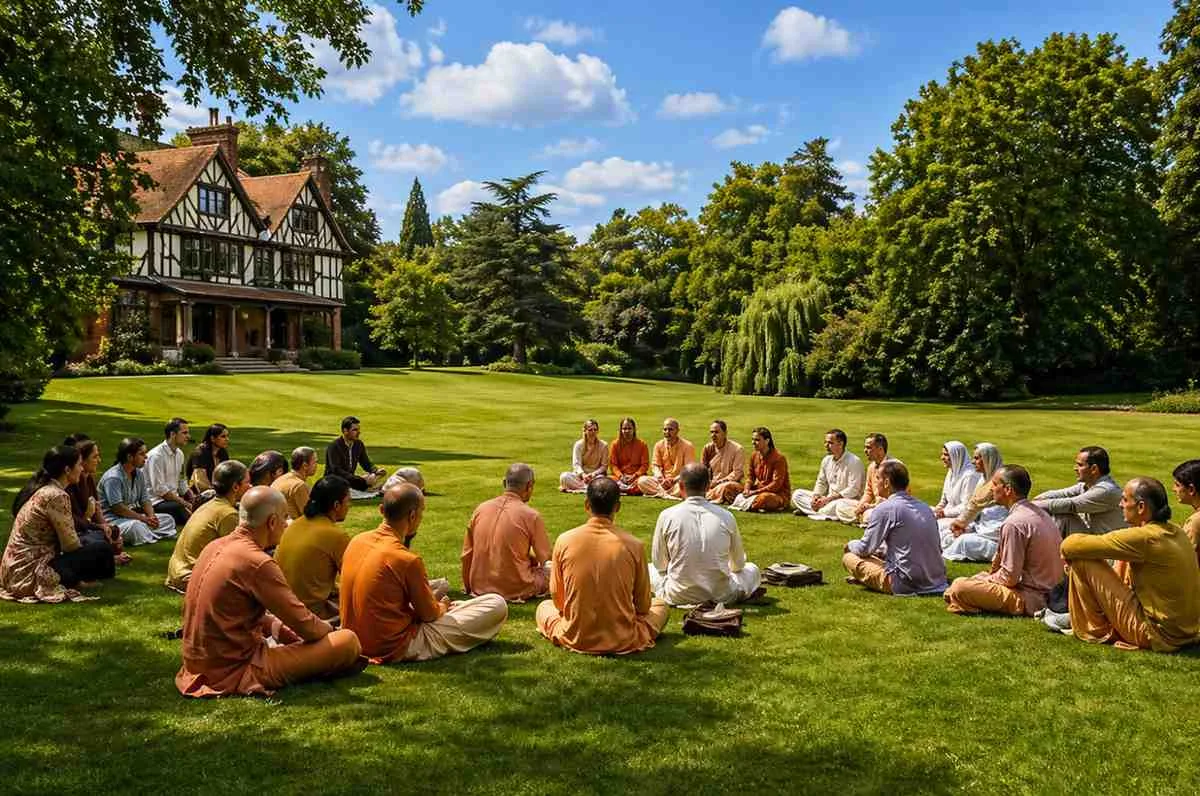
Aham Brahmasmi Meaning: Why It Is Not Ego
Aham Brahmasmi means 'I am Brahman'. Learn its context in Brihadaranyaka Upanishad 1.4.10, why Vedanta says it is not ego, and how it sits with the other three Mahavakyas.
Quick answer: Aham Brahmasmi means 'I am Brahman'. It is a statement from the Brihadaranyaka Upanishad (1.4.10) in which Brahman, the ultimate reality, is said to have known itself as 'I am Brahman', and therefore became all this. Vedanta teachers say the 'I' is the Self, not the ego. It is one of the four mahavakyas and a key idea of our Atma Paramatma Tattvam guide.
Few Sanskrit phrases are as widely quoted and as widely misunderstood. On a poster it can sound like self-glorification; in the Upanishad it is a statement about the nature of the Self, in a passage that goes on to warn against seeing oneself as separate. This guide reads the verse in context, explains the words, and compares the four mahavakyas. For the Self itself, see What is Atma?.
The Sanskrit and the word-by-word meaning
ब्रह्म वा इदमग्र आसीत् तदात्मानमेवावेदहं ब्रह्मास्मीति
brahma vā idam agra āsīt tad ātmānam evāved aham brahmāsmīti
| Word | Meaning |
|---|---|
| brahma | Brahman, the ultimate reality (the neuter noun; not Brahma the creator deity) |
| aham | I |
| asmi | am |
| tad ātmānam eva avet | it knew only itself (the Self) |
Our paraphrase of 1.4.10: 'In the beginning this was Brahman alone. It knew only itself: I am Brahman. Therefore it became all this. Whoever among the gods awoke to this became that, and so too among the sages and among human beings.' The verse goes on to mention the sage Vamadeva, who, seeing this, said 'I was Manu and the sun', and says that whoever knows 'I am Brahman' becomes this whole world. It ends with a warning: the one who worships a divinity thinking 'that one is one being and I am another' does not know.
The setting: Brihadaranyaka 1.4
Section 1.4 of the Brihadaranyaka is a creation teaching. Verse 1 says that in the beginning this was the Self alone, in the form of a person. Looking around, it saw nothing other than itself, and its first words were 'I am' (so 'ham asmi). Verse 2 says it was afraid, and that this is why a person alone is afraid; then it reflected, 'there is nothing else than me, so of what should I be afraid?' and its fear went away, 'for fear arises from a second'. The Upanishad then describes how the one became many.
Seen in this setting, 'aham brahmasmi' in 1.4.10 is not a boast by a person. It is the Self, in the beginning of the account, knowing what it is. The verse then says what a person who understands the same thing is like: the knowledge is a recognition, not a new acquisition. This is also the teaching of the lion story in our pillar guide.
Why Aham Brahmasmi is not ego
In Sanskrit ahankara means 'I-maker': the faculty that builds 'I am this body, I am this role, this is mine'. The word 'aham' in 'aham brahmasmi' is the same word 'I', which is why the statement is easily confused with ego. Vedanta teachers answer in three ways.
- The 'I' is different. The ego-sense is an 'I' tied to a body, name, job and history. The 'I' of the mahavakya is the awareness in which that sense appears. Brihadaranyaka 4.4.5 puts it as 'this Self is Brahman'. See our guide on Ahankara, the wall before self-knowledge.
- It is about all, not about me. The verse says the knower 'becomes this whole world'. An ego asks for more of the world for itself; this teaching removes the walls between self and others.
- It goes together with humility. The same verse warns against the idea 'I am one, the divine is another'. Teachers stress that the person who understands the statement is the last person to say it as a boast; devotional traditions also say that no ordinary person should claim it.
Other traditions read the verse differently. Vishishtadvaita and Dvaita teach that the individual self and the Supreme are distinct, and they interpret such statements in the light of their wider arguments; Vishishtadvaita, for example, speaks of Brahman as the inner self of every being. These readings are widely taught, and we do not ask the reader to choose between them here. For a calm comparison with the other great statement, see Tat Tvam Asi meaning.
Reading the verse line by line
- 'In the beginning this was Brahman alone.' The verse starts with the one reality before the many. It is a statement about what is, not about a person.
- 'It knew only itself: I am Brahman.' Knowledge here is self-recognition. Nothing new is acquired; what was always the case is known.
- 'Therefore it became all this.' Knowing the Self as Brahman is said to be knowing the whole. This is why teachers say that the knower does not see others as outsiders.
- 'Whoever among the gods awoke to this became that; likewise sages and humans.' The text says this knowledge is open across levels of beings; the Upanishad names the sage Vamadeva as an example who, seeing this, said 'I was Manu and the sun'.
- 'The one who thinks: that is one being, I am another, does not know.' This closing warning is as important as the opening statement. A person who takes the divine to be wholly other has not yet seen what the verse points at, according to this reading.
Common misreadings
- 'It is a slogan of self-importance.' As shown above, the verse dissolves the claim of the ego; it does not strengthen it.
- 'It denies devotion.' Traditions differ here. Advaita teachers have composed and sung devotional hymns, and Vishishtadvaita and Dvaita place devotion at the centre of their readings. The mahavakya does not forbid worship.
- 'It means I can ignore dharma.' The same Upanishad ends by teaching self-control, giving and compassion (5.2.3), and the Gita (see our complete guide) applies Self-knowledge to action.
- 'It is one sentence that can be understood by repetition.' Teachers describe understanding as the fruit of study, reflection and meditation, not of repetition alone.
The four Mahavakyas together
| Mahavakya | Meaning | Upanishad and verse | Veda (traditional) |
|---|---|---|---|
| प्रज्ञानं ब्रह्म (prajñānaṃ brahma) | Consciousness is Brahman | Aitareya 3.3 | Rigveda |
| अहं ब्रह्मास्मि (ahaṃ brahmāsmi) | I am Brahman | Brihadaranyaka 1.4.10 | Yajurveda |
| तत्त्वमसि (tat tvam asi) | You are That | Chandogya 6.8.7 | Samaveda |
| अयमात्मा ब्रह्म (ayam ātmā brahma) | This Self is Brahman | Mandukya 2 | Atharvaveda |
One way to remember them: the first defines Brahman as consciousness, the second is the knower's statement, the third is the teacher's instruction, and the fourth points to the Self that we all have. Teachers say each of the four, studied properly, leads to the same understanding. We explain the fourth in our Mandukya Upanishad guide.
अयमात्मा ब्रह्म
ayam ātmā brahma
How to approach Aham Brahmasmi respectfully
- Start with the question 'who am I?' rather than the answer. Our NRI guide has a simple routine.
- Read the verse in context (Brihadaranyaka 1.4) rather than as a quote on its own.
- Learn it from a qualified teacher or a recognised study group when you can; the tradition describes this as listening (shravana), reflection (manana) and meditation (nididhyasana).
- Do not use it to claim power, to dismiss others or to avoid responsibilities; the same Upanishad teaches compassion, restraint and giving in its closing chapters (5.2).
If you want a daily practice, try Atma Vichara for Hindus abroad; for the first book that explains the whole system for beginners, see What is Advaita Vedanta?.
Frequently asked questions
What does Aham Brahmasmi mean?
Aham Brahmasmi means 'I am Brahman': aham (I), brahma (Brahman, the ultimate reality) and asmi (am). It is the realisation of the Self as non-different from Brahman, spoken in the first person.
Where is Aham Brahmasmi found?
In the Brihadaranyaka Upanishad, chapter 1, section 4, verse 10 (1.4.10). Tradition associates this Upanishad with the Yajurveda (the White Yajurveda).
Does Aham Brahmasmi mean I am God?
No Vedanta teacher takes it to mean that the personality, the ego or the body is God. In the Advaita reading the 'I' is the Self, the witness of the mind, and the teaching removes the ego's claim to be the centre. Vishishtadvaita and Dvaita traditions read the relationship between the individual and the Lord differently.
What are the four Mahavakyas?
Tradition lists Prajnanam Brahma (Aitareya Upanishad 3.3, Rigveda), Aham Brahmasmi (Brihadaranyaka 1.4.10, Yajurveda), Tat Tvam Asi (Chandogya 6.8.7, Samaveda) and Ayam Atma Brahma (Mandukya 2, Atharvaveda).
Is Aham Brahmasmi the same as Tat Tvam Asi?
They point to the same truth from different sides. Tat Tvam Asi is what the teacher says to the student ('you are That'); Aham Brahmasmi is the understanding as the knower states it ('I am Brahman').
Is it right to chant Aham Brahmasmi as an affirmation?
Traditional teachers say the statement is to be studied with a teacher and reflected on, so that it is understood rather than used as a slogan. If you chant it, do so with reverence and understanding; it does not promise any worldly result.
How is Aham Brahmasmi different from ahankara?
Ahankara is the ego-sense, the 'I am the doer and owner' idea, which Vedanta treats as a limitation. Aham Brahmasmi is the recognition that the real 'I' is not that. Our guide on ahankara explains the first.
Editor's note (31 October 2026)
This guide is part of HinduTone's series on atma jnana, built around our pillar article from Sri Sadguru Peetham. Upanishad references are given by chapter and verse so that you can check them in a translation by a recognised teacher; translations of verses on this page are our own faithful paraphrases, not quotations from any published translation. The Sanskrit lines were checked against the Upanishad texts on sanskritdocuments.org. HinduTone offers education and devotion, not medical, psychological or financial advice, and no spiritual practice here comes with a guaranteed result. The context of 1.4.1-2 and 1.4.10 was checked against the Sanskrit text of the Brihadaranyaka.
Last updated: 31 October 2026
Also read in this series
- Atma Paramatma Tattvam: the pillar guide (lion story, Tat Tvam Asi, Advaita Vedanta)
- What is Atma? The Self in the Upanishads
- Tat Tvam Asi meaning: Chandogya Upanishad 6.8.7
- What is Advaita Vedanta? A beginner's guide
- Atma Vichara for Hindus abroad: a self-inquiry routine for busy families
- Gargi and Maitreyi: women seers of the Upanishads
Share this with family and friends
Send it on WhatsApp, post it, or copy the link.
More from Spirituality
- Love vs Attachment: What the Ramayana, the Bhagavata and Vedanta Teach About Selfless Love
- Gargi and Maitreyi: Women Seers of the Upanishads
- What Is Atma? The Self in the Upanishads, Explained
- Atma Paramatma Tattvam: Are They One? The Lion Story, Tat Tvam Asi and Advaita Vedanta
- Daiva Sankalpam (Divine Will): The Story of the Sadhu on the Sinking Boat
You might also like
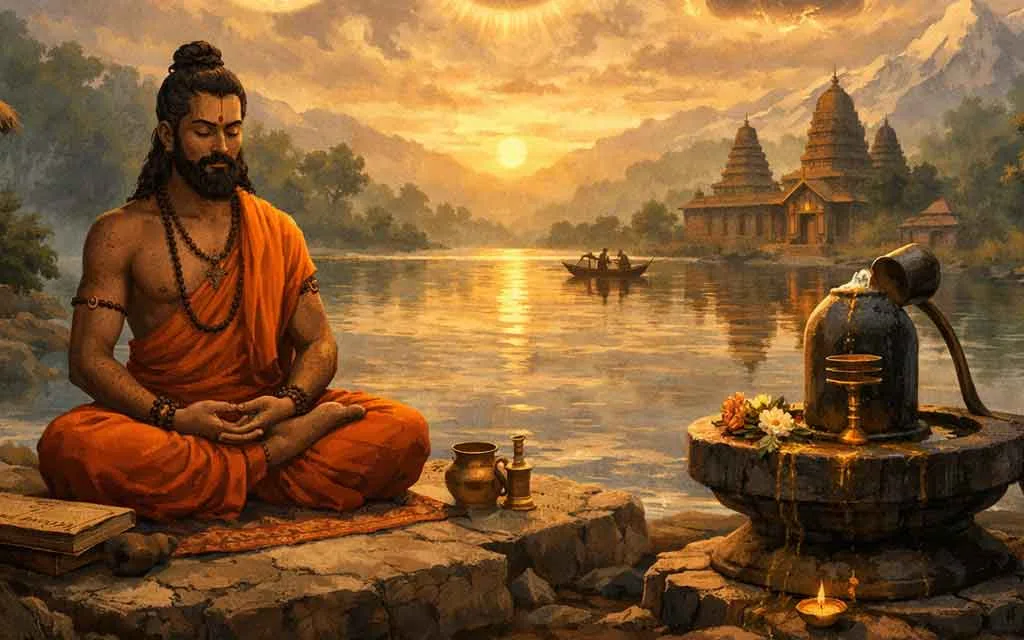
Tat Tvam Asi Meaning: Chandogya Upanishad 6.8.7 Explained
Ahankara, the Wall Before Self-Knowledge | True Knowledge Dawns When the Ego Goes
Not Wealth, Just Good Character: A Reflection on Daanam (Charity) | Selfless Giving in the Hindu Tradition