Atma Vichara for NRIs: A Self-Inquiry Routine for Busy Families
A practical atma vichara routine for Hindu families abroad: 10 to 15 minutes a day using shravana, manana and nididhyasana, 'Who am I?' journaling, weekend study, and ways to share the ideas with children.
Quick answer: Atma vichara, self-inquiry, can fit into a busy household abroad in about 10 to 15 minutes a day: a short reading (shravana), a reflection question (manana) and a few quiet minutes (nididhyasana), followed by a couple of lines in a 'Who am I?' journal. Add one weekend session with a study group or recorded class. It is based on the Upanishadic teaching in our Atma Paramatma Tattvam pillar guide, and makes no promise of results.
For many Hindus abroad the challenge is not interest but time. Between work, school runs, commuting and a calendar built around other time zones, long retreats are not realistic. The Upanishads were not only taught to people who left home; the Brihadaranyaka, for instance, shows Yajnavalkya teaching his wife Maitreyi (see Gargi and Maitreyi). This guide adapts the traditional method for ordinary weekdays. If the terms are new, read What is Atma? first.
The three-step method behind atma vichara
Vedanta describes a method in three steps, drawn from Brihadaranyaka 2.4.5 where the Self is to be 'seen, heard, reflected on and meditated on':
आत्मा वा अरे द्रष्टव्यः श्रोतव्यो मन्तव्यो निदिध्यासितव्यः
ātmā vā are draṣṭavyaḥ śrotavyo mantavyo nididhyāsitavyaḥ
| Step | Sanskrit | In plain words | In your day |
|---|---|---|---|
| 1 | Shravana | Listening to the teaching | Read or hear a short passage (2 to 3 minutes) |
| 2 | Manana | Reflecting until doubts are cleared | Take one question and think it through (5 minutes) |
| 3 | Nididhyasana | Settling into what has been understood | Sit quietly with the insight (3 to 5 minutes) |
This is a framework from the tradition, shortened to fit a modern schedule. It is not a replacement for a teacher; see 'Weekend study' below.
A 15-minute daily routine
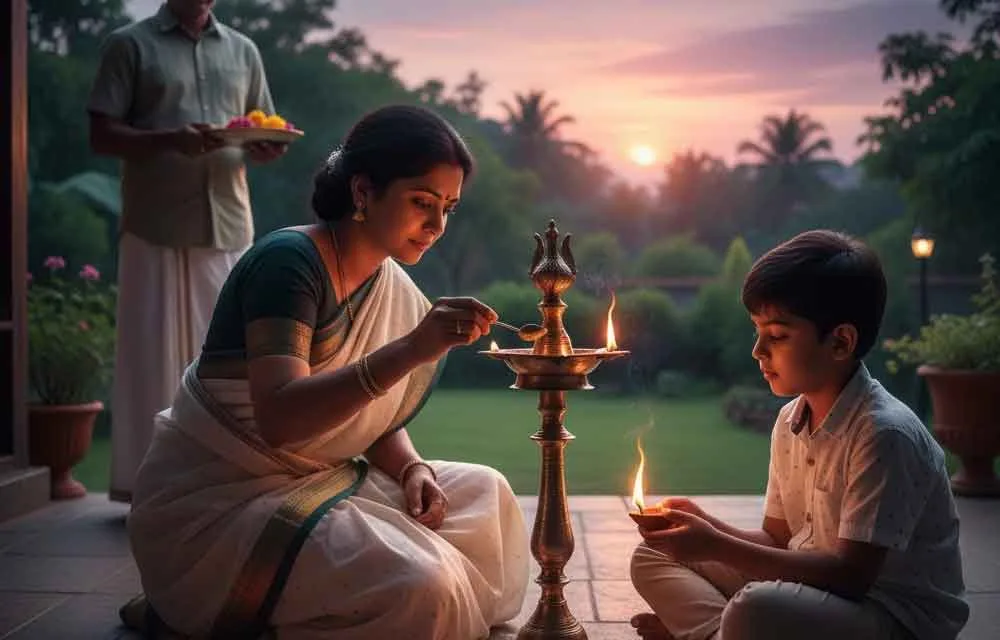
- Minutes 1 to 2: settle. Sit on a chair or on the floor. Light a lamp if you have a home altar and it fits your home; if you live in an apartment where flames are not allowed, an electric lamp is fine. Take a few slow breaths.
- Minutes 3 to 5: one short passage. Read a few lines: for example, Katha 1.2.18 (the Self is unborn), Mandukya 2 ('this Self is Brahman') or the line about Tat Tvam Asi in Tat Tvam Asi meaning. Read it slowly, in a translation you trust. Keep a small book or a phone note with the week's passage.
- Minutes 6 to 10: reflect on one question. Pick one: Who is aware of this thought? Am I the same person I was at five, fifteen or twenty-five? What in me did not change? Think it through without forcing an answer.
- Minutes 11 to 13: sit quietly. Let thoughts come and go. When you notice you were lost in a thought, notice that you noticed; that noticing is the point of the exercise.
- Minutes 14 to 15: write two lines. In your journal, write the day's passage and one sentence in answer to the question. Do not edit.
On days when you have only five minutes, read one line, ask one question and sit for two minutes. The tradition values steady practice more than long practice, and nothing here needs any special equipment.
A 'Who am I?' journaling prompt list
The question 'Who am I?' is associated with Ramana Maharshi, whose method of self-inquiry (atma vichara) is a direct investigation of the source of the 'I' feeling; see our guide to Ramana Maharshi. Ramana's practice and the study-based path of Shankara's Advaita are related but not identical, and it helps to know which you are following. A few prompts that work with either:
- When I say 'I am tired' or 'I am happy', what is the 'I' that I am talking about?
- What do I call 'mine' today, and what remains if I put those things down for a moment?
- Where did my anger or worry go when it ended, and what noticed it?
- What in my life is changing, and what is aware of the change?
- Where did I act from ego today (see ahankara)? What would have been different if I had acted from calm?
For the idea of the ego, read Ahankara, the wall before self-knowledge. Please note that journaling is a reflective exercise, not therapy.
Weekend study: a longer session
Once a week, add 45 to 60 minutes. Options include a class at a local temple or cultural centre, an online talk, a family reading circle, or a group with a regular text. Well-known organisations that run Vedanta classes in many countries include Chinmaya Mission, Arsha Vidya groups and the Vedanta Societies of the Ramakrishna Order. We name them only as examples: check each organisation's own website for what is offered near you or online, because programmes differ from place to place and change over time. If you want a voice to listen to, our guide to Swami Sarvapriyananda introduces a widely followed teacher of Advaita Vedanta.
A good group or teacher will welcome questions, will not ask you to give up your family duties and will not promise outcomes. If a group asks for large payments or secrecy, step back.
Raising children with these ideas
- Tell stories. The lion who thought it was a sheep (in the pillar guide) and the salt in the water (Chandogya 6.13) are told in a few minutes and stay with children.
- Ask, do not lecture. 'Who is listening to the story?' is a good bedtime question. Accept whatever answers come.
- Use Om. With younger children, a minute of humming Om together is an easy shared practice; the Om guide explains the meaning for older children.
- Teens: connect to their questions. Teenagers often ask about identity. The Gita and the Upanishads give a classical vocabulary for it; see Why young Hindus should learn the Gita and Upanishads.
- Let them disagree. The Upanishads are full of questions and some schools read the same texts differently. Families can enjoy this.
Time-zone friendly habits
- Fix one daily slot in your local time (early morning, a lunch break or after dinner) and treat it like an appointment.
- Keep live classes from India as an occasional extra, and use recordings and written commentary otherwise.
- Use commute time for audio talks if you travel by public transport or are walking; please do not use them while driving if you find them absorbing.
- Keep one printed or saved passage at hand for the week so that you never need to search on a busy morning.
- Pick one weekly check-in with a friend or family member who is also studying, even a ten-minute call.
A sample week
| Day | Practice | Time |
|---|---|---|
| Monday to Friday | 15-minute routine (or the 5-minute version) | 10 to 15 min |
| Saturday | Family reading or story with children | 20 min |
| Sunday | Study group, recorded class or temple discourse | 45 to 60 min |
| Any day | One journal entry on 'Who am I?' | 5 min |
Cautions and common obstacles
- This is not a medical or psychological treatment. Please see a qualified professional for health concerns.
- Do not expect a particular experience. The texts speak of understanding, not of special states.
- If you feel restless, shorten the sitting rather than skipping the practice.
- Remember that the teaching is not a reason to neglect family or work: the Gita presents Self-knowledge together with duty.
Next in this series: What is Advaita Vedanta? for a map of the school, and Aham Brahmasmi meaning for the first-person Mahavakya. See also our Bhagavad Gita complete guide.
Frequently asked questions
What is atma vichara?
Atma vichara means inquiry into the Self. In Vedanta it is the investigation of the question 'who am I?' through listening to the teaching, reflecting on it and then meditating on it. In Ramana Maharshi's teaching, the term refers to a direct inquiry into the source of the 'I' feeling.
Can I do atma vichara with a full-time job and children?
Yes. The routine on this page needs 10 to 15 minutes a day and one longer session a week. A shorter 5-minute version is given for the busiest days. Consistency matters more than length.
Do I need a guru to start?
Tradition says the teaching is received from a teacher, and a qualified teacher or study group is ideal. You can begin by reading and listening to well-known teachers while you look for a group or class. Do not feel pressured to commit to any group that does not suit you.
Which organisations offer Vedanta classes for Hindus abroad?
Well-known examples include Chinmaya Mission, Arsha Vidya groups, and the Vedanta Societies of the Ramakrishna Order. We list them only as examples; please check each organisation's own website for what it currently offers near you or online.
How do I talk to my children about the Atma?
Use stories, questions and wonder rather than lectures. The lion story in our pillar guide, the salt-in-water example from the Chandogya Upanishad, and simple questions such as 'who is it that is listening?' work for many ages. Let children's questions lead.
Will atma vichara reduce my stress?
We cannot promise that. Many people find quiet reflection restful, but atma vichara is a spiritual inquiry, not a medical or psychological treatment. If you are struggling with anxiety, depression or other health concerns, please speak with a qualified professional.
How do I fit this around different time zones?
Choose a fixed daily slot in your own local time, use recorded talks and written commentary, and treat live classes from India as a bonus. Many study groups record sessions, so check what is offered.
Editor's note (31 October 2026)
This guide is part of HinduTone's series on atma jnana, built around our pillar article from Sri Sadguru Peetham. Upanishad references are given by chapter and verse so that you can check them in a translation by a recognised teacher; translations of verses on this page are our own faithful paraphrases, not quotations from any published translation. The Sanskrit lines were checked against the Upanishad texts on sanskritdocuments.org. HinduTone offers education and devotion, not medical, psychological or financial advice, and no spiritual practice here comes with a guaranteed result. The routine is a practical adaptation, not a prescription. Organisation names are given only as well-known examples.
Last updated: 31 October 2026
Also read in this series
- Atma Paramatma Tattvam: the pillar guide (lion story, Tat Tvam Asi, Advaita Vedanta)
- What is Atma? The Self in the Upanishads
- Tat Tvam Asi meaning: Chandogya Upanishad 6.8.7
- Aham Brahmasmi meaning: why it is not ego
- What is Advaita Vedanta? A beginner's guide
- Gargi and Maitreyi: women seers of the Upanishads
Share this with family and friends
Send it on WhatsApp, post it, or copy the link.
More from Spirituality
- Love vs Attachment: What the Ramayana, the Bhagavata and Vedanta Teach About Selfless Love
- Tat Tvam Asi Meaning: Chandogya Upanishad 6.8.7 Explained
- Not Wealth, Just Good Character: A Reflection on Daanam (Charity) | Selfless Giving in the Hindu Tradition
- Daiva Sankalpam (Divine Will): The Story of the Sadhu on the Sinking Boat
- Chilkur Balaji 'Visa Balaji' Temple: The 11 and 108 Pradakshina Custom Explained for NRIs
You might also like

What Is Atma? The Self in the Upanishads, Explained
Atma Paramatma Tattvam: Are They One? The Lion Story, Tat Tvam Asi and Advaita Vedanta
Ahankara, the Wall Before Self-Knowledge | True Knowledge Dawns When the Ego Goes