Kashi Vishwanath Ashtakam (Gangataranga Ramaniya Jatakalapam): Full Text with Meaning
The Kashi Vishwanathashtakam, 'gangataranga ramaniya jatakalapam', praises Shiva as Vishwanatha, lord of the city of Varanasi, with the refrain 'varanasipurapatim bhaja vishvanatham'. Here are all its verses in Devanagari and IAST from sanskritdocuments.org (attributed to the sage Vyasa in its colophon), with our own verse-by-verse meaning and how it is recited at home and in Kashi.
Quick answer: The Kashi Vishwanathashtakam (Vishwanathashtakam) beginning 'gangātaraṅgaramaṇīyajaṭākalāpaṃ' is a hymn of 8 verses with a two-verse phalashruti to Shiva as Vishwanatha, Lord of Kashi (Varanasi). Every verse ends 'vārāṇasīpurapatiṃ bhaja viśvanātham' ('worship Vishwanatha, Lord of the city of Varanasi'). Its colophon attributes it to the sage Vyasa.
Last updated: 21 October 2026. The Sanskrit below is the complete text published by sanskritdocuments.org (file vishvanaatha8.itx, transliterated and proofread by Subramanian Ganesh; Author field: Traditional; colophon: composed by the great sage Vyasa), converted to Devanagari and IAST by software from the source, with no word typed by hand and no letter changed. Our own plain-English meaning follows every verse.
Kashi Vishwanathashtakam: full text with meaning
Each verse appears in Devanagari and then in IAST transliteration, followed by its meaning. The verses are in the flowing vasantatilaka metre, four lines of fourteen syllables.
Vishwanatha, Lord of Kashi (verses 1 to 4)
Verse 1
गङ्गातरंगरमणीयजटाकलापं
गौरीनिरन्तरविभूषितवामभागम् ।
नारायणप्रियमनंगमदापहारं
वाराणसीपुरपतिं भज विश्वनाथम् ॥ १॥
gaṅgātaraṃgaramaṇīyajaṭākalāpaṃ
gaurīnirantaravibhūṣitavāmabhāgam |
nārāyaṇapriyamanaṃgamadāpahāraṃ
vārāṇasīpurapatiṃ bhaja viśvanātham || 1||
Meaning: Whose mass of matted hair is made lovely by the waves of the Ganga, whose left side is always adorned by Gauri; who is dear to Narayana and humbled the pride of Kama, the bodiless god of love: worship Vishwanatha, the Lord of the city of Varanasi.
Verse 2
वाचामगोचरमनेकगुणस्वरूपं
वागीशविष्णुसुरसेवितपादपीठम् ।
वामेनविग्रहवरेणकलत्रवन्तं
वाराणसीपुरपतिं भज विश्वनाथम् ॥ २॥
vācāmagocaramanekaguṇasvarūpaṃ
vāgīśaviṣṇusurasevitapādapīṭham |
vāmenavigrahavareṇakalatravantaṃ
vārāṇasīpurapatiṃ bhaja viśvanātham || 2||
Meaning: Who is beyond the reach of words, whose nature holds countless virtues, whose footstool is served by Brahma, Vishnu and the gods; who keeps his consort in the left half of his noble form: worship Vishwanatha, the Lord of the city of Varanasi.
Verse 3
भूताधिपं भुजगभूषणभूषितांगं
व्याघ्राजिनांबरधरं जटिलं त्रिनेत्रम् ।
पाशांकुशाभयवरप्रदशूलपाणिं
वाराणसीपुरपतिं भज विश्वनाथम् ॥ ३॥
bhūtādhipaṃ bhujagabhūṣaṇabhūṣitāṃgaṃ
vyāghrājināṃbaradharaṃ jaṭilaṃ trinetram |
pāśāṃkuśābhayavarapradaśūlapāṇiṃ
vārāṇasīpurapatiṃ bhaja viśvanātham || 3||
Meaning: The Lord of all beings, whose limbs are adorned with serpents, who wears the tiger skin as his garment, with matted hair and three eyes; who holds the noose and the goad, gives fearlessness and boons, and bears the trident: worship Vishwanatha, the Lord of the city of Varanasi.
Verse 4
शीतांशुशोभितकिरीटविराजमानं
भालेक्षणानलविशोषितपंचबाणम् ।
नागाधिपारचितभासुरकर्णपूरं
वाराणसीपुरपतिं भज विश्वनाथम् ॥ ४॥
śītāṃśuśobhitakirīṭavirājamānaṃ
bhālekṣaṇānalaviśoṣitapaṃcabāṇam |
nāgādhipāracitabhāsurakarṇapūraṃ
vārāṇasīpurapatiṃ bhaja viśvanātham || 4||
Meaning: Who shines with a crown made beautiful by the cool-rayed moon, who burned the five-arrowed Kama with the fire of the eye on his forehead; whose brilliant ear-ornaments are made by the king of serpents: worship Vishwanatha, the Lord of the city of Varanasi.
The Lord who removes sin and fear (verses 5 to 8)
Verse 5
पंचाननं दुरितमत्तमतङ्गजानां
नागान्तकं दनुजपुंगवपन्नगानाम् ।
दावानलं मरणशोकजराटवीनां
वाराणसीपुरपतिं भज विश्वनाथम् ॥ ५॥
paṃcānanaṃ duritamattamataṅgajānāṃ
nāgāntakaṃ danujapuṃgavapannagānām |
dāvānalaṃ maraṇaśokajarāṭavīnāṃ
vārāṇasīpurapatiṃ bhaja viśvanātham || 5||
Meaning: A lion to the maddened elephants of sin, a Garuda to the serpents that are the demon chiefs, a forest fire to the forests of death, grief and old age: worship Vishwanatha, the Lord of the city of Varanasi.
Verse 6
तेजोमयं सगुणनिर्गुणमद्वितीयं
आनन्दकन्दमपराजितमप्रमेयम् ।
नागात्मकं सकलनिष्कलमात्मरूपं
वाराणसीपुरपतिं भज विश्वनाथम् ॥ ६॥
tejomayaṃ saguṇanirguṇamadvitīyaṃ
ānandakandamaparājitamaprameyam |
nāgātmakaṃ sakalaniṣkalamātmarūpaṃ
vārāṇasīpurapatiṃ bhaja viśvanātham || 6||
Meaning: The radiant one, with qualities and beyond qualities, without a second, the root of bliss, unconquered and immeasurable; whose self is the serpent (as the source prints 'nāgātmakaṃ'; see the note), with parts and without parts, whose form is the Self: worship Vishwanatha, the Lord of the city of Varanasi.
Verse 7
रागादिदोषरहितं स्वजनानुरागं
वैराग्यशान्तिनिलयं गिरिजासहायम् ।
माधुर्यधैर्यसुभगं गरलाभिरामं
वाराणसीपुरपतिं भज विश्वनाथम् ॥ ७॥
rāgādidoṣarahitaṃ svajanānurāgaṃ
vairāgyaśāntinilayaṃ girijāsahāyam |
mādhuryadhairyasubhagaṃ garalābhirāmaṃ
vārāṇasīpurapatiṃ bhaja viśvanātham || 7||
Meaning: Free from faults such as passion, loving to his own devotees, the home of dispassion and peace, the companion of Girija (Parvati); lovely in sweetness and steadiness, beautiful even with the poison in his throat: worship Vishwanatha, the Lord of the city of Varanasi.
Verse 8
आशां विहाय परिहृत्य परस्य निन्दां
पापे रतिं च सुनिवार्य मनः समाधौ ।
आदाय हृत्कमलमध्यगतं परेशं
वाराणसीपुरपतिं भज विश्वनाथम् ॥ ८॥
āśāṃ vihāya parihṛtya parasya nindāṃ
pāpe ratiṃ ca sunivārya manaḥ samādhau |
ādāya hṛtkamalamadhyagataṃ pareśaṃ
vārāṇasīpurapatiṃ bhaja viśvanātham || 8||
Meaning: Giving up craving, leaving aside the blame of others, turning the mind away from delight in wrongdoing and setting it in stillness, take hold of the supreme Lord who dwells in the lotus of the heart, and worship Vishwanatha, the Lord of the city of Varanasi.
Phalashruti (verses 9 and 10)
Verse 9 (phalashruti)
वाराणसीपुरपतेः स्तवनं शिवस्य
व्याख्यातमष्टकमिदं पठते मनुष्यः ।
विद्यां श्रियं विपुलसौख्यमनन्तकीर्तिं
सम्प्राप्य देहविलये लभते च मोक्षम् ॥ ९॥
vārāṇasīpurapateḥ stavanaṃ śivasya
vyākhyātamaṣṭakamidaṃ paṭhate manuṣyaḥ |
vidyāṃ śriyaṃ vipulasaukhyamanantakīrtiṃ
samprāpya dehavilaye labhate ca mokṣam || 9||
Meaning: Whoever recites this ashtakam, the hymn to Shiva, Lord of the city of Varanasi, as it has been taught, gains learning, prosperity, great happiness and endless fame, and when the body falls attains liberation.
Verse 10 (closing verse, unnumbered in the source)
विश्वनाथाष्टकमिदं यः पठेच्छिवसन्निधौ ।
शिवलोकमवाप्नोति शिवेन सह मोदते ॥
viśvanāthāṣṭakamidaṃ yaḥ paṭhecchivasannidhau |
śivalokamavāpnoti śivena saha modate ||
Meaning: Whoever recites this Vishwanathashtakam in the presence of Shiva reaches the world of Shiva and rejoices with Shiva.
Colophon
॥ इति श्रीमहर्षिव्यासप्रणीतं श्रीविश्वनाथाष्टकं सम्पूर्णम् ॥
|| iti śrīmaharṣivyāsapraṇītaṃ śrīviśvanāthāṣṭakaṃ sampūrṇam ||
Meaning: Thus ends the Sri Vishwanathashtakam, composed by the great sage Vyasa.
Vishwanatha and the city of Kashi
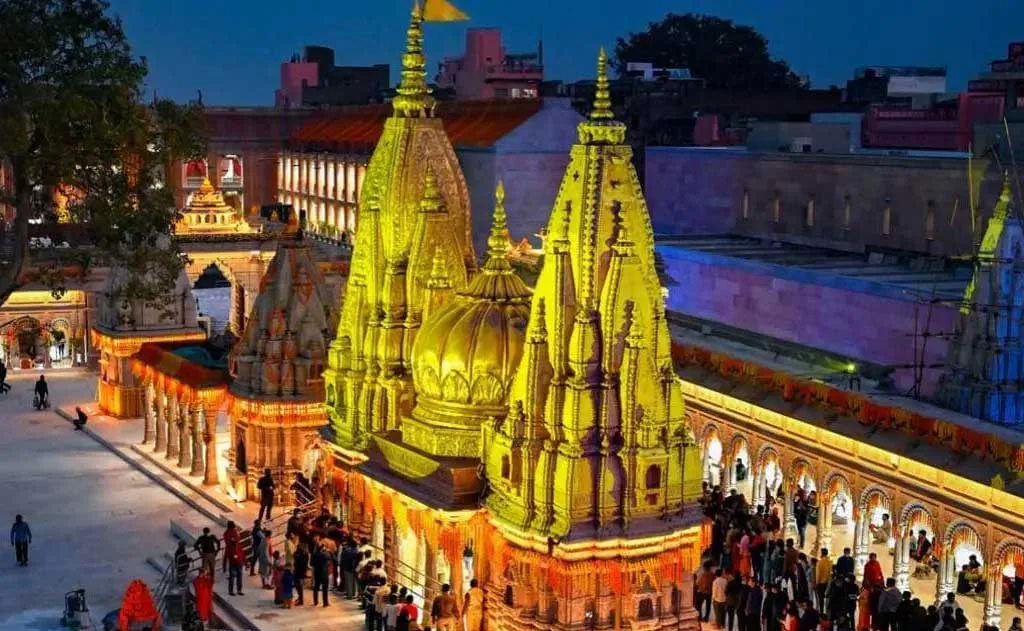
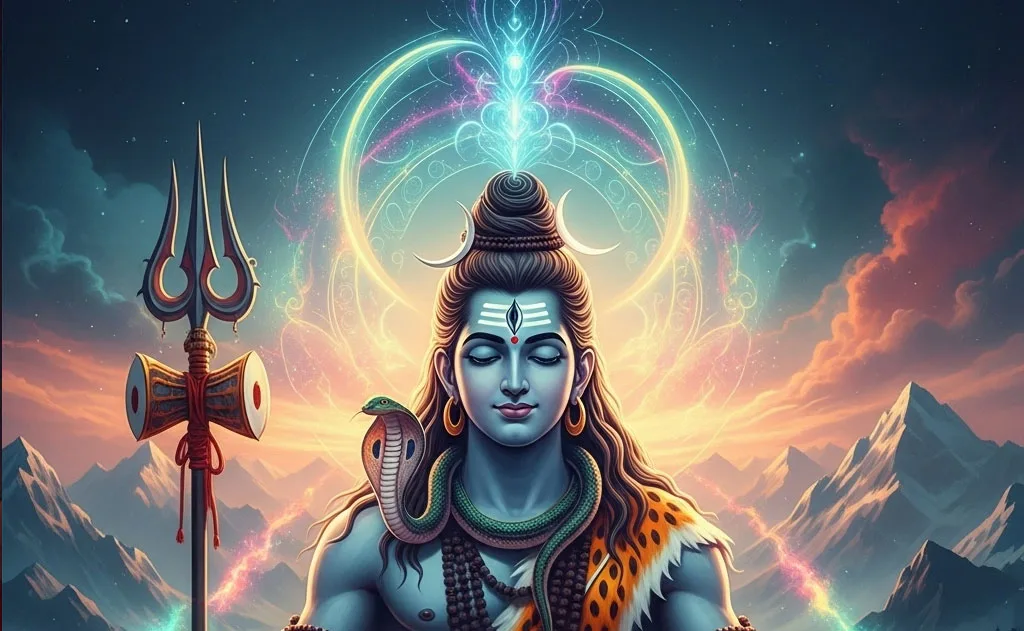
Kashi, also called Varanasi and Banaras, is Shiva's own city on the Ganga, and the Kashi Vishwanath temple is one of the twelve jyotirlingas (see why Kashi Vishwanath is revered as the jyotirlinga of liberation). The hymn moves from the image of the Lord (the Ganga in his hair, Gauri at his side, serpents, tiger skin and trident) to his power over sin and death, and ends with an inner instruction: drop craving and blame, still the mind, and find the Lord in the lotus of the heart. For other shrines of the city, see our guide to famous temples in Uttar Pradesh and the Kalabhairava temple, guardian of Kashi.
| Verse | What it shows |
|---|---|
| 1 | the Ganga in his hair, Gauri at his left, dear to Narayana |
| 2 | beyond words, served by Brahma and Vishnu, with his consort |
| 3 | serpents, tiger skin, three eyes, noose, goad and trident |
| 4 | the moon on his crown, the forehead eye that burned Kama |
| 5 | lion to sin, Garuda to demons, forest fire to death and grief |
| 6 | with and beyond qualities, one without a second, the Self |
| 7 | free of passion, companion of Parvati, the poison in his throat |
| 8 | the inner path: give up craving and blame, find him in the heart |
When is it traditionally recited?
- On Mondays: Shiva's day. See the guide to Monday in Hinduism and the Monday rituals guide for NRI families.
- In Karthika Masam: on the Karthika Somavarams of 2026 and on the next Masik Shivaratri, Saturday 7 November 2026 (dates for India; check your local panchang abroad).
- On Kartik Purnima and Dev Deepawali: when the ghats of Varanasi are lit with lamps; see Dev Deepawali in Varanasi and the Kartik Purnima 2026 guide.
- On Kalabhairav Jayanti: Tuesday 1 December 2026, together with the Kalabhairava Ashtakam, since Kalabhairava is the guardian of Kashi.
- On pilgrimage: many pilgrims recite it before darshan; check the temple's official website for current timings and rules.
How to recite it at home
- Light a lamp before a Shiva lingam or an image of Shiva; if you have Ganga water, offer a few drops.
- Recite the eight verses; the family can join in the refrain 'vārāṇasīpurapatiṃ bhaja viśvanātham'.
- End with the two closing verses and aarti.
- Pair it with the Ganga Stotram and the Annapurna Stotram: Ganga, Annapurna and Vishwanatha are the three presences of Kashi.
- On a longer day, add the Dwadasa Jyotirlinga Stotram.
Pronunciation help
- The metre is vasantatilaka; each line has a lilt of 'DUM-DUM-da-DUM-da-da-da-DUM-da-da-DUM-da-DUM-DUM'. Let the long syllables ring.
- A line over a vowel (ā, ī, ū) means it is held twice as long; ṅ is the 'ng' in 'gaṅgā'; ṭ and ḍ are said with the tongue curled back.
- 'Vārāṇasī' has three long vowels: 'vaa-raa-na-see'.
Traditional beliefs about the Vishwanathashtakam
Devotees traditionally believe that reciting this hymn with devotion:
- brings the grace of Vishwanatha even to those far from Kashi;
- burns away sin and fear, as verse 5 pictures with the lion, Garuda and the forest fire;
- turns the mind inward, as verse 8 teaches, which is itself the heart of the practice.
These are matters of faith. The hymn is worship and a teaching for the mind, not a promise of learning, wealth or any particular result.
Tips for NRI families
- Plan a Kashi visit around a festival. Dev Deepawali and the Karthika month are the most loved times; our Kashi Vishwanath temple page has the background.
- Teach verse 8 as a value. 'Give up craving, do not blame others, keep the mind still' is a lesson children can carry to school and work.
- Go further. Try the Shivashtakam and the Kalabhairava Ashtakam.
Frequently asked questions
Who composed the Kashi Vishwanathashtakam?
The colophon of the sanskritdocuments.org text says it was 'composed by the great sage Vyasa' (maharshi-vyasa-pranitam); the file's Author field says 'Traditional'. That is the attribution we give.
What does the refrain mean?
'Vārāṇasīpurapatiṃ bhaja viśvanātham' means 'worship Vishwanatha, the Lord of the city of Varanasi'. Vishwanatha means 'Lord of the universe'; in Kashi he is worshipped as one of the twelve jyotirlingas.
How many verses does it have?
Eight verses of praise, a ninth verse that gives the fruit of reciting it, and one short closing verse that the source prints without a number. We give all ten, numbered for easy reference.
When is it traditionally recited?
On Mondays, in Karthika Masam (the Karthika Somavarams of 2026 are 16, 23 and 30 November and 7 December), on Masik Shivaratri, on Dev Deepawali and Kartik Purnima in Varanasi (Tuesday 24 November 2026), and by pilgrims before darshan at the Kashi Vishwanath temple.
Can I recite it if I cannot visit Kashi?
Yes. The last verse speaks of reciting it 'in the presence of Shiva', which families take to mean before any Shiva lingam or image, at home or in a local temple.
What does the phalashruti promise?
Verse 9 speaks of learning, prosperity, happiness, fame and liberation, and verse 10 of reaching Shiva's world. Devotees traditionally believe it brings Vishwanatha's grace; it is an act of faith, not a guarantee of any worldly result.
Editor's note (21 October 2026)
This page was published on 21 October 2026 at the address readers and search engines were already requesting. The Sanskrit is the full text of the Vishvanathashtakam on sanskritdocuments.org (file vishvanaatha8.itx, transliterated and proofread by Subramanian Ganesh; Author field: Traditional). The attribution to Vyasa is the source's colophon, given as it stands. sanskritdocuments.org has no second copy of this hymn (its Vishvanathashtaka Stotram and Kashi Vishvanatha Stotram are different hymns), so no letter is changed. Two readings are kept exactly as printed: verse 6 'nāgātmakaṃ' (many printed editions read 'nādātmakaṃ', 'whose self is sound'; our meaning follows the source), and verse 2 'vāmenavigrahavareṇakalatravantaṃ', written as one word. The closing anushtubh verse is unnumbered in the source; we number it 10 for reference. The meanings are our own.
Related guides
Share this with family and friends
Send it on WhatsApp, post it, or copy the link.
You might also like
Durgashtakam (Katyayani Mahamaye): Full Sanskrit Text with Meaning
Ganeshashtakam (Yato Anantashakteh) from the Ganesha Purana: Full Text with Meaning
Shivashtakam (Prabhum Prananatham Vibhum Vishvanatham): Full Text with Meaning