
Monday Shiva Puja: Somvar Vrat, Om Namah Shivaya Mantra and Rituals
Monday (Somvar) is dedicated to Lord Shiva. Offer water or milk to the Shivalinga, place bilva leaves, chant Om Namah Shivaya and, if you wish, keep the Somvar vrat. Here is the home puja step by step, verified mantras with meaning, the types of Monday fast with food options, the twelve Jyotirlingas and regional customs from Sawan to Karthika.
Monday (Somvar) is dedicated to Lord Shiva. Offer water or milk to the Shivalinga, place bilva leaves, chant Om Namah Shivaya and, if you wish, keep the Somvar vrat.
Quick answer: Monday is Lord Shiva's day. Its Sanskrit name, Somavara, means the day of Soma, the Moon, whom Shiva wears as a crescent on his head. On Monday devotees bathe the Shivalinga with water (and a little milk), offer bilva leaves and white flowers, chant Om Namah Shivaya and often keep the Somvar vrat, eating fruit and milk by day and one simple meal after the evening puja.
Last updated: 10 October 2026. This is the Monday chapter of our Hindu days of the week guide, where you can compare all seven days at a glance.
This guide covers why Monday belongs to Shiva, a home abhishekam you can do in fifteen minutes, what to offer and what tradition leaves out, four verified mantras with meaning, the different Monday fasts and what to eat, mistakes to avoid, the twelve Jyotirlingas, Shiva worship abroad, ideas for children, and the many regional forms of Monday devotion.
Why Monday belongs to Shiva
Every weekday takes its name from a graha, and Monday's is the Moon: Somavara in Sanskrit, Somvar in Hindi, Somavaram in Telugu and Tamil. The link to Shiva runs through the Moon itself. Shiva is Chandrashekhara, 'the one crowned with the moon', and Somanatha, 'lord of Soma'. The Navagraha Stotram makes the connection explicit: its verse for Chandra ends by calling the Moon śambhor mukuṭa-bhūṣaṇam, the jewel on Shambhu's crown.
The Puranic story most often told is that of Chandra and Daksha. The Moon married the twenty-seven daughters of Daksha, the nakshatras, but favoured Rohini. Daksha cursed him to waste away. Chandra worshipped Shiva at Prabhasa on the Gujarat coast, and Shiva eased the curse so that the Moon now wanes and waxes instead of disappearing for ever. The shrine there became Somnath, the first of the twelve Jyotirlingas, and the day of the Moon became a day of thanks to the god who saved him.
A second strand is Parvati's devotion. Many Monday vrat kathas tell how Parvati, or a devoted woman inspired by her, won Shiva's grace by fasting on Mondays. This is why the Somvar vrat is especially popular with young women praying for a good life partner and with married couples praying for harmony. It is not limited to them: the vrat is kept by men, older people and whole families.
Shiva himself is the ascetic and the householder at once: the meditating yogi of Kailasa, the cosmic dancer Nataraja, the husband of Parvati and father of Ganesha and Kartikeya. He is easy to please, the stories say, which is why a little water and a leaf are enough for his worship. Learn more on our Lord Shiva page.
What you need for Monday puja
- A Shivalinga or a picture of Shiva. A small stone, brass or crystal lingam on a plate (with a spout, the yoni-pitha) is ideal for abhishekam. A framed picture works too; you then offer water to a small bowl in front of it.
- Water, ideally in a copper or brass vessel, and a small spoon of milk. Curd, honey, ghee and sugar (the panchamrita) are optional extras.
- Bilva (bel) leaves, the traditional three-leaflet sprigs. Many Indian grocery shops abroad sell them fresh or frozen before Shravan and Mahashivratri.
- White flowers, such as jasmine or white oleander, and fresh water for the flowers.
- Vibhuti (sacred ash), sandalwood paste and a few grains of unbroken rice.
- A ghee lamp, incense and a simple naivedya: fruit, milk sweets or a little sugar.
Step-by-step Monday Shiva puja at home
You can do this in the morning or at dusk. Many people do a short morning offering and a fuller puja in the evening before breaking the fast.
- Bathe and prepare. Wear clean clothes; white or light colours are traditional on Monday. Clean the puja space and place the lingam on its plate.
- Remember Ganesha. Begin with a short prayer to Ganesha, as Hindu worship traditionally does, so the puja proceeds without obstacles.
- Sankalpa. Hold a little water in your right palm, state your name and the purpose of the puja in your own words, and let the water fall onto the plate.
- Abhishekam with water. Pour water slowly over the lingam while chanting Om Namah Shivaya. Pouring in a steady thin stream, rather than a splash, is the classical method.
- Milk and panchamrita (optional). Offer a spoonful of milk, then any of curd, honey, ghee and sugar, and finish with plain water to rinse.
- Dry and adorn. Wipe the lingam gently, apply sandalwood paste and three horizontal lines of vibhuti, and place a few grains of rice.
- Offer bilva. Place the bilva sprigs on the lingam with the smooth side facing down and the stem towards you, chanting Om Namah Shivaya with each one. One, three or eleven sprigs are common.
- Flowers, lamp and incense. Offer white flowers, light the lamp and incense.
- Chant. Recite Om Namah Shivaya 108 times on a rudraksha mala, or the Shiva Panchakshara Stotram below. Add the Mahamrityunjaya mantra if it is your family's practice.
- Naivedya and aarti. Offer the fruit or sweet, perform aarti with the lamp and sing a Shiva bhajan if you like.
- Close quietly. Bow, ask forgiveness for any mistakes in the worship, and sit for a minute in silence.
Collect the abhisheka water from the spout and pour it into a plant pot or garden rather than down the sink. Some families keep a little as tirtha to sip.
Offerings, and what tradition leaves out
| Offering | Why it is offered | Practical tip |
|---|---|---|
| Water | The essential offering; Shiva bears the Ganga in his hair | Tap water is fine; use a slow, thin stream |
| Milk | Coolness and purity | A spoonful is enough; follow with water |
| Bilva leaves | Shiva's favourite leaf; three leaflets read as his three eyes or the three gunas | Wash gently; a slightly torn leaf is still acceptable in many families |
| White flowers | Calm and purity, the colour of the Moon | Jasmine, white oleander or any fresh white flower |
| Vibhuti | Shiva's ash, a reminder of impermanence | Three horizontal lines on the lingam or your forehead |
| Rudraksha | Shiva's bead, used for japa | Any mala you already use is acceptable |
By long custom a few things are usually not offered on the Shivalinga: the ketaki (screwpine) flower, which a Puranic story says Shiva rejected after it bore false witness for Brahma; tulsi leaves, which belong to Vishnu; turmeric, which many families reserve for the Goddess and auspicious ceremonies; and broken rice. Practice varies, and none of these is a cause for fear if a mistake is made in innocence.
Verified Shiva mantras for Monday
The texts below come from our checked source files (sanskritdocuments.org editions) and are inserted without retyping.
1. Om Namah Shivaya (Panchakshari)
ॐ नमः शिवाय॥
oṃ namaḥ śivāya||
Meaning: Om, salutations to Shiva, the auspicious one. The five syllables na-maḥ-śi-vā-ya give the mantra its name, Panchakshari. It appears in the Shri Rudram of the Yajurveda and needs no initiation for ordinary chanting. 108 repetitions on a mala take about ten minutes.
2. Mahamrityunjaya mantra (Rigveda 7.59.12)
ॐ त्र्यम्बकं यजामहे सुगन्धिं पुष्टिवर्धनम्। उर्वारुकमिव बन्धनान्मृत्योर्मुक्षीय माऽमृतात्॥
oṃ tryambakaṃ yajāmahe sugandhiṃ puṣṭivardhanam| urvārukamiva bandhanānmṛtyormukṣīya mā'mṛtāt||
Meaning: We worship the three-eyed one, fragrant, who nourishes all growth. As the ripe cucumber is freed from its stalk, may he free us from death, and not from immortality.
Traditionally chanted for health and courage, especially when someone in the family is unwell. It is a prayer for peace of mind and grace, not a substitute for medical care. See our Mahamrityunjaya mantra guide for pronunciation.
3. Shiva Panchakshara Stotram (Adi Shankara)
Each of its five verses is built on one syllable of na-maḥ-śi-vā-ya. Here are the first and fifth verses and the closing verse.
नागेन्द्रहाराय त्रिलोचनाय भस्माङ्गरागाय महेश्वराय ।
नित्याय शुद्धाय दिगम्बराय तस्मै नकाराय नमः शिवाय ॥ १॥
nāgendrahārāya trilocanāya bhasmāṅgarāgāya maheśvarāya |
nityāya śuddhāya digambarāya tasmai nakārāya namaḥ śivāya || 1||
Meaning of verse 1: To him who wears the king of serpents as a garland, the three-eyed one, whose body is smeared with ash, the great lord, eternal, pure, clothed in the directions: to that Shiva, who is the syllable 'na', salutations.
यक्षस्वरूपाय जटाधराय पिनाकहस्ताय सनातनाय ।
दिव्याय देवाय दिगम्बराय तस्मै यकाराय नमः शिवाय ॥ ५॥
yakṣasvarūpāya jaṭādharāya pinākahastāya sanātanāya |
divyāya devāya digambarāya tasmai yakārāya namaḥ śivāya || 5||
Meaning of verse 5: To him who has taken the form of a yaksha, who wears matted locks, who holds the Pinaka bow in his hand, the ancient lord, divine, digambara: to that Shiva, who is the syllable 'ya', salutations.
पंचाक्षरमिदं पुण्यं यः पठेच्छिवसन्निधौ ।
शिवलोकमवाप्नोति शिवेन सह मोदते ॥
॥ इति श्रीमच्छंकराचार्यविरचितं शिवपञ्चाक्षरस्तोत्रं समाप्तम् ॥
paṃcākṣaramidaṃ puṇyaṃ yaḥ paṭhecchivasannidhau |
śivalokamavāpnoti śivena saha modate ||
|| iti śrīmacchaṃkarācāryaviracitaṃ śivapañcākṣarastotraṃ samāptam ||
Meaning of the closing: Whoever recites this sacred Panchakshara hymn near Shiva attains Shiva's world and rejoices with him. Read all five verses with commentary in our Shiva Panchakshara Stotram guide.
4. Navagraha Stotram, verse for Chandra
दधिशङ्खतुषाराभं क्षीरोदार्णवसंभवम् ।
नमामि शशिनं सोमं शम्भोर्मुकुटभूषणम् ॥ २॥
dadhiśaṅkhatuṣārābhaṃ kṣīrodārṇavasaṃbhavam |
namāmi śaśinaṃ somaṃ śambhormukuṭabhūṣaṇam || 2||
Meaning: I bow to Soma, the Moon, white as curd, the conch and snow, born from the ocean of milk, the ornament on Shambhu's crown.
Other Monday favourites include the Rudrashtakam, the Shiv Chalisa, Bilvashtakam, Lingashtakam and the 108 names of Shiva. For a longer list see Monday mantras for Shiva devotees.
Types of Monday fast
| Fast | How it is kept | Typical duration |
|---|---|---|
| Somvar vrat | Fruit and milk by day, one meal after the evening puja | Every Monday, for as long as you choose |
| Solah Somvar | Same pattern, with the Solah Somvar katha read each week and an udyapan on the 17th Monday | 16 consecutive Mondays |
| Saumya Pradosh | Fast through the day and puja at dusk when Pradosh (trayodashi) falls on a Monday | Twice a month at most |
| Shravan or Sawan Somvar | Monday fasts during the monsoon month of Shravan, often with temple abhishekam | The four or five Mondays of the month |
| Karthika Somavaram | Telugu and Kannada custom of fasting until the evening stars appear, then lighting lamps | The Mondays of Karthika Masam |
Read the stories behind them in our Somavar vrat katha, Solah Somvar vrat guide, Pradosham guide and Karthika Somavaram vratham katha.
What to eat on a Monday fast
- Allowed in most traditions: fruit, milk, curd, buttermilk, paneer, makhana, peanuts, sabudana khichdi or vada, boiled potato or sweet potato, kuttu (buckwheat), singhara (water chestnut) or rajgira (amaranth) flour rotis, and rock salt.
- Usually avoided: wheat, rice and pulses during the day, ordinary table salt, onion, garlic, meat, eggs and alcohol.
- Breaking the fast: after the evening puja, with a simple sattvic meal. Some families break it with kheer or a sweet offered to Shiva first.
If you cannot fast
You do not need to fast to worship Shiva on Monday. Choose what fits your life: a vegetarian Monday; skipping one meal; giving up one habit for the day; an evening lamp and 108 Om Namah Shivaya after work; or feeding someone. A student, a shift worker or a new mother can keep Monday sacred without going hungry.
Health note: People with diabetes, blood-pressure problems, kidney disease or a history of eating disorders, pregnant or breastfeeding women and anyone on regular medication should speak to a doctor before fasting. Stay hydrated. Children and older relatives should keep, at most, a symbolic fast such as avoiding one food.
Do's and don'ts for Monday
- Do offer at least water and a leaf, even on your busiest Monday.
- Do keep the mind calm. The Moon governs the mind in jyotisha, and many people make Monday a day for patience and gentle speech.
- Do wear white or light colours if you like; it is a custom, not a requirement.
- Do walk only half-way around a Shivalinga in a temple and turn back, so as not to step over the channel that carries the abhisheka water. This is the widespread temple custom.
- Don't waste milk. Use a little and share prasad milk with family or those in need.
- Don't worry that a missed Monday cancels your devotion. Simply continue the next week.
Common mistakes
- Pouring litres of milk. A spoonful is traditional at home. The intention, not the quantity, is the offering.
- Placing bilva upside up and stem away. The usual practice is smooth side down, stem facing the devotee.
- Offering dhatura without care. Dhatura appears in Shiva iconography, but the plant is poisonous. It is not needed for home worship, and should never be within reach of children.
- Full pradakshina around the lingam in a temple. Follow the half-circle custom and the priest's guidance.
- Mixing up Solah Somvar counts. Mark each Monday on a calendar. If you miss one through illness, many traditions allow you to add one at the end.
- Over-promising results. Shiva devotion is traditionally believed to bring peace and grace; it is not a guaranteed formula for marriage, money or recovery from illness.
The twelve Jyotirlingas
The Jyotirlingas are the twelve shrines where, by tradition, Shiva appeared as an endless pillar of light. Visiting one on a Monday, or during Shravan or Mahashivratri, is a lifelong wish for many devotees. The places below follow the well-known hymn that names the twelve; links lead to HinduTone's source-checked temple pages.
| Jyotirlinga | State | Note |
|---|---|---|
| Somnath | Gujarat | Prabhas Patan on the Saurashtra coast; first in the traditional list and named after Soma, the Moon, who is said to have worshipped Shiva here. |
| Mallikarjuna | Andhra Pradesh | Srisailam in the Nallamala hills; also counted among the Shakti Peethas. |
| Mahakaleshwar | Madhya Pradesh | Ujjain; the lingam faces south, and Shiva is worshipped as lord of time. |
| Omkareshwar | Madhya Pradesh | On an island in the Narmada said to be shaped like the syllable Om. |
| Kedarnath | Uttarakhand | High in the Garhwal Himalaya; heads the Panch Kedar and opens only in the warmer months. |
| Bhimashankar | Maharashtra | In the Sahyadri hills, at the source of the Bhima river. |
| Kashi Vishwanath | Uttar Pradesh | Varanasi, the city Shiva is said never to leave. |
| Trimbakeshwar | Maharashtra | Near Nashik, close to the source of the Godavari. |
| Baidyanath | Jharkhand | Deoghar; 'lord of physicians'. Some traditions place this Jyotirlinga at Parli in Maharashtra instead. |
| Nageshvar | Gujarat | Near Dwarka, identified with the Daruka forest of the hymn. Aundha in Maharashtra and Jageshwar in Uttarakhand also claim this name. |
| Rameshwaram | Tamil Nadu | On Pamban island; tradition says Rama worshipped Shiva here. |
| Grishneshwar | Maharashtra | Beside the Ellora caves; usually listed last of the twelve. |
Plan any visit with the temple's official website for current timings, rules and seasonal closures, especially for Kedarnath, which closes for winter. For routes and circuits see our 12 Jyotirlingas guide. Nepal's Pashupatinath is not one of the twelve, but tradition links it with Kedarnath, and it draws large crowds on the Mondays of Shrawan; see also our page on Somavar darshan at Pashupatinath.
Monday Shiva worship abroad
Almost every Hindu temple outside India has a Shiva shrine, and many hold a Monday abhishekam or a Pradosham puja at dusk. To take part:
- Check the temple calendar or social media for 'Somavara abhishekam' or 'Pradosham'.
- Bring milk, bilva or flowers only if the temple accepts them; many collect offerings at the counter.
- If evenings are hard, offer water at home before work and visit the temple on the Monday nearest a festival.
- Use your local sunrise and sunset for vrat timings, not India's.
Our Monday rituals NRI guide covers practical details, and these guides list well-known temples: USA, Canada, Australia and New Zealand.
Mondays with children
- Let them pour. A child can pour the water over the lingam with a small spoon while the family chants Om Namah Shivaya together.
- One story a week. Shiva drinking the halahala poison to save the world and becoming Neelakantha; Ganga descending into his hair; Ganesha and the elephant head; Markandeya, the boy saved by Shiva from Yama.
- Moon diary. Draw the moon each Monday night for a month and talk about Chandra and the crescent on Shiva's head.
- Music. Put on a Shiva bhajan on the drive to school. Our Shiva bhajans for Monday mornings list is a good start.
- No fasting for kids. Let them offer a fruit instead and share it as prasad.
Regional Monday traditions
- North India, Shravan (Sawan): The Mondays of the monsoon month are the year's peak of Shiva worship, with Kanwar pilgrims carrying Ganga water to Shiva temples. See Sawan Somwar 2026 and our Sravana Masam hub.
- Telugu states and Karnataka, Karthika Masam: Karthika Somavaram fasts last until the stars appear, followed by lamps at temples and homes. The 2026 Karthika Mondays are listed in our Karthika Masam 2026 day-by-day calendar.
- Tamil Nadu: Shiva temples hold Sangabhishekam, a bath with water from many conches, on the Mondays of the month of Karthigai.
- Maharashtra: On Shravan Mondays, especially among new brides, a fistful of grain called shivamuth is offered to Shiva, a different grain each week.
- Nepal: The Mondays of Shrawan bring long queues of women in red and green to Pashupatinath and other Shiva shrines.
- Panchang combinations: A new moon on a Monday is Somvati Amavasya, observed with river baths and prayers for the family; Pradosh on a Monday is Soma or Saumya Pradosh.
The biggest Shiva night of the year is Mahashivratri; see the Maha Shivratri 2027 guide for the next date.
Related reading on HinduTone
- Hindu days of the week: all seven days compared
- Which god to pray to for job, marriage, health or studies
- What is a tithi? The 30 lunar days explained
- The Navagrahas explained
Frequently asked questions
Why is Monday dedicated to Lord Shiva?
Monday is Somavara, the day of Soma, the Moon. Shiva wears the crescent moon on his head and is called Chandrashekhara and Somanatha, and the Navagraha verse for the Moon itself calls Chandra the ornament of Shambhu's crown. Puranic stories of Chandra being freed from a curse by worshipping Shiva, and of Parvati's devotion, made Monday Shiva's day across India.
What is the difference between Somvar vrat and Solah Somvar vrat?
The Somvar vrat is a fast kept on Mondays generally, for as long as you choose. Solah Somvar is a vow to fast on sixteen consecutive Mondays, usually started in an auspicious month such as Shravan or Karthika and closed with an udyapan puja on the seventeenth Monday.
What can I eat during the Monday fast?
Common choices are fruit, milk, curd, sabudana khichdi, potato, kuttu or singhara flour dishes and makhana, cooked with rock salt (sendha namak). Many people eat one full meal in the evening after puja. Grains, onion, garlic, meat and alcohol are usually avoided.
Can I offer milk to a Shivalinga at home?
Yes. A small spoonful of milk after water is traditional. Use only as much as you need, follow with water, and use the collected abhisheka liquid for plants or share it rather than pouring it down the drain.
What should not be offered to Shiva?
By common tradition, ketaki (screwpine) flowers, tulsi leaves and turmeric are not offered on the Shivalinga, and broken rice is avoided. These are customs that vary by family and region, not rules that bring harm if you get them wrong.
Can unmarried men and women keep the Monday fast?
Yes. The Somvar vrat is open to everyone. It is popular with young women who pray, as Parvati did, for a good life partner, but men, married couples and older people keep it too, for peace, health or simply devotion.
Which mantra should I chant on Monday?
Om Namah Shivaya, the Panchakshari, is the central Monday mantra and suits everyone. Many also chant the Mahamrityunjaya mantra from the Rigveda, the Shiva Panchakshara Stotram, and the Navagraha verse for Chandra. Texts of all four are given on this page.
Continue through the week
Previous day: Sunday: Surya puja and arghya · Next day: Tuesday: Hanuman puja and Mangalvar vrat · Back to the seven-day overview.
Editor's note (10 October 2026)
This guide was expanded and rewritten on 10 October 2026. Sanskrit texts are inserted from our verified source files; meanings are our own translations. Jyotirlinga notes draw on HinduTone's source-checked temple pages, and alternative claimants are noted where traditions differ. Benefits mentioned are those traditionally believed by devotees, not guarantees; please take medical advice before fasting.
You might also like
Monday Rituals in Hinduism — Somavar Shiva Puja, Vrat & Complete NRI Guide for 2026
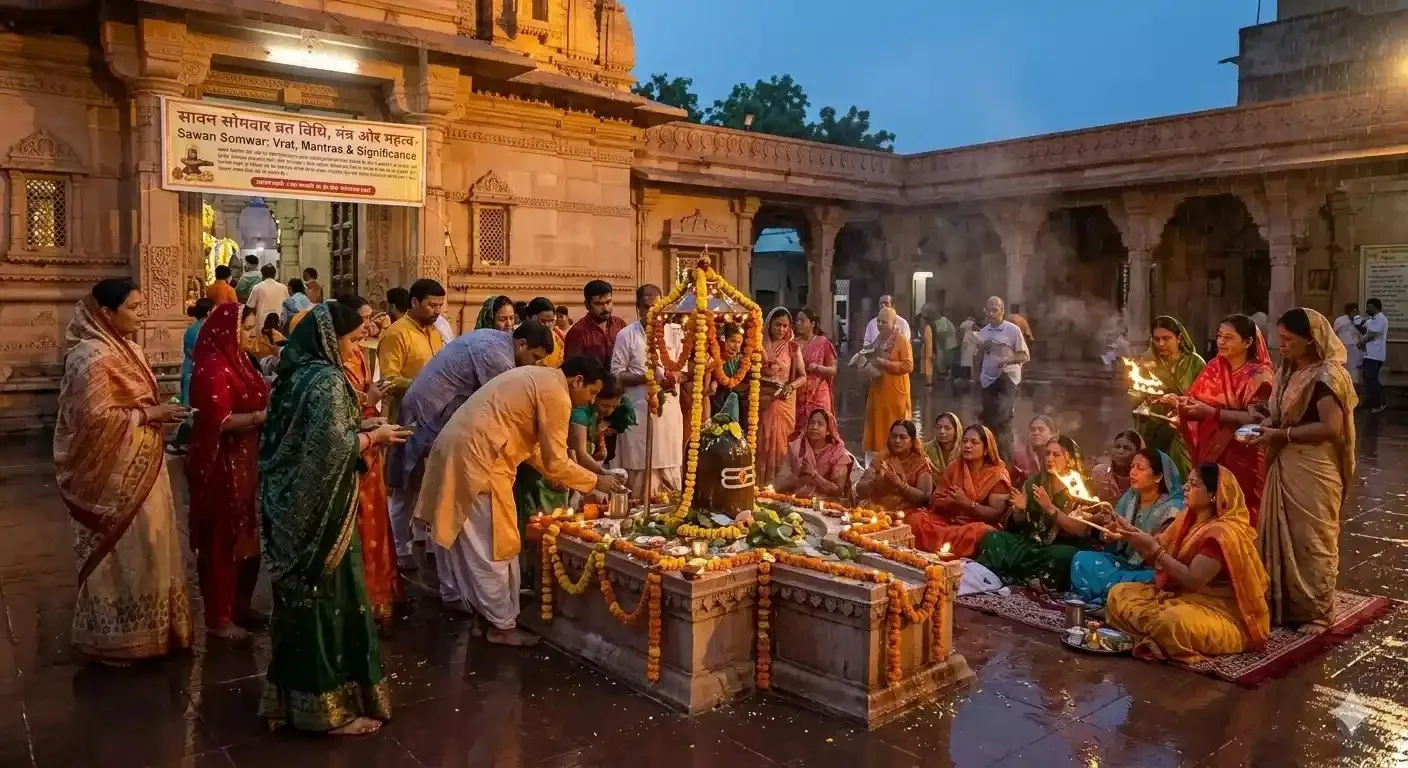
Om Namah Shivaya: Meaning, Benefits & Chanting
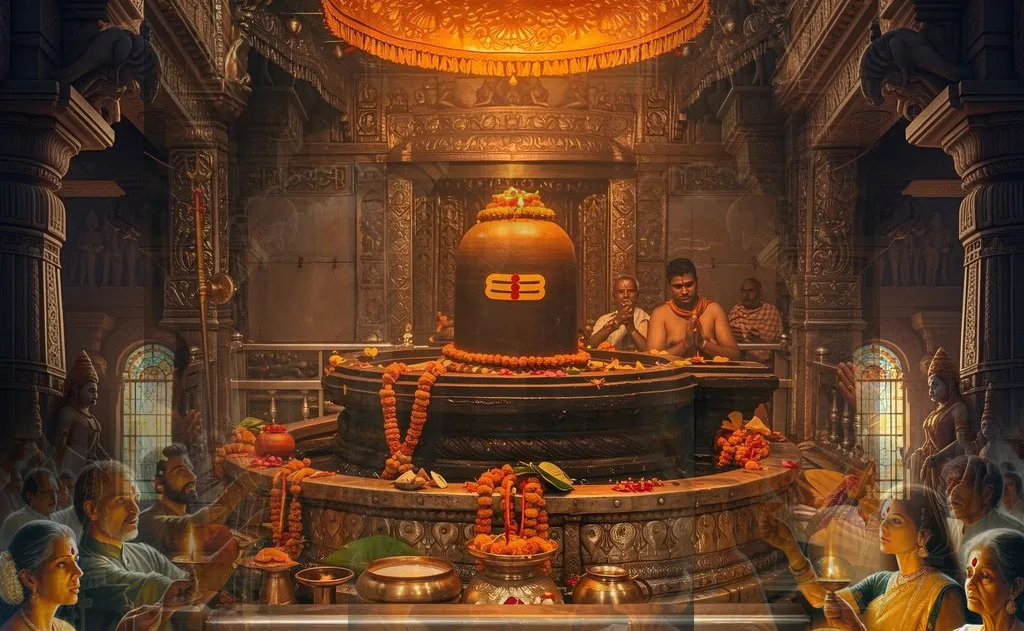
Sravana Masam Mondays: Spiritual Significance, Poojas, Vratas, Mantras & Temple Visits
