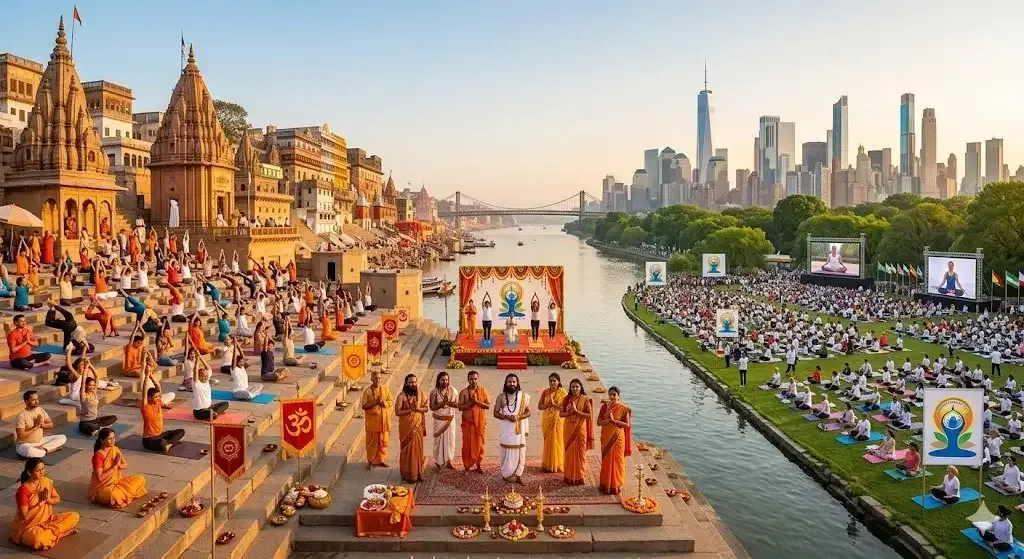
Sunday Hindu God: Surya Puja Vidhi, Mantras, Fasting and Rituals
Sunday (Ravivar) is Surya's day. Offer arghya, a stream of water, to the rising sun, chant a short Surya mantra and, if you wish, keep a simple one-meal Ravivar fast. This guide covers the home puja step by step, verified mantras with meaning, food customs, Sun temples and how families abroad can keep the practice.

Quick answer: In Hindu tradition Sunday belongs to Surya, the Sun god. The simplest Sunday worship is to wake before sunrise, bathe, face east and pour a thin stream of water (arghya) from a copper vessel towards the rising sun while chanting Om Suryaya Namah. Light a lamp, offer a red flower and something sweet, and spend a few minutes in thanks. Some devotees also keep a light Ravivar vrat, eating one simple meal before sunset.
Last updated: 10 October 2026. This page is part of our Hindu days of the week guide, which explains the deity, mantra and observance for all seven days.
Below you will find why Sunday is Surya's day, a step-by-step home puja, what to offer and why, verified mantras in Devanagari with transliteration and meaning, fasting and food customs, mistakes to avoid, Sun temples with checked facts, ideas for children, and how Sunday Surya worship differs from Bihar to Tamil Nadu.
Why Sunday is Surya's day
The Sanskrit name of Sunday is Ravivara, also called Bhanuvara and Adityavara. Ravi, Bhanu and Aditya are all names of the Sun. In the jyotisha system of the seven varas, each weekday is named after the graha that rules its first hour (hora) at sunrise, and Sunday's first hora belongs to the Sun. That is why the Navagraha Stotram, the hymn to the nine grahas attributed to Vyasa, opens with Surya, and why Sunday heads the Hindu week.
Surya is also unusual among Hindu deities because he is pratyaksha devata, a god you can actually see. The Vedic hymns praise the Sun as Savitr, the impeller who wakes the world, and as Mitra, the friend. The Savitri mantra, better known as the Gayatri, is a prayer to the light of Savitr. For centuries the daily sandhya prayers at dawn, noon and dusk have been timed by the Sun, so honouring him on his own weekday is a natural step for a household that already greets him every morning.
In the epics Surya is a father figure with a large family. The Navagraha verse for Saturday calls Shani 'the son of Ravi', born of Chhaya and Martanda. Yama, the lord of death, and the river Yamuna are also his children; in the Mahabharata Karna is Surya's son, and in the Ramayana the monkey king Sugriva is. In the Yuddha Kanda of the Ramayana the sage Agastya teaches Rama the Aditya Hridayam on the battlefield before the final fight with Ravana, and devotees have chanted it on Sundays ever since.
Surya also had his own worshipping tradition, the Saura sampradaya, which is counted among the six forms of worship (shanmata) associated with Adi Shankara's teaching alongside Shiva, Vishnu, Shakti, Ganesha and Skanda. Today most families honour Surya within a wider practice, but Sunday remains his day across almost every region.
Who Surya is: form and symbols
Temple images and paintings usually show Surya standing or riding a single-wheeled chariot drawn by seven horses, driven by his charioteer Aruna, the dawn. He typically holds a lotus in each hand and wears high boots in north Indian sculpture, a detail seen at Modhera and other medieval Sun temples. His colour is red or golden, and red flowers, red sandalwood and wheat are his traditional offerings.
Many families worship him as Surya Narayana, seeing the Sun as a form of Vishnu. In the Navagraha mandapam found in most South Indian temples, Surya stands at the centre facing east, with the other eight grahas around him. Understanding this helps you find him in almost any temple, even one dedicated to another deity.
What you need for Sunday Surya puja
- A copper or brass lota (small water vessel). Copper is traditional, but any clean vessel will do.
- Clean water, with a red flower, a pinch of kumkum or red sandalwood and a few grains of unbroken rice (akshata).
- A ghee or oil lamp and incense.
- Red or saffron flowers such as hibiscus (japa), which the Navagraha verse itself compares to the Sun's colour.
- Naivedya: jaggery, wheat-based sweets, rice kheer or simply fruit.
- A picture or small image of Surya, or a Navagraha picture, if you have one. A lamp facing east is enough if you do not.
Step-by-step Sunday Surya puja at home
This sequence takes about fifteen to twenty minutes. Shorten or extend it to suit your morning.
- Wake before sunrise. Check your local sunrise time the night before. Brush, bathe and wear clean clothes; many people choose red, orange or white on Sundays.
- Set your intention (sankalpa). Sit or stand quietly for a moment and say in your own words why you are praying today: gratitude, health for the family, clarity at work, or simply to begin the week well.
- Fill the lota. Add the flower, kumkum or red sandalwood and akshata to the water.
- Face east at sunrise. Stand on a balcony, in the garden or at an open window. Hold the lota with both hands at chest height or slightly above.
- Offer arghya. Pour the water slowly in a thin stream while chanting Om Suryaya Namah, or the Navagraha verse for Surya given below. Let your gaze rest on the falling water, not on the sun itself. Many people offer three times.
- Turn once in place. A clockwise turn on the spot (pradakshina) closes the arghya in many families.
- Light the lamp. At your altar, light the lamp and incense, offer a flower and apply a dot of red sandalwood or kumkum to the image.
- Chant. Recite the Surya mantra 11, 21 or 108 times on a mala, or read the Aditya Hridayam if that is your practice.
- Offer naivedya. Place the sweet or fruit before the image, wait a moment, then share it as prasad.
- Aarti and quiet. Wave the lamp in a small circle, then sit for a minute in silence before starting the day.
If you practise yoga, Surya Namaskar on a Sunday morning fits naturally after arghya. Each of the twelve rounds is traditionally linked to one name of the Sun, from Mitra and Ravi to Arka and Bhaskara; see our guide to the twelve Surya Namaskar mantras.
Offerings and what they mean
| Offering | Traditional meaning | If you do not have it |
|---|---|---|
| Water (arghya) | The core act: returning a little of what the Sun gives every living thing | Any clean water; a glass will do |
| Red flowers, especially hibiscus | The Sun's colour; the Navagraha verse likens Surya to the japa flower | Any fresh red, orange or yellow flower |
| Red sandalwood or kumkum | Auspiciousness and the colour of dawn | Turmeric-kumkum, or leave it out |
| Unbroken rice (akshata) | Wholeness and abundance | A few grains of any rice |
| Wheat and jaggery | Grain ripened by the Sun; the most common Sunday naivedya in north India | Any simple home-made sweet or fruit |
| Ghee lamp | Light offered to light | An oil lamp or candle in a safe holder |
None of these needs to be expensive. A pinch of kumkum and a glass of water offered with attention is complete worship.
Verified Surya mantras with meaning
The texts below are reproduced from our checked source files (sanskritdocuments.org editions), not retyped. Chant slowly; correct pronunciation matters more than speed.
1. Navagraha Stotram, verse for Surya
जपाकुसुमसंकाशं काश्यपेयं महाद्युतिम् ।
तमोऽरिं सर्वपापघ्नं प्रणतोऽस्मि दिवाकरम् ॥ १॥
japākusumasaṃkāśaṃ kāśyapeyaṃ mahādyutim |
tamo'riṃ sarvapāpaghnaṃ praṇato'smi divākaram || 1||
Meaning: I bow to Divakara, the maker of day, who glows like the japa (hibiscus) flower, the great and radiant son of Kashyapa, the enemy of darkness, who dispels all wrongdoing.
This is the Surya verse of the Navagraha Stotram attributed to Vyasa. Because the hymn gives one verse to each graha in weekday order, it is the most natural Sunday verse, and you can extend it into a full Navagraha prayer on other days. Read the complete text with meaning in our Navagraha Stotram guide.
2. Om Suryaya Namah
ॐ सूर्याय नमः॥
oṃ sūryāya namaḥ||
Meaning: Om, salutations to Surya. This short name-mantra needs no special preparation and suits children, beginners and busy mornings. It is the mantra most people use during arghya.
3. The Savitri (Gayatri) mantra
ॐ भूर्भुवः स्वः । तत्सवितुर्वरेण्यम् । भर्गो देवस्य धीमहि
धियो योनः प्रचोदयात् ॐ ॥
oṃ bhūrbhuvaḥ svaḥ | tatsaviturvareṇyam | bhargo devasya dhīmahi
dhiyo yonaḥ pracodayāt oṃ ||
Meaning: Om. Earth, sky and heaven. We meditate on the adorable radiance of the divine Savitr; may he inspire our understanding.
This Rigvedic prayer to Savitr, the Sun as the power that awakens, is the heart of the daily sandhya. In many families it is learned from a teacher or elder, and some traditions keep formal Gayatri japa for those who have received initiation (diksha). Follow your family's guidance; Om Suryaya Namah is open to everyone.
4. Aditya Hridayam (named, not reproduced)
The Aditya Hridayam is a hymn of about thirty verses in the Yuddha Kanda of Valmiki's Ramayana, taught by Agastya to Rama. It praises the Sun as the source of all the gods and is the hymn most associated with Sunday. We have not yet verified a full text against a critical edition, so we do not print its verses on this page. You can read it in our Aditya Hridayam guide. Another Sunday favourite is the Vishnu Sahasranama; see our Vishnu Sahasranama guide with a Sunday practice plan.
For more options, including how many repetitions to aim for, see Sunday mantras for Surya.
Ravivar vrat: fasting and food customs
The Sunday fast (Ravivar vrat) is a vow of simplicity, not of hardship. Its common forms are:
- One meal before sunset. The most widespread form. The meal is eaten after the morning puja and before the sun goes down.
- No salt for the day. Many families keep the Sunday meal saltless, and some also avoid oil. Wheat roti with ghee and jaggery, plain rice with milk, or kheer are typical.
- Fruit and milk only. A lighter version for those who prefer not to cook.
- A fixed number of Sundays. Some devotees take a vow for a set number of Sundays, often twelve, or for a year, and close it with a small puja, a meal for guests and a donation.
On the day, people who observe the vrat generally avoid meat, eggs, alcohol and tobacco, and many also skip onion and garlic. Reading or listening to the Ravivar vrat katha is part of the observance in north India.
If you cannot fast
Fasting is optional, and Surya worship is complete without it. Good alternatives are: skipping salt at just one meal; eating a plain vegetarian lunch; giving up one indulgence such as sweets or screen time for the morning; or donating wheat, jaggery or a meal to someone in need. In many families giving (dana) is itself the main Sunday observance.
Health note: Do not fast without medical advice if you have diabetes, low blood pressure, kidney problems or an eating disorder, if you are pregnant or breastfeeding, or if you take regular medication. Children and older people should not keep strict fasts. Drink water through the day unless your doctor and tradition both agree otherwise. A saltless day is not suitable for everyone, especially in hot weather.
Do's and don'ts for Sunday
These are traditional customs. Follow what fits your family and region; none of them is a rule whose breach brings misfortune.
- Do rise early and greet the Sun, even for one minute.
- Do offer arghya where the water can fall onto soil or into a plant, rather than onto a drain or a hard floor.
- Do show respect to your father and elders. Surya is the graha associated with the father, so many families make Sunday a day to call or visit parents.
- Do give: wheat, jaggery, a meal, or your time.
- Avoid staring at the sun. Look at the water stream or keep your eyes lowered.
- Avoid heavy, oily or non-vegetarian food on a day you have chosen to observe.
- Avoid turning the day into a list of fears. Sunday worship is about light and gratitude.
Common mistakes
- Offering arghya at midday. The practice belongs to sunrise. Late morning is acceptable if you missed it; harsh noon light is not the tradition and is uncomfortable for the eyes.
- Using India's sunrise time abroad. Always use the sunrise where you are. A family in Toronto or Sydney offers arghya at its own dawn.
- Pouring onto your own feet. Hold the lota forward so the water falls clear of your feet.
- Copying Sanskrit from random images. Many mantra graphics online contain spelling errors. Use a checked text, like the ones on this page, or learn from a teacher.
- Fasting too hard, too fast. Start with one simple meal. A vow kept gently for many Sundays is worth more than one punishing day.
- Treating Surya as a remedy machine. Astrological reasons are common, but the oldest Sunday practice is simple thanks to the Sun for life itself.
Sun temples to know
Very few Indian temples have Surya as the main deity today. The two below have checked facts on HinduTone; follow the links for history, architecture and visiting notes.
Modhera Sun Temple, Gujarat
The Modhera Sun Temple near Mehsana is dated by the Indira Gandhi National Centre for the Arts to about 1026 to 1027 CE, in the reign of the Chaulukya (Solanki) king Bhima I. IGNCA ranks it the most important of Gujarat's Sun temples and places it beside Martand in Kashmir and Konark in Odisha among India's best-known Sun shrines. Its stepped tank, the Surya Kund, is a protected monument, and the temple was added to UNESCO's tentative list in 2022. The shrine lost its tower centuries ago and is no longer a place of daily worship, but it remains a powerful place to understand Surya's medieval cult.
Katarmal Sun Temple, Uttarakhand
High above the Kosi valley near Almora, the Katarmal Sun Temple is reported to have been built in the 9th century by Katarmalla, a king of the Katyuri dynasty. The main shrine is ringed by 44 smaller shrines, and the deity is known locally as Burhadita or Vriddhaditya, 'the old Sun'. An older idol from the temple is now in the National Museum in Delhi.
If you plan a pilgrimage to either site, check official sources for current access and timings before you travel.
Finding Surya and the Navagrahas in a temple abroad
Few temples outside India are dedicated to Surya alone, but nearly every large Hindu temple in North America, the UK, Europe, Australia and the Gulf has a Navagraha shrine, where Surya stands at the centre. On a Sunday morning you can:
- Ask the temple office whether there is a Navagraha or Surya archana on Sundays; many temples hold one.
- Walk around the Navagraha shrine clockwise, usually seven or nine times, without touching the images unless the priest says it is allowed.
- Offer wheat, a red cloth or a lamp in place of the arghya if the temple does not allow water offerings indoors.
- Check the temple's own website or social media for timings, which change with the season.
Our regional guides can help you find a temple near you: Hindu temples in the USA, in Canada, in Australia and New Zealand, and Surya and Navagraha shrines in the USA.
Sunday Surya worship with children
For most families abroad Sunday is the one unhurried morning of the week, which makes it the easiest day to involve children.
- Sunrise walk. Once a month, step outside together to watch the sunrise. Let the child hold the lota with you and say Om Suryaya Namah.
- Twelve names game. Teach one of Surya's twelve names each Sunday, from Mitra to Bhaskara, and ask what it means.
- Draw the chariot. Seven horses, one wheel, Aruna at the reins: a good way to start talking about the seven days and the colours of light.
- Stories. Tell how the infant Hanuman leapt at the Sun thinking it was a fruit, or how Surya taught Hanuman the scriptures. Both stories are told in many retellings of the Ramayana tradition.
- Gratitude round. At breakfast, everyone names one thing the Sun gives us: food, warmth, light, the seasons.
More ideas are in our Sunday activities for kids and in raising children with Hindu values abroad.
Regional Sunday and Sun traditions
Sunday Surya worship looks different from region to region, and several of the biggest Sun festivals fall outside the weekly cycle.
- Bihar, eastern Uttar Pradesh and the Nepal Terai: Chhath, a four-day festival in which devotees, mostly women, offer arghya to the setting sun and then to the rising sun while standing in a river or pond. It is the largest Sun festival in India.
- Across India, in Magha: Ratha Saptami, celebrated as Surya's birthday. Many South Indian families bathe with arka (calotropis) leaves on the head, and the deity at Tirumala is taken out on several vahanas through the day, beginning with the Surya Prabha vahana.
- January: Makar Sankranti, marking the Sun's move into Makara, is Pongal in Tamil Nadu, where the first pot of new rice is boiled for the Sun.
- Telugu and Kannada families: Sundays in sacred months carry extra weight, especially Karthika Masam Sundays and Margashira Masam Sundays. See also Bhadrapada Masam Sundays.
- Bengal: Itu puja, a Sun observance kept by women on the Sundays of Agrahayan with a pot of sprouting grains.
- Panchang combinations: When the seventh lunar day (Saptami) falls on a Sunday it is called Bhanu Saptami, and Sunday with the Pushya nakshatra forms Ravi Pushya yoga. Both are treated as especially good days for Surya worship.
The Bhavishya and Samba Puranas also tell the story of Krishna's son Samba, who is said to have been relieved of a skin disease by worshipping the Sun and to have built a Sun temple in thanks. It is a Puranic legend explaining the spread of Surya worship, not a medical claim.
Also read: Surya Kavacham with meaning.
Related reading on HinduTone
- Hindu days of the week: gods, mantras, puja and fasting for all seven days
- Weekend poojas: Saturday and Sunday rituals together
- Which god to pray to for job, marriage, health or studies
- The Navagrahas explained: the nine planetary deities
- What is a panchang? The five limbs, including the vara
- A five-minute daily puja for busy people
Frequently asked questions
Which Hindu god is worshipped on Sunday?
Surya, the Sun god, is worshipped on Sunday. The day's Sanskrit name, Ravivara, comes from Ravi, one of Surya's names. In the Navagraha tradition Surya is the first of the nine grahas, and many families also honour Vishnu as Surya Narayana on this day.
What is the right time to offer arghya to the Sun?
The traditional time is at or shortly after sunrise, while the sun is still low and gentle. Use your own local sunrise time, not India's. If you miss sunrise, offer arghya within the first hour or so of the morning facing east; tradition does not ask you to offer it at harsh midday light.
What should I put in the water for Surya arghya?
Clean water in a copper or brass lota is enough. Many families add a red flower, a pinch of kumkum or red sandalwood and a few grains of unbroken rice. Some add a little jaggery. Keep it simple and avoid anything that could harm plants or soil where the water falls.
Can women and children offer Surya arghya?
Yes. Surya arghya is a household practice open to everyone, and in festivals such as Chhath it is led by women. Children can hold the lota with a parent and say the short mantra Om Suryaya Namah.
Do I have to fast on Sunday to worship Surya?
No. The fast is optional. Arghya, a lamp and a mantra are the heart of Sunday worship. If you do fast, the common form is one simple meal before sunset, often without salt. People with health conditions, pregnant women and anyone on regular medication should check with a doctor first.
Can I chant Aditya Hridayam on Sunday?
Yes, Sunday is the day many devotees choose for Aditya Hridayam, the hymn the sage Agastya teaches Rama in the Ramayana. We have not reproduced its verses here; read them from a reliable edition or our Aditya Hridayam guide, and learn the pronunciation from a teacher if you can.
What if I cannot see the sunrise where I live?
Face east at your local sunrise time and offer the water anyway, into a plant pot or garden bed. In high-latitude winters, cloudy cities or apartments with no east view, the intention and direction matter more than seeing the disc.
Continue through the week
Previous day: Saturday: Shani Dev and Hanuman worship · Next day: Monday: Shiva puja and Somvar vrat · Back to the seven-day overview.
Editor's note (10 October 2026)
This guide was rewritten on 10 October 2026. Mantra texts come from our verified source files; we have deliberately not reproduced the Aditya Hridayam until its text is checked. Temple facts are drawn from HinduTone's source-checked temple pages. Benefits described here are those traditionally believed by devotees, not promises, and fasting advice is general: please consult a doctor about your own health.
Share this with family and friends
Send it on WhatsApp, post it, or copy the link.
More from Spirituality
- Complete MBBS Once in Life: The Spiritual Meaning of Mahabharata, Bhagavatam, Bhagavad Gita & Ramayana
- Sri Medha Dakshinamurthy Swami Dhyanam | Meditation Sloka for Intelligence, Eloquence & Self-Realization
- What Is True Poverty? | Dharma Is the Greatest Wealth | Sanatana Dharma
- Correct Yourself First! | The Power of Constructive Criticism for Personal Growth
- Trees: Abodes of the Divine | Spiritual and Environmental Significance of Trees
You might also like
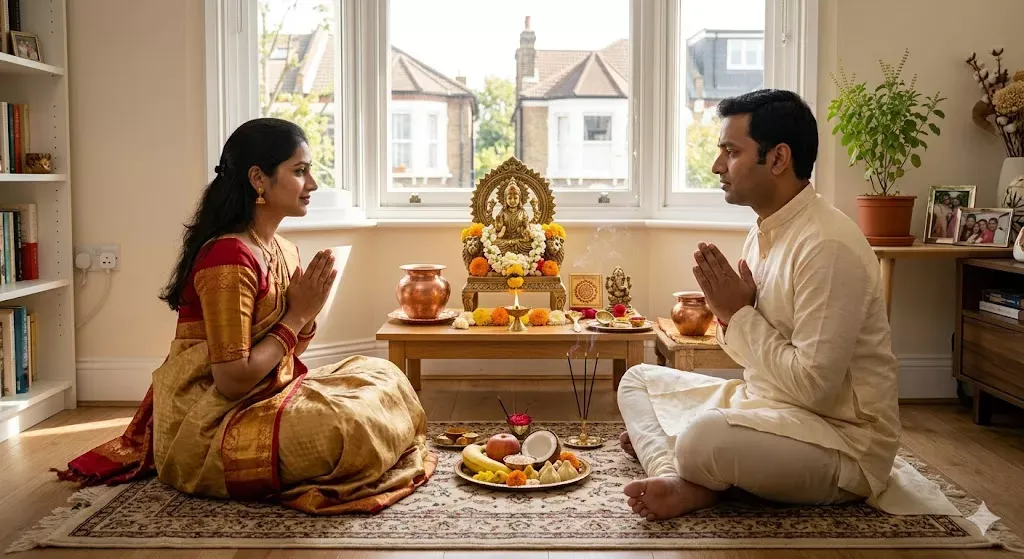
Surya Puja at Home: A Practical Guide for NRIs
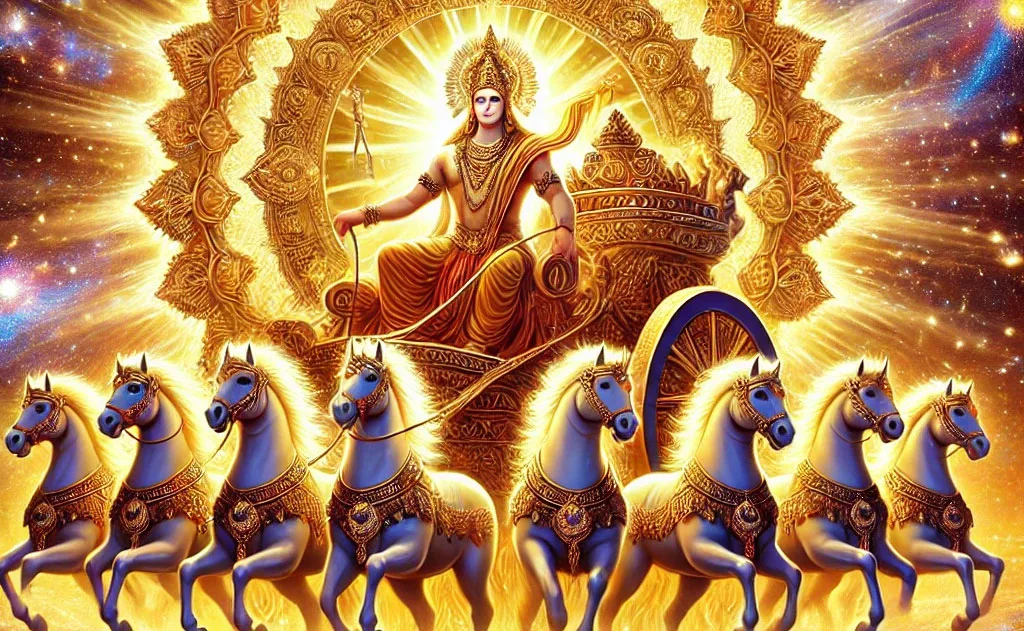
Surya Arghya: How & When to Offer Water to the Sun

Chilkur Balaji 'Visa Balaji' Temple: The 11 and 108 Pradakshina Custom Explained for NRIs