
Sri Medha Dakshinamurthy Swami Dhyanam | Meditation Sloka for Intelligence, Eloquence & Self-Realization
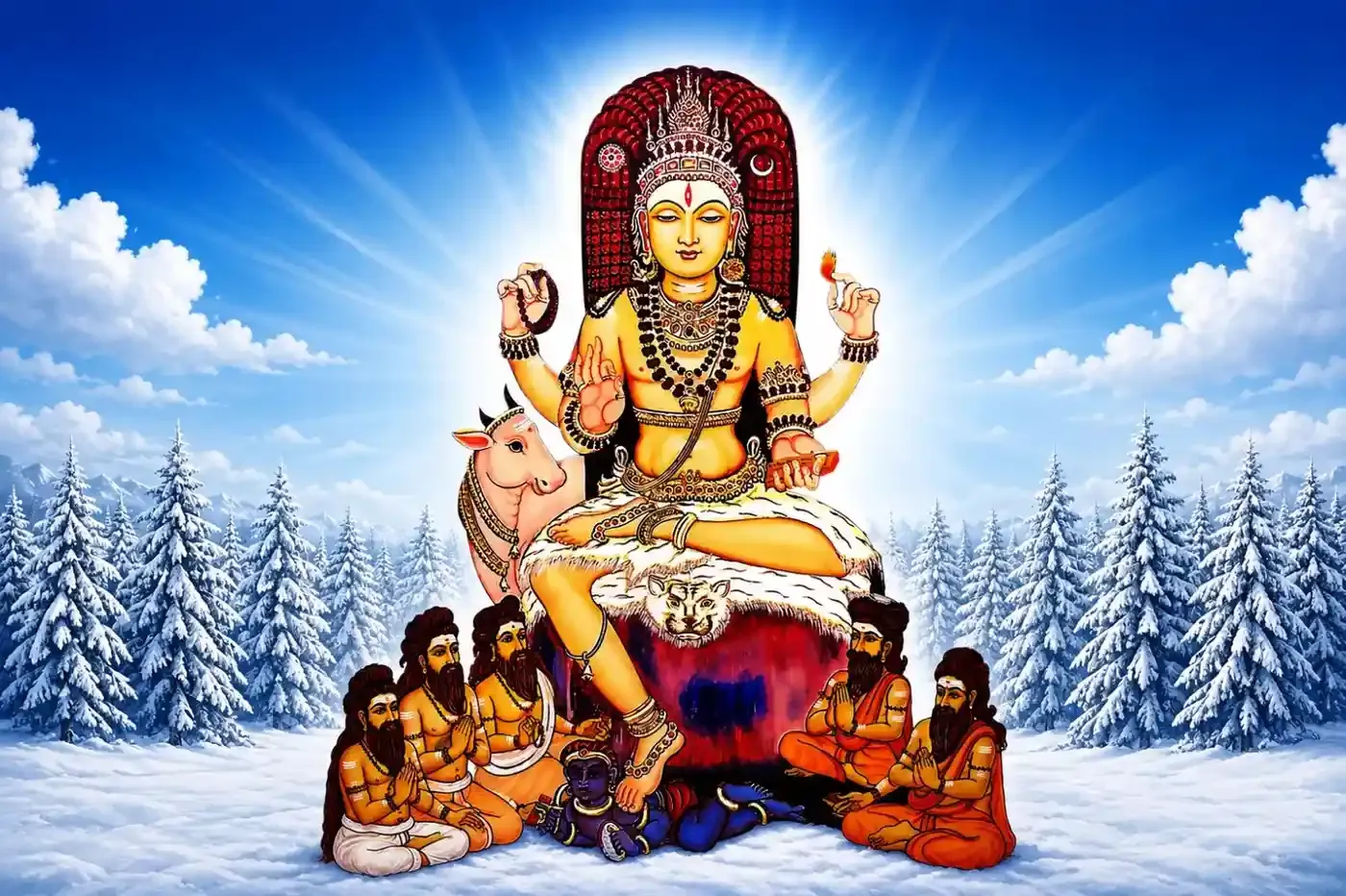
Meditation on Sri Medha Dakshinamurthy Swami for Guru's Grace, Intelligence, Eloquence, Purity of Mind, and Self-Realization Dhyana Sloka Om Mudrābhadra Kamaṇḍalukṣa Guṇabhṛddhastena Reṇetarā-Dājānuprasṛtena Kuṇḍalitaṭillekhā Mujjvalāṃ Jñānataḥ |Muktāhāra Vibhūṣitaṃ Śaśikalā Kalpena Cūḍāmaṇiṃ,Dhyāyenmānasa Paṅkaje Paraguruṃ Medhākaraṃ Śaṅkaram || Description of the Divine Form I bow to Lord Dakshinamurthy, who reveals the Supreme Brahman to His disciples solely through the eloquence of silence (mauna-vyakhyana). Ever youthful, He is the revered teacher of realized sages and great seers established in Brahman.
Meditation on Sri Medha Dakshinamurthy Swami for Guru's Grace, Intelligence, Eloquence, Purity of Mind, and Self-Realization
Dhyana Sloka
Om
Mudrābhadra Kamaṇḍalukṣa Guṇabhṛddhastena Reṇetarā-
Dājānuprasṛtena Kuṇḍalitaṭillekhā Mujjvalāṃ Jñānataḥ |
Muktāhāra Vibhūṣitaṃ Śaśikalā Kalpena Cūḍāmaṇiṃ,
Dhyāyenmānasa Paṅkaje Paraguruṃ Medhākaraṃ Śaṅkaram ||
Description of the Divine Form
I bow to Lord Dakshinamurthy, who reveals the Supreme Brahman to His disciples solely through the eloquence of silence (mauna-vyakhyana). Ever youthful, He is the revered teacher of realized sages and great seers established in Brahman. Holding the Chinmudra in His hand, He is the embodiment of bliss, with a serene smile that reflects His complete absorption in the Self.
Holding the Chinmudra in one hand, a sacred Kamandalu in another, and a rosary in another, with His hand extending down to His knees, He illuminates the radiant Kundalini Shakti—shining like a streak of lightning—through the light of divine knowledge. Adorned with pearl garlands and the crescent moon upon His crown, I meditate in the lotus of my heart upon that Supreme Guru, Lord Shankara, who bestows intelligence and wisdom.
Benefits of This Meditation
- Sumedhassu – Enhanced memory, intelligence, and mental sharpness.
- Vakchaturyam – Eloquence and excellence in learning and education.
- Chitta Shuddhi – Purity of mind and inner peace.
- Atma Jnana – Self-realization and attainment of liberation (Moksha).
More stotrams to read
Frequently asked questions
What is the Sri Medha Dakshinamurthy dhyana sloka?
It is a meditation verse that begins with Om and Mudrabhadra Kamandalu. It describes Lord Shankara as the Supreme Guru who bestows intelligence and wisdom, to be meditated upon in the lotus of the heart.
How is Lord Dakshinamurthy described in this meditation?
He is ever youthful, the teacher of realized sages, and reveals the Supreme Brahman through the eloquence of silence (mauna-vyakhyana). He holds the Chinmudra, a Kamandalu and a rosary, and wears pearl garlands and the crescent moon.
What are the benefits of meditating on Medha Dakshinamurthy?
The benefits listed are Sumedhassu (enhanced memory, intelligence and mental sharpness), Vakchaturyam (eloquence and excellence in learning), Chitta Shuddhi (purity of mind) and Atma Jnana (Self-realization).
What does the Chinmudra symbolise in this dhyana?
Dakshinamurthy holds the Chinmudra in His hand as the embodiment of bliss, with a serene smile reflecting His absorption in the Self. He reveals Brahman to disciples through silence.
Who can practice this meditation for Guru's grace?
The text does not restrict it: it is a meditation for Guru's grace, intelligence, eloquence, purity of mind and Self-realization. Students seeking learning and seekers of liberation (Moksha) can meditate on it with devotion.
Share this with family and friends
Send it on WhatsApp, post it, or copy the link.
More from Spirituality
- Diwali 2026 Wishes from Sri Sadguru Peetham: Ashvayuja Amavasya with Swati Nakshatra
- The Root of Devotion Is a Change of Heart – Sri Sadguru Peetham
- Love vs Attachment: What the Ramayana, the Bhagavata and Vedanta Teach About Selfless Love
- Gargi and Maitreyi: Women Seers of the Upanishads
- Atma Vichara for NRIs: A Self-Inquiry Routine for Busy Families
You might also like
What Is True Poverty? | Dharma Is the Greatest Wealth | Sanatana Dharma

Sri Mahalingeswarar Temple – A Sacred Remedy for Magha Nakshatra Borns
Purushottam Maas 2026: Lord Vishnu's Sacred Gift of Spiritual Multiplication & Divine Grace
