Pradosha Kalam: Significance and Shivaradhana for Hindus
What is Pradosha Kalam? Pradosha Kalam, also known as Pradosham, is a sacred period in Hinduism dedicated to the worship of Lord Shiva.
What is Pradosha Kalam? Pradosha Kalam, also known as Pradosham, is a sacred period in Hinduism dedicated to the worship of Lord Shiva.
What is Pradosha Kalam?
Pradosha Kalam, also known as Pradosham, is a sacred period in Hinduism dedicated to the worship of Lord Shiva. It occurs twice a month, during the twilight hours on the 13th day (Trayodashi) of both the waxing (Shukla Paksha) and waning (Krishna Paksha) phases of the lunar cycle. The term "Pradosha" comes from the Sanskrit words pra (before) and dosha (night), referring to the time when day transitions into night, typically between 4:30 PM and 6:00 PM, though the exact timing varies based on local sunset times.
This period is considered highly auspicious for spiritual practices, as it is believed that Lord Shiva and Goddess Parvati are in a benevolent mood during this time, granting blessings to devotees who perform sincere worship. Pradosha is observed with special rituals, fasting, and prayers, particularly in Shiva temples, where devotees gather to offer their devotion.
Importance of Pradosha Kalam to Hindus
Pradosha holds immense spiritual significance for Hindus, particularly for devotees of Lord Shiva. The key aspects of its importance include:
- Auspicious Time for Worship: The twilight period is considered a powerful time for connecting with divine energies. It is believed that during Pradosha, Lord Shiva performs his cosmic dance (Tandava), symbolizing the cycle of creation, preservation, and destruction, making it an ideal time for devotees to seek his grace.
- Cleansing of Sins: Observing Pradosha Vrat (fast) and performing rituals are believed to cleanse devotees of their past sins and negative karma. It is said that sincere worship during this time can absolve one of accumulated doshas (spiritual impurities).
- Fulfillment of Desires: Devotees believe that praying to Lord Shiva during Pradosha can fulfill their heartfelt wishes, whether related to health, wealth, relationships, or spiritual growth. The period is seen as a time when divine blessings are easily accessible.
- Connection to Lord Shiva and Goddess Parvati: Pradosha is associated with the divine union of Shiva and Parvati. It is believed that they are particularly pleased with devotees' prayers during this time, making it an opportunity to strengthen one's spiritual bond with them.
- Special Significance of Maha Pradosham: When Pradosha falls on a Saturday (known as Shani Pradosham) or Monday (Soma Pradosham), it is considered especially powerful. Maha Pradosham, occurring when Pradosha coincides with certain planetary alignments or festivals, is believed to amplify the spiritual benefits.
Shivaradhana: Worship Practices During Pradosha
Shivaradhana, or the worship of Lord Shiva during Pradosha, involves a series of rituals that devotees perform to honor the deity. These practices are deeply rooted in Hindu tradition and vary slightly based on regional customs. Below is a typical outline of how Pradosha is observed:
- Fasting (Pradosha Vrat): Devotees observe a fast from sunrise to sunset, consuming only water, fruits, or light meals. Some undertake a complete fast, breaking it only after the evening puja. The fast is believed to purify the body and mind, preparing devotees for spiritual communion.
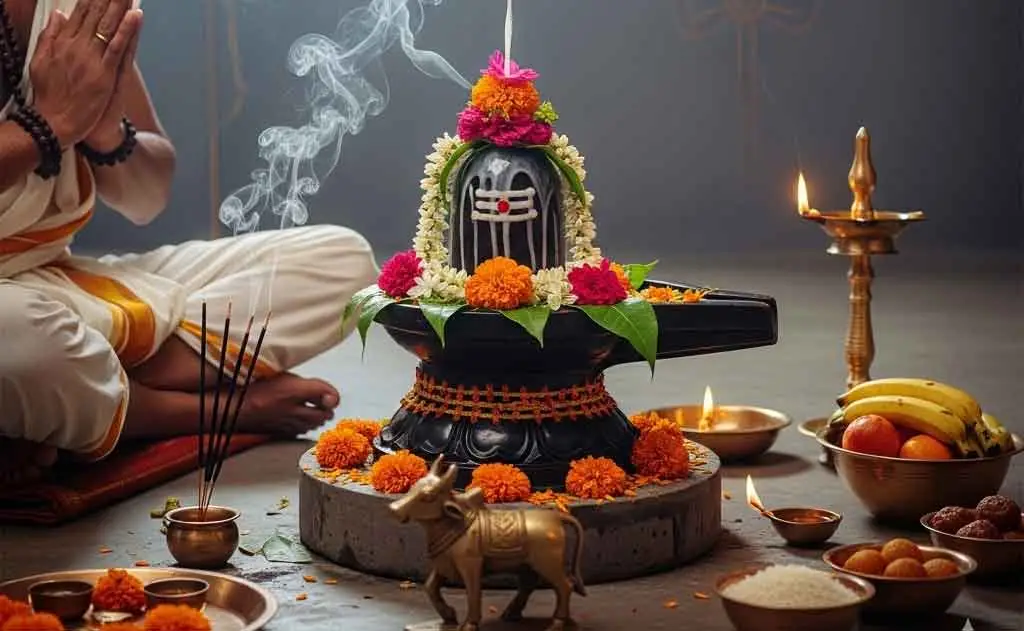
- Temple Visits and Abhishekam: Devotees visit Shiva temples to participate in the Pradosha Puja, which includes the ritual bathing (Abhishekam) of the Shiva Lingam with sacred substances like milk, curd, ghee, honey, and water. This act symbolizes purification and devotion.
- Chanting Mantras: Reciting powerful mantras such as the Maha Mrityunjaya Mantra, Om Namah Shivaya, or Shiva Tandava Stotram is considered highly meritorious during Pradosha. These chants invoke Lord Shiva’s blessings for protection, health, and liberation.
- Offering Bilva Leaves: Offering Bilva (bael) leaves to the Shiva Lingam is a key ritual, as these leaves are particularly dear to Lord Shiva. Devotees offer them with reverence, often chanting mantras.
- Nandi Worship: Lord Shiva’s divine vehicle, Nandi (the bull), is also worshipped during Pradosha. Devotees offer prayers to Nandi, seeking his intercession with Lord Shiva.
- Pradosha Katha: Listening to or narrating stories about the significance of Pradosha enhances the spiritual experience. These stories often highlight the transformative power of Shiva’s grace.
- Charity and Good Deeds: Acts of charity, such as donating food, clothes, or money to the needy, are considered highly auspicious during Pradosha, as they align with the principles of compassion and selflessness.
A Devotional Story: The Miracle of Pradosha
In a small village nestled in the lush hills of South India, there lived a poor farmer named Devan. Despite his meager means, Devan was a devout follower of Lord Shiva, visiting the village temple every evening to offer a single Bilva leaf at the feet of the Shiva Lingam. His life, however, was fraught with hardships—his crops often failed due to erratic rains, and his family struggled to make ends meet.
One day, a wise sage visited the village and spoke of the sanctity of Pradosha Kalam, explaining that sincere worship during this time could invoke Lord Shiva’s boundless compassion. Inspired, Devan resolved to observe Pradosha Vrat with utmost devotion. On the next Trayodashi, he fasted all day, bathed in the nearby river, and walked barefoot to the temple, carrying a handful of Bilva leaves he had carefully gathered.
As the sun dipped below the horizon, marking the start of Pradosha Kalam, Devan stood before the Shiva Lingam, his heart brimming with faith. He chanted Om Namah Shivaya with every leaf he placed, praying not for wealth but for the strength to care for his family. The temple priest, moved by Devan’s sincerity, invited him to participate in the Abhishekam, an honor rarely extended to common folk.
That night, Devan dreamt of a radiant figure—Lord Shiva himself, standing beside Nandi, with Goddess Parvati smiling gently. Shiva blessed him, saying, “Your devotion has touched my heart. Trust in me, and your burdens shall ease.” Devan awoke with a sense of peace he had never known.
The following morning, dark clouds gathered over the village, and a gentle rain began to fall, nourishing the parched fields. Devan’s crops flourished, yielding a bountiful harvest that season. His family’s fortunes improved, and the village began to prosper. Word of Devan’s devotion spread, and soon, the entire village gathered to observe Pradosha, transforming the temple into a hub of spiritual fervor.
Years later, when Devan grew old, he shared his story with younger generations, teaching them that true devotion during Pradosha could move mountains. The village temple, now adorned with offerings from far and wide, became a beacon of hope, reminding all that Lord Shiva’s grace flows freely to those who surrender with love and faith.
Conclusion
Pradosha Kalam is a sacred window for Hindus to connect with Lord Shiva, seeking his blessings for spiritual growth and worldly well-being. Through fasting, rituals, and heartfelt prayers, devotees honor the divine during this auspicious time. The story of Devan illustrates the transformative power of Shivaradhana, showing that sincere devotion can bring miracles, both subtle and profound. For those seeking to deepen their spiritual practice, observing Pradosha is a beautiful way to experience Lord Shiva’s eternal grace.
This article is crafted for www.hindutone.com to inspire and educate devotees about the sanctity of Pradosha Kalam.
Frequently Asked Questions
When does Pradosha Kalam occur?
Pradosha occurs twice a month, at twilight on Trayodashi, the 13th lunar day, of both Shukla and Krishna Paksha. It is typically between 4:30 PM and 6:00 PM, but the exact timing varies with local sunset.
What do Shani Pradosham and Soma Pradosham mean?
When Pradosha falls on a Saturday it is called Shani Pradosham, and on a Monday Soma Pradosham. Both are considered especially powerful for Shiva worship.
How is the Pradosha Vrat observed?
Devotees fast from sunrise to sunset, taking only water, fruits or light meals, and some keep a complete fast. The fast is broken after the evening puja at a Shiva temple.
What rituals are done during Pradosha puja?
Devotees perform abhishekam of the Shiva Lingam with milk, curd, ghee, honey and water, offer bilva leaves, and worship Nandi. They chant the Maha Mrityunjaya Mantra or Om Namah Shivaya, and listen to the Pradosha Katha.
How can NRIs find the Pradosha time where they live?
Since the timing depends on local sunset, NRIs should check their local panchang for the Trayodashi twilight window. They can then fast, chant and offer bilva leaves or water at a home altar or nearby Shiva temple.
You might also like
Raja Ravi Varma’s ‘Yashoda and Krishna’ Sells for Record ₹167.2 Crore – A Defining Moment for Indian Art
How to Pray Lord Radha Krishna in 2026: Mantras, Poojas, Important Dates, Temples & Rituals | HinduTone
Cyrus Poonawalla Acquires Raja Ravi Varma’s Divine Masterpiece ‘Yashoda and Krishna’ for ₹167.2 Crore – A Historic Moment for Sanatan Heritage