
Navagraha: The Nine Planetary Deities of Hinduism Explained, with Colours, Days, Grains and Temples
Who are the Navagraha? Meet the nine planetary deities, Surya, Chandra, Mangala, Budha, Brihaspati, Shukra, Shani, Rahu and Ketu, with a table of their traditional colours, weekdays, mounts, grains and gems, how devotees circle the Navagraha shrine, the nine Navagraha temples around Kumbakonam, and how to approach remedies as devotion.
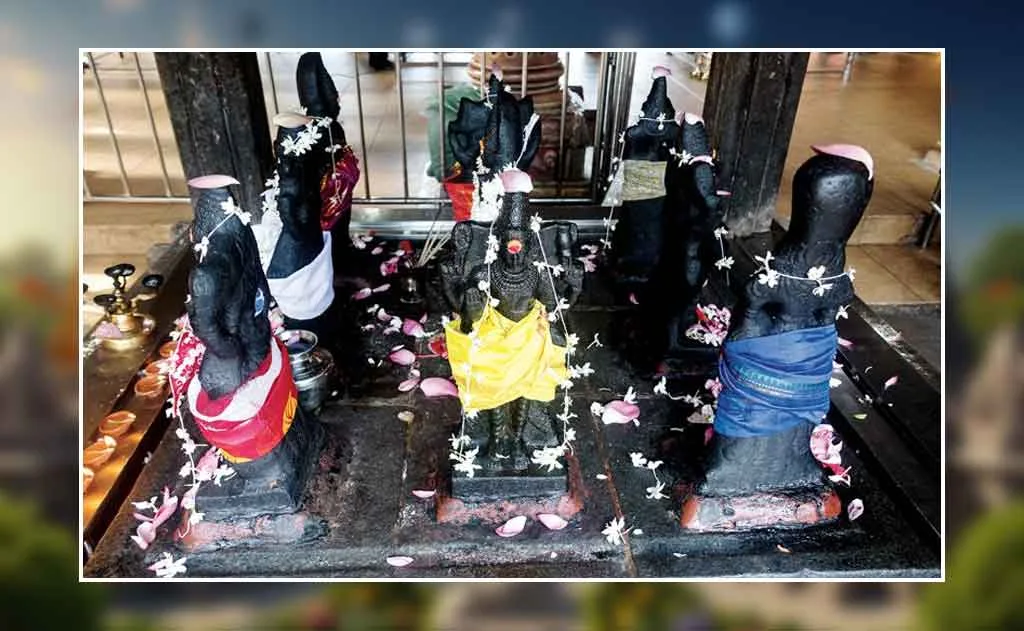
Who are the Navagraha? Meet the nine planetary deities, Surya, Chandra, Mangala, Budha, Brihaspati, Shukra, Shani, Rahu and Ketu, with a table of their traditional colours, weekdays, mounts, grains and gems, how devotees circle the Navagraha shrine, the nine Navagraha temples around Kumbakonam, and how to approach remedies as devotion.
Quick answer: The Navagraha are the nine planetary deities of Hindu tradition: Surya (Sun), Chandra (Moon), Mangala (Mars), Budha (Mercury), Brihaspati (Jupiter), Shukra (Venus), Shani (Saturn), and the shadow planets Rahu and Ketu. Jyotisha links each with qualities of life, and many temples have a Navagraha shrine for prayer.
What graha means
In Sanskrit, graha means "one that seizes" or grasps, an influence rather than simply a planet. That is why the Sun, the Moon and the two lunar nodes are counted alongside Mars, Mercury, Jupiter, Venus and Saturn, while the outer planets are not part of the classical list. The grahas are seen both as astronomical bodies tracked in the panchang and as devas who can be worshipped.
Several of them have deep roots in scripture. Surya is praised in many Rig Veda hymns, and the Gayatri Mantra is addressed to Savitr, the Sun as the inspirer. Brihaspati is the priest and teacher of the gods in the Vedas, and Shukra is the teacher of the asuras in the epics and Puranas. Their roles as planetary rulers are set out in Jyotisha texts such as the Brihat Parashara Hora Shastra, and Puranas including the Matsya Purana describe their forms and worship.
The nine grahas one by one
- Surya (Sun): the soul, vitality, authority and the father. King of the grahas; placed at the centre of the Navagraha shrine.
- Chandra (Moon): the mind, emotions, the mother and nurturing. The Moon's movement through the 27 nakshatras is the basis of the Hindu calendar.
- Mangala (Mars): energy, courage, land and siblings. Also called Angaraka or Kuja; linked with Mangal Dosha in marriage matching.
- Budha (Mercury): intellect, speech, learning and trade. Described in the Puranas as the son of Chandra.
- Brihaspati or Guru (Jupiter): wisdom, dharma, teachers, children and good fortune. Considered the most benevolent graha.
- Shukra (Venus): love, beauty, arts, comfort and marriage. The guru of the asuras, master of the knowledge of revival.
- Shani (Saturn): discipline, karma, delay, hard work and justice. Son of Surya; feared but also revered as the judge of deeds.
- Rahu: desire, obsession, foreign lands and sudden change. The northern lunar node; a shadow graha.
- Ketu: detachment, spirituality and past karma. The southern lunar node; often linked with moksha.
The story of Rahu and Ketu: the Puranas tell that during the churning of the ocean, the asura Svarbhanu disguised himself to drink the nectar of immortality. Surya and Chandra recognised him, and Vishnu, as Mohini, cut off his head with the Sudarshana chakra. Having tasted the nectar, the head (Rahu) and body (Ketu) lived on, and their enmity with the Sun and Moon is traditionally told as the cause of eclipses.
Traditional associations table
These associations are as commonly listed in Jyotisha and temple tradition. Details, especially the mounts of Rahu and Ketu, vary between texts and regions.
| Graha | Weekday | Colour | Vahana (mount) | Grain | Gem |
|---|---|---|---|---|---|
| Surya | Sunday | Red, copper | Chariot of seven horses | Wheat | Ruby |
| Chandra | Monday | White | Antelope or chariot of white horses | Rice | Pearl |
| Mangala | Tuesday | Red | Ram | Toor dal (pigeon pea) | Red coral |
| Budha | Wednesday | Green | Lion (horse in some texts) | Moong (green gram) | Emerald |
| Brihaspati | Thursday | Yellow | Elephant | Chana (Bengal gram) | Yellow sapphire |
| Shukra | Friday | White | Horse (crocodile in some texts) | White beans (field beans) | Diamond |
| Shani | Saturday | Black, dark blue | Crow | Black sesame | Blue sapphire |
| Rahu | No weekday (often Saturday) | Smoky, dark | Varies (lion in some) | Urad (black gram) | Hessonite (gomed) |
| Ketu | No weekday (often Tuesday or Saturday) | Smoky, multicoloured | Varies (vulture or eagle in some) | Horse gram (kollu) | Cat's eye |
The nine grains together are called navadhanya and are offered in Navagraha pujas, especially in South India. Our Wednesday (Budhvar) guide covers one weekday in detail.
Navagraha shrines in temples
Many South Indian Shiva temples, and increasingly temples in North India and abroad, have a Navagraha sannidhi: nine small images on a raised platform, with Surya at the centre. A common arrangement places the grahas so that no two face each other directly, though layouts follow Agama rules that differ between temples.
How devotees circumambulate: the most common practice is nine rounds, clockwise, often while chanting the graha names or the Navagraha Stotram. Some devotees do seven or eleven rounds; some temples suggest that the last two rounds be done anticlockwise for Rahu and Ketu, while others discourage that. Many devotees touch the images only where permitted. Customs vary, so follow the guidance at your temple. Traditionally, people visit the main deity first and the Navagraha shrine afterwards. For more on circling, see Pradakshina by number.
The nine Navagraha temples near Kumbakonam
The Kaveri delta of Tamil Nadu has a famous circuit of nine temples, each linked with one graha, which many pilgrims visit over one or two days from Kumbakonam:
- Surya: Suryanar Kovil
- Chandra: Thingalur
- Mangala (Angaraka): Vaitheeswaran Koil
- Budha: Thiruvenkadu
- Guru: Alangudi
- Shukra: Kanjanur
- Shani: Thirunallar (in Karaikal, Puducherry)
- Rahu: Thirunageswaram
- Ketu: Keezhperumpallam
Most are Shiva temples with an important shrine to the graha, and they are ancient, sung in Tamil devotional tradition. Check each temple's official website for current timings.
Remedies as devotion, not fear
Jyotisha suggests remedies (pariharas) when a graha is considered weak or troubling: prayer, mantra japa, fasting on the graha's weekday, charity of its grain or colour, or a Navagraha Shanti Puja. Approached as devotion, these are a way of surrendering worries to God and doing good. Many teachers stress that no graha punishes the sincere, and that dharma and kindness matter more than any ritual.
Jyotisha is a traditional belief system and an important part of Hindu culture. It is not a substitute for medical, legal or financial advice, and no ritual can guarantee results. For specific topics, see Sade Sati 2026, Shani Deva, Rahu and Ketu's karmic lessons and Vimshottari Dasha explained.
For NRI families
Many temples in the USA, UK, Canada, Australia and Singapore have a Navagraha shrine, and some hold monthly Navagraha homas. Children often enjoy learning the grahas through the weekdays: the English names Sunday and Monday match Surya and Chandra, and in many European languages the remaining weekdays are also named after the same planets, which makes an easy conversation starter with friends.
Frequently asked questions
What are the nine Navagraha?
Surya (Sun), Chandra (Moon), Mangala (Mars), Budha (Mercury), Brihaspati or Guru (Jupiter), Shukra (Venus), Shani (Saturn), Rahu and Ketu. Rahu and Ketu are the two lunar nodes, called shadow planets (chaya grahas).
Why are the Sun and Moon called planets in Hinduism?
Graha means "one that seizes" or influences, not planet in the modern astronomical sense. Jyotisha counts the Sun, the Moon, five visible planets and the two lunar nodes as the nine grahas that influence life on earth.
How many times should you go around the Navagraha shrine?
Nine rounds is the most common custom, but some devotees do seven or eleven, and some temples suggest particular patterns. Customs vary, so follow the guidance displayed at your temple or ask the priest.
Which planet is worshipped on which day?
Traditionally: Sunday for Surya, Monday for Chandra, Tuesday for Mangala, Wednesday for Budha, Thursday for Brihaspati, Friday for Shukra and Saturday for Shani. Rahu and Ketu have no weekday of their own; many devotees pray to them on Saturdays or during Rahu Kalam.
Do I need to wear a gemstone for a weak planet?
Gem recommendations are a Jyotisha tradition, not a requirement of Hindu worship. Many teachers say prayer, charity and right conduct are the primary remedies. Consult a qualified, trusted astrologer if you wish, and never make major decisions or spend heavily on fear.
Where are the nine Navagraha temples?
The best-known circuit is around Kumbakonam in Tamil Nadu: Suryanar Kovil, Thingalur, Vaitheeswaran Koil, Thiruvenkadu, Alangudi, Kanjanur, Thirunallar, Thirunageswaram and Keezhperumpallam. Most are Shiva temples with a shrine for the graha. Check each temple's official website for current timings.
Editor's note (9 October 2026)
This explainer was written in October 2026. Associations of colour, mount, grain and gem follow common Jyotisha and temple listings; texts and regions differ, and we have flagged the main variations. The Rahu-Ketu story is paraphrased from the Puranic tradition. Nothing here is a prediction or a promise of results. For temple visits, check each temple's official website for current timings.
Related guides
You might also like

Why Do Hindus Fast? Upavasa Meaning, Types of Vrat and the Main Fasting Days

Why Is the Cow Sacred in Hinduism? Aghnya, Kamadhenu, Gopala and Gau Seva Explained

Trimurti Explained: Brahma, Vishnu and Shiva, Their Roles, Consorts and Why Brahma Has So Few Temples
