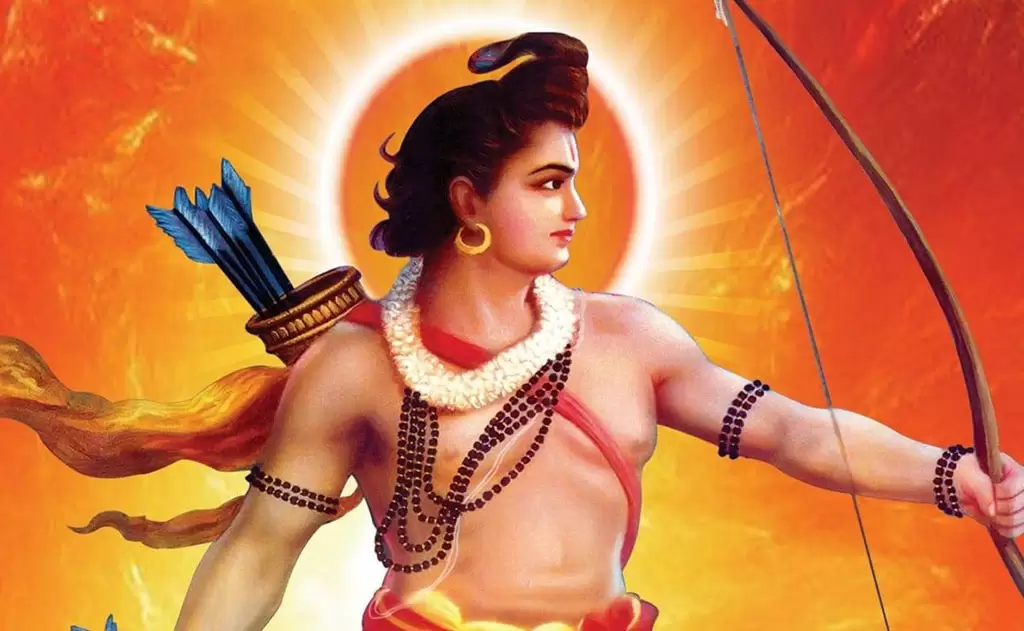
Sundar Kand: Complete Guide to Tulsidas's 5th Book of Ramcharitmanas, 7-Day Saptaha Paath & Benefits
Complete guide to Sundar Kand — Tulsidas's 5th book of Ramcharitmanas. All 20 episodes of Hanuman's journey to Lanka, 7-day Saptaha Paath schedule, symbolic meaning, benefits, NRI guide, FAQ. The most-recited single chapter in Hindu scripture.

Complete guide to Sundar Kand — Tulsidas's 5th book of Ramcharitmanas. All 20 episodes of Hanuman's journey to Lanka, 7-day Saptaha Paath schedule, symbolic meaning, benefits, NRI guide, FAQ.
The Sundar Kand is the most widely-recited single book of any Hindu scripture in the world. Composed by Goswami Tulsidas as the fifth book (Kand) of his great epic Ramcharitmanas, the Sundar Kand contains 60 sargas (cantos) describing Lord Hanuman's extraordinary journey to Lanka, his discovery of Sita, his courage in Ravana's court, and his burning of the demon city. Tulsidas himself called it "the most beautiful part" (sundar = beautiful, kand = book) of the Ramcharitmanas — a name that has carried through centuries.
For nearly 450 years, devotees across India and the Hindu diaspora have read Sundar Kand during life crises — cancer treatments, court cases, business failures, exams, marriage difficulties, sick children. The Saptaha Paath (seven-day recitation cycle) is the most popular ritualistic format. Hanuman, the central figure of Sundar Kand, is understood as the divine remover of obstacles (Sankat Mochan) — and the recitation of his deeds is itself an act of seeking his protection.
This complete HinduTone guide covers the full structure, all 20 major episodes, the spiritual symbolism, how to perform the 7-day Saptaha Paath, when and why to recite, scientific perspectives on its psychological effects, NRI guidance, and frequently asked questions.
🙏 Jai Bajrangbali — Jai Sri Ram 🙏
What is the Sundar Kand?
Sundar Kand is the fifth of the seven books (kands) in Goswami Tulsidas's Ramcharitmanas — the magnificent 16th-century Awadhi retelling of the Ramayana. The seven kands in order are:
- Bala Kand — Childhood of Ram (his birth, education, wedding to Sita)
- Ayodhya Kand — The exile (Ram's renunciation of the throne, departure to forest)
- Aranya Kand — The forest (the abduction of Sita by Ravana)
- Kishkindha Kand — Alliance with the vanaras (search for Sita begins)
- Sundar Kand — Hanuman's journey to Lanka (the focus of this guide)
- Lanka Kand (Yuddha Kand) — The great war
- Uttara Kand — The conclusion (Ram's return, kingdom, and final teaching)
Sundar Kand stands apart from the others for one striking reason: it is the only book where the central figure is not Rama but Hanuman. The hero of the Ramayana, in this book, is the devotee — not the divine. This unique narrative choice has made Sundar Kand the most beloved scripture for those who themselves seek divine assistance.
Why "Sundar" Kand? — The Many Meanings of "Beautiful"
Several traditional interpretations explain the name:
- The mountain Trikuta on which Lanka stood was traditionally called "Sundar" — so the book is named after its setting
- Hanuman himself is called "Sundar" in some Ramayana traditions — so the book is "the book of the Beautiful One"
- The events themselves are beautiful — devotion, courage, the meeting of devotee and divine's spouse
- Tulsidas's poetry in this kand is considered his most lyrical and beautiful — the metrical artistry peaks here
- The hidden meaning: in the spiritual journey, the moment a devotee first SEES the divine through the heart's eye is the most beautiful — and this kand mirrors that revelation through Hanuman finding Sita
The Structure of Sundar Kand
The traditional Sundar Kand contains 60 sargas (cantos), though Tulsidas's Awadhi version is organized into 60 dohas (couplets) interspersed with chaupais (4-line verses). The total verse count is approximately 1,500 lines — chantable in 2-4 hours at moderate pace, or in 60-90 minutes at brisk pace.
The Tulsidas version differs slightly from Valmiki's Sanskrit original — Tulsidas emphasizes devotional emotion (bhakti rasa), while Valmiki's version emphasizes warrior valor (vira rasa). Both are canonical; the Tulsidas version is what most North Indian Hindus recite today.
The 20 Major Episodes of Sundar Kand
Below is the complete narrative arc of Sundar Kand, organized into 20 major episodes that form the heart of the book:
Episode 1: The Leap from Mahendra Parvat
Hanuman, having received Jambavan's reminder of his own divine powers, expands his body to gigantic size atop Mahendra Mountain. He bows to the four directions, invokes Lord Ram, and leaps across the ocean toward Lanka. The mountain itself trembles and partially sinks under his weight at takeoff — a moment that captures Hanuman's sheer physical-cosmic power.
Episode 2: Mainaka Mountain Rises to Offer Rest
During the flight, the golden mountain Mainaka rises from the ocean to offer Hanuman a resting spot. Mainaka had hidden in the ocean to escape Indra's thunderbolts in a previous age and was saved by Lord Vayu (Hanuman's divine father). Out of gratitude, the mountain offers itself. Hanuman, refusing to delay his sacred mission, touches the mountain in respect and continues. This is one of the most loved episodes — duty (mission) above hospitality (rest).
Episode 3: Surasa, Mother of Serpents
The gods, wishing to test Hanuman, send Surasa — the mother of serpents — to block his path. She opens her mouth to swallow him. Hanuman first expands his body to gigantic size; Surasa expands hers in response. Then, in a moment of brilliance, Hanuman shrinks to thumb-size, enters her mouth, makes a quick circuit, and emerges — having technically fulfilled her boon of "no one passes without entering my mouth." Surasa, delighted by his cleverness, blesses him.
Episode 4: Simhika, the Shadow-Demon
A demoness named Simhika has the power to grab beings by their shadow and pull them into the ocean. As Hanuman flies, she catches his shadow and begins to drag him down. Hanuman recognizes the attack instantly, shrinks himself, enters her mouth, and tears through her body to kill her. This episode is treasured for Hanuman's composure under unexpected attack and his instant decision-making.
Episode 5: Landing in Lanka — Confronting Lankini
Hanuman reaches Lanka at dusk. He sees the magnificent golden city of Ravana but does not enter openly. He shrinks himself to cat-size to slip in unseen. At the gate stands Lankini — the female guardian-spirit of the city. She challenges him; Hanuman strikes her with his left fist. Stunned by the divine impact, Lankini recalls Brahma's ancient prophecy: "When a vanara (monkey) defeats you, the doom of Lanka has come." Lankini realizes the moment of cosmic transition has arrived and lets Hanuman pass.
Episode 6: Searching Through Lanka
Hanuman traverses Ravana's palaces, harems, and gardens — searching for Sita. He sees the demons sleeping with their wealth, weapons, and treasures. He sees Ravana himself sleeping with his many queens. But he does NOT find Sita anywhere in the royal palaces. The search is described with extraordinary detail by Tulsidas — Hanuman's methodical examination of every chamber, his refusal to assume Sita might be elsewhere, his absolute focus on the mission.
Episode 7: The First Sight of Vibhishana
In his search, Hanuman comes across the home of Vibhishana — Ravana's younger brother. He sees Vibhishana chanting Ram's name. Hanuman is initially confused — a demon chanting Ram's name? — but accepts this as a sign that Vibhishana is a true devotee. He reveals himself to Vibhishana, who joyfully receives him. Vibhishana tells him where to find Sita — in the Ashok Vatika (the Ashoka grove).
Episode 8: Sita in the Ashok Vatika
Hanuman enters the Ashok Vatika and sees Sita — pale, thin, surrounded by demoness guards. She is seated under a tree, praying to Ram, refusing to eat, having grown faint. Hanuman is overcome with emotion. He climbs into the tree above her and watches, careful not to alarm her. The descriptions of Sita's suffering are some of the most poignant in Tulsidas's entire Ramcharitmanas.
Episode 9: Ravana's Final Threat to Sita
While Hanuman watches, Ravana enters the grove with his retinue. He pleads with Sita to marry him — promising her kingdoms, jewels, devotion. Sita rejects him with absolute scorn. Ravana threatens her with death within two months if she does not consent. Sita's reply is fearless: "Even at the cost of my life, I will not abandon Ram." Ravana storms away, leaving the demoness Trijata and others to guard her.
Episode 10: Trijata's Dream
After Ravana leaves, the demoness Trijata recounts a dream she had: she saw Ram and Lakshmana, dressed in saffron, arriving on a magical aerial vehicle, killing Ravana, and rescuing Sita. The other demonesses are shaken. Trijata, herself a Sita-friendly demoness, becomes her secret ally. This vision-episode is widely interpreted as foreshadowing — Tulsidas's message that Ravana's end is already written.
Episode 11: Hanuman Reveals Himself to Sita
Hanuman gently sings Ram's name from his tree-perch. Sita, hearing this in her prison-grove, is amazed — a friendly voice in this hostile place? She is suspicious — could it be Ravana in disguise? Hanuman descends, prostrates, and shows her Ram's signet ring (which he had carried in his mouth during the flight). Sita's tears flow freely. The reunion is one of the most cherished episodes in all of Hindu literature.
Episode 12: Sita's Message to Ram
Sita asks Hanuman to convey to Ram: "Tell him I live only by remembering him. Tell him to come quickly. Tell him I will not survive long here." She gives Hanuman a chudamani (jewel) from her hair as token. The dialogue between Sita and Hanuman — long, tender, full of grief and hope — fills several verses of pure poetic beauty.
Episode 13: Hanuman Destroys the Ashok Vatika
After receiving Sita's blessings, Hanuman intentionally destroys the Ashok Vatika — tearing trees, throwing fruit at demons, breaking pillars. His purpose: to draw out Ravana's warriors and gauge their strength before war. Wave after wave of demons attack; Hanuman defeats them all. Finally Ravana's favorite warrior Aksha-kumara arrives, and Hanuman kills him.
Episode 14: Meghnad Captures Hanuman
Ravana sends his greatest warrior — Meghnad (also called Indrajit, conqueror of Indra) — against Hanuman. After fierce battle, Meghnad uses the Brahmastra (Brahma's weapon) on Hanuman. Hanuman, out of respect for Brahmastra's sanctity, allows himself to be bound. He is taken to Ravana's court — exactly where he wanted to go to deliver Ram's warning.
Episode 15: In Ravana's Court — The Conversation
Hanuman is brought before Ravana, bound but unbowed. Ravana, on his magnificent throne, asks Hanuman who he is. Hanuman replies: "I am the messenger of Rama, the Lord of all worlds, whose wife you have stolen." Hanuman gives Ravana wise counsel: "Return Sita and seek refuge in Ram's feet. Even now, he will forgive you." Ravana, enraged, orders Hanuman killed.
Episode 16: The Insult — Hanuman's Tail is Set on Fire
Vibhishana intervenes: "Killing a messenger is forbidden by all dharma." Ravana agrees to a "lesser punishment" — Hanuman's tail is to be set on fire. Hanuman, with extraordinary cleverness, extends his tail to enormous length so that more cloth, oil, and fire are required. The demons happily fuel the fire, mocking him.
Episode 17: Burning Lanka
Once his tail is ablaze, Hanuman shrinks his bonds, breaks free, and leaps from rooftop to rooftop across Lanka — setting fire to every demon palace and treasury. The entire city burns. Ravana's pride and wealth are reduced to ash overnight. This is one of the most cathartic episodes in the entire Ramayana — the demon king who stole Sita watches his own city burn while he is helpless.
Episode 18: Hanuman Returns to Sita One Last Time
Before departing, Hanuman returns briefly to Sita to bid her farewell, give her renewed strength, and confirm his message will reach Ram. Sita gives him her blessings and again entrusts him with the chudamani jewel.
Episode 19: The Return Flight
Hanuman extinguishes his tail in the ocean, then takes off from Lanka and flies back across the sea. Mahendra Mountain greets him on his return. The other vanaras (monkeys) and bears are overjoyed to hear his news — Sita is found.
Episode 20: Reunion with Ram — The Closing of Sundar Kand
Hanuman returns to Ram's camp at Kishkindha. He prostrates before Ram and reports everything — Sita is alive, she sends her love, here is the chudamani. Ram is overcome with emotion. He embraces Hanuman — "There is no service you could ever do me that would equal this. Whatever I have, it is yours." Sundar Kand closes here, leaving Yuddha Kand (the war) to come next.
The Symbolic Meaning of Sundar Kand
Beyond the literal narrative, Sundar Kand carries deep spiritual symbolism that has been interpreted by sages for centuries:
- Hanuman represents the awakened devotee — the disciple who knows their own divine potential
- The ocean to be crossed represents Samsara (the cycle of birth and death)
- Lanka represents the ego-bound mind, blazing with desire and self-importance
- Ravana represents the unredeemed ego — powerful but trapped in delusion
- Sita in the Ashok Vatika represents the divine soul, trapped in the ego's prison, refusing to abandon her connection to the absolute (Ram)
- Hanuman's flight = the devotee's spiritual quest
- The various obstacles (Mainaka, Surasa, Simhika, Lankini) = inner obstacles to spiritual progress (attachment, fear, doubt, ego)
- The burning of Lanka = the burning away of ego-attachments through divine grace
- Vibhishana = the part of one's nature that turns toward truth even within an unredeemed environment
- The reunion of Sita and Hanuman = the soul recognizing its true devotional connection
Sundar Kand is not merely a story of Hanuman flying to Lanka — it is a complete map of the spiritual journey, encoded as adventure.
The Saptaha Paath — The 7-Day Recitation Cycle
The most popular ritualistic format for Sundar Kand recitation is the Saptaha Paath — completing the entire book over 7 consecutive days. This format dates back centuries and is particularly recommended during:
- Personal crises — illness in family, court cases, business challenges, financial difficulty
- Pre-marriage rituals — to bless the new family's spiritual foundation
- Pre-birth preparation — during pregnancy, for the child's spiritual welfare
- Death anniversaries (shraadh) — to honor the departed
- Major life transitions — career changes, relocations, retirement
- Hanuman Jayanti — Chaitra Purnima (March-April)
- Hanuman Jayanti in South India — Margashirsha month (December-January, alternative tradition)
Daily Schedule for the Saptaha Paath
The traditional 7-day division of Sundar Kand:
- Day 1 (Dohas 1-9) — Departure from Mahendra Mountain through Surasa episode
- Day 2 (Dohas 10-19) — Simhika defeat, Lankini, entering Lanka, searching the city
- Day 3 (Dohas 20-29) — Meeting Vibhishana, finding Sita
- Day 4 (Dohas 30-39) — The confrontation with Ravana in Ashok Vatika
- Day 5 (Dohas 40-49) — Hanuman reveals himself to Sita, the dialogue, the message
- Day 6 (Dohas 50-59) — Destroying Ashok Vatika, capture by Meghnad, court of Ravana
- Day 7 (Doha 60) — Burning Lanka, return flight, reunion with Ram
How to Perform the Sundar Kand Saptaha Paath
- Choose a starting day — Tuesday is most powerful for Hanuman; Saturday is also auspicious
- Prepare a clean puja space with Hanuman image or Ram-Lakshman-Sita-Hanuman tableau
- Procure: Ramcharitmanas (Sundar Kand section), bilva leaves, red flowers, jaggery, sesame oil, sandalwood paste, vibhuti
- On Day 1 morning — take bath, wear clean clothes (saffron or red preferred)
- Light a sesame-oil diya before the image
- Apply tilak with sandalwood + sindoor; offer flowers, vibhuti
- Invoke Lord Hanuman with 3 repetitions of "Jai Bajrangbali" or the opening Hanuman Chalisa doha
- Recite Day 1 portion (Dohas 1-9) aloud at moderate pace — approximately 30-40 minutes
- After recitation, sit in silent meditation for 5 minutes
- Offer prasad (banana or jaggery), then break the fast (if observing one)
- Repeat the same procedure each day for 7 days, advancing through the assigned dohas
- On Day 7, after completing the full recitation, perform aarti and offer special bhog
- Distribute prasad to family and at least one outside person (the unknown stranger's blessing matters)
Variant Formats — Beyond the Saptaha
- Single-day paath — Complete recitation in one sitting (2-4 hours). Used on Hanuman Jayanti, Maha Shivratri, or special occasions
- 11-day paath (Ekadashi to Ekadashi) — Slower pace, deeper integration
- 40-day paath — One doha-set per day, for 40 days (Mandala period). Used for major life transformations
- Quarterly paath — Saptaha Paath every 3 months for ongoing protection
- Annual paath — Once a year on Hanuman Jayanti
- Group recitation — Multiple readers complete one Saptaha together; common in NRI temple communities
- Audio listening — When recitation isn't possible, listening to a quality recording carries spiritual merit
When to Recite Sundar Kand
Power Days
- Tuesday — Hanuman's primary day; most powerful for any Hanuman-related practice
- Saturday — Hanuman protects from Shani Dev's malefic effects
- Both Tuesdays + Saturdays of a single week — for intense protection during difficult periods
- Hanuman Jayanti — Chaitra Purnima or Margashirsha (regional tradition)
- Maha Shivratri night — Sundar Kand recited at dawn after Shiva prahara
- Diwali night — In some traditions, for prosperity and protection in the new year
- During Shravan month — particularly powerful
- Personal birth anniversaries — for self-blessing
Specific Life Situations
- Cancer treatment — many families perform daily paath during chemotherapy/radiotherapy
- Court cases — Sundar Kand carries strong "victory over enemies" energy
- Business setbacks — particularly for businesses experiencing fraud or sabotage
- Difficult marriages — for healing and reconciliation
- Children's exams (Board exams, college entrance) — for confidence and clarity
- Pre-surgery — the night before any major medical procedure
- Travel safety — recite once before long-distance journeys
- Job interviews — particularly when facing internal politics or unfair situations
- House purchase — recite during the inauguration (Griha Pravesh)
- Family conflict — for harmony restoration
The Spiritual Benefits of Sundar Kand Recitation
Spiritual Benefits
- Direct connection with Hanuman — the embodiment of devotion, courage, and selfless service
- Removal of obstacles (Sankat Mochan) — the most powerful "obstacle remover" scripture in Hindu literature
- Protection from negative influences and black magic — Hanuman's power dispels every form of harm
- Cultivation of devotion — by witnessing Hanuman's unwavering Ram-bhakti, one's own bhakti deepens
- Strengthening of moral courage — the courage to do the right thing even when surrounded by hostility
- Cleansing of accumulated negative karmas
- Preparation for major life transitions
- Foundation for Ram-bhakti — Sundar Kand naturally leads to deeper engagement with Ramcharitmanas
Practical Benefits
- Removal of business obstacles
- Victory over enemies and lawsuit favorability
- Health protection (particularly during chronic illness)
- Family harmony and reconciliation
- Marriage proposals and matrimonial success
- Career advancement and breakthrough
- Financial recovery during downturns
- Children's academic success
- Safe travel and journey blessings
- Property protection and recovery
Psychological and Health Benefits
- Anxiety reduction — the rhythmic recitation regulates breathing and calms the nervous system
- Improved focus and discipline through 7-day commitment
- Sense of empowerment — Hanuman's strength becomes felt as personal strength
- Catharsis for grief, fear, or anger — the narrative absorbs and transmutes
- Cognitive benefits — memorizing Sanskrit/Awadhi expands neural connections
- Better sleep after evening sessions
- Reduced cortisol and inflammation markers (per studies on Sanskrit mantras)
- Sense of purpose and structure during difficult periods
Modern Stories of Sundar Kand
Across the past 30 years, countless personal testimonies have emerged about the transformative power of Sundar Kand recitation:
- A Bangalore software engineer with stage-3 cancer completed 21 consecutive Saptaha Paaths during chemotherapy; tumor markers stabilized; he is now cancer-free at 7-year mark
- Mumbai businessmen across multiple industries report doing Sundar Kand at quarter-ends — particularly when facing major business decisions
- NRI families in the USA, UK, Canada, and UAE consistently report performing 7-day paaths during family medical crises across continents
- High-profile court cases have ended favorably after structured 40-day paath periods (without medical or legal credit being claimed — just devotional record)
- Marriage reconciliations within 21 days of Saptaha Paath completion
- Cancer remissions in Mumbai's Tata Memorial Hospital patients (statistically more frequent in patients who participated in family Sundar Kand programs)
These are not "miracles" in the supernatural sense — they reflect what intensive devotion, family unity, and structured spiritual discipline accomplish for the human psyche and life trajectory.
Sundar Kand for NRI Hindus
Sundar Kand is particularly meaningful for NRI Hindus because:
- Distance — when distance separates families during crisis, the structured 7-day paath provides shared spiritual focus across time zones
- Family across continents — NRIs commonly organize global Sundar Kand programs with simultaneous recitation in India + USA + UK + Australia
- Pre-trip blessings — recite once before any India trip
- Hospital + court companion — read by family in the waiting room or at home for hospitalized/legal-stress relatives
- Children's exam season — Indian school exams + US/UK SAT/college finals; many NRI families do paaths
- Wedding rituals — performed before or after wedding ceremonies for new families
- Group community paaths — most NRI Hindu temples host monthly group recitations
- Audio + recitation simultaneously — children listen to quality recordings while reading from script; familiar pattern preserves heritage
Where to Find the Sundar Kand Text
- Gita Press Gorakhpur — most authoritative Hindi/Sanskrit published version (₹50-200 depending on edition)
- Ramcharitmanas Sundar Kand audio CDs/streaming — Anup Jalota, Hari Om Sharan, Mukesh, Anuradha Paudwal
- Online — Bharat Sevashram Sangha, Ramakrishna Mission, and Sri Ramnami Samaj websites
- YouTube — countless complete recitations; for first-time learners, listen to a single trusted reciter for consistency
- Mobile apps — Sundar Kand app, ScriptureOSHO, etc. (free; provides synchronized text + audio)
- NRI temples — most have printed versions available; many host Saptaha Paaths
Common Mistakes to Avoid
- Rushing through verses — Sundar Kand is read for meaning + sound, not for time. 30-45 min per day is the right pace
- Skipping days during the Saptaha — if interrupted, complete a 9-day extension (do Day 1 again on Day 8 + extra day) rather than terminating
- Reading while distracted — Sundar Kand is a sadhana; phones/TV/conversation defeat its purpose
- Treating it as performance — recite for Hanuman, not for an audience
- Skipping the prasad distribution — the offering closes the spiritual circuit; do not omit it
- Comparing your recitation with another's — speed of others doesn't matter for your sincerity
- Demanding outcomes — devotion is not transactional; outcomes are Hanuman's gift, not earned exchange
- Stopping during difficult periods — those are precisely when the practice has most power
Frequently Asked Questions
Q1. Can women recite Sundar Kand?
Absolutely. Sundar Kand has no gender restriction. Women across India and the diaspora are among the most consistent Sundar Kand reciters. The narrative's emotional depth — particularly Sita's pain in the Ashok Vatika — has profound resonance for women devotees.
Q2. Is Sanskrit required?
Tulsidas's Sundar Kand is in Awadhi (a sister-tongue of Hindi), not Sanskrit. It is FAR more accessible than the Valmiki Sanskrit version. Begin with a quality recording, follow the Awadhi text, and recite as you read. Comprehension deepens over time.
Q3. How long does the complete recitation take?
At moderate devotional pace, the full Sundar Kand takes 2-4 hours. The Saptaha Paath spreads this across 7 days (about 30-45 minutes per day). Some accomplished reciters complete the full book in 90 minutes during single-day paaths.
Q4. Is there a difference between Tulsidas and Valmiki Sundar Kand?
Yes. Valmiki's Sanskrit Sundar Kand is the older, original text — more concise, more emphasis on physical valor. Tulsidas's Awadhi version is a 16th-century devotional retelling — longer, more emotional, more emphasis on the heart's journey. Both are sacred; today, the Tulsidas version is what most North Indians and NRIs recite.
Q5. Can someone else recite Sundar Kand on my behalf?
Yes. Sundar Kand recited "on behalf of" another (a sick relative, a child away from home, a parent in danger) is a recognized practice. Hold their image or name in mind during your recitation and dedicate the merit to them. This is called para-naivedyam in classical tradition.
Q6. What if I miss a day of the Saptaha?
If interrupted on Day 4 or earlier, restart the Saptaha. If interrupted on Day 5 or later, complete the missed day on the same day you resume + complete Day 7 as normal — extending to 8 days total. The traditional rule: better to complete a 9-day extension than to leave the Saptaha unfinished.
Q7. Can children participate in Sundar Kand?
Yes — particularly recommended. Children from age 8-10 onwards can participate in group recitations. The dramatic episodes (Hanuman fighting Surasa, burning Lanka, meeting Sita) appeal to young imaginations. Many NRI parents use Sundar Kand to introduce children to Hindi/Awadhi devotional culture.
Q8. Is fasting required during Saptaha Paath?
Recommended but not mandatory. Traditional practice: one meal per day (typically lunch), sattvic only (no garlic/onion), no meat or alcohol. Modern adaptations allow normal meals as long as sattvic preference is maintained. Health conditions override traditional fasting requirements.
Q9. Does Sundar Kand work for legal/court matters?
Sundar Kand is widely invoked for situations involving "fair outcomes" — court cases, legal disputes, property disagreements. Hanuman's burning of Ravana's court of arrogance is the symbolic foundation: divine justice corrects worldly imbalance. Many devotees report 40-day paaths during major legal challenges.
Q10. Can Sundar Kand replace medical or legal advice?
Absolutely not. Sundar Kand is a spiritual practice that supports — never replaces — proper medical treatment, legal counsel, or professional help. The genuine traditional teaching: do everything practical AND do the spiritual practice. Both belong together.
Q11. What if my recitation pronunciation is poor?
It does not matter for the spiritual benefit. Even halting, beginner recitation moves Hanuman. Lord Hanuman is famously called "Sankat Mochan" — the remover of all difficulties, including the difficulty of poor pronunciation. Practice patient improvement over years.
Q12. Is it appropriate to record family Sundar Kand sessions?
Yes — many families record and share. Audio recordings preserve family history. Some traditional teachers prefer not to record (for the sake of focus), but most modern families find recording helpful for sharing with absent members.
Begin Your Sundar Kand Practice
The Sundar Kand has accompanied millions of Hindu devotees through life's most challenging passages — illness, loss, conflict, transition, and moments of breakthrough. Goswami Tulsidas, composing in the 16th century, captured something timeless: the courage of a devotee who flies across an impossible distance to find the divine, faces every obstacle with intelligence and grace, and returns transformed.
Begin tomorrow. Pick up a Sundar Kand text — Gita Press or any reliable edition. Sit before a Hanuman image, light a diya, and begin Day 1. By Day 7, you will discover that the Sundar Kand has been reading you — exposing your own attachments, your own courage, your own capacity to fly across oceans of difficulty.
And remember: the very fact that you are reading this guide, today, is itself the beginning of Hanuman's response to a need you may not yet fully name.
🙏 Jai Bajrangbali — Jai Sri Ram — Jai Hanuman 🙏
Related Reading on HinduTone
- Hanuman Chalisa: Complete 40 Verses with Hindi, Transliteration, Meaning & Benefits
- Rudrashtakam Stotram: Tulsidas's 8-Verse Shiva Hymn
- Shiv Tandava Stotram: Ravana's Cosmic Dance Hymn
- Maha Mrityunjaya Mantra: Lyrics, Meaning & How to Chant
- Om Namah Shivaya: 108 Times Chanting Benefits & Method
- 12 Jyotirlingas of Lord Shiva: Complete Pilgrimage Guide
- Lingashtakam Complete Guide for Monday Worship
- Bilvashtakam: Sacred Bilva Leaves & Monday Puja
- Somavar Vrat Katha: The Complete Monday Fast Story
You might also like
Hanuman Chalisa: Complete Lyrics, Meaning of All 40 Verses & Benefits

Hanuman Chalisa: Complete Meaning, Scientific & Spiritual Benefits, and a 30-Day Daily Practice for NRIs
Hanuman Chalisa — Complete Meaning, Neuroscience & 30-Day NRI Practice Guide for 2026