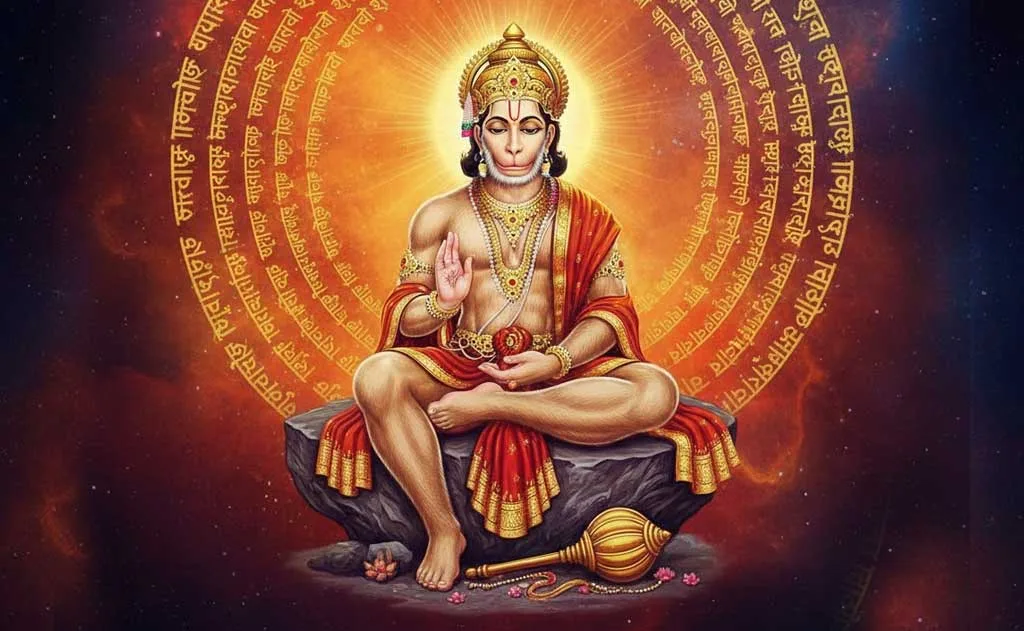
Hanuman Chalisa: Full Lyrics in Hindi with IAST and Meaning of All 40 Chaupais
The complete Hanuman Chalisa of Goswami Tulsidas, checked against the sanskritdocuments.org Hindi text: two opening dohas, forty chaupais and the closing doha in Devanagari and IAST, each with our own plain-English meaning, plus when it is traditionally recited (Tuesdays and Saturdays) and a simple way to recite it at home.
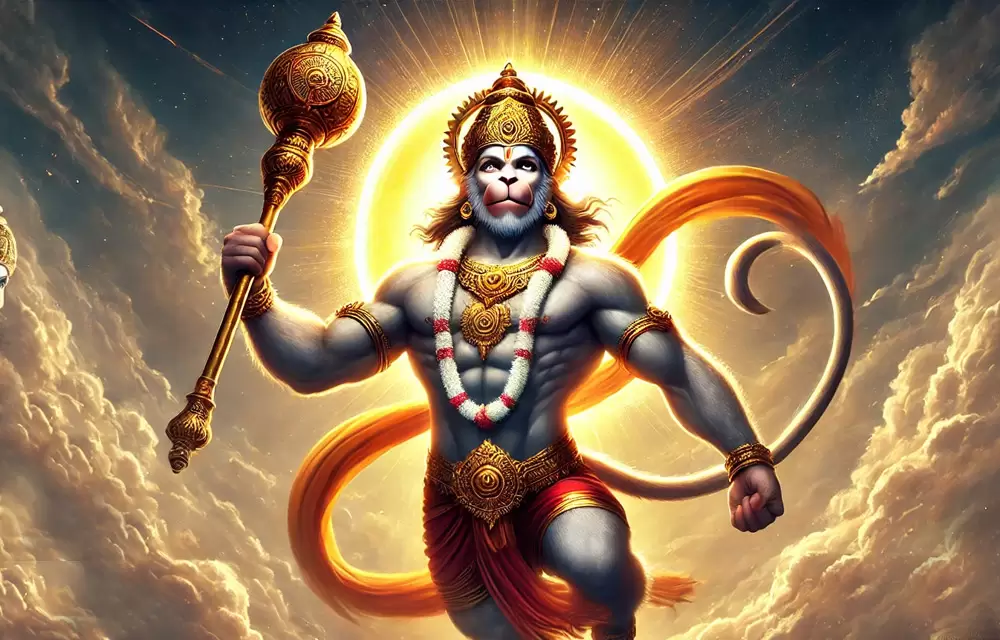
Quick answer: The Hanuman Chalisa is a forty-verse hymn to Lord Hanuman in Awadhi (an eastern form of Hindi), traditionally attributed to Goswami Tulsidas. It opens with two dohas beginning 'Shri Guru charana saroja raja', has forty chaupais beginning 'Jaya Hanumana jnana guna sagara', and ends with the doha 'Pavanatanaya sankata harana'. It is traditionally recited on Tuesdays and Saturdays, and by many devotees every day.
Last updated: 18 October 2026. The Devanagari text on this page comes from the Hindi edition published by sanskritdocuments.org, converted to Devanagari and IAST by software rather than retyped by hand. The English meanings are our own.
Generations of families have learned the Chalisa by ear, from grandparents, temple bhajans or recordings, and small differences in wording have crept in. This page gives one published text verse by verse, so you can read, chant and understand each line. If your family follows a particular printed book, follow that book; the differences are minor.
About the Hanuman Chalisa
Tulsidas (16th century) is best known for the Ramcharitmanas, the Awadhi retelling of the Ramayana. The Chalisa draws on the same story: Hanuman meeting Sita in Lanka, burning the city, bringing the Sanjivani herb for Lakshmana, and serving at Rama's door. It then turns to Hanuman as a protector of devotees and closes with Tulsidas's own prayer.
The verse forms are simple. A doha is a two-line couplet; a chaupai is a quatrain of four short quarters, printed here as two lines. Because the language is Awadhi, the IAST shows forms such as 'bidyā' and 'barana' that differ from Sanskrit spelling; read them as written.
| Part | What it covers |
|---|---|
| Opening dohas | Prayer to the Guru, the aim of singing Rama's glory, and a request for strength and wisdom |
| Chaupais 1 to 10 | Hanuman's form, strength, learning and devotion to Rama |
| Chaupais 11 to 20 | His deeds in the Ramayana: Lanka, Sanjivani, Sugriva, Vibhishana, the leap across the ocean |
| Chaupais 21 to 30 | Hanuman as guardian of Rama's door and protector of those who take refuge in him |
| Chaupais 31 to 40 | The blessings of recitation and Tulsidas's prayer |
| Closing doha | A prayer that Hanuman dwell in the heart with Rama, Lakshmana and Sita |
Hanuman Chalisa lyrics with meaning
Each verse appears in Devanagari, then IAST transliteration, then a plain-English meaning that stays close to the words. In IAST, a line over a vowel (ā, ī, ū) means it is held longer, ṃ is a nasal sound, and ś or ṣ is close to 'sh'.
Opening dohas
Doha 1
श्रीगुरु चरन सरोज रज निज मनु मुकुरु सुधारि ।
बरनऊँ रघुबर बिमल जसु जो दायकु फल चारि ॥
śrīguru carana saroja raja nija manu mukuru sudhāri |
baranaūm̐ raghubara bimala jasu jo dāyaku phala cāri ||
Meaning: Cleaning the mirror of my mind with the dust of my Guru's lotus feet, I sing the spotless glory of Raghubar (Sri Rama), which grants the four aims of life: dharma, prosperity, fulfilment and liberation.
Doha 2
बुद्धिहीन तनु जानिके सुमिरौं पवनकुमार ।
बल बुद्धि बिद्या देहु मोहिं हरहु कलेस बिकार ॥
buddhihīna tanu jānike sumirauṃ pavanakumāra |
bala buddhi bidyā dehu mohiṃ harahu kalesa bikāra ||
Meaning: Knowing that my understanding is small, I remember you, son of the Wind. Give me strength, wisdom and knowledge, and take away my troubles and faults.
Chaupais 1 to 10: Hanuman's form and qualities
Chaupai 1
जय हनुमान ज्ञान गुन सागर ।
जय कपीस तिहुँ लोक उजागर ॥
jaya hanumāna jñāna guna sāgara |
jaya kapīsa tihum̐ loka ujāgara ||
Meaning: Victory to Hanuman, ocean of wisdom and virtue. Victory to the lord of the vanaras, who lights up the three worlds.
Chaupai 2
राम दूत अतुलित बल धामा ।
अंजनिपुत्र पवनसुत नामा ॥
rāma dūta atulita bala dhāmā |
aṃjaniputra pavanasuta nāmā ||
Meaning: You are Rama's messenger and a home of matchless strength, known as Anjani's son and as Pavanasuta, son of the Wind.
Chaupai 3
महाबीर बिक्रम बजरंगी ।
कुमति निवार सुमति के संगी ॥
mahābīra bikrama bajaraṃgī |
kumati nivāra sumati ke saṃgī ||
Meaning: Great hero, full of valour, with a body as strong as a thunderbolt (Bajrangi), you remove wrong thinking and stay beside good sense.
Chaupai 4
कंचन बरन बिराज सुबेसा ।
कानन कुंडल कुंचित केसा ॥
kaṃcana barana birāja subesā |
kānana kuṃḍala kuṃcita kesā ||
Meaning: Your body shines with a golden colour and you are finely dressed, with rings in your ears and curly hair.
Chaupai 5
हाथ बज्र औ ध्वजा बिराजै ।
काँधे मूँज जनेऊ साजै ॥
hātha bajra au dhvajā birājai |
kām̐dhe mūm̐ja janeū sājai ||
Meaning: The thunderbolt and a flag shine in your hands, and a sacred thread of munja grass rests on your shoulder.
Chaupai 6
संकर सुवन केसरीनंदन ।
तेज प्रताप महा जग बंदन ॥
saṃkara suvana kesarīnaṃdana |
teja pratāpa mahā jaga baṃdana ||
Meaning: You are born of Shankara's grace and are the joy of Kesari. Your radiance and might are honoured across the world.
Chaupai 7
विद्यावान गुनी अति चातुर ।
राम काज करिबे को आतुर ॥
vidyāvāna gunī ati cātura |
rāma kāja karibe ko ātura ||
Meaning: You are learned, full of good qualities and very wise, always eager to carry out Rama's work.
Chaupai 8
प्रभु चरित्र सुनिबे को रसिया ।
राम लखन सीता मन बसिया ॥
prabhu caritra sunibe ko rasiyā |
rāma lakhana sītā mana basiyā ||
Meaning: You love to hear the Lord's story, and Rama, Lakshmana and Sita live in your heart.
Chaupai 9
सूक्ष्म रूप धरि सियहिं दिखावा ।
बिकट रूप धरि लंक जरावा ॥
sūkṣma rūpa dhari siyahiṃ dikhāvā |
bikaṭa rūpa dhari laṃka jarāvā ||
Meaning: Taking a tiny form, you appeared before Sita; taking a fearsome form, you set Lanka ablaze.
Chaupai 10
भीम रूप धरि असुर सँहारे ।
रामचंद्र के काज सँवारे ॥
bhīma rūpa dhari asura sam̐hāre |
rāmacaṃdra ke kāja sam̐vāre ||
Meaning: Taking a mighty form, you destroyed the asuras and completed the tasks of Ramachandra.
Chaupais 11 to 20: deeds in the Ramayana
Chaupai 11
लाय सजीवन लखन जियाये ।
श्रीरघुबीर हरषि उर लाये ॥
lāya sajīvana lakhana jiyāye |
śrīraghubīra haraṣi ura lāye ||
Meaning: You brought the life-giving herb (Sanjivani) and revived Lakshmana, and Sri Raghubir embraced you with joy.
Chaupai 12
रघुपति कीन्ही बहुत बड़ाई ।
तुम मम प्रिय भरतहि सम भाई ॥
raghupati kīnhī bahuta bar̤āī |
tuma mama priya bharatahi sama bhāī ||
Meaning: Rama praised you greatly and said: you are as dear to me as my brother Bharata.
Chaupai 13
सहस बदन तुम्हरो जस गावैं ।
अस कहि श्रीपति कंठ लगावैं ॥
sahasa badana tumharo jasa gāvaiṃ |
asa kahi śrīpati kaṃṭha lagāvaiṃ ||
Meaning: 'May the thousand-mouthed one sing your glory,' said the Lord of Shri, and held you close.
Chaupai 14
सनकादिक ब्रह्मादि मुनीसा ।
नारद सारद सहित अहीसा ॥
sanakādika brahmādi munīsā |
nārada sārada sahita ahīsā ||
Meaning: Sanaka and the sages, Brahma and the munis, Narada, Sharada (Saraswati) and the king of serpents,
Chaupai 15
जम कुबेर दिगपाल जहाँ ते ।
कबि कोबिद कहि सके कहाँ ते ॥
jama kubera digapāla jahām̐ te |
kabi kobida kahi sake kahām̐ te ||
Meaning: Yama, Kubera and the guardians of the directions, poets and scholars: how could any of them fully tell your glory?
Chaupai 16
तुम उपकार सुग्रीवहिं कीन्हा ।
राम मिलाय राज पद दीन्हा ॥
tuma upakāra sugrīvahiṃ kīnhā |
rāma milāya rāja pada dīnhā ||
Meaning: You did Sugriva a great service: you brought him to Rama and helped him regain his kingdom.
Chaupai 17
तुम्हरो मंत्र बिभीषन माना ।
लंकेस्वर भए सब जग जाना ॥
tumharo maṃtra bibhīṣana mānā |
laṃkesvara bhae saba jaga jānā ||
Meaning: Vibhishana followed your counsel and became the lord of Lanka, as the whole world knows.
Chaupai 18
जुग सहस्र जोजन पर भानू ।
लील्यो ताहि मधुर फल जानू ॥
juga sahasra jojana para bhānū |
līlyo tāhi madhura phala jānū ||
Meaning: The sun, thousands of yojanas away, you swallowed as a child, thinking it was a sweet fruit.
Chaupai 19
प्रभु मुद्रिका मेलि मुख माहीं ।
जलधि लाँघि गये अचरज नाहीं ॥
prabhu mudrikā meli mukha māhīṃ |
jaladhi lām̐ghi gaye acaraja nāhīṃ ||
Meaning: Carrying the Lord's ring in your mouth, you leapt across the ocean; it is no wonder that you did.
Chaupai 20
दुर्गम काज जगत के जेते ।
सुगम अनुग्रह तुम्हरे तेते ॥
durgama kāja jagata ke jete |
sugama anugraha tumhare tete ||
Meaning: Every hard task in the world becomes easy through your grace.
Chaupais 21 to 30: refuge and protection
Chaupai 21
राम दुआरे तुम रखवारे ।
होत न आज्ञा बिनु पैसारे ॥
rāma duāre tuma rakhavāre |
hota na ājñā binu paisāre ||
Meaning: You guard Rama's door, and no one enters without your leave.
Chaupai 22
सब सुख लहै तुम्हारी सरना ।
तुम रच्छक काहू को डर ना ॥
saba sukha lahai tumhārī saranā |
tuma racchaka kāhū ko ḍara nā ||
Meaning: Whoever takes refuge in you finds every comfort; with you as protector, why fear anyone?
Chaupai 23
आपन तेज संहारो आपै ।
तीनों लोक हाँक तें काँपै ॥
āpana teja saṃhāro āpai |
tīnoṃ loka hām̐ka teṃ kām̐pai ||
Meaning: You alone can hold back your own power; the three worlds tremble at your call.
Chaupai 24
भूत पिसाच निकट नहिं आवै ।
महाबीर जब नाम सुनावै ॥
bhūta pisāca nikaṭa nahiṃ āvai |
mahābīra jaba nāma sunāvai ||
Meaning: Ghosts and evil spirits do not come near when the name of the great hero is spoken.
Chaupai 25
नासै रोग हरै सब पीरा ।
जपत निरंतर हनुमत बीरा ॥
nāsai roga harai saba pīrā |
japata niraṃtara hanumata bīrā ||
Meaning: Illness and pain are said to leave the one who keeps repeating the name of brave Hanuman.
Chaupai 26
संकट तें हनुमान छुड़ावै ।
मन क्रम बचन ध्यान जो लावै ॥
saṃkaṭa teṃ hanumāna chur̤āvai |
mana krama bacana dhyāna jo lāvai ||
Meaning: Hanuman frees from trouble those who fix their mind, deeds and words on him.
Chaupai 27
सब पर राम तपस्वी राजा ।
तिन के काज सकल तुम साजा ॥
saba para rāma tapasvī rājā |
tina ke kāja sakala tuma sājā ||
Meaning: Rama, the ascetic king, is above all, and you carried out all his work.
Chaupai 28
और मनोरथ जो कोई लावै ।
सोई अमित जीवन फल पावै ॥
aura manoratha jo koī lāvai |
soī amita jīvana phala pāvai ||
Meaning: Whoever brings any other heartfelt wish to you receives the boundless fruit of life.
Chaupai 29
चारों जुग परताप तुम्हारा ।
है परसिद्ध जगत उजियारा ॥
cāroṃ juga paratāpa tumhārā |
hai parasiddha jagata ujiyārā ||
Meaning: Your glory shines through all four yugas and is famed as a light to the world.
Chaupai 30
साधु संत के तुम रखवारे ।
असुर निकंदन राम दुलारे ॥
sādhu saṃta ke tuma rakhavāre |
asura nikaṃdana rāma dulāre ||
Meaning: You protect the good and the saintly, destroy the asuras and are dear to Rama.
Chaupais 31 to 40: blessings of recitation and Tulsidas's prayer
Chaupai 31
अष्ट सिद्धि नौ निधि के दाता ।
अस बर दीन जानकी माता ॥
aṣṭa siddhi nau nidhi ke dātā |
asa bara dīna jānakī mātā ||
Meaning: You can grant the eight siddhis and nine nidhis (powers and treasures), a boon Mother Janaki gave you.
Chaupai 32
राम रसायन तुम्हरे पासा ।
सदा रहो रघुपति के दासा ॥
rāma rasāyana tumhare pāsā |
sadā raho raghupati ke dāsā ||
Meaning: You hold the elixir of devotion to Rama; may you always remain the servant of Raghupati.
Chaupai 33
तुम्हरे भजन राम को पावै ।
जनम जनम के दुख बिसरावै ॥
tumhare bhajana rāma ko pāvai |
janama janama ke dukha bisarāvai ||
Meaning: Through devotion to you a person reaches Rama and forgets the sorrows of many lives.
Chaupai 34
अंत काल रघुबर पुर जाई ।
जहाँ जन्म हरिभक्त कहाई ॥
aṃta kāla raghubara pura jāī |
jahām̐ janma haribhakta kahāī ||
Meaning: At the end of life such a person goes to Rama's abode and, if born again, is known as a devotee of Hari.
Chaupai 35
और देवता चित्त न धरई ।
हनुमत सेई सर्ब सुख करई ॥
aura devatā citta na dharaī |
hanumata seī sarba sukha karaī ||
Meaning: Even without holding other deities in mind, one who serves Hanuman finds every happiness.
Chaupai 36
संकट कटै मिटै सब पीरा ।
जो सुमिरै हनुमत बलबीरा ॥
saṃkaṭa kaṭai miṭai saba pīrā |
jo sumirai hanumata balabīrā ||
Meaning: Troubles are cut away and all pain ends for whoever remembers mighty, heroic Hanuman.
Chaupai 37
जै जै जै हनुमान गोसाईं ।
कृपा करहु गुरु देव की नाईं ॥
jai jai jai hanumāna gosāīṃ |
kṛpā karahu guru deva kī nāīṃ ||
Meaning: Victory, victory, victory to you, Lord Hanuman. Be kind to me as a Guru is kind.
Chaupai 38
जो सत बार पाठ कर कोई ।
छूटहि बंदि महा सुख होई ॥
jo sata bāra pāṭha kara koī |
chūṭahi baṃdi mahā sukha hoī ||
Meaning: Whoever recites this a hundred times is freed from bondage and finds great joy.
Chaupai 39
जो यह पढ़ै हनुमान चलीसा ।
होय सिद्धि साखी गौरीसा ॥
jo yaha par̤hai hanumāna calīsā |
hoya siddhi sākhī gaurīsā ||
Meaning: Whoever reads this Hanuman Chalisa gains success; Gaurisha (Shiva) is the witness.
Chaupai 40
तुलसीदास सदा हरि चेरा ।
कीजै नाथ हृदय मँह डेरा ॥
tulasīdāsa sadā hari cerā |
kījai nātha hṛdaya mam̐ha ḍerā ||
Meaning: Tulsidas, forever Hari's servant, prays: Lord, make your home in my heart.
Closing doha
Closing doha
पवनतनय संकट हरन मंगल मूरति रूप ।
राम लखन सीता सहित हृदय बसहु सुर भूप ॥
pavanatanaya saṃkaṭa harana maṃgala mūrati rūpa |
rāma lakhana sītā sahita hṛdaya basahu sura bhūpa ||
Meaning: Son of the Wind, remover of troubles, embodiment of all that is auspicious: dwell in my heart, king of the gods, together with Rama, Lakshmana and Sita.
When the Hanuman Chalisa is traditionally recited
- Tuesday (Mangalvar): the main weekly day for Hanuman worship in North India, often with a visit to a Hanuman temple. See our Tuesday Hanuman puja guide.
- Saturday (Shanivar): many devotees recite the Chalisa on Saturdays, a day linked with both Hanuman and Shani Dev. See our Saturday and Shani Dev guide and why Hanuman is worshipped on Saturday.
- Daily: many families recite it every morning or evening as part of regular prayer.
- Hanuman Jayanti: the Chalisa is recited many times over at temples and homes. See Hanuman Jayanti 2026: date and puja vidhi.
How to recite the Hanuman Chalisa at home
- Bathe or wash your hands and face, and sit before a picture or murti of Hanuman (or of Rama with Hanuman).
- Light a lamp. Many devotees offer a red flower, a little sindoor or a simple sweet; a lamp and a sincere mind are enough.
- Begin by remembering Lord Rama, as Tulsidas does in the opening dohas, and read the two dohas slowly.
- Recite the forty chaupais at an even pace. Clear pronunciation matters more than speed.
- Finish with the closing doha, a short prayer and, if you like, the aarti.
If you are learning, read one group of ten chaupais a day along with the meaning, and recite the whole Chalisa from the text. Children often learn fastest by listening to a recording and joining in.
Significance
For devotees, Hanuman is the model of strength joined with humility: the mightiest of heroes who sees himself only as Rama's servant. The Chalisa is traditionally believed to give courage, steady the mind and bring Hanuman's protection, and verses such as chaupais 24 to 26 speak of freedom from fear, illness and trouble. These are statements of faith from the tradition, not guarantees; the Chalisa is best recited as an offering of devotion.
Other Hanuman prayers you may like: the Sankat Mochan Hanuman Ashtak, the Bajrang Baan and the 108 names of Hanuman.
Frequently asked questions
Who wrote the Hanuman Chalisa?
The Hanuman Chalisa is traditionally attributed to Goswami Tulsidas, the 16th-century poet-saint who also wrote the Ramcharitmanas. He names himself in the last chaupai: 'Tulsidas sada Hari chera', 'Tulsidas, forever Hari's servant'.
Is the Hanuman Chalisa in Sanskrit or Hindi?
Neither, strictly. It is written in Awadhi, an eastern dialect of Hindi, which is why it uses forms such as 'barana' and 'bidya' rather than Sanskrit 'varna' and 'vidya'. It is printed in Devanagari script and is read as part of the Hindi devotional tradition.
Why is it called Chalisa?
Chalisa comes from chalis, forty. The hymn has forty chaupais (four-part verses, printed here as two lines each), framed by two dohas at the start and one at the end.
Which day is best for reciting the Hanuman Chalisa?
Tuesday and Saturday are the days traditionally associated with Hanuman, and many devotees also recite it daily, on Hanuman Jayanti and during the Ramayana season. Morning or evening, after a bath, is common, but sincere recitation at any time is welcomed by the tradition.
How many times should I recite the Hanuman Chalisa?
Once a day is the most common practice. Some devotees recite it 7, 11 or 108 times on special days, and chaupai 38 speaks of reciting it a hundred times. These are traditional practices of devotion, not rules, and no number guarantees a particular result.
Can women and children recite the Hanuman Chalisa?
Yes. The Hanuman Chalisa is a household hymn recited by women, men and children alike. Families who follow particular customs, for example during certain days of the month, can follow their own family or temple guidance.
How long does the Hanuman Chalisa take?
About eight to ten minutes at a steady pace. Beginners can read slowly from the IAST lines; with daily practice most people learn it by heart within a few weeks.
Editor's note (18 October 2026)
The Hanuman Chalisa text on this page is taken from Shri Hanumana Chalisa on sanskritdocuments.org (file chaalisa.itx), converted from ITRANS to Devanagari and IAST with the indic_transliteration software and checked line by line against the site's Devanagari page. Two small corrections were made: in chaupai 9 the source spells the first word सूक्श्म, which we give as सूक्ष्म (sūkṣma, subtle); and in chaupai 36 the first half-line ends with a double danda in the source, given here with a single danda as in every other chaupai. The source also prints the aarti 'Mangala murati Maruta nandana' after the Chalisa, which is not reproduced here. Spellings vary slightly between printed editions (for example बिद्या and विद्या); if your family follows a particular book, follow it. The English meanings are our own plain renderings, and the hymn is presented as an act of devotion with no promise of particular results.
Related guides
Share this with family and friends
Send it on WhatsApp, post it, or copy the link.
More from Pooja, Slokas and Mantras
- Sri Venkatesa Vijayarya Saptavibhakti Stotram: Full Text in Telugu, Sanskrit and IAST with Meaning
- Deeparadhana: Significance of Lighting the Lamp, Deepam Jyoti Parabrahma Meaning, Oil and Wicks
- Narmadashtakam (Sabindu Sindhu) by Adi Shankaracharya: Full Text in Sanskrit with Meaning
- Hari Stotram (Jagajjalapalam) by Swami Brahmananda: Full Text in Sanskrit with Meaning
- Ganeshashtakam (Yato Anantashakteh) from the Ganesha Purana: Full Text with Meaning
You might also like

Sundar Kand: Complete Guide to Tulsidas's 5th Book of Ramcharitmanas, 7-Day Saptaha Paath & Benefits
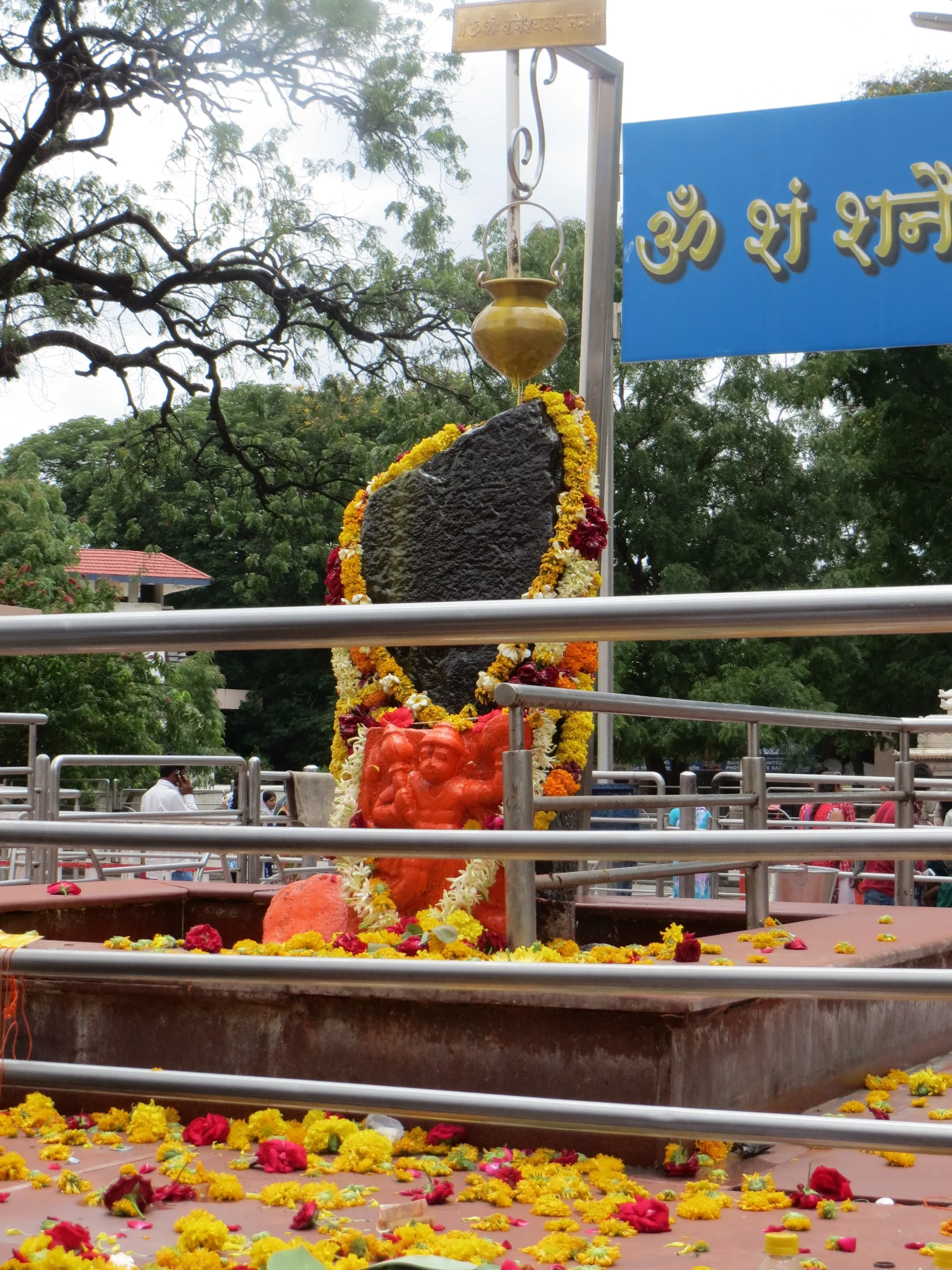
Shani Dev Puja Vidhi: Saturday Puja Steps, Samagri, Mantras and Shanivar Vrat Guide

Hanuman Jayanti 2026 in UAE: Indian Community in Dubai, Abu Dhabi & Sharjah Celebrates Bajrangbali with Immense Devotion