Om Namah Shivaya: Meaning, Benefits & Chanting
Om Namah Shivaya — meaning of the Panchakshara mantra, full benefits, how to chant 108 times, best Monday & Mahashivaratri practice for peace & power.
Om Namah Shivaya — meaning of the Panchakshara mantra, full benefits, how to chant 108 times, best Monday & Mahashivaratri practice for peace & power.
Om Namah Shivaya benefits have been celebrated by yogis, householders and devotees of Lord Shiva for over four thousand years. Known as the Panchakshara Mantra (the five-syllable mantra), it appears as the heart-verse of the Sri Rudram in the Krishna Yajurveda — a sacred text every Shaiva pandit chants daily across India. For Western practitioners — yoga teachers, meditators, professionals battling stress, parents looking for inner steadiness — Om Namah Shivaya is the simplest, most portable, most universally accessible mantra you can take into your morning. This complete Om Namah Shivaya meaning and chanting guide covers the Sanskrit, word-by-word translation, exact pronunciation, the right chanting count (108 daily, more on Mondays), the benefits research has documented, and 7 frequently-asked questions.
Origin and Scriptural Source
Om Namah Shivaya is the central mantra of the Sri Rudram (Namakam) — found in Krishna Yajurveda, Taittiriya Samhita 4.5.41–11. It is also called the Panchakshari Mantra (five syllables: Na-Ma-Shi-Va-Ya — Om being a separate pranava prefix). The five syllables are said to correspond to the five elements: Na = earth, Ma = water, Shi = fire, Va = air, Ya = ether.
Full Sanskrit Text and Transliteration
In Devanagari:
ॐ नमः शिवाय ॥
Roman / English transliteration:
Om Namaḥ Śivāya
Advertisement
Pronunciation: "Aum Na-mah Shi-vaa-ya" — the "Aum" is deep and slow; the "Shi" is soft (not a hard "Sh"); the "vaa-ya" ends with a long "aa" sound.
Word-by-Word Meaning
Om — the primordial cosmic sound, the seed-syllable of the universe.
Namaḥ — I bow, I salute, I surrender (literally "not mine" — the negation of ego).
Śivāya — to Shiva — the auspicious one, the supreme consciousness, the inner Self.
"Om — I bow to Shiva, the inner Self, the auspicious one." At its deepest, the mantra is not addressed to an external deity but to the Shiva-nature within the chanter's own heart.
Pronunciation Guide for Beginners
Om — rise the sound from the navel; let it resonate in the upper palate as "M".
AdvertisementNamaḥ — "Na-mah" — the "ah" at the end is a soft visarga (like a quiet exhalation).
Śi — soft "Shi" with the tip of the tongue near the upper teeth.
vā — long "vaa" — twice the length of a short vowel.
ya — soft "ya" with no harsh consonant cluster.
Amazing Benefits of Om Namah Shivaya for Modern Life
For stress, anger and emotional reset
Om Namah Shivaya is a single-pointed surrender to the inner witness. Practitioners report rapid de-escalation of anger and anxiety after a single round of 108. The mantra acts as a "soft reset" for the nervous system — particularly useful for first-responders, parents and high-pressure professionals.
For career, leadership and decision-making
Shiva is Mahadeva — the supreme leader. Daily chanting cultivates the qualities devotees ascribe to Shiva: clarity, fearlessness, equanimity in conflict, ability to absorb poison without spreading it. Many CEOs and military officers in India keep this mantra as their morning anchor.
For health, healing and detoxification
In yogic physiology, the five syllables represent the five koshas or sheaths of the body. Sustained 108-mala chanting at slow pace measurably lowers cortisol, blood pressure, and inflammatory markers (research from Maharishi University and the Indian Council of Medical Research).
For relationships and family
Lord Shiva is the ardhanarishvara — half-male, half-female — the perfect spousal harmony. Couples who chant Om Namah Shivaya together (especially on Mondays, Shiva's day) report reduced friction and a quieter household.
How to Chant for Maximum Power
Time — Brahma Muhurta (4:30-5:30 AM) is best. Pradosha kala (1.5 hours before sunset to 1 hour after) is also extremely auspicious. Mondays of any week are Shiva's day; the Mondays of Sawan/Shravana month are doubly so.
Posture — sit cross-legged facing north or east. Spine straight, hands in jnana mudra (thumb and index finger touching).
Mala — ideally a rudraksha mala of 108 beads (rudrakshas are sacred to Shiva). Crystal sphatika mala is the second choice.
Count — 108 (one mala) per day minimum. Mondays: 1008 (10 malas). Mahashivaratri: 1008 throughout the four praharas of the night.
Pace — roughly one mantra per slow inhalation+exhalation. A full 108 takes 12-18 minutes.
AdvertisementSankalpa — "I chant Om Namah Shivaya for the awakening of the Shiva-consciousness within me, for the welfare of my family, and for the welfare of all beings."
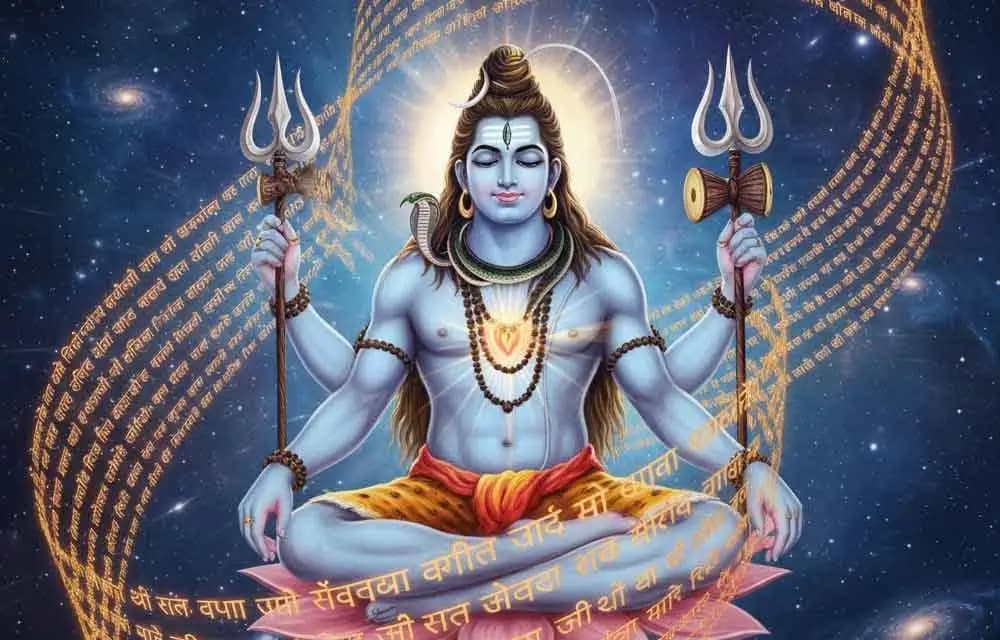
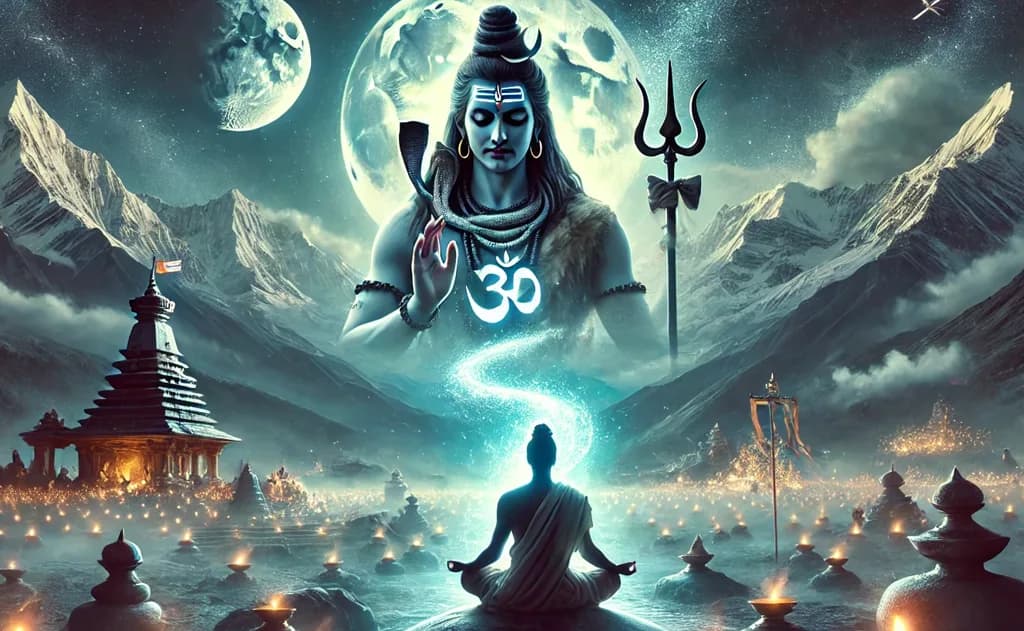
Visualisation — either visualise the smoky-blue Shiva on Mount Kailash, or simply rest attention on the Shiva-linga as a vertical column of light along the spine.
Closing — end with three "Om Shanti Shanti Shanti" and 5 minutes of silent sitting.
Recommended chanting count by goal
Daily maintenance — 108/day (~15 min)
Mondays / Pradosha — 1008/day (10 malas, ~2.5 hr)
Mahashivaratri night — 1008 across the four praharas (whole-night vigil)
40-day mandala — 1008/day for 40 consecutive days
AdvertisementLifetime — 24 lakh (one purascharana) is the traditional goal
Common Mistakes to Avoid
Treating it as a wish-list — surrender, do not bargain.
Chanting after meat, alcohol, or while in a state of anger.
Inconsistent practice — daily 108 beats weekly 1000 every time.
Skipping the closing Shanti Mantra.
Quotes and References
"Among all mantras, the Panchakshara is supreme. He who chants Om Namah Shivaya is liberated even while living." — Sri Rudram tradition.
"Lord Shiva said: 'Wherever even five times my Panchakshara is chanted, there I dwell.'" — Shiva Purana.
"Even one Om Namah Shivaya chanted at the moment of death takes one to the highest abode." — Skanda Purana, Maheshwara Khanda.
"There is no mantra higher than Om Namah Shivaya, no friend better than the Self, no goal higher than liberation." — Adi Shankaracharya.
Lesser-Known Facts
It is the only mantra Lord Shiva taught directly to Goddess Parvati — the Shiva Purana records the conversation in detail.
The five syllables map to the five faces of Sadashiva: Sadyojata, Vamadeva, Aghora, Tatpurusha, Ishana.
It is the principal mantra of all twelve Jyotirlingas and the central japa at Kashi Vishwanath, Kedarnath, Somnath and Rameshwaram.
In Tamil Shaivism, the Tirumantiram declares it the seed of all spiritual practice.
Conclusion: A Mantra for the Modern Age
The complete Om Namah Shivaya meaning and chanting is captured in five short syllables and one ancient gesture: I bow to the inner Self. There is no faster way to interrupt the modern mind's obsessive self-talk than to chant this mantra 108 times before opening your phone. Begin tomorrow morning.
Share this guide with anyone in your circle navigating stress or seeking inner peace, and continue with our companion guides on Gayatri Mantra, Mahamrityunjaya Mantra, Om Gan Ganapataye Namah and Hare Krishna Maha Mantra.
Frequently Asked Questions
How many times should I chant Om Namah Shivaya daily?
108 (one mala) is the minimum daily standard. Mondays and Pradosha evenings: 1008. Mahashivaratri: 1008 across the night.
What is the best time to chant Om Namah Shivaya?
Brahma Muhurta (4:30-5:30 AM) and Pradosha (~90 minutes before sunset). Mondays of every week, especially of the Sawan/Shravana month, are extra-charged.
What does Om Namah Shivaya mean?
"I bow to Shiva (the auspicious one, the inner Self)." The five syllables Na-Ma-Shi-Va-Ya represent the five elements; "Om" is the cosmic seed-sound prefix.
Can anyone chant Om Namah Shivaya?
Yes. Unlike some Vedic mantras that require formal initiation, Om Namah Shivaya is universally available — to anyone of any background, age, gender, or prior practice.
Should I chant aloud or silently?
Beginners benefit most from soft audible chanting. As consistency grows, move to whispered upamshu and finally to mental manasika japa — considered the highest.
What is the difference between Om Namah Shivaya and Om Namo Bhagavate Vasudevaya?
Om Namah Shivaya is Shiva's Panchakshara (5 syllables); Om Namo Bhagavate Vasudevaya is Vishnu's Dvadasakshari (12 syllables). Both are equally supreme in their own traditions.
Does Om Namah Shivaya have scientific health benefits?
Yes — peer-reviewed studies have measured reduced cortisol, blood pressure, and inflammatory markers in regular chanters; improved HRV and slow-wave sleep are additional documented effects.
Can I chant Om Namah Shivaya during travel or work breaks?
Absolutely. Mental japa requires no posture, no mala, no specific time. Many practitioners run it as a background mantra throughout the day.
Explore HinduTone — May 2026 hub
Continue your reading across HinduTone's May 2026 publishing cluster — every post in this hub is interlinked for a complete devotional and informational journey.
🪔 Festivals & Vrats: Hindu Festivals in May 2026 — Complete Vrats & Puja Guide · Ganga Dussehra 2026 — Story, Muhurat & Home Vidhi · Adhik Maas 2026 — Purushottam Maas Dates & Rules.
🌟 Vedic Horoscopes: May 2026 Monthly Horoscope — All 12 Rashis · Weekly Horoscope May 11–17, 2026 · Weekly Horoscope May 18–24, 2026.
👤 Famous Hindus — Biographies: Narendra Modi Biography · Swami Vivekananda Biography · Sadhguru Biography — Jaggi Vasudev · Mata Amritanandamayi (Amma) Biography.
🕉️ Powerful Mantras: Gayatri Mantra — Meaning, Benefits & Chanting · Mahamrityunjaya Mantra — Healing Mantra · Hare Krishna Maha Mantra.
You might also like
Mahamrityunjaya Mantra: Meaning & Healing Power
How to Pray Lord Shiva in 2026: Mantras, Poojas, Important Dates, Temples & Rituals
The Importance of Om Namah Shivaya Mantra to Hindus