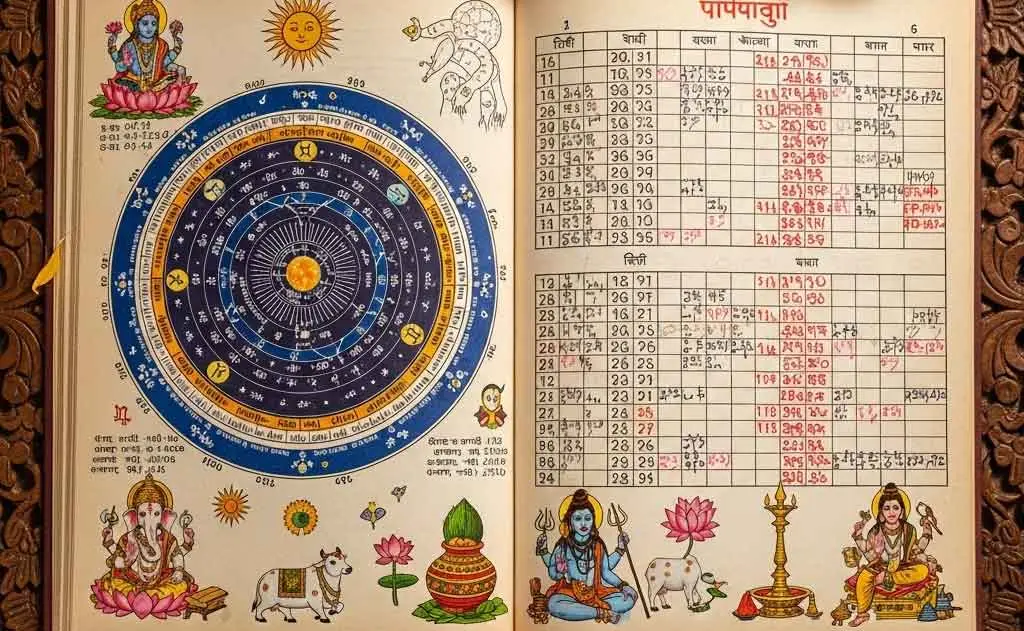
Varanasi Diwali 2026: Dev Deepawali on 24 November – The Divine Festival of Lights
Varanasi celebrates Diwali on Sunday 8 November 2026 and Dev Deepawali, the Diwali of the Gods, on Kartik Purnima, Tuesday 24 November 2026. Here is the meaning, the ghats, the rituals and how to plan a visit.
Varanasi celebrates Diwali on Sunday 8 November 2026 and Dev Deepawali, the Diwali of the Gods, on Kartik Purnima, Tuesday 24 November 2026. Here is the meaning, the ghats, the rituals and how to plan a visit.
Quick answer: In 2026 Varanasi celebrates Diwali (Lakshmi Puja) on Sunday 8 November and Dev Deepawali, the “Diwali of the Gods”, on Kartik Purnima, Tuesday 24 November 2026. Dhanteras is Friday 6 November. Because 2026 has an extra lunar month, these festivals come about three weeks later than last year. Sunset in Varanasi on Diwali evening is around 5:13 PM; for exact Pradosh Kaal and Purnima tithi timings, check Drik Panchang for Varanasi closer to the date.
“यत्र विश्वनाथः तत्र काशी” – where Lord Vishwanath resides, there is Kashi.
Varanasi Diwali and Dev Deepawali 2026 at a glance
| Day | 2026 date | What happens in Kashi |
|---|---|---|
| Dhanteras | Fri 6 November | Start of the Diwali season; shopping for metal and new vessels, evening lamps |
| Diwali / Lakshmi Puja | Sun 8 November | Homes, shops and temples lit; Lakshmi–Ganesh puja after sunset |
| Govardhan Puja / Annakut | Tue 10 November | Annakut offerings in Krishna and Annapurna temples |
| Bhai Dooj | Wed 11 November | Sisters pray for brothers’ long life |
| Devuthani (Prabodhini) Ekadashi | Fri 20 November | Vishnu awakens; Tulsi Vivah follows on Sat 21 November |
| Kartik Purnima / Dev Deepawali | Tue 24 November | Ganga snan at dawn; lakhs of diyas on the ghats after sunset |
In the North Indian (purnimanta) calendar followed in Varanasi, the month of Kartik runs from about 26 October to 24 November 2026, so Dev Deepawali is the grand finale of the whole month of lamps.
Introduction: the Diwali of the Devas
While all of India celebrates Diwali with joy, Varanasi – the eternal city also known as Kashi – observes a second, uniquely divine celebration called Dev Deepawali or Dev Diwali. It falls on the full moon night (Kartik Purnima) of the month of Kartik, about a fortnight after the main Diwali.
Dev Deepawali means “the Diwali of the Gods”. On this night the steps of the ghats along the Ganga are illuminated with lakhs of earthen lamps in honour of Mother Ganga. Tradition holds that the gods themselves descend to earth to bathe in the Ganga and celebrate in Kashi.
The sacred significance: Lord Shiva’s triumph
The mythological foundation
Dev Deepawali honours Lord Shiva’s victory over the demon Tripurasura. Having received a powerful boon from Lord Brahma, Tripurasura and his three flying cities (Tripura) had become invincible and terrorised the three worlds. When the gods failed to defeat him, they approached Shiva. On Kartik Purnima, Shiva took the form of Tripurari, destroyer of the three cities, and destroyed them with a single arrow. The gods lit lamps in celebration – the origin of the “Diwali of the Gods”. The day is therefore also called Tripuri or Tripurari Purnima.
Multiple sacred dimensions
Beyond Shiva’s victory, some devotees honour Kartik Purnima as the day Lord Vishnu took his first avatar as Matsya, the fish, and in South India it is linked with Lord Kartikeya. For Varanasi, it is the night when the boundary between heaven and earth is believed to dissolve along every ghat.
Diwali in Varanasi on 8 November
The main Diwali in Kashi is celebrated much as in the rest of North India: homes are cleaned and decorated, rangoli is drawn, and Lakshmi–Ganesh puja is performed in the Pradosh Kaal after sunset on Sunday 8 November 2026. The lanes around Vishwanath Gali, Thatheri Bazaar and the old city markets fill with diyas, sweets and brassware in the days from Dhanteras onward.
A special Diwali-week tradition is the darshan of Goddess Annapurna in her golden form at the Annapurna temple near Kashi Vishwanath, traditionally opened to devotees for a few days around Dhanteras and Annakut. Check the temple’s own announcements for the 2026 darshan days.
The ghats on Dev Deepawali night
A river of lights
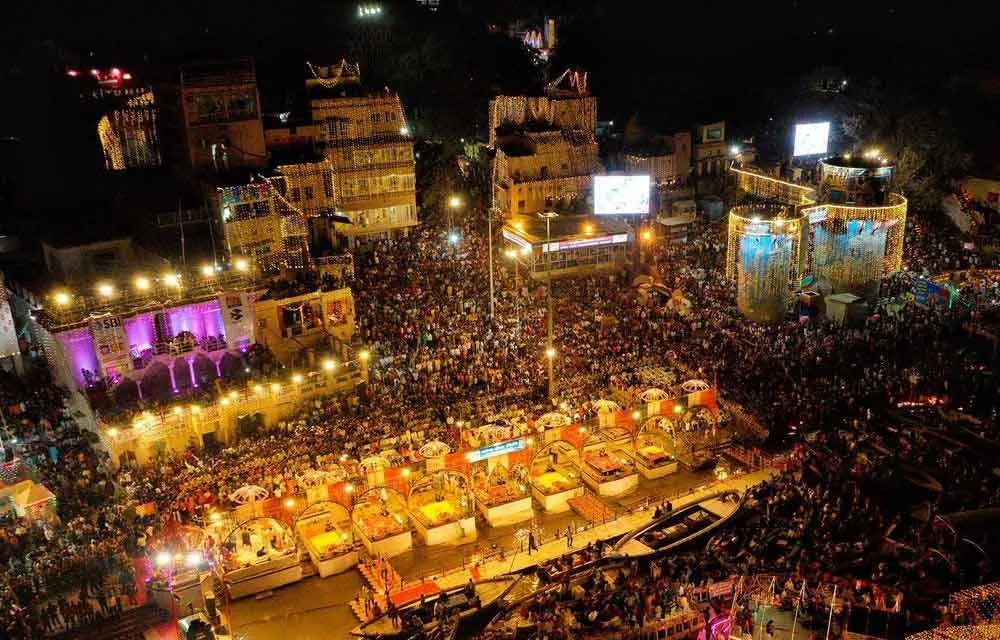
On Dev Deepawali the steps of the riverfront ghats, from Ravidas Ghat at the southern end to Raj Ghat in the north, are lined with earthen diyas. The reflection of countless flames on the dark water of the Ganga is one of the most moving sights in India.
The Ganga Aarti
The highlight for most visitors is the evening Ganga Aarti at Dashashwamedh Ghat. Priests in traditional dress move in synchronised rhythm with large brass lamps, accompanied by bells, conch shells, drums and hymns. On Dev Deepawali the aarti is held on a grander scale than usual, against the backdrop of the lamp-lit ghats.
Character of the main ghats
- Dashashwamedh Ghat: the most famous and most crowded, home of the main Ganga Aarti.
- Assi Ghat: known for its spiritual ambience and morning aarti; often a little calmer.
- Rajendra Prasad Ghat: next to Dashashwamedh, with good views and slightly more space.
- Manikarnika Ghat: the ancient cremation ghat, a reminder of the cycle of life and death.
- Panchganga Ghat: where five sacred rivers are believed to meet, with its historic lamp tower.
Floating diyas and the boat view
Thousands of small leaf boats carrying lit diyas are set afloat on the river, each carrying a prayer or an offering of gratitude to Mother Ganga. Watching from a boat lets you see the whole illuminated crescent of ghats at once – diyas above, reflections below and the full moon overhead. Cultural programmes, processions of deities from neighbouring temples, fireworks and light shows have featured in recent years; the official programme for 2026 will be announced locally, so check with Uttar Pradesh Tourism and the district administration closer to the date.
Rituals of Kartik Purnima
Kartik Snan – the holy dip
Before dawn on Kartik Purnima, devotees descend to the ghats for the Kartik Snan, a dip in the Ganga believed to wash away sins and to grant the merit of bathing throughout the whole month of Kartik. Chants of “Har Har Mahadev” and “Gange Cha Yamune Chaiva” rise from the water as the sky lightens.
Temple worship
After the bath, devotees visit Kashi Vishwanath, one of the twelve Jyotirlingas, and Kaal Bhairav, the kotwal or guardian of Kashi. On very crowded festival days the temple administration sometimes restricts touch darshan to manage the rush, so follow the instructions issued for 2026. Other temples devotees visit include:
- Annapurna Temple – the goddess of nourishment
- Sankat Mochan Hanuman Temple
- Durga Temple – the red temple of the Divine Mother
- Tulsi Manas Temple – associated with Goswami Tulsidas and the Ramcharitmanas
- New Vishwanath Temple on the BHU campus
Dana and deep-daan
Giving food, clothes and lamps (deep-daan) on Kartik Purnima is considered highly meritorious. Many families light a lamp for their ancestors on the river and donate to priests, boatmen and the needy.
Ganga Mahotsav and tribute to the armed forces
Varanasi’s Ganga Mahotsav, a cultural festival of classical music, dance, crafts and boat races, has traditionally run over the days leading up to Kartik Purnima and ends with Dev Deepawali. On Dev Deepawali evening, Ganga Seva Nidhi has also traditionally honoured India’s fallen soldiers at the Amar Jawan Jyoti near Dashashwamedh Ghat. Check official sources for the 2026 schedule of both.
Origins of the modern celebration
Lamps have been lit on the ghats on Kartik Purnima for generations, but the large organised illumination seen today is widely credited to local efforts begun around 1991 at Dashashwamedh Ghat by Pandit Kishori Raman Dubey (Babu Maharaj). What began as a modest community initiative has grown into one of the world’s great festivals of light.
Planning a visit for Dev Deepawali 2026
Varanasi becomes extremely crowded around Dev Deepawali. Hotels, guesthouses and boats book out well in advance, so plan as early as you can.
Where to watch
- Dashashwamedh Ghat for the main aarti – arrive two to three hours early.
- Assi Ghat or Rajendra Prasad Ghat for a slightly calmer atmosphere.
- A boat on the river for the widest view – book in advance with a licensed operator and insist on life jackets.
- Rooftop guesthouses and cafés along the ghats for panoramic views.
What to carry
- Comfortable shoes with grip – ghat steps can be slippery.
- Modest clothing that covers shoulders and knees.
- A light warm layer – late-November evenings are cool by the river.
- Cash in small notes, water and light snacks.
- A camera that handles low light, and plenty of patience.
Getting there
Varanasi is served by Lal Bahadur Shastri International Airport at Babatpur, outside the city, and by Varanasi Junction (Cantt) and Kashi railway stations, with road links across Uttar Pradesh and Bihar. Expect road closures and traffic diversions near the ghats on Dev Deepawali evening; plan to walk the last stretch.
Staying safe
- Keep valuables secure and agree a meeting point with your group.
- Follow police and volunteer instructions at barricades and entry points.
- Avoid overloaded boats and stay seated while on the water.
- Remove shoes at temples and respect photography rules.
Banarasi flavours and shopping
No visit is complete without Banarasi paan, kachori-jalebi for breakfast, thick lassi, chaat, and – if the weather has turned cold enough – the seasonal winter dessert malaiyo. Varanasi is also famous for Banarasi silk sarees, brassware, rudraksha, wooden toys and musical instruments.
Eco-friendly celebration
Choose earthen diyas with mustard or sesame oil, offer flowers rather than plastic, and carry your waste back with you. Keeping Mother Ganga clean is itself an act of worship.
Celebrating from abroad
For the diaspora, Kartik Purnima on 24 November 2026 is also Karthika Pournami for Telugu and Kannada families and a major lamp festival in temples worldwide. Light diyas at home after your local sunset, chant “Om Namah Shivaya”, offer a lamp to the tulsi plant, and join your local temple’s programme. Do not use Varanasi timings abroad – check the Purnima timings for your own city on Drik Panchang.
The eternal prayer
“असतो मा सद्गमय। तमसो मा ज्योतिर्गमय। मृत्योर्मा अमृतं गमय।” – Lead me from untruth to truth, from darkness to light, from death to immortality. This prayer from the Brihadaranyaka Upanishad captures the essence of Dev Deepawali: as lamps are lit on the ghats of Kashi, we light the lamp of awareness within. Har Har Mahadev!
Frequently asked questions
When is Dev Deepawali 2026 in Varanasi?
Dev Deepawali is celebrated on Kartik Purnima, which falls on Tuesday 24 November 2026. The main lamp-lighting on the ghats happens in the evening after sunset. Confirm the exact Purnima tithi and Pradosh Kaal timings on Drik Panchang for Varanasi closer to the date.
Is Dev Deepawali the same as Diwali?
No. Diwali (Lakshmi Puja) falls on Sunday 8 November 2026 and is celebrated across India and the diaspora. Dev Deepawali, the Diwali of the Gods, comes on the full moon of Kartik, 16 days later on 24 November 2026, and is specific to Varanasi and the Ganga ghats.
Why are the 2026 dates later than last year?
The Hindu lunar calendar has an extra (adhik) month in 2026, so Diwali, Kartik Purnima and Dev Deepawali all fall roughly three weeks later in the Gregorian calendar than they did last year.
Which ghat is best for watching Dev Deepawali?
Dashashwamedh Ghat hosts the best-known Ganga Aarti but is the most crowded. Assi Ghat and Rajendra Prasad Ghat are good alternatives, and a boat on the river gives the widest view of the lit riverfront. Arrive several hours early and book boats only through reliable operators.
Can NRIs observe Dev Deepawali from abroad?
Yes. Light diyas at home after your local sunset on Kartik Purnima (24 November 2026), offer prayers to Lord Shiva and Mother Ganga, and join your local temple’s Karthika Pournami programme. Many families also follow livestreams of the Varanasi Ganga Aarti.
Editor’s note (4 October 2026)
This guide has been fully updated for 2026. Festival dates follow Drik Panchang (India): Diwali 8 November and Kartik Purnima / Dev Deepawali 24 November 2026. Programme details such as laser shows, cultural events and darshan restrictions are announced locally each year, so we have not listed them; check Uttar Pradesh Tourism, the Varanasi district administration and the Shri Kashi Vishwanath temple for 2026 announcements.
Related guides
You might also like
Gita Jayanti 2026 Prasad Recipes — Tulsi-Honoring Sweets, Krishna's Favourites & December 20 Bhog Plate
Maha Shivratri 2026 Vrat Recipes — Sabudana Khichdi, Singhada Halwa, Phalahara Foods Complete Fasting Guide
Shani Deva Temples Worldwide & Must-Performed Rituals — Complete Devotee's Guide