Vinayaka Vrata Vidhanam: The Complete Ganesh Chaturthi Puja, Step by Step
The complete Ganesh Chaturthi puja, step by step — sankalpam, shodashopachara, 21 patri, 108 names, vrata katha and udvasana, with Sanskrit, transliteration and meaning.
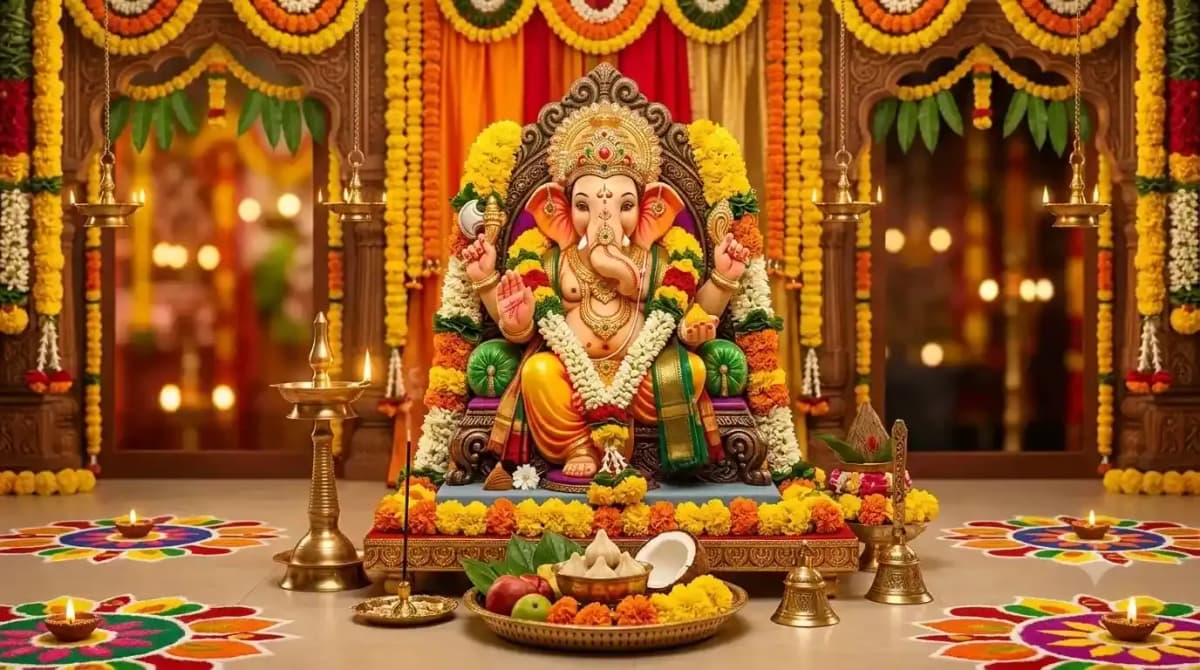
The complete Ganesh Chaturthi puja, step by step — sankalpam, shodashopachara, 21 patri, 108 names, vrata katha and udvasana, with Sanskrit, transliteration and meaning.
Important: this vidhanam is a devotional reading aid. Confirm the madhyahna muhurat and the sankalpa details (samvatsara, nakshatra, yoga, karana) with a local panchang, and have your family purohit check the recitation and pronunciation. Fields shown in brackets […] are to be filled from your panchang. A short, sincere puja is complete — the Kshama Prarthana at the close covers any error.
This is the full order of worship for Vinayaka Chaturthi — the sequence you follow from the first achamana to the final udvasana, with each mantra in Sanskrit, in Roman transliteration, and with its meaning. It is written to be read from during the puja. Ganesh Chaturthi 2026 falls on Monday, 14 September, with installation in the madhyahna window. For placement, direction and the samagri checklist, see our Ganesh Sthapana guide.
Part 1 — Opening
Guru & Ganesha dhyanam
शुक्लाम्बरधरं विष्णुं शशिवर्णं चतुर्भुजम्। प्रसन्नवदनं ध्यायेत् सर्वविघ्नोपशान्तये॥
Śuklāmbaradharaṁ viṣṇuṁ śaśivarṇaṁ caturbhujam | prasannavadanaṁ dhyāyet sarvavighnopaśāntaye ||
Clothed in white, all-pervading, moon-hued, four-armed, serene of face — meditate on him for the quieting of all obstacles.
गुरुर्ब्रह्मा गुरुर्विष्णुः गुरुर्देवो महेश्वरः। गुरुः साक्षात् परं ब्रह्म तस्मै श्रीगुरवे नमः॥
Gurur brahmā gurur viṣṇuḥ gurur devo maheśvaraḥ | guruḥ sākṣāt paraṁ brahma tasmai śrīgurave namaḥ ||
The guru is Brahma, Vishnu and Maheshwara; the guru is verily the supreme Brahman. To that guru, salutations.
Achamana
[Sip water from the right palm after each of the first three.] Om Keśavāya svāhā | Om Nārāyaṇāya svāhā | Om Mādhavāya svāhā. Then recite the remaining Keshava names with folded hands: Govinda, Vishnu, Madhusudana, Trivikrama, Vamana, Shridhara, Hrishikesha, Padmanabha, Damodara, Sankarshana, Vasudeva, Pradyumna, Aniruddha, Purushottama, Adhokshaja, Narasimha, Achyuta, Janardana, Upendra, Hari, Shri Krishna — each preceded by Om and followed by namaḥ.
Purification, bell, lamp
अपवित्रः पवित्रो वा सर्वावस्थां गतोऽपि वा। यः स्मरेत् पुण्डरीकाक्षं स बाह्याभ्यन्तरः शुचिः॥
Apavitraḥ pavitro vā sarvāvasthāṁ gato’pi vā | yaḥ smaret puṇḍarīkākṣaṁ sa bāhyābhyantaraḥ śuciḥ ||
Pure or impure, in whatever state — whoever remembers the lotus-eyed Lord becomes clean within and without. [Say Puṇḍarīkākṣāya namaḥ three times, sprinkling water on your head.]
साज्यं त्रिवर्तिसंयुक्तं वह्निना योजितं प्रियम्। गृहाण मङ्गलं दीपं त्रैलोक्य तिमिरापहम्॥
Sājyaṁ trivarti-saṁyuktaṁ vahninā yojitaṁ priyam | gṛhāṇa maṅgalaṁ dīpaṁ trailokya timirāpaham ||
Accept this auspicious lamp of ghee and three wicks, which removes the darkness of the three worlds. [Light and honour the lamp; ring the bell.]
Bhuta shuddhi & Pranayama
उत्तिष्ठन्तु भूतपिशाचाः एते भूमिभारकाः। एतेषामविरोधेन ब्रह्मकर्म समारभे॥
Uttiṣṭhantu bhūtapiśācāḥ ete bhūmibhārakāḥ | eteṣām avirodhena brahmakarma samārabhe ||
Let the beings that burden the earth depart; without hindrance from them I begin this sacred act.
Then the pranayama: Om bhūḥ, Om bhuvaḥ, Oṁ suvaḥ, Om mahaḥ, Om janaḥ, Om tapaḥ, Oṁ satyam, Om tat savitur vareṇyaṁ bhargo devasya dhīmahi dhiyo yo naḥ pracodayāt, Om āpo jyotī raso’mṛtaṁ brahma bhūr bhuvas suvarom.
Part 2 — Sankalpam
[Hold akshata and water in the right palm; release into a plate at the end.] Declare what you do, for whom, where and when. Fill these from your panchang for 14 September 2026:
- Samvatsara — the current Telugu samvatsara [from your panchang]
- Ayana — Dakshinayana; Ritu — Varsha; Masa — Bhadrapada; Paksha — Shukla; Tithi — Chaturthi; Vasara — Somavara (Monday)
- Nakshatra, Yoga, Karana — [from your local panchang]
- Gotra and Nama — your own
Purpose (for the household): kṣema-sthairya-dhairya-vijaya-āyur-ārogya-aiśvarya-abhivṛddhyarthaṁ, dharma-artha-kāma-mokṣa caturvidha phala puruṣārtha siddhyarthaṁ, sarvābhīṣṭa siddhyarthaṁ — Varasiddhi Vināyaka devatā prītyarthaṁ, dhyānāvāhanādi ṣoḍaśopacāra pūjāṁ kariṣye. Declare your vrata length here — 1½, 3, 5, 7 or 10 days; the visarjan date follows from it.
Part 3 — Kalasha Aradhana
कलशस्य मुखे विष्णुः कण्ठे रुद्रः समाश्रितः। मूले तत्र स्थितो ब्रह्मा मध्ये मातृगणाः स्मृताः॥
Kalaśasya mukhe viṣṇuḥ kaṇṭhe rudraḥ samāśritaḥ | mūle tatra sthito brahmā madhye mātṛgaṇāḥ smṛtāḥ ||
At the mouth of the kalasha is Vishnu, at its neck Rudra, at its base Brahma, and in its middle the mothers abide.
गङ्गे च यमुने चैव गोदावरि सरस्वति। नर्मदे सिन्धु कावेरि जलेऽस्मिन् सन्निधिं कुरु॥
Gaṅge ca yamune caiva godāvari sarasvati | narmade sindhu kāveri jale’smin sannidhiṁ kuru ||
Ganga, Yamuna, Godavari, Sarasvati, Narmada, Sindhu and Kaveri — be present in this water. [Sprinkle it on the articles, the deity and yourself.]
Part 4 — Haridra Ganapati Puja
Before the main idol, a small Ganapati is formed from turmeric paste on a betel leaf, so the puja itself begins without obstruction.
सुमुखश्चैकदन्तश्च कपिलो गजकर्णकः। लम्बोदरश्च विकटो विघ्नराजो गणाधिपः॥ धूम्रकेतुर्गणाध्यक्षः फालचन्द्रो गजाननः। वक्रतुण्डः शूर्पकर्णो हेरम्बः स्कन्दपूर्वजः॥
Sumukhaś caikadantaś ca kapilo gajakarṇakaḥ | lambodaraś ca vikaṭo vighnarājo gaṇādhipaḥ | dhūmraketur gaṇādhyakṣaḥ phālacandro gajānanaḥ | vakratuṇḍaḥ śūrpakarṇo herambaḥ skandapūrvajaḥ ||
Whoever recites or hears these sixteen names — at study, marriage, entering or leaving, in every undertaking — meets no obstacle.
Invoke with "Om gaṇānāṁ tvā gaṇapatiṁ havāmahe… ā naḥ śṛṇvann ūtibhiḥ sīda sādanam" (Rigveda 2.23.1), then perform prana pratishtha (below) on the turmeric Ganapati, a brief shodashopachara, and the udvasana verse, before moving to the main idol.
Part 5 — Varasiddhi Vinayaka Puja
Repeat the sankalpa briefly, naming Varasiddhi Vinayaka, then perform prana pratishtha on the clay idol:
अस्य प्राणाः प्रतिष्ठन्तु अस्य प्राणाः क्षरन्तु च। अस्य देवत्वमर्चायै मामहेति च कश्चन॥
Asya prāṇāḥ pratiṣṭhantu asya prāṇāḥ kṣarantu ca | asya devatvam arcāyai māmaheti ca kaścana ||
May the life-breath be established in this image and remain; may divinity abide in it for worship. Then: sthiro bhava, varado bhava, suprasanno bhava.
एकदन्तं शूर्पकर्णं गजवक्त्रं चतुर्भुजम्। पाशाङ्कुशधरं देवं ध्यायेत् सिद्धिविनायकम्॥
Ekadantaṁ śūrpakarṇaṁ gajavaktraṁ caturbhujam | pāśāṅkuśadharaṁ devaṁ dhyāyet siddhivināyakam ||
Single-tusked, winnow-eared, elephant-faced, four-armed, bearing noose and goad — meditate thus on Siddhi Vinayaka.
अत्रागच्छ जगद्वन्द्य सुरराजार्चितेश्वर। अनाथनाथ सर्वज्ञ गीर्वाण सुरपूजित॥
Atrāgaccha jagadvandya surarājārciteśvara | anāthanātha sarvajña gīrvāṇa surapūjita ||
Come here, O worshipped of the world, refuge of the refugeless, all-knowing, revered by the celestials. [Avahanam — offer akshata.]
The sixteen upacharas
Offer each in turn, saying Śrī mahāgaṇādhipataye namaḥ before the closing phrase:
- Asanam — a seat (akshata)
- Padyam — water at the feet
- Arghyam — water at the hands
- Achamaniyam — water for sipping
- Madhuparkam — curd, honey and ghee
- Panchamrita snanam — milk, curd, ghee, honey, sugar (recite Gaṁ Gaṇapataye namaḥ eleven times during the abhisheka)
- Shuddhodaka snanam — clean water
- Vastram — cloth, or akshata
- Yajnopavitam — sacred thread
- Gandham — sandalwood paste
- Akshata — unbroken rice with turmeric
- Pushpam — flowers, hibiscus foremost
मध्वाज्यं शर्करायुक्तं दधि क्षीर समन्वितम्। पञ्चामृतं गृहाणेदं भक्तानामिष्टदायक॥
Madhvājyaṁ śarkarāyuktaṁ dadhi kṣīra samanvitam | pañcāmṛtaṁ gṛhāṇedaṁ bhaktānām iṣṭadāyaka ||
Accept this panchamrita of honey, ghee, sugar, curd and milk, O granter of devotees’ desires.
Part 6 — Anga Puja
Offer akshata or a flower at each name, indicating the corresponding part: Om Pārvatīnandanāya namaḥ (feet), Gaṇeśāya (ankles), Jagaddhātre (shins), Jagadvallabhāya (knees), Umāputrāya (thighs), Vikaṭāya (waist), Nāthāya (navel), Uttamāya (belly), Vināyakāya (chest), Herambāya (heart), Kapilāya (throat), Skandāgrajāya (shoulders), Harasutāya (hands), Brahmacāriṇe (arms), Sumukhāya (face), Ekadantāya (tusks), Vighnanetre (eyes), Śūrpakarṇāya (ears), Phālacandrāya (forehead), Nāgābharaṇāya (nose), Śivapriyāya (head), Sarvamaṅgaḷāsutāya (all limbs).
Part 7 — Ekavimshati Patra Puja (21 leaves)
Each leaf offered with a name of Ganesha: Māchī, Bṛhatī, Bilva (maredu), Dūrvā (garika), Dattūra (ummetta), Badarī (regu), Apāmārga (uttareni), Jambū/Tulasī, Cūta (mamidi), Karavīra (ganneru), Viṣṇukrānta, Dāḍimī (danimma), Devadāru, Maruvaka, Sindhuvāra (vavili), Jātī (jaji), Gaṇḍakī, Śamī (jammi), Aśvattha (ravi), Arjuna (maddi), Arka (jilledu).
On tulsi: some paddhatis include a tulsi leaf here as the one recognised exception in Ganesha’s worship; others substitute another leaf. Both are followed by observant families. If you cannot find all 21, offer what you have and complete the count with durva grass — the offering held dearest of all. Follow with 21 bunches of durva, each with a name of Ganesha or Om Gaṁ Gaṇapataye Namaḥ.
Part 8 — Ashtottara Shatanamavali (108 names)
Offer flowers or akshata through the 108 names — Gajānana, Gaṇādhyakṣa, Vighnarāja, Vināyaka, Dvaimātura, Dvimukha, Pramukha, Sumukha, Kṛtī, Supradīpa, Sukhanidhi, Surādhyakṣa, Maṅgaḷasvarūpa, Pramatha, Prathama, Prājña, Vighnakartā, Vighnahantā, Viśvanetā, Virāṭpati, Śrīpati, Vākpati, Purāṇapuruṣa, Pūṣā, Agragaṇya, Agrapūjya, Bhaktanidhi, Śṛṅgārī, Āśritavatsala, Mantrakṛt, Sarva, Sarvopāsya, Sarvakartā, Sarvasiddhiprada, Pañcahasta, Pārvatīnandana, Prabhu, Kumāraguru, Mahāgaṇapati, Mahākāla, Mahābala, Heramba, Lambajaṭhara, Maheśa, Divyāṅga, Samastadevatāmūrti, Kuñjarāsurabhañjana, Pramoda, Mahodara, Madotkaṭa, Mahāvīra, Mantrī, Viṣṇupriya, Bhaktajīvita, Aiśvaryakāraṇa, Gaṅgāsuta, Gaṇādhīśa, Vaṭu, Jyoti, Abhīṣṭavarada, Śivapriya, Śīghrakārī, Śāśvata, Balotthita, Bhavātmaja, Brahmacārī, Brahmarūpī, Kalyāṇaguru, Unmattaveṣa, Aparājita, Samastajagadādhāra, Sarvaiśvaryaprada… concluding Śrī Vighneśvarāya namaḥ. (Aṣṭottara śatanāma pūjāṁ samarpayāmi.)
Part 9 — Dhupa, Deepa, Naivedya, Nirajana
दशाङ्गं गुग्गुलोपेतं सुगन्धं सुमनोहरम्। धूपं गृहाण देवेश सर्वदेव नमस्कृत॥
Daśāṅgaṁ guggulopetaṁ sugandhaṁ sumanoharam | dhūpaṁ gṛhāṇa deveśa sarvadeva namaskṛta ||
Accept this fragrant ten-fold incense, O Lord revered by all the gods. [Show dhupa, then the lamp.]
Naivedya: [offer modak, undrallu, kudumulu, ladoo, fruit and jaggery; sprinkle water around the plate.] Om bhūr bhuvas suvaḥ tat savitur vareṇyaṁ…; Amṛtamastu; Om prāṇāya svāhā, apānāya svāhā, vyānāya svāhā, udānāya svāhā, samānāya svāhā. Steamed rice dumplings — kudumulu, undrallu, modaka — are recorded as his preference, with ladoos also accepted; offer 21 where you can. Then tambulam, and karpura nirajanam:
मङ्गलं विघ्नराजाय मङ्गलं हरसूनवे। मङ्गलं शूर्पकर्णाय एकदन्ताय मङ्गलम्॥
Maṅgalaṁ vighnarājāya maṅgalaṁ harasūnave | maṅgalaṁ śūrpakarṇāya ekadantāya maṅgalam ||
Auspiciousness to the lord of obstacles, to the son of Hara, to the winnow-eared, to the single-tusked one.
यानि कानि च पापानि जन्मान्तर कृतानि च। तानि तानि प्रणश्यन्ति प्रदक्षिण पदे पदे॥
Yāni kāni ca pāpāni janmāntara kṛtāni ca | tāni tāni praṇaśyanti pradakṣiṇa pade pade ||
Whatever sins have been done, in this birth or others, are destroyed step by step with each pradakshina. [Circumambulate and prostrate.]
Part 10 — The Vrata Katha
[Hold akshata in the right palm; place them on your head at the end.]
How Gajanana came to be
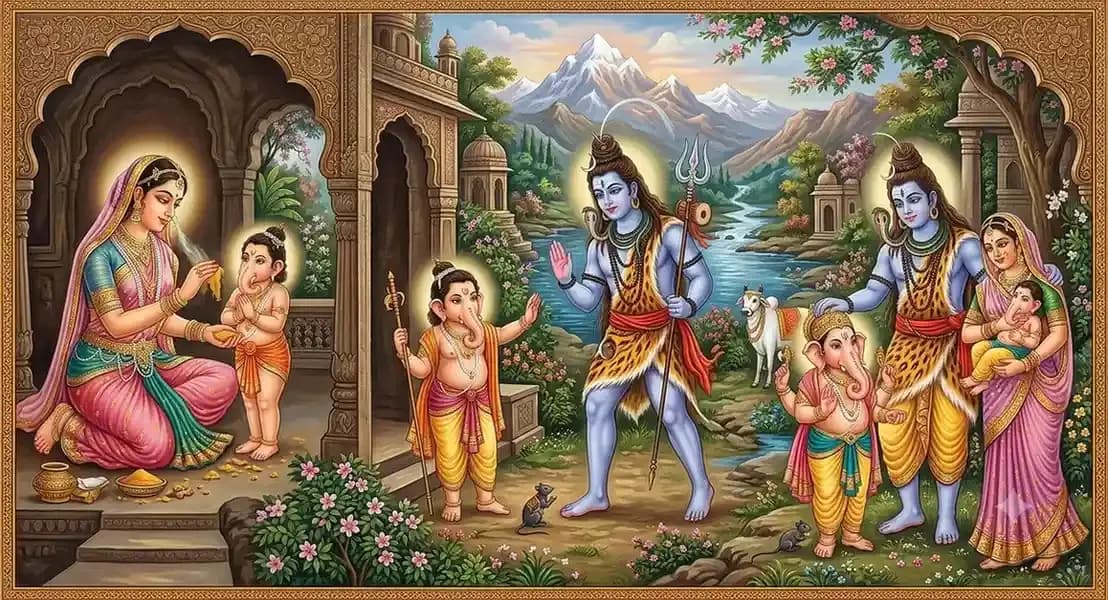
Parvati formed a boy from the turmeric of her own body, gave him life, and set him to guard her door. Shiva came; the boy refused him entry; in the ensuing combat the boy’s head was severed. To console Parvati’s grief, Shiva fixed upon the boy the head of an elephant and gave him life, foremost rank among the ganas, and worship before every undertaking. He was born, tradition holds, on Bhadrapada Shukla Chaturthi at midday — which is why the sthapana is done in the madhyahna window.
The moon’s laughter and the curse
Having eaten his fill of kudumulu and ladoos, Ganesha set out to bow to his parents. Chandra, the moon, laughed at his belly; the laughter carried the evil eye. Parvati cursed the moon: whoever looks on him shall meet false accusation. When the devas pleaded, she set the remedy — whoever worships Ganesha on Chaturthi, hears the story with faith and places the katha akshata on the head, is freed from false blame.
Krishna and the Syamantaka gem
In Dvapara, on this Chaturthi, Krishna glimpsed the moon’s reflection in milk. Satrajit’s gem, worn by his brother Prasena, led to Prasena’s death by a lion, the lion’s death by Jambavan, and the gem passing to Jambavan’s cave. Accused of theft, Krishna followed the trail, fought Jambavan twenty-seven days until Jambavan recognised in him the Rama he had served, and surrendered the gem and his daughter Jambavati. Krishna cleared his name; Satrajit, ashamed, offered the gem and his daughter Satyabhama. Krishna accepted Satyabhama and returned the gem. Thereafter Krishna performed the Vighneshwara worship in full on this day.
Phalashruti: whoever worships Ganesha on this day and hears this story with faith is freed from false accusation. If you glimpse the moon on Chaturthi night by accident, recite:
सिंहः प्रसेनमवधीत् सिंहो जाम्बवता हतः। सुकुमारक मा रोदीस्तव ह्येष स्यमन्तकः॥
Siṁhaḥ prasenam avadhīt siṁho jāmbavatā hataḥ | sukumāraka mā rodīs tava hyeṣa syamantakaḥ ||
The lion killed Prasena; the lion was killed by Jambavan. Weep not, little one — this Syamantaka is yours.
Part 11 — Closing
मन्त्रहीनं क्रियाहीनं भक्तिहीनं गणाधिप। यत्पूजितं मया देव परिपूर्णं तदस्तु ते॥
Mantrahīnaṁ kriyāhīnaṁ bhaktihīnaṁ gaṇādhipa | yat pūjitaṁ mayā deva paripūrṇaṁ tad astu te ||
Lacking in mantra, ritual and devotion — whatever worship I have offered, O Lord, let it be counted as complete.
For any error, recite three times: Om Acyutāya namaḥ, Om Anantāya namaḥ, Om Govindāya namaḥ. Take the prasada akshata on your head: Śrī mahāgaṇapati prasādaṁ śirasā gṛhṇāmi.
Udvasana — only on your visarjan day
On intervening days, end at the prasada and leave the idol installed. On the visarjan day:
यान्तु देवगणाः सर्वे पूजामादाय मामकीम्। इष्टकामप्रसिद्ध्यर्थं पुनरागमनाय च॥
Yāntu devagaṇāḥ sarve pūjām ādāya māmakīm | iṣṭakāma-prasiddhyarthaṁ punarāgamanāya ca ||
May all the divine hosts depart with the worship offered, and come again for the fulfilment of my wishes. Om Śāntiḥ Śāntiḥ Śāntiḥ.
The Short Vidhanam: Twenty Minutes
An honest abridgement for a weekday morning or a small flat — not a different puja:
- Achamana and Śuklāmbaradharaṁ
- Deeparadhana
- Sankalpa (in your own language if you must — say the place, day, name and number of days)
- Prana pratishtha — Asya prāṇāḥ pratiṣṭhantu
- Dhyanam — Vakratuṇḍa Mahākāya
- Brief shodashopachara with Om Gaṁ Gaṇapataye Namaḥ
- 21 bunches of durva
- Naivedyam and the five prana offerings
- Aarti
- Vrata katha — the Syamantaka story; place akshata on the head
- Kshama Prarthana and Namatraya japa
- Prasada
The Kshama Prarthana is on this list for a reason — it is the tradition’s own provision for a puja done short or imperfectly. Use it, and carry no guilt about the rest.
Explore the Ganesh Chaturthi 2026 Complete Guide
This page is part of Hindutone’s Ganesh Chaturthi 2026 cluster:
- Complete Ganesh Chaturthi 2026 guide (hub)
- Date & city-wise muhurat
- Ganesh Sthapana (setup at home)
- Ganesh Visarjan mantra
- Stories of Ganesha
- Wishes & quotes
Frequently Asked Questions
Can I perform the Vinayaka vrata without a priest?
Yes. This is a householder’s vrata, performed at home across India without a purohit.
Do I need to recite in Sanskrit?
The shlokas may be recited by anyone; recite what you can and say the rest in your own language. Vedic mantras are traditionally learned from a teacher.
What if I make mistakes in the mantras?
The Namatraya japa and the Kshama Prarthana at the close are the tradition’s own remedy for errors in mantra, procedure or pronunciation.
Why is the puja done at midday?
Ganesha is held to have appeared during the madhyahna period on Bhadrapada Shukla Chaturthi, so installation follows that window.
What if I cannot get all 21 patri?
Offer what you have and make up the count with durva grass.
Related Reading on Hindutone
- Ganesh Sthapana 2026: how to welcome Ganesha into your home
- Ganesh Chaturthi naivedyam for NRI kitchens
- Ganesh Visarjan mantra: what to chant during Ganpati Visarjan
The mantras, names and kathas here are the traditional Vedic and Puranic liturgy, common to many published paddhatis. This arrangement is by Hindutone, with grateful acknowledgement to the Telugu paddhati tradition — including Sri Pranava Peetham and the compilations of Sri Vāsu Muktinūtalapāṭi — consulted in preparing it. Please verify all details with your family purohit.
You might also like
Ganesh Chaturthi and NRI Kids: The Questions Nobody Prepares You For

The Moon on Ganesh Chaturthi: Why It Must Not Be Seen, and the Remedy Mantra
The Stories of Ganesha: Puranic Legends Behind Ganesh Chaturthi