The Kalabhairava Temple: Guardian of Kashi and the Lord of Time
Deep in the labyrinthine lanes of Varanasi, where ancient stone meets sacred smoke and the air hums with centuries of devotion, stands a temple that commands…
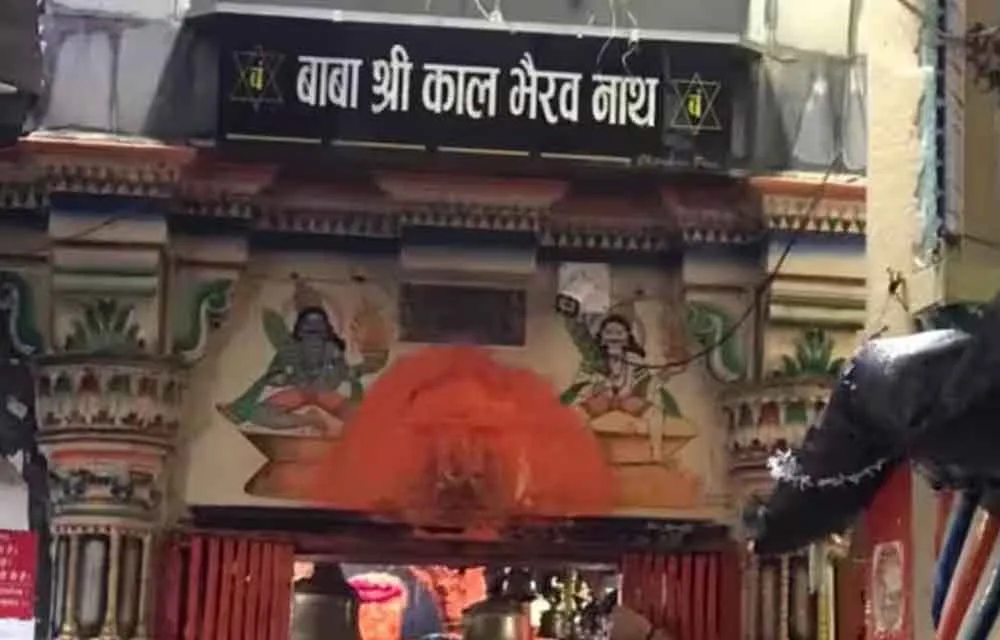
Deep in the labyrinthine lanes of Varanasi, where ancient stone meets sacred smoke and the air hums with centuries of devotion, stands a temple that commands…
Deep in the labyrinthine lanes of Varanasi, where ancient stone meets sacred smoke and the air hums with centuries of devotion, stands a temple that commands both reverence and awe. The Kalabhairava Temple is not merely a place of worship—it is the seat of Kashi's eternal guardian, the fierce protector appointed by Lord Shiva himself to watch over the holy city until the end of time.
The Fierce Face of Shiva: Understanding Kalabhairava
Kalabhairava represents one of Lord Shiva's most powerful and terrifying forms. The name itself reveals his nature: "Kala" means time or death, and "Bhairava" signifies the terrible or fierce one. Yet within this fearsome exterior lies profound compassion and unwavering protection for devotees who approach with sincere hearts.
Unlike the serene, meditative Shiva seated in the Himalayas, Bhairava is Shiva in his most dynamic, active manifestation—carrying a skull, adorned with serpents, riding a black dog, and wielding weapons that destroy evil and ignorance. His dark complexion symbolizes the timeless void from which all creation emerges and into which it dissolves. His bloodshot eyes see through all deception, his naked form represents absolute truth, and his garland of skulls reminds us of the impermanence of physical existence.
This fierce appearance serves a divine purpose. Just as a father might appear stern to protect his children from danger, Bhairava's terrifying form frightens away negative forces, evil spirits, and those who would harm the sacred city of Kashi. To the righteous, however, Bhairava is the ultimate protector—a guardian whose very presence ensures safety and spiritual progress.
Kashi Ka Kotwal: The Divine Police Chief
The title "Kotwal" traditionally refers to a police chief or city magistrate in ancient India, and Bhairava holds this sacred office in Varanasi by divine appointment. According to tradition, when Lord Shiva established Kashi as his eternal abode, he appointed Kalabhairava as the city's guardian and protector, responsible for maintaining cosmic order within its boundaries.
This isn't merely ceremonial. Devotees believe that no one can enter or leave Kashi without Bhairava's permission. He maintains a celestial ledger of every soul that passes through the city's gates, watching over pilgrims, blessing the devout, and ensuring that those who seek moksha (liberation) in Kashi receive Shiva's grace. Even death itself must seek Bhairava's approval before claiming anyone in this sacred city.
The concept of Kashi Ka Kotwal transforms the city into a divinely governed space where spiritual law supersedes worldly concerns. Bhairava patrols the city astride his vahana (vehicle), a black dog, accompanied by ghosts and spirits who serve as his attendants. His jurisdiction extends to both the visible and invisible realms, protecting devotees from physical dangers and spiritual obstacles alike.
The Sacred Legend: Why Bhairava Guards Kashi
The story of how Bhairava became Kashi's eternal guardian is rooted in one of Hinduism's most profound mythological episodes. Once, during a cosmic debate about supremacy among the Trinity, Lord Brahma (the creator) spoke disrespectfully to Lord Shiva. In different versions of the story, Brahma either claimed superiority over Shiva or spoke arrogantly about his creative powers.
Enraged by this disrespect, Shiva manifested Bhairava—his fierce form—who severed one of Brahma's five heads with his fingernail or sword. This act, while righteous in defending cosmic order, carried the sin of Brahmahatya (killing a Brahmin, as Brahma represents the priestly class). The severed head stuck to Bhairava's hand, becoming a skull that he was cursed to carry as a begging bowl until the sin was expiated.
Bhairava then embarked on a journey of penance, wandering through the three worlds seeking absolution. He visited countless sacred sites, but the skull remained attached to his hand. Finally, he arrived in Kashi, and the moment he entered the sacred city, the skull fell from his hand. The sin was washed away by the sanctity of Kashi itself, and the place where the skull fell became known as Kapalamochana (the place where the skull was released), now a sacred site within Varanasi.
Overwhelmed with gratitude and recognizing Kashi's unique spiritual power, Bhairava pledged to remain in the city eternally as its guardian. Lord Shiva formalized this role, appointing him as Kashi Ka Kotwal. From that moment, Bhairava has stood as the fierce protector of this timeless city, ensuring that it remains a sanctuary for spiritual seekers and a gateway to liberation.
The Kalabhairava Temple: Architecture and Atmosphere
Located in the Vishweshwarganj area of Varanasi, near the banks of the sacred Ganges, the Kalabhairava Temple presents an imposing yet welcoming facade. The temple's architecture reflects traditional North Indian style, with its sanctum sanctorum housing a striking idol of Kalabhairava.
The deity is depicted in his characteristic fierce form: dark-skinned, garlanded with skulls, holding various weapons including a trident and drum, with a dog (his vehicle) at his feet. Unlike many Hindu temples where photography and close viewing might be restricted, devotees can approach Bhairava directly, emphasizing his accessibility despite his fearsome appearance.
The temple atmosphere is distinctly different from the serene ambiance of most Shiva temples. There's an electric intensity here, a palpable sense of power that visitors often describe as both intimidating and comforting. The air is thick with incense, the sound of bells creates a constant rhythmic backdrop, and devotees arrive in steady streams throughout the day and night, as Bhairava is worshipped at all hours.
Unique Worship Practices: The Offering of Liquor
One of the most distinctive aspects of Bhairava worship is the offering of alcohol—specifically, country liquor or wine—to the deity. This practice startles many visitors unfamiliar with Tantric traditions, as alcohol is generally prohibited in orthodox Hindu worship. However, Bhairava's worship follows Tantric principles that transcend conventional religious boundaries.
The offering of liquor symbolizes several profound concepts. First, it represents the devotee's willingness to surrender even socially forbidden things to the divine, demonstrating complete devotion beyond social conditioning. Second, in Tantric philosophy, Bhairava represents the state beyond duality—beyond good and evil, pure and impure. Offering alcohol acknowledges that the divine encompasses all aspects of existence, not just those deemed "pure" by society.
Devotees pour liquor into a vessel before the deity, and it's believed that Bhairava consumes it energetically. The liquid is later distributed as prasad (blessed offering) to devotees who wish to receive it. This practice is conducted with deep reverence and specific rituals, never with the casual attitude one might have toward ordinary drinking.
Other traditional offerings include flowers (especially red and black varieties), coconuts, black sesame seeds, and mustard oil lamps. Non-vegetarian offerings, particularly those involving meat, are not made at this temple despite some Bhairava traditions elsewhere accepting them.
The Benefits of Bhairava Worship
Devotees seek Bhairava's blessings for a wide range of life circumstances, and his worship is considered especially powerful for specific situations:
Protection from Negative Forces: Bhairava is the supreme protector against black magic, evil spirits, and negative energies. Those experiencing unexplained difficulties, bad luck, or sensing malevolent influences turn to Bhairava for his fierce protective power.
Victory Over Enemies: As the destroyer of obstacles and adversaries, Bhairava grants courage and ensures victory over both external enemies and internal negative qualities like fear, anger, and ignorance.
Legal Matters and Justice: Given his role as Kashi's cosmic police chief, Bhairava is worshipped by those facing legal issues, seeking justice, or dealing with bureaucratic obstacles. His association with dharma (cosmic law) makes him particularly receptive to prayers for righteous outcomes in disputes.
Mastery Over Time: As Kalabhairava—the Lord of Time—he can mitigate the negative effects of time, delay unwanted events, and accelerate positive outcomes. Those feeling burdened by timing in their lives, whether delays in marriage, career, or other life events, seek his intervention.
Spiritual Protection and Progress: For serious spiritual practitioners, especially those walking Tantric paths, Bhairava's worship is essential. He protects practitioners from spiritual dangers, grants siddhis (spiritual powers) when appropriate, and accelerates spiritual evolution.
Removal of Fear: Despite—or perhaps because of—his fearsome appearance, Bhairava is the destroyer of all fears. Regular worship gradually dissolves anxieties, phobias, and the existential dread that can paralyze spiritual progress.
Moksha in Kashi: Most importantly for those in Varanasi, Bhairava's blessing is considered essential for attaining liberation. His permission is required for the soul's final journey, making his worship integral to Kashi's promise of moksha to those who die within the city.
The Daily Rhythm of Devotion
The Kalabhairava Temple operates on a schedule that reflects both traditional temple timings and the unique nature of Bhairava worship. The temple opens early in the morning for Mangala Aarti and remains accessible throughout much of the day, with specific pujas performed at dawn, midday, evening, and night.
The night hours hold special significance for Bhairava worship. As a deity associated with darkness, cremation grounds, and the dissolution of time, Bhairava's power is believed to be particularly accessible during nighttime. Many serious devotees prefer to visit after sunset, and the temple remains active well into the night, especially on Tuesdays and Sundays, which are considered especially auspicious for Bhairava worship.
The eighth day (Ashtami) of the waning moon in each lunar month is Kalabhairava Ashtami, the most important day for his worship. On this day, the temple swells with devotees from across India, special rituals are performed, and the deity's power is believed to be most accessible.
Bhairava Beyond Varanasi
While the Kalabhairava Temple in Varanasi holds special significance, Bhairava worship extends throughout India with temples dedicated to him in various forms. There are traditionally said to be 64 Bhairavas, each with specific attributes and domains of influence. Kalabhairava—time as destroyer—is among the most powerful and widely worshipped.
In Tamil Nadu, Bhairava is worshipped as the guardian deity of Shiva temples, often installed at the entrance. In Maharashtra and Karnataka, rural shrines to Bhairava serve as village protectors. Tibet's Dharmapalas share characteristics with Bhairava, showing how this fierce protective energy transcends cultural boundaries within the broader Hindu-Buddhist tradition.
The Philosophical Depth: Understanding the Fierce Divine
For those willing to look beyond the surface, Bhairava's fierce form contains profound spiritual teachings. His terrifying appearance is not cruelty but compassionate destruction—the demolition of ego, illusion, and everything that stands between the devotee and ultimate truth.
The skull he carries represents the ego's death, necessary for spiritual rebirth. His nakedness symbolizes the truth beyond all covering, the reality beyond all appearance. The serpents adorning him are kundalini energy, the dormant spiritual power that Bhairava awakens in dedicated practitioners. His vehicle, the black dog, represents loyalty, alertness, and the ability to perceive what others cannot—all qualities necessary for spiritual guardianship.
Time itself—Kala—is both the destroyer that brings death to all things and the medium through which spiritual evolution occurs. As Kalabhairava, Shiva reminds us that time is not our enemy but our teacher, and that death itself is a doorway, not a destination. In Kashi, where death promises liberation, Bhairava stands at that doorway, ensuring that those who have earned passage receive it, and those who aren't ready are given more time to prepare.
Experiencing the Guardian's Presence
Visitors to the Kalabhairava Temple often report a distinctive experience—a sense of being seen, known, and evaluated by a presence that is both intimidating and oddly comforting. There's less of the gentle, meditative peace one might feel in other spiritual spaces, and more of a charged alertness, as if standing before someone whose power is absolute but whose intentions toward sincere seekers are completely benevolent.
The temple's location in Varanasi's crowded lanes means the approach itself is an immersion in the city's life—passing by shops selling puja materials, dodging sacred cows, navigating through pilgrims from across India and beyond. This juxtaposition of sacred and mundane perfectly captures Bhairava's nature: he is not distant or otherworldly but fully present in the messiness of existence, protecting and guiding through the chaos of life itself.
The Eternal Vigil
For thousands of years, through dynasties and empires, through invasions and independence, through floods and famines, Kalabhairava has maintained his vigil over Kashi. The temple may close its doors at night, but the guardian never sleeps. His presence permeates the city, from the ghats where cremations occur continuously to the narrow lanes where pilgrims walk toward Vishwanath Temple.
In a world that often seems governed by chaos and randomness, Kalabhairava represents divine order—fierce, uncompromising, but ultimately compassionate. He reminds us that protection sometimes requires strength that looks like ferocity, that true safety comes not from comfort but from the presence of a guardian who will face anything on our behalf.
To visit the Kalabhairava Temple is to confront both our fears and our courage, to stand before a power that can destroy all that is false within us and protect all that is true. In the heart of Kashi, the timeless city where death itself becomes liberation, Kalabhairava stands eternal—the guardian at the gate, the protector of pilgrims, the fierce face of divine love that will never abandon those who seek truth, no matter how long the journey takes or how dark the path becomes.
The message of Kalabhairava for modern seekers remains unchanged from ancient times: Do not fear the destroyer of illusions. The same force that can annihilate what is false is the force that protects what is real. In surrendering to time, we transcend time. In facing the fierce divine, we discover the ultimate protection. And in Kashi, under Bhairava's eternal watch, every ending is a beginning, and even death itself becomes a doorway to the infinite.
Frequently Asked Questions
Where is The Kalabhairava Temple located?
Deep in the labyrinthine lanes of Varanasi, where ancient stone meets sacred smoke and the air hums with centuries of devotion, stands a temple that commands both reverence and awe. The Kalabhairava Temple is not merely a place of worship—it is the seat of Kashi's eternal guardian, the fierce protector appointed by Lord Shiva himself to watch over the holy c
Who is the presiding deity of The Kalabhairava Temple?
The temple's presiding deity and its significance are described in the guide above.
What are the timings and how do I reach The Kalabhairava Temple?
Temples typically open early morning and evening; confirm current darshan timings before visiting. The nearest airport, railway station and road routes are covered in the guide above.
What is the best time to visit The Kalabhairava Temple?
Major festival days and the cooler months are popular, though weekday mornings offer a calmer darshan. Plan around the temple's key festivals for the most vibrant experience.
You might also like
Shani Deva Temples Worldwide & Must-Performed Rituals — Complete Devotee's Guide
Purushottam Maas 2026: Lord Vishnu's Sacred Gift of Spiritual Multiplication & Divine Grace

Divine Hindu Temple News, Festivals & Global Devotion in Jyeshtha Adhik Maas 2026