Tuesday Fasting Rules & Vrat Menu: Mangalwar Vrat for Marriage & Mangal Dosha
Complete guide to Tuesday fasting rules and Mangalwar vrat menu — who should fast, what to eat & avoid, puja vidhi, recipes, and benefits for marriage & Mangal Dosha.
Complete guide to Tuesday fasting rules and Mangalwar vrat menu — who should fast, what to eat & avoid, puja vidhi, recipes, and benefits for marriage & Mangal Dosha.
The Mangalwar vrat, or Tuesday fast, is one of the most cherished observances in Hinduism. Dedicated to Lord Hanuman and ruled by the planet Mars (Mangal), this fast is believed to bring courage, protection, and — most popularly — blessings for marriage and relief from Mangal Dosha. For countless unmarried girls and married couples across India, keeping the Tuesday fast with faith is a beautiful way to invite harmony and happiness into life.
If you wish to begin this sacred practice, it is important to know the correct Tuesday fasting rules, the proper vrat menu, the puja vidhi, and the real benefits it offers. This complete guide covers everything you need to observe the Mangalwar vrat with devotion and confidence.
Who Should Keep the Tuesday Fast
The Tuesday fast is open to anyone seeking the blessings of Lord Hanuman, but it is especially recommended for:
- Unmarried girls praying for a suitable and loving life partner.
- Couples facing Mangal Dosha, the planetary placement of Mars often linked to delays or disputes in marriage.
- Married couples seeking harmony, understanding, and peace in their relationship.
- Those troubled by fear, enemies, or obstacles, since Hanuman ji is the great protector.
- People with a weak or afflicted Mars in their horoscope who wish to strengthen courage and willpower.
Traditionally, the Mangalwar vrat is begun on the first Tuesday of the bright fortnight (Shukla Paksha) and continued for 21 or 45 Tuesdays, or as per one's personal vow (sankalp). Anyone who is unwell, pregnant, or unable to fast for health reasons should observe a lighter version or simply offer prayers, as devotion matters more than strict fasting.
Tuesday Fasting Rules: What to Eat & What to Avoid
A key part of the Mangalwar vrat is following the right diet. The fast is usually a phalahar (one-meal) observance, where devotees eat a single sattvic meal during the day, often before sunset.
What to Eat During the Tuesday Fast
The traditional vrat menu centers on wheat and jaggery, which are considered auspicious for Mars and Lord Hanuman:
- Wheat-based foods — chapati or halwa made from wheat flour.
- Jaggery (gud) — sweet dishes made with jaggery are especially favored.
- Fruits — banana, apple, papaya, and seasonal fruits.
- Milk and dairy — plain milk, curd, and paneer.
- Dry fruits — almonds, cashews, raisins, and dates for energy.
- Water and fresh juices — to stay hydrated through the day.
What to Avoid During the Tuesday Fast
- Salt — traditionally avoided on the day of the fast.
- Non-vegetarian food — meat, fish, and eggs are strictly avoided.
- Onion and garlic — considered tamasic and unsuitable for vrat.
- Alcohol and tobacco — completely forbidden.
- Rice — many devotees avoid rice during the Mangalwar vrat.
- Anger and harsh words — quarrels go against the spirit of the fast.
The golden rule is to keep the food simple, sattvic, and offered first to Lord Hanuman as prasad before eating.
Mangalwar Vrat Puja Vidhi
Performing the puja correctly enhances the blessings of the fast. Follow these steps for a complete Mangalwar vrat puja:
- Wake up early and bathe, then wear clean red or orange clothes.
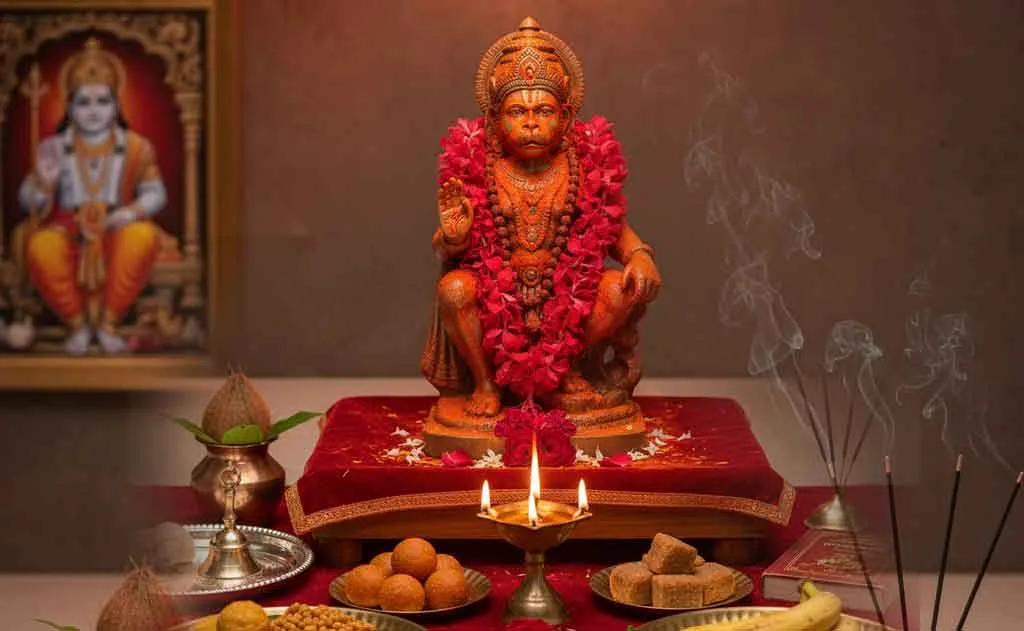
- Clean the puja area and place an idol or image of Lord Hanuman, ideally with Lord Rama.
- Light a diya of mustard or sesame oil and offer incense.
- Offer sindoor mixed with jasmine (chameli) oil to Hanuman ji — his most beloved offering.
- Offer red flowers, such as hibiscus, along with the prasad.
- Make a sankalp, silently stating your wish or intention.
- Recite the Hanuman Chalisa and Hanuman mantras with devotion.
- Perform the aarti and bow down to seek blessings.
- Eat your vrat meal in the evening after completing the puja, and share prasad with others.
Visiting a Hanuman temple on Tuesday and offering sindoor or a red flag is also considered highly auspicious.
Simple Vrat Recipes for Tuesday
Here are two easy, traditional recipes to enjoy during your Mangalwar vrat.
Atte Ka Halwa (Wheat Flour Halwa)
A warm, comforting dish made with the auspicious wheat and jaggery.
- Heat 2 tablespoons of ghee in a pan.
- Add half a cup of wheat flour and roast on low flame until golden and fragrant.
- Slowly add 1.5 cups of warm water and stir to avoid lumps.
- Add jaggery to taste (in place of sugar) and a few cardamom pods.
- Cook until thick, garnish with chopped almonds, and offer to Hanuman ji first.
Gud-Chana Prasad (Jaggery & Roasted Gram)
A quick, healthy prasad loved by devotees of Bajrangbali.
- Take a handful of roasted Bengal gram (bhuna chana).
- Mix with small pieces of jaggery.
- Offer to Lord Hanuman, then share as prasad.
These dishes are simple, satisfying, and perfectly suited to the spirit of the fast.
Real Benefits for Unmarried Girls and Married Couples
The Mangalwar vrat is especially treasured for the blessings it brings to marriage and family life.
Benefits for Unmarried Girls
- Believed to help find a suitable, loving, and devoted life partner.
- Removes delays and obstacles in marriage, including those caused by Mangal Dosha.
- Builds patience, inner strength, and confidence.
- Invites the protective grace of Lord Hanuman into one's journey toward marriage.
Benefits for Married Couples
- Promotes harmony, love, and mutual understanding between partners.
- Believed to reduce the harmful effects of Mangal Dosha on married life.
- Helps remove misunderstandings, tension, and negativity from the home.
- Brings peace, stability, and the blessing of a happy family life.
Beyond marriage, the fast strengthens willpower, calms a fiery Mars, and fosters a deep sense of protection and faith.
Practical Tips for Keeping the Tuesday Fast
- Start with a sankalp — decide clearly how many Tuesdays you will observe the fast.
- Stay hydrated — drink water, milk, and fruit juices to keep your energy up.
- Keep it simple — do not overburden yourself; devotion matters more than strictness.
- Be consistent — regular Tuesdays bring greater rewards than occasional fasting.
- Maintain positivity — avoid anger and harsh speech, and keep your thoughts calm and pure.
- Listen to your body — if you feel unwell, switch to a lighter fruit-and-milk fast.
Conclusion
The Mangalwar vrat is a simple yet powerful path to invite the blessings of Lord Hanuman for marriage, harmony, and protection. By following the correct Tuesday fasting rules, eating a sattvic vrat menu, and performing the puja with devotion, both unmarried girls and married couples can experience the grace of Bajrangbali in their lives. What matters most is sincerity, consistency, and faith.
May Lord Hanuman bless you with happiness, harmony, and a blessed married life.
Did you find this guide helpful? Share your own Mangalwar vrat experiences and favorite recipes in the comments below. If this article touched your heart, please share it with family and friends, and subscribe to hindutone.com for more devotional guides. 🙏 Jai Bajrangbali!
Frequently asked questions
What can I eat during the Tuesday fast?
The traditional vrat menu centers on wheat and jaggery: chapati or halwa, fruits, milk, curd, paneer, dry fruits, water and fresh juices. All food is kept sattvic and offered to Lord Hanuman first as prasad.
What should be avoided on Mangalwar vrat?
Salt, meat, fish, eggs, onion, garlic, alcohol and tobacco are avoided, and many devotees also skip rice. Anger and harsh words go against the spirit of the fast.
For how many Tuesdays should the Mangalwar vrat be kept?
Traditionally it begins on the first Tuesday of the bright fortnight (Shukla Paksha) and continues for 21 or 45 Tuesdays, or as per one's personal vow (sankalp).
Who should keep the Tuesday fast?
Anyone seeking Lord Hanuman's blessings can fast, especially unmarried girls praying for a life partner, couples with Mangal Dosha, and those troubled by fear or obstacles. Those who are unwell or pregnant should keep a lighter version or simply pray.
How do I perform the Mangalwar vrat puja?
Bathe early, wear red or orange clothes, light a mustard or sesame oil diya, and offer sindoor mixed with jasmine oil and red flowers to Hanuman ji. Make a sankalp, recite the Hanuman Chalisa, perform the aarti, and eat the vrat meal in the evening after the puja.
Can the Tuesday fast be kept if I have health problems?
Yes, a lighter version is fine. If you feel unwell, switch to a fruit-and-milk fast, since devotion matters more than strictness.
Related Reading on HinduTone
- Importance of Tuesday in Hinduism: Mangalwar Vrat, Hanuman & Mangal Worship
- Hanuman Chalisa: Complete 40 Verses with Hindi, Transliteration, Meaning & Benefits
- Sundar Kand: Complete Guide to Tulsidas's 5th Book of Ramcharitmanas
- Importance of Monday in Hinduism: Somvar Vrat & Lord Shiva Worship
- Rudrashtakam Stotram: Tulsidas's 8-Verse Shiva Hymn
- 12 Jyotirlingas of Lord Shiva: Complete Pilgrimage Guide
- Shiv Tandava Stotram: Ravana's Cosmic Dance Hymn
- Maha Mrityunjaya Mantra: Lyrics, Meaning & How to Chant
You might also like
Navratri 2026: 30+ Easy Vrat Recipes for NRIs

How to Perform Hindu Puja at Home: Items, Steps, Mantras and Daily Rituals

108 Names of Maa Durga (Durga Ashtottara Shatanamavali) with Meaning for Navratri 2026