Importance of Wednesday in Hinduism: Budhwar Vrat, Lord Ganesh & Budh Worship, Rituals & Benefits
Complete guide to the importance of Wednesday (Budhwar) in Hinduism — Lord Ganesh + Budh Dev worship, Budhwar Vrat fasting rules, 7-Wednesday vrat for exams, intellectual sharpness, business success, step-by-step puja, Vakratunda Mahakaya mantra, benefits, and the famous Budhwar Vrat Katha. 🙏 Ganpati Bappa Moriya!
Complete guide to the importance of Wednesday (Budhwar) in Hinduism — Lord Ganesh + Budh Dev worship, Budhwar Vrat fasting rules, 7-Wednesday vrat for exams, intellectual sharpness, business success, step-by-step puja, Vakratunda Mahakaya mantra, benefits, and the famous Budhwar Vrat Katha. 🙏 Ganpati Bappa Moriya!
In the spiritual rhythm of the Hindu week, Wednesday is the day of intellect, communication, and beginnings. After the contemplative stillness of Monday and the action-energy of Tuesday, Wednesday brings clarity of mind, sharpness of speech, and the divine grace that removes obstacles from every new endeavor. The importance of Wednesday in Hinduism rests on two profound divine connections: Lord Ganesh — the elephant-headed remover of obstacles and patron of new beginnings — and Budh Dev (the planet Mercury), the celestial ruler of intellect, communication, business acumen, and learning. Known as Budhwar in Hindi and Saumyavar in Sanskrit, Wednesday is when students, professionals, entrepreneurs, and seekers of wisdom turn to the divine for clarity and breakthrough.
For millions of Hindu families across India and the global diaspora — particularly parents praying for their children's education, professionals navigating career challenges, students preparing for examinations, and entrepreneurs starting new ventures — Wednesday is the most auspicious day to invoke divine intelligence. In this complete guide, we explore why Wednesday carries such spiritual weight, how to observe the Budhwar Vrat, the rituals and mantras that please Lord Ganesh and Budh Dev, and the timeless stories that demonstrate the power of Wednesday devotion.
Religious Significance of Wednesday in Hinduism
The Sanskrit name for Wednesday is Saumyavar — derived from Saumya, meaning "gentle, pleasant, beautiful" — a quality associated with both the planet Mercury and the personality of those born on this day. The Hindi name Budhwar comes from Budh, the divine name of the deity who governs Mercury and represents intelligence, wit, and articulate expression.
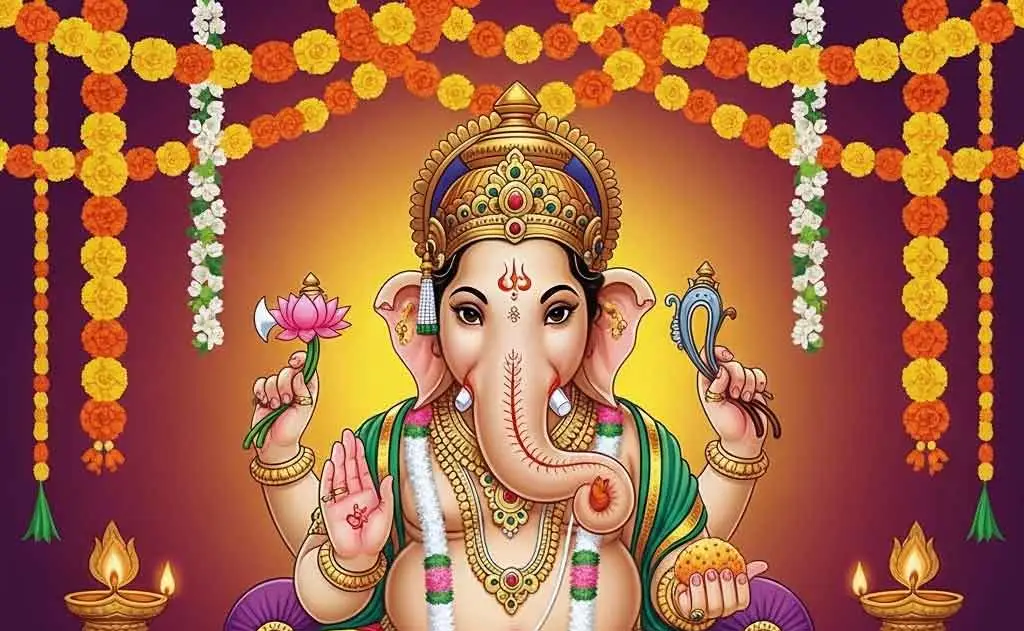
Wednesday is traditionally dedicated to Lord Ganesh — universally invoked at the beginning of every Hindu ritual, every new venture, every wedding, every business inauguration, every journey, and every spiritual practice. Ganesh is the firstborn son of Shiva and Parvati, and the divine protocol of Hindu worship is unambiguous: "Prathama Pujya Ganeshaya" — Ganesh is worshipped first in every ceremony. Wednesday, as the day of new beginnings, naturally became Ganesh's sacred day.
In many North Indian traditions, Wednesday is also associated with Lord Krishna — the divine cowherd who embodies divine intelligence, eloquence, and the playful wisdom of the cosmos. Vaishnavite households often honor both Ganesh and Krishna on Wednesdays. In Maharashtra, Wednesday is also linked to Lord Vitthal (a form of Krishna) at Pandharpur — making Wednesday the day Vitthal-Rakhumai darshan is considered most auspicious.
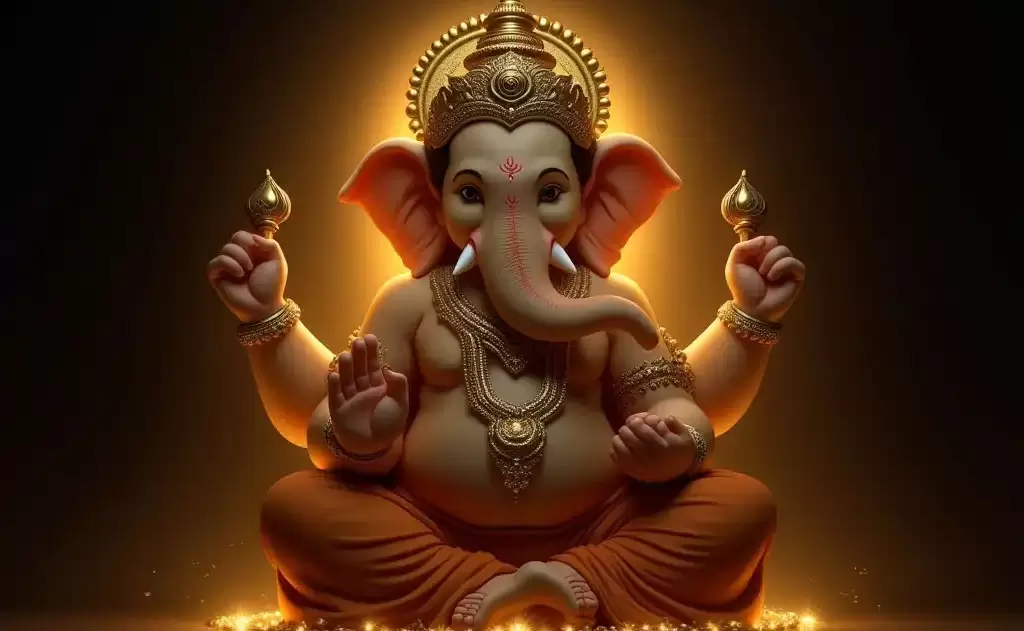
Lord Ganesh's elephant head is rich with symbolism: the large ears teach us to listen more than we speak; the small mouth reminds us that wisdom comes from selective speech; the broken tusk represents the willingness to sacrifice for higher purpose (Ganesh broke his own tusk to write the Mahabharata at sage Vyasa's request); the large belly symbolizes the capacity to digest both the pleasant and the unpleasant in life. Every Wednesday observance honors these eternal lessons.
Astrological Significance of Wednesday — The Power of Budh (Mercury)
In Vedic astrology (Jyotish), Wednesday is ruled by Budh Dev (Mercury) — the planet that governs intelligence, communication, business acumen, learning, writing, languages, mathematics, science, trade, and the nervous system. A strong, well-placed Mercury in one's horoscope brings sharp intellect, eloquent speech, success in education and business, and the ability to communicate ideas with clarity. A weak or afflicted Mercury can manifest as speech difficulties, learning challenges, business failures, indecisiveness, and nervous tension.
Budh is considered the prince among the navagrahas (nine planets) — youthful, agile, intellectually gifted, and adaptable. Vedic mythology tells that Budh is the son of Chandra (Moon) and Tara (the wife of Brihaspati/Jupiter) — a celestial origin that explains Mercury's unique blend of intellect (from Tara) and intuitive sensitivity (from Chandra). Worshipping Ganesh and Budh together on Wednesdays is the traditional method to strengthen Mercury's positive influence.
Astrologers across India and NRI communities recommend the Budhwar Vrat to those experiencing:
- Academic difficulties — poor performance in school or college, exam anxiety, learning disabilities
- Speech problems — stammering, lack of confidence in public speaking, communication breakdowns
- Career stagnation in intellectual or communication-based work (writing, teaching, IT, journalism)
- Business setbacks or repeated commercial failures
- Difficulty in negotiations, deals, contracts
- Memory weakness or mental fog
- Nervous disorders, anxiety, or scattered thinking
- Failed examinations or interviews despite preparation
- Problems with siblings, cousins, or younger relatives (Mercury rules these relationships)
- Children's educational delays or learning challenges
Mercury rules the colors green and emerald — which is why devotees wear green on Wednesday, offer green durva grass, light green-flame diyas where available, and place emerald-colored stones near the Ganesh altar. Green is the color of growth, renewal, learning, and adaptability — exactly the qualities Wednesday devotion seeks to cultivate.
The Deities Associated with Wednesday: Lord Ganesh and Budh Dev
At the center of all Wednesday worship stands Lord Ganesh — also known as Ganapati (lord of the ganas), Vinayaka (the one without a lord), Vighneshwara (master of obstacles), Lambodara (the large-bellied), Gajanana (elephant-faced), and Ekadanta (one with a single tusk). He is the elder son of Shiva and Parvati, and the most universally beloved deity in the entire Hindu pantheon.
Ganesh holds a unique position in Hindu cosmology — he is the Vighnaharta, the remover of obstacles, but he is also the Vighnakarta — the placer of obstacles where lessons are needed. This dual function means Ganesh both clears the path for sincere endeavors AND tests the seeker through carefully calibrated challenges. The mature devotee honors both faces of Ganesh.
Alongside Ganesh, devotees on Wednesday also honor Budh Dev — the planetary deity of Mercury. Budh is depicted as a youthful, green-bodied scholar holding a sword, mace, and lotus, riding a magnificent winged lion. He represents the cosmic principle of luminous intelligence. Wednesday's puja often combines Ganesh's blessing for obstacle removal with Budh's strengthening of intellectual faculties.
In Vaishnavite households, Lord Krishna may also receive Wednesday honors — particularly the playful Bal Krishna (child Krishna) form, since Krishna's eloquence and divine intelligence make him a natural fit for Mercury's domain. Some Maharashtrian families honor Lord Vitthal specifically on Wednesdays, particularly the Pandharpur Vitthal who is considered the divine embodiment of every form of intelligence.
Budhwar Vrat: Fasting Rules, Dos and Don'ts
The Budhwar Vrat (Wednesday fast) is a beautiful spiritual practice that combines gentle discipline with profound intellectual benefit. Unlike the intense Mangalwar Vrat (Tuesday), the Budhwar Vrat is often described as the most pleasant of the weekly fasts — Mercury's gentle, adaptable energy makes the observance feel light rather than rigorous.
Types of Wednesday Fasts
There are three popular forms of the Wednesday fast, each with distinct purposes:
- Weekly Budhwar Vrat — the regular Wednesday fast observed every week throughout the year. Recommended for ongoing intellectual sharpness and steady business success.
- 7-Wednesday Vrat (Saat Budhwar Vrat) — a vow to fast for 7 consecutive Wednesdays, traditionally undertaken before major examinations, new business launches, or career transitions.
- 21-Wednesday Vrat — a deeper commitment of 21 consecutive Wednesdays, often taken for chronic learning difficulties, persistent communication problems, or long-term educational goals (such as competitive exams like UPSC, IIT, or medical entrance).
Dos on Wednesday
- Wake up early, take a bath, and wear clean green or saffron clothes — green is most powerful for Mercury energy.
- Visit a Ganesh temple or set up a clean home altar with a Ganesh murti or image.
- Light a ghee diya before the Ganesh image — the steady flame represents the steady intellect.
- Offer durva grass (sacred to Ganesh), green leaves, modaks (Ganesh's favorite sweet), bananas, and yellow flowers.
- Apply red sindoor or sandalwood paste to Ganesh's forehead.
- Recite the Ganesh Atharva Sheersha, Ganesh Stotra, or Vakratunda Mahakaya mantra.
- For Budh's blessing, also recite the Budh mantra at the altar or upon a Budh image.
- Donate green items, green vegetables, fruits, or money to needy students; supporting education on Wednesdays is especially meritorious.
- Speak gently and truthfully throughout the day — Wednesday tests our communication.
- If observing the fast, eat only one sattvic meal in the evening — preferably moong dal khichdi, fresh green vegetables, or curd rice with jaggery.
Don'ts on Wednesday
- Avoid non-vegetarian food, onion, garlic, alcohol, and any form of intoxicant.
- Do not speak harshly, argue, or engage in gossip — Mercury punishes thoughtless speech.
- Avoid telling lies on Wednesdays — Mercury rules speech, and dishonesty creates immediate karmic backlash.
- Refrain from heavy work that exhausts the mind — Wednesday is for clear thinking, not mental strain.
- Avoid skipping classes, presentations, or important communications — Wednesday is for showing up and speaking up.
- Do not buy or borrow used books, papers, or anything previously owned that holds another person's mental energy.
- Avoid scattered, chaotic activities — Wednesday's grace flows toward focused, intentional action.
- Do not eat blue or dark foods that conflict with Mercury's green energy.
Rituals and Mantras for Wednesday
Performing the Wednesday puja with sincerity is the heart of the observance. A simple offering of durva grass to a Ganesh image, accompanied by three repetitions of "Om Gam Ganapataye Namah," carries the same spiritual potency as the most elaborate ceremony performed without faith.
Step-by-Step Wednesday Puja
- Purify yourself and the altar — bathe and clean the puja space before beginning. Sweep the area with care.
- Invoke Lord Ganesh — place a Ganesh murti or image and decorate with green flowers, fresh durva grass, and yellow marigolds.
- Light the ghee diya — ghee is the most pure offering; the steady flame supports steady concentration.
- Offer durva grass — Ganesh's most beloved offering. 21 blades of durva grass, tied as bunches of 3 blades each (7 bunches total), is the traditional perfect number.
- Apply sindoor or sandalwood — red sindoor to forehead and chest of the Ganesh image.
- Offer modaks — Ganesh's favorite sweet. Even one modak is acceptable; 21 is traditionally ideal.
- Recite mantras — Ganesh Atharva Sheersha (the most powerful Ganesh stotra), Vakratunda Mahakaya, or the Beej Mantra "Om Gam Ganapataye Namah."
- Read the Budhwar Vrat Katha — the traditional Wednesday fast story.
- Perform Aarti — recite "Jai Ganesh Jai Ganesh Jai Ganesh Deva" while waving the camphor flame.
- Conclude with gratitude — seek Ganesh's blessing for clarity of thought, success in education and business, and the removal of all obstacles. Dedicate the merit to all beings.
Powerful Wednesday Mantras
Chanting these mantras on Wednesday is believed to sharpen intellect, remove obstacles in studies and business, and invite Lord Ganesh's eternal grace:
- Ganesh Beej Mantra: Om Gam Ganapataye Namah — the foundational Ganesh mantra; recite 108 times daily.
- Vakratunda Mahakaya: Vakratunda Mahakaya Suryakoti Samaprabha, Nirvighnam Kuru Me Deva Sarva Karyeshu Sarvada — recited before any new beginning; declares "Lord, remove all obstacles in every endeavor of mine."
- Ganesh Gayatri: Om Ekadantaya Vidmahe, Vakratundaya Dheemahi, Tanno Danti Prachodayat — the Vedic Gayatri form for Ganesh, recited 108 times.
- Budh Mantra: Om Bram Brim Braum Sah Budhaya Namah — strengthens Mercury; recited 17, 51, or 108 times for intellect and communication.
- Sankashti Mantra: Om Vighnaharta Ganpati Bappa Moriya — the joyful Marathi-Hindi devotional phrase invoked for major obstacles.
Reciting these mantras 108 times using a rudraksha or green-jade mala on Wednesday is considered especially auspicious. Students preparing for examinations often combine the Ganesh Beej Mantra with the Vakratunda Mahakaya — a complete morning sadhana before study sessions.
Benefits of Observing Budhwar Vrat
The rewards of honoring Wednesday extend across the intellectual, professional, and spiritual dimensions of life. Devotees who observe the Budhwar Vrat with sincere faith consistently report:
- Sharper intellect and mental clarity — the most signature benefit; Mercury's strength flows into the devotee's thinking capacity.
- Academic success — improved exam results, faster learning, better memory; widely practiced by students worldwide before board exams, SAT, GRE, JEE, NEET, UPSC.
- Eloquent speech and communication — better expression in interviews, presentations, public speaking, and writing.
- Business success — particularly powerful for those in trade, commerce, consulting, IT, and intellectual professions.
- Removal of obstacles from new ventures — Ganesh's signature blessing; ideal day to begin any new business, course, project, or major life decision.
- Improved relationships with siblings and cousins — Mercury rules these relationships; Budhwar Vrat heals family communication.
- Career advancement — especially in fields requiring intelligence, writing, communication, technology, or analysis.
- Mental stability and reduced anxiety — Mercury's well-placed energy calms nervous tension.
- Success in negotiations and contracts — Wednesday is the most auspicious day for signing major business agreements.
- Protection from miscommunication — Wednesday devotion guards against misunderstandings that could damage relationships or careers.
- Spiritual growth through wisdom — Ganesh, as the lord of wisdom, deepens the devotee's understanding of dharma.
Beyond these specific benefits, the weekly practice of pausing each Wednesday for Ganesh puja and mantra recitation creates a powerful intellectual rhythm — the mind learns that there is a weekly moment for sharpening, focusing, and renewing its divine connection.
Beliefs and Stories Associated with Wednesday Worship
Hindu tradition is rich with stories celebrating the transformative power of Wednesday devotion. Among the most famous:
The Budhwar Vrat Katha — The Merchant's Wife and the Promise
A wealthy merchant's wife, while preparing food on a Tuesday evening, was visited by her elderly mother-in-law who reminded her of the upcoming Budhwar Vrat. The mother-in-law explained: "Tomorrow is Wednesday, the day of Lord Ganesh and Budh Dev. Observe the fast, recite the mantras, and offer durva grass — Lord Ganesh will remove obstacles from your household and bring prosperity to your husband's business."
The young wife, eager to please her family, woke at dawn on Wednesday, bathed, wore green, and prepared the puja. She offered durva grass, modaks, and lit a ghee diya. She recited the Ganesh Beej Mantra 108 times and observed silence throughout the day, speaking only when necessary and with great care.
On the same Wednesday evening, her husband returned from his business journey with the news that a major contract — long delayed — had suddenly been finalized in his favor. He had won not by chance but by the unusually clear thinking he had experienced that very day. The wife understood: her Budhwar Vrat had quietly transmitted Ganesh's grace to her husband's business. From that day, the entire family observed Wednesday devotion across generations, becoming one of the most prosperous merchant families in their region.
Vyasa and Ganesh — The Birth of Mahabharata
When sage Veda Vyasa wished to compose the Mahabharata — the longest epic in human history — he realized he needed a scribe who could write as fast as he could dictate. Lord Brahma suggested Ganesh. Vyasa approached Ganesh, who agreed on one condition: "I will write, but only if your dictation never stops." Vyasa's counter-condition: "I will dictate only what is meaningful; you must understand each verse before writing it."
And so they began. Vyasa would dictate; Ganesh would write. Whenever Vyasa needed to think, he would dictate a particularly complex Sanskrit verse — forcing Ganesh to pause and understand before writing. The Mahabharata's densest passages reflect those moments when Vyasa needed thinking time.
Mid-composition, Ganesh's writing tool broke. Without hesitation, Ganesh broke off his own tusk and used it as a quill — completing the entire 100,000-verse epic without ever stopping. This is why Ganesh is depicted with one tusk (Ekadanta). The Mahabharata is therefore, in a literal sense, the masterpiece of Wednesday devotion — composed by sage Vyasa and written by Lord Ganesh himself.
Why Ganesh is Worshipped First
When Lord Brahma's creation was complete and the question arose of which deity to worship first in any ceremony, all the major gods competed for the honor. Lord Shiva proposed a test: "Whoever circumambulates the universe three times and returns first will be worshipped first."
Kartikeya, Ganesh's brother, immediately mounted his peacock and flew off. Ganesh, who had only a mouse as his vehicle, faced an impossible task. He thought for a moment, then circumambulated his parents Shiva and Parvati three times. When Shiva asked why, Ganesh replied: "My parents are my universe. To go around them is to go around all creation."
Pleased by Ganesh's wisdom (a Wednesday quality), Lord Shiva granted that Ganesh would forever be worshipped first in every Hindu ceremony — a position that holds today across India and the global Hindu diaspora.
These stories — and countless others recited across India for centuries — share a common thread: Wednesday is the day when intelligence, communication, and devotion converge to produce breakthrough results.
Wednesday Worship for NRI Hindus
Wednesday devotion is particularly powerful for NRI Hindus, and the practice has adapted beautifully to global contexts:
- Education focus — most NRI families are deeply invested in their children's academic success; the Budhwar Vrat aligns perfectly with school and college transition seasons
- Pre-exam practice — many NRI students undertake 7-Wednesday vrats before SAT, GRE, MCAT, USMLE, GMAT, LSAT, and other major standardized exams
- Tech industry alignment — NRI Hindus in IT and software fields find Wednesday's Mercury energy directly supportive of analytical work
- Business launch tradition — Wednesday is the most auspicious day for starting any new business; many NRI entrepreneurs select Wednesdays for incorporation, store openings, and product launches
- Family Ganesh puja — most NRI temples host weekly Wednesday Ganesh aartis; growing crowd participation
- Online learning support — students taking online courses worldwide invoke Wednesday's clarity before difficult video lectures or exams
- Children's practice — many NRI parents teach the Vakratunda Mahakaya mantra to children, building lifelong morning routines
- Career transition prayers — NRI professionals invoking Wednesday for visa interviews, job offers, and promotions
Conclusion: Embrace the Wisdom Energy of Wednesday
The importance of Wednesday in Hinduism is the beautiful intersection of intellect and devotion. Dedicated to Lord Ganesh — the eternal remover of obstacles and patron of all beginnings — and aligned with the planetary energy of Budh Dev, Wednesday offers every seeker a weekly opportunity to sharpen the mind, clear obstacles from new ventures, and invite divine wisdom into every decision. Whether you observe the full Budhwar Vrat, recite the Ganesh mantras daily, or simply light a ghee diya every Wednesday morning, the wisdom-grace of Ganapati is always available to the sincere devotee.
In a world that increasingly demands clear thinking — exams that test entire futures, careers that depend on quick learning, business decisions that determine livelihoods, and conversations that shape relationships — Wednesday is the day Hindu tradition has trusted for centuries to align human intelligence with divine intelligence. The same Ganesh who patiently scribed the Mahabharata, who broke his own tusk for the work, who solved the cosmic puzzle of circumambulating his parents — he is the same Ganesh who today blesses your exams, your interviews, your business decisions, and your children's futures. The only condition: turn to him on Wednesday with sincere faith.
May Lord Ganesh bless you with sharp intelligence, eloquent speech, business success, academic excellence, and the removal of every obstacle on every sacred Wednesday.
Did you find this guide helpful? Share your own Wednesday rituals and Ganesh experiences in the comments below — we'd love to hear how you honor Vighnaharta in your weekly practice. And if this article touched your heart, share it with family and friends to spread Lord Ganesh's blessings! 🙏 Ganpati Bappa Moriya! Jai Sri Ganesh!
Related Reading on HinduTone
- Importance of Monday in Hinduism: Somvar Vrat & Lord Shiva Worship
- Importance of Tuesday in Hinduism: Mangalwar Vrat, Hanuman & Mangal Worship
- Hanuman Chalisa: Complete 40 Verses with Hindi, Transliteration, Meaning & Benefits
- Sundar Kand: Complete Guide to Tulsidas's 5th Book of Ramcharitmanas & 7-Day Saptaha Paath
- Somavar Vrat Katha: The Complete Monday Fast Story
- Shiv Tandava Stotram: Ravana's Cosmic Dance Hymn
- Rudrashtakam Stotram: Tulsidas's 8-Verse Shiva Hymn
- Maha Mrityunjaya Mantra: Lyrics, Meaning & How to Chant
- 12 Jyotirlingas of Lord Shiva: Complete Pilgrimage Guide
- Lingashtakam Complete Guide for Monday Worship
- Bilvashtakam: Sacred Bilva Leaves & Monday Puja
You might also like
Importance of Tuesday in Hinduism: Mangalwar Vrat, Hanuman & Mangal Worship, Rituals & Benefits
Ganesh Mantra Benefits — The Complete Guide for NRIs in USA, UK & Canada
Wednesday Hindu Rituals for NRIs in USA: The Complete Budhwar Puja Guide