Importance of Tuesday in Hinduism: Mangalwar Vrat, Hanuman & Mangal Worship, Rituals & Benefits
Complete guide to the importance of Tuesday (Mangalwar) in Hinduism — Lord Hanuman + Mangal Dev worship, Mangalwar Vrat fasting rules, 21-Tuesday vrat, Mangal Dosha remedies, debt removal, marriage delay solutions, step-by-step puja, Hanuman Chalisa, mantras, and the famous Tuesday Vrat Katha. 🙏 Jai Bajrangbali!

Complete guide to the importance of Tuesday (Mangalwar) in Hinduism — Lord Hanuman + Mangal Dev worship, Mangalwar Vrat fasting rules, 21-Tuesday vrat, Mangal Dosha remedies, debt removal, marriage delay solutions, step-by-step puja, Hanuman Chalisa, mantras, and the famous Tuesday Vrat Katha. 🙏 Jai Bajrangbali!
Of all the days of the week in Sanatan Dharma, Tuesday is the day that moves things. Where Monday brings stillness and devotion, Tuesday brings courage, action, and the resolution of obstacles. The importance of Tuesday in Hinduism rests on two powerful divine connections: Lord Hanuman — the supreme remover of difficulties (Sankat Mochan) — and Mangal Dev (the planet Mars), the celestial energy of courage, strength, and timely action. Known as Mangalwar in Hindi and Bhaumavar in Sanskrit, Tuesday is when devotees seek the fierce, fast-acting grace of these divine forces.
For millions of Hindus across India and the global diaspora — particularly NRI families navigating debt, career setbacks, marriage delays, Mangal Dosha concerns, and difficult life challenges — Tuesday is the day to act decisively in the realm of devotion. In this complete guide, we explore why Tuesday holds such profound spiritual weight, how to observe the Mangalwar Vrat, the rituals and mantras that please Hanuman and Mangal Dev, and the timeless stories that prove the power of Tuesday devotion.
Religious Significance of Tuesday in Hinduism
The Sanskrit name for Tuesday is Bhaumavar or Mangalvar — derived from Mangal, the divine name for both the planet Mars and the deity who governs auspicious beginnings, courage, and rightful action. Tuesday is universally regarded in Hindu tradition as the day dedicated to Lord Hanuman — the eternal devotee of Lord Ram, the embodiment of devotion, strength, and selfless service.
According to scriptural tradition, Lord Hanuman was born on a Tuesday during the Chaitra month, which is why Hanuman Jayanti falls on Chaitra Purnima. From the moment of his birth, Tuesday became the day on which devotees most easily reach Hanuman with prayers, fasts, and offerings. Hindu households across India light a sesame-oil diya every Tuesday evening and chant the Hanuman Chalisa — a practice that has continued unbroken for over 400 years since Goswami Tulsidas composed the Chalisa in the 16th century.
Tuesday is also the day of Mangal Dev — the planetary deity who rules Mars. While Hanuman is the supreme divine connection of the day, Mangal Dev represents the cosmic energy that aligns with Hanuman's warrior-protector nature. Worshipping both — Hanuman as the personal deity and Mangal Dev as the planetary force — creates the most complete Tuesday observance.
In the spiritual cosmology of Hinduism, Hanuman is uniquely powerful because he is "Sankat Mochan" — the one who removes (mochan) all difficulties (sankat). No other deity in the Hindu pantheon carries this specific title with such force. When a devotee seeks Tuesday's grace, they invoke the most direct cosmic mechanism for obstacle removal.
Astrological Significance of Tuesday — The Power of Mangal
In Vedic astrology (Jyotish), Tuesday is ruled by Mangal Dev (Mars) — the planet that governs physical strength, courage, debt repayment, real estate, athletics, surgical procedures, and the resolution of disputes. A strong Mars in one's horoscope brings willpower, decisiveness, and the ability to act when others hesitate. A weak or afflicted Mars manifests as cowardice, indecision, chronic debt, marital delays, accidents, blood disorders, and Mangal Dosha.
The condition known as Mangal Dosha (also called "Manglik Dosha") refers to a Mars placement in certain houses of the birth chart that traditionally indicates marriage delays or marital disharmony. Approximately 20-30% of Hindu birth charts show some form of Mangal Dosha. Worshipping Hanuman and Mangal Dev on Tuesdays is the most widely-recommended remedy.
Astrologers across India and NRI communities recommend the Mangalwar Vrat to those experiencing:
- Mangal Dosha and resulting marriage delays
- Chronic debt and inability to pay off loans
- Career stagnation or feeling stuck in a job
- Real estate disputes or property-related obstacles
- Court cases, legal disputes, or unfair situations
- Feeling fearful, timid, or unable to take action
- Recurring conflicts at home or workplace
- Health issues related to blood (anemia, hypertension) or sudden injuries
- Accidents or repeated mishaps
- Energy depletion, chronic fatigue, or lack of motivation
Mars rules the color red — which is why devotees wear red on Tuesday, offer red flowers, light red-flame diyas, and apply red sindoor to Hanuman's image. Red is the color of action, courage, and the warrior spirit — exactly what Tuesday devotion seeks to awaken.
The Deities Associated with Tuesday: Hanuman and Mangal Dev
At the heart of all Tuesday worship stands Lord Hanuman — the divine servant of Lord Ram, the son of the Wind God (Pavansut), the embodiment of brahmacharya (celibate strength), and the destroyer of every form of fear and obstacle. He is variously called Bajrangbali (body strong as thunderbolt), Anjaneya (son of Anjana), Pavansut (son of the Wind), Maruti (son of Marut/Wind), Mahabir (great hero), and Sankat Mochan (remover of difficulties).
Hanuman is distinct from every other Hindu deity in one extraordinary way: he is widely considered to still be physically present on Earth. According to tradition, Hanuman is one of the "Chiranjivi" (immortal beings) and continues to walk wherever the Ramayana is recited. This makes Hanuman exceptionally accessible — he is not a distant divine being but an ever-present devotee's helper.
Alongside Hanuman, devotees on Tuesday also honor Mangal Dev — the planetary deity of Mars. Mangal is depicted as a red-bodied warrior holding weapons, often shown riding a ram. He represents the cosmic principle of decisive action. In some traditions, Hanuman himself is considered an incarnation or chosen vehicle of Mangal Dev — explaining why both share Tuesday.
Devotees may also honor Hanuman alongside Lord Ram, since Hanuman's entire being is dedicated to Ram-bhakti. The triad of Ram, Lakshmana, Sita with Hanuman seated below is the most common Tuesday altar image in Hindu households across the world.
Mangalwar Vrat: Fasting Rules, Dos and Don'ts
The Mangalwar Vrat (Tuesday fast) is one of the most action-oriented spiritual practices in Hinduism. While Monday's Somvar Vrat is contemplative and peaceful, the Mangalwar Vrat is empowering and transformative — undertaken specifically to remove obstacles and bring about decisive change.
Types of Tuesday Fasts
There are four popular forms of the Tuesday fast, each with distinct purposes:
- Weekly Mangalwar Vrat — the regular Tuesday fast observed every week throughout the year. The most common form among Hindu households.
- 21-Tuesday Vrat (Ikkis Mangalwar Vrat) — a vow to fast for 21 consecutive Tuesdays, traditionally undertaken for major life challenges including Mangal Dosha and chronic obstacles.
- 11-Tuesday Vrat (Gyarah Mangalwar Vrat) — a shorter vow of 11 consecutive Tuesdays, often taken when 21 weeks feels too long but a structured commitment is desired.
- Hanuman Jayanti Vrat — the annual fast on Hanuman Jayanti (Chaitra Purnima, March-April), considered the most spiritually charged single Tuesday of the year.
Dos on Tuesday
- Wake up before sunrise and take a full bath, ideally with a few drops of red sandalwood or rose water added.
- Wear red, saffron, or maroon clothing — Hanuman's sacred colors.
- Visit a Hanuman temple or set up a clean home altar with a Hanuman image, photo, or murti.
- Light a sesame-oil (til oil) diya — this is Hanuman's most-favored oil; mustard oil is the second preference.
- Apply sindoor to Hanuman's image after reciting "Jai Bajrangbali."
- Offer red flowers (especially red hibiscus), bananas, jaggery, betel leaves, and gram (chana).
- Recite the Hanuman Chalisa, Bajrang Baan, or Sundar Kand (whichever fits your time and devotion level).
- Donate red items, food, or jaggery to the needy as a gesture of compassion.
- Speak truthfully throughout the day — Hanuman especially honors truthfulness.
- If observing the full fast, eat only one sattvic meal in the evening — typically wheat-based or moong-based, sweetened with jaggery.
Don'ts on Tuesday
- Avoid consuming non-vegetarian food, onion, garlic, alcohol, and tobacco.
- Do not eat salt — many traditional families observe a "no-salt" Tuesday.
- Avoid cutting hair, nails, or beard on Tuesdays (traditional belief).
- Refrain from buying or shifting iron items, as Mars relates to iron and certain timings are inauspicious.
- Avoid lending money on Tuesdays — Mars rules debt, and lending creates karmic complications.
- Do not engage in anger, arguments, or harsh speech.
- Avoid laziness or skipping the puja once the vow is taken.
- Do not consume foods of any color associated with Saturday (black sesame, black lentils) — they conflict with Mars's red energy.
Rituals and Mantras for Tuesday
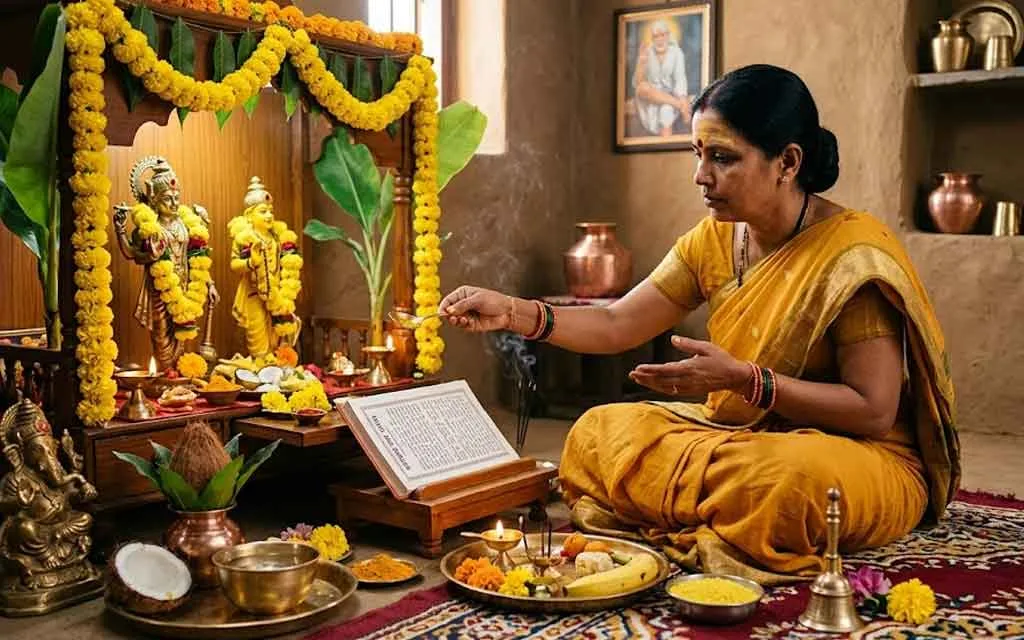
Performing the Tuesday puja with sincerity is the soul of the observance. Even the simplest sesame-oil diya lit before a Hanuman image with three repetitions of "Jai Bajrangbali" carries immense spiritual potency.
Step-by-Step Tuesday Puja
- Purify yourself and the altar — bathe and clean the puja space before beginning.
- Invoke Hanuman — place a Hanuman image or murti and decorate with red flowers and sindoor.
- Light the sesame-oil diya — sesame oil is Hanuman's favored offering. Light it from a small clay or metal lamp.
- Offer sindoor and oil — apply sindoor mixed with sesame oil to Hanuman's forehead and chest.
- Offer naivedyam — present banana, jaggery, betel leaves, gram, and red flowers.
- Recite the Hanuman Chalisa — the heart of Tuesday devotion; ideally one full recitation, more for serious sadhana.
- Optional — Bajrang Baan or Sundar Kand — for those undertaking deeper practice, especially during a 21-week vrat.
- Perform Hanuman Aarti — light a camphor or ghee aarti before the image while chanting "Jai Hanuman."
- Conclude with gratitude — seek forgiveness for shortcomings, pray for the dedicated outcome, and dedicate the merit to all beings.
Powerful Tuesday Mantras
Chanting these mantras on Tuesday is believed to remove obstacles, fears, debt, and negative planetary influences:
- Hanuman Beej Mantra: Om Hanumate Namah — the simplest and most powerful daily invocation of Hanuman.
- Sankat Mochan Mantra: Om Hum Hanumate Rudratmakaya Hum Phat — chanted for the removal of severe obstacles, illness, and persistent difficulty.
- Mangal Mantra: Om Bhaum Mangalaya Namah — invoked for strengthening Mars and resolving Mangal Dosha.
- Hanuman Gayatri: Om Anjaneyaya Vidmahe, Mahabalaya Dheemahi, Tanno Hanuman Prachodayat — the Vedic Gayatri form for Hanuman, recited 11 or 108 times.
- Ram Naam Mantra: Sri Ram Jai Ram Jai Jai Ram — Hanuman's favorite mantra; chanting Ram's name pleases Hanuman more than any other offering.
Reciting these mantras 108 times using a rudraksha or red-sandalwood mala on Tuesday is considered especially auspicious. Many devotees combine the Hanuman Beej Mantra with the Hanuman Chalisa — a complete daily Tuesday practice in 30-40 minutes.
Benefits of Observing Mangalwar Vrat
The rewards of honoring Tuesday extend across the spiritual, material, and psychological dimensions of life. Devotees who observe the Mangalwar Vrat with sincere faith consistently report:
- Removal of obstacles — the signature benefit; Hanuman's "Sankat Mochan" title literally means "remover of difficulties."
- Resolution of debt and financial recovery — Mars rules debt; Tuesday devotion is the traditional remedy for chronic financial difficulty.
- Cancellation of Mangal Dosha — the most-prescribed remedy for marriage delays and Manglik incompatibility concerns.
- Courage and confidence — the cultivation of action-orientation and decisive power in life.
- Protection from fear and negative influences — verse 24 of the Hanuman Chalisa promises that "ghosts and evil spirits flee" at the chanting of "Mahabir."
- Career advancement — particularly powerful for those in physically active careers (military, police, sports, surgery, manufacturing).
- Court case favorability — Hanuman, who burned Ravana's arrogant court, is widely invoked for legal disputes.
- Family harmony and conflict resolution — the action-energy of Mars combined with Hanuman's wisdom resolves stuck situations.
- Children's success and protection — Tuesday is widely observed by mothers for sons and daughters facing exams or career transitions.
- Physical strength and stamina — Mars's elemental power supports athletic, surgical, and martial pursuits.
- Spiritual growth through Ram-bhakti — Hanuman is the gateway to Lord Ram; deep Hanuman devotion naturally leads to Ram-bhakti.
Beyond these specific benefits, the weekly discipline of pausing each Tuesday for puja and recitation creates a powerful spiritual rhythm — the soul learns to trust that there is always a moment in the week when divine help is most accessible.
Beliefs and Stories Associated with Tuesday Worship
Hindu tradition is rich with stories celebrating the transformative power of Tuesday devotion. Among the most famous:
The Tuesday Vrat Katha — The Merchant's Son
A wealthy merchant and his wife, despite their riches, had no son and longed deeply for one. They observed the Mangalwar Vrat faithfully for many years. Pleased with their devotion, Lord Hanuman appeared in their dreams and blessed them with a son. The merchant was overjoyed; he named the boy Mangal in honor of the day that brought him.
Years passed and Mangal grew into a healthy young boy. One day, the merchant left on a long business journey. Upon returning, he was tested when he encountered a wise sadhu who asked, "Will you offer your most prized possession to Lord Hanuman?" The merchant, in unwavering faith, vowed to offer his son's service to Hanuman if his son's life and future were protected.
On reaching home, the merchant's wife welcomed him joyfully. But before he could share his vow, a fire broke out in their warehouse. The merchant lost much of his wealth in minutes. Yet his son Mangal, instead of grieving the lost wealth, comforted his father: "Father, Hanuman has shown us the way. The wealth was lost; we still have each other and his blessing." Pleased by the family's pure faith — neither greedy in prosperity nor desperate in loss — Hanuman restored their fortunes multiplied many times over. The family observed Mangalwar Vrat together for the rest of their lives, becoming legendary in their region for both wealth and devotion.
Hanuman Meets Bhima — The Forest Encounter
During the 12-year forest exile of the Pandavas, Bhima — the mightiest of the five brothers — was walking through a dense forest looking for sweet-smelling flowers for Draupadi. He came across an old monkey lying across the path, its long tail blocking his way. Bhima asked the monkey to move; the monkey replied, "I am too old and tired. Move my tail yourself."
Bhima, proud of his immense strength, bent down to push the tail aside — and found he could not lift it. He used both hands, all his force, every technique — but the tail would not move. Finally exhausted, Bhima realized this was no ordinary monkey. He prostrated and asked for the monkey's true identity. Hanuman revealed himself — Bhima's elder brother through their shared father (Vayu, the Wind God).
Hanuman embraced Bhima and granted him a special boon: during the great war, Hanuman would sit on Arjuna's chariot flag and personally protect both brothers. The Pandavas' victory in the Mahabharata war is therefore directly connected to Tuesday's power — the day when the divine warrior protector chooses to bless devotees.
Tulsidas in Akbar's Prison
In 1574-1575 CE, Goswami Tulsidas was imprisoned by Emperor Akbar after refusing to perform miracles for the Mughal court. Inside the prison, Tulsidas composed the Hanuman Chalisa across several Tuesdays. As the 40 chaupais flowed forth, an army of monkeys descended upon Fatehpur Sikri, disrupting Mughal life. Akbar, recognizing he had imprisoned a true saint, personally went to the prison and apologized.
From that prison episode emerged the Hanuman Chalisa — perhaps the most-recited Hindu hymn in human history. The Chalisa's power has been understood from its origin as the power of Tuesday: a Saint composed it on Tuesdays in captivity, invoked Hanuman, and was freed by Hanuman's direct intervention.
These stories — and countless others recited across India for centuries — share a common thread: Tuesday is the day when faith translates into transformative action, when devotion meets divine response, when stuck situations begin to move.
Tuesday Worship for NRI Hindus
Tuesday devotion is particularly powerful for NRI Hindus, and the practice has adapted beautifully to global contexts:
- Time-zone friendly — Tuesdays exist worldwide; morning or evening practice fits any schedule across USA, UK, Canada, UAE, Australia, and Singapore
- Hanuman is "everywhere" — Hanuman's chiranjivi status means the divine connection isn't bound to any geography
- Marriage matters — many NRI families with Mangal Dosha concerns observe the full 21-Tuesday vrat across continents
- Career stress — software engineers, doctors, financial professionals worldwide find Hanuman's decisive courage particularly relevant
- Family network — Tuesday WhatsApp groups for synchronized Hanuman Chalisa recitation are now common in NRI Hindu communities
- Temple programs — major NRI Hindu temples host weekly Tuesday Hanuman programs; growing crowd participation
- Children's practice — many NRI parents teach Hanuman Chalisa to children, building the Tuesday rhythm from a young age
- Audio-based learning — Spotify and YouTube Hanuman Chalisa recordings allow morning-commute practice during weekly demands
Conclusion: Embrace the Action-Energy of Tuesday
The importance of Tuesday in Hinduism is the beautiful intersection of devotion and decisive action. Dedicated to Lord Hanuman — the supreme remover of difficulties — and aligned with the planetary energy of Mangal Dev, Tuesday offers every seeker a weekly opportunity to address stuck situations, debts, fears, and obstacles. Whether you observe the full Mangalwar Vrat, recite the Hanuman Chalisa daily, or simply light a sesame-oil diya every Tuesday evening, the action-grace of Bajrangbali is always available to the sincere devotee.
In a world where so many problems feel intractable — debt that never ends, marriages delayed by Mangal Dosha, careers that stagnate, fears that paralyze — Tuesday is the day Hindu tradition has trusted for centuries to break through. The same Hanuman who flew across the ocean to find Sita, who burned Lanka in a single night, who lifted the Sanjeevani mountain to save Lakshmana — he is the same Hanuman who today removes the obstacles in your life. The only condition: turn to him on Tuesday with sincere faith.
May Lord Hanuman bless you with strength, courage, prosperity, and the removal of every obstacle on every sacred Tuesday.
Did you find this guide helpful? Share your own Tuesday rituals and Hanuman experiences in the comments below — we'd love to hear how you honor Bajrangbali in your weekly practice. And if this article touched your heart, share it with family and friends to spread Hanuman's blessings! 🙏 Jai Bajrangbali! Jai Sri Ram!
Related Reading on HinduTone
- Hanuman Chalisa: Complete 40 Verses with Hindi, Transliteration, Meaning & Benefits
- Sundar Kand: Complete Guide to Tulsidas's 5th Book of Ramcharitmanas & 7-Day Saptaha Paath
- Importance of Monday in Hinduism: Somvar Vrat & Lord Shiva Worship
- Somavar Vrat Katha: The Complete Monday Fast Story
- Maha Mrityunjaya Mantra: Lyrics, Meaning & How to Chant
- Shiv Tandava Stotram: Ravana's Cosmic Dance Hymn
- Rudrashtakam Stotram: Tulsidas's 8-Verse Shiva Hymn
- Lingashtakam Complete Guide for Monday Worship
- Bilvashtakam: Sacred Bilva Leaves & Monday Puja
- 12 Jyotirlingas of Lord Shiva: Complete Pilgrimage Guide
- Pradosham: Complete Guide to Monday Shiva Puja
You might also like
Hanuman Chalisa on Tuesday: Powerful Benefits & Correct Way to Chant
Hanuman Chalisa on Tuesday: Miracles, Rules & Hidden Meanings
Importance of Monday in Hinduism: Somvar Vrat, Lord Shiva Worship, Rituals & Benefits