Best Shiva Mantras for Night Meditation: A Complete Guide for Spiritual Practice
Last Updated: February 2026 | Reading Time: 9 minutes For centuries, devotees have turned to Lord Shiva's sacred vibrations during the mystical hours between…
Last Updated: February 2026 | Reading Time: 9 minutes For centuries, devotees have turned to Lord Shiva's sacred vibrations during the mystical hours between…
Last Updated: February 2026 | Reading Time: 9 minutes
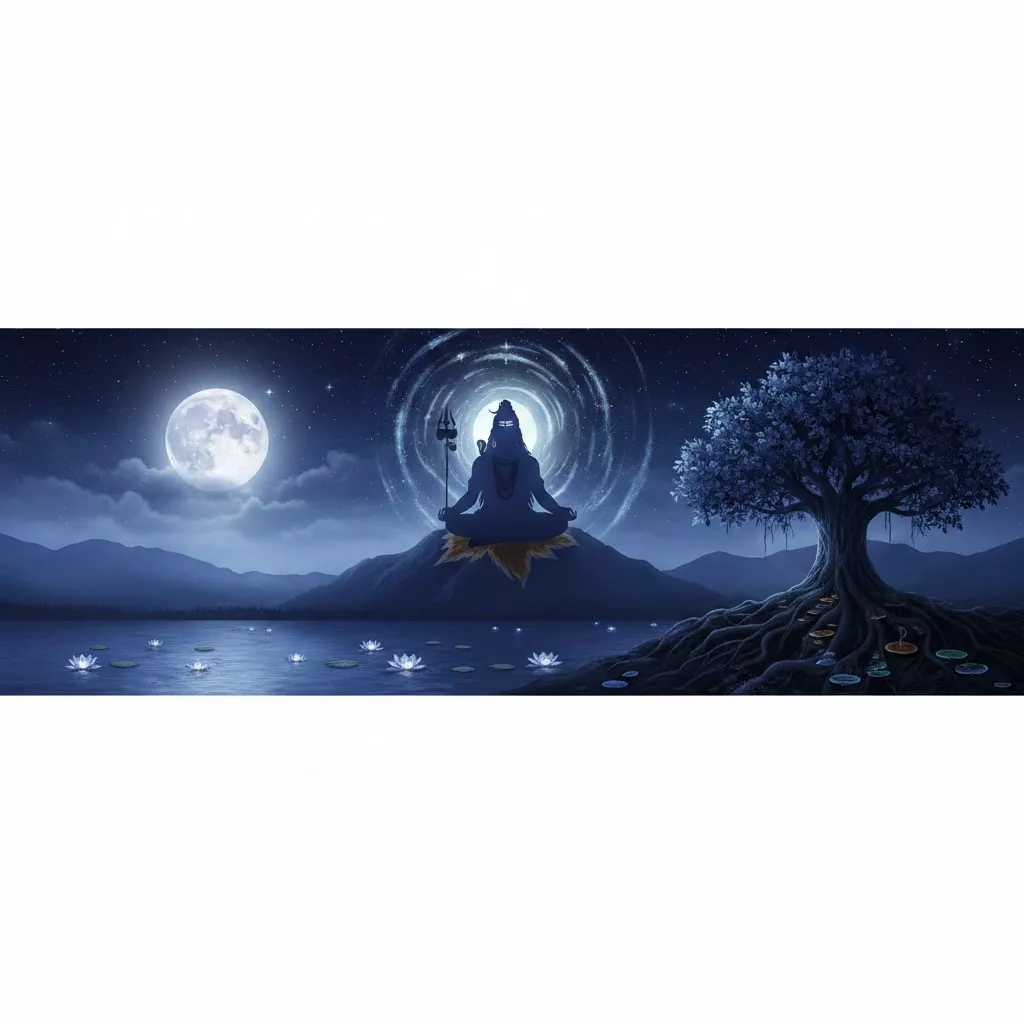
For centuries, devotees have turned to Lord Shiva's sacred vibrations during the mystical hours between dusk and dawn. Night meditation with Shiva mantras holds particular significance in Hindu spiritual tradition, as these hours are believed to carry heightened cosmic energy when the mind naturally turns inward.
This guide examines the most powerful Shiva mantras for nocturnal practice, their authentic meanings, scientific benefits, and proper chanting methods validated by both scriptural sources and contemporary practitioners.
Why Chant Shiva Mantras at Night?
The connection between Shiva worship and nighttime practice runs deep in Vedic tradition. Lord Shiva is called "Trilochana" (the three-eyed one) who never sleeps, perpetually absorbed in meditation. The quiet hours between 10 PM and 4 AM—known as Brahma Muhurta approaching dawn—create optimal conditions for spiritual practice.
Neurologically, our brain waves shift toward theta and delta frequencies during these hours, states associated with deep meditation and subconscious access. The reduced sensory input from the external world allows mantras to penetrate deeper into consciousness. Additionally, many practitioners report that chanting before sleep improves sleep quality while maintaining spiritual awareness.
During Maha Shivaratri, the night of Shiva's cosmic dance, devotees maintain all-night vigils (jagran) specifically to harness this temporal-spiritual alignment. This ancient practice reflects an understanding that certain times amplify mantra effectiveness.
The 7 Most Powerful Shiva Mantras for Night Practice
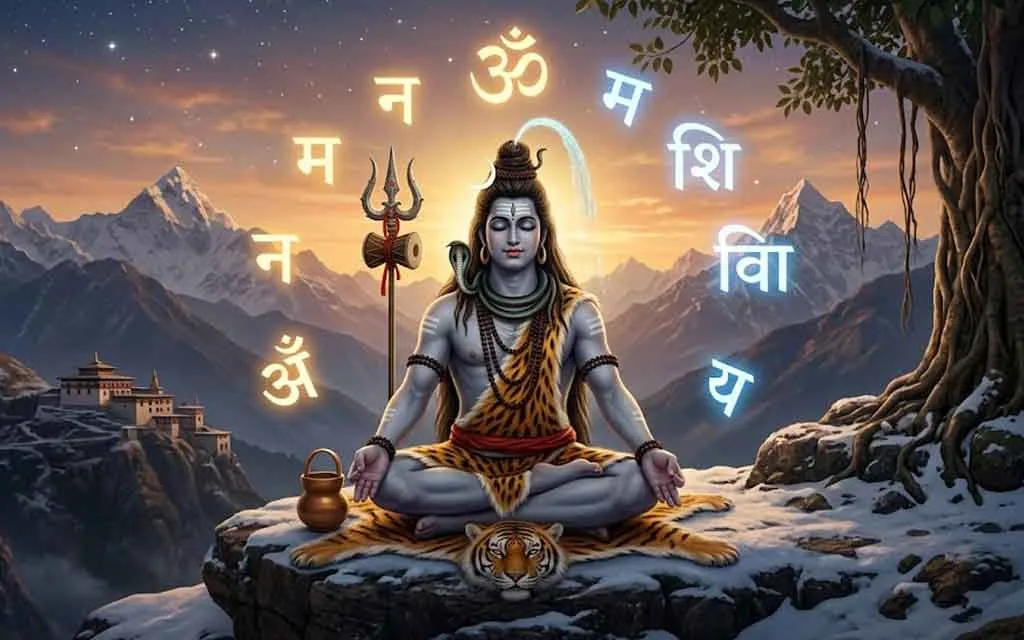
1. Om Namah Shivaya (The Panchakshari Mantra)
Sanskrit: ॐ नमः शिवाय
Transliteration: Om Namah Shivaya
This five-syllable mantra represents the most universal Shiva invocation, appearing in the Krishna Yajurveda's Shri Rudram and serving as the heart of Shaivite tradition.
Literal Meaning: "Om and salutations to Shiva" or "I bow to Shiva"
Deeper Significance: Each syllable corresponds to one of the five elements—Na (earth), Ma (water), Shi (fire), Va (air), Ya (ether)—representing Shiva as the consciousness pervading all creation.
Night Chanting Method:
- Sit in a comfortable meditative posture with spine erect
- Begin with 3-5 deep breaths to center yourself
- Chant aloud for the first 11 repetitions to establish the vibration
- Transition to whisper chanting for 33 repetitions
- Complete with mental repetition (manasika japa) for 64 repetitions
- Total: 108 repetitions (one mala)
Benefits: Practitioners report reduced anxiety, improved sleep onset, and a sense of protective presence. The rhythmic repetition naturally slows brainwave activity, facilitating the transition from beta to alpha and theta states conducive to both meditation and rest.
2. Mahamrityunjaya Mantra (The Death-Conquering Mantra)
Sanskrit: ॐ त्र्यम्बकं यजामहे सुगन्धिं पुष्टिवर्धनम्
उर्वारुकमिव बन्धनान् मृत्योर्मुक्षीय मामृतात्
Transliteration: Om Tryambakam Yajamahe Sugandhim Pushtivardhanam
Urvarukamiva Bandhanan Mrityor Mukshiya Maamritat
Found in the Rigveda (7.59.12), this mantra addresses Rudra-Shiva as Tryambaka, the three-eyed lord who perceives past, present, and future simultaneously.
Translation: "We worship the three-eyed one who is fragrant and nourishes all beings. May he liberate us from death for the sake of immortality, just as the ripe cucumber is severed from its bondage to the vine."
Night Practice Application: This mantra is particularly recommended for those facing health challenges, fear, or life transitions. Its association with healing and liberation from fear makes it ideal for processing daytime anxieties before sleep.
Chanting Method:
- Recommended time: Between 10 PM and midnight
- Chant slowly, taking 15-20 seconds per complete recitation
- Pause between repetitions to let the vibration settle
- Minimum: 11 repetitions; optimal: 21 or 108 repetitions
- Can be combined with visualization of divine light
Documented Benefits: Beyond traditional spiritual benefits, practitioners report reduced nighttime anxiety, fewer disturbing dreams, and enhanced emotional resilience. The mantra's complex syllabic structure requires focused attention, effectively quieting mental chatter.
3. Shiva Gayatri Mantra
Sanskrit: ॐ तत्पुरुषाय विद्महे महादेवाय धीमहि
तन्नो रुद्रः प्रचोदयात्
Transliteration: Om Tatpurushaya Vidmahe Mahadevaya Dhimahi
Tanno Rudrah Prachodayat
Meaning: "We know the Supreme Being, we meditate upon the great Lord, may Rudra inspire our understanding."
This Gayatri form dedicated to Shiva combines the structural power of the Gayatri meter with Shaivite devotion. It follows the classical three-part Gayatri formula: acknowledgment, meditation, and prayer for enlightenment.
Night Meditation Sequence:
- Practice after bathing or washing hands and face
- Light a lamp or candle if possible (fire element connects to Shiva's third eye)
- Chant during the first 15 minutes of your meditation session
- Follow with 10-15 minutes of silent meditation
- Repeat 27 or 54 times
Spiritual Benefits: This mantra specifically awakens intellectual and intuitive faculties. Regular nighttime practice is said to enhance dream clarity, spiritual insight, and morning mental sharpness.
4. Om Namah Shivaya Shivaya Namah Om
Sanskrit: ॐ नमः शिवाय शिवाय नमः ॐ
Transliteration: Om Namah Shivaya Shivaya Namah Om
This palindromic variation creates a circular, self-contained energetic field. The mirror structure symbolizes the non-dual nature of reality—that devotee and deity are ultimately one.
Chanting Method for Deep Meditation:
- Exceptionally effective for late-night practice (after midnight)
- Chant at a natural breathing pace—inhale "Om Namah Shivaya," exhale "Shivaya Namah Om"
- Creates a breathing meditation that synchronizes mantra, breath, and consciousness
- Continue for 15-30 minutes or until natural cessation
Unique Benefit: This mantra-breath combination activates the parasympathetic nervous system, lowering heart rate and blood pressure while maintaining meditative awareness. Many practitioners fall asleep naturally during this practice, creating a bridge between waking meditation and yogic sleep (yoga nidra).
5. Om Hreem Namah Shivaya
Sanskrit: ॐ ह्रीं नमः शिवाय
Transliteration: Om Hreem Namah Shivaya
This variation adds Hreem, a bija (seed) mantra representing divine feminine energy and the heart chakra. The combination invokes both Shiva and Shakti principles, balancing masculine and feminine energies.
Meaning: "Om, the cosmic sound and divine creative power (Hreem), I bow to Shiva"
Night Practice:
- Particularly beneficial for emotional healing and relationship harmony
- Place right hand on heart center while chanting
- Visualize soft golden light expanding from your heart with each repetition
- Chant 108 times
Reports from Practitioners: This mantra specifically addresses emotional blockages and past trauma. The Hreem syllable activates heart energy, while Shiva's transformative power helps process and release emotional content during sleep.
6. Rudra Mantra: Om Namo Bhagavate Rudraya
Sanskrit: ॐ नमो भगवते रुद्राय
Transliteration: Om Namo Bhagavate Rudraya
This mantra addresses Shiva's Rudra aspect—the fierce, transformative force that destroys negativity and obstacles.
Translation: "Om, salutations to the Lord who is Rudra (the remover of suffering)"
When to Use:
- During challenging life periods requiring courage
- When processing anger or difficult emotions
- Before important transitions or decisions
Night Chanting Approach:
- Chant with strength and conviction (not aggressively, but with determination)
- Visualize obstacles dissolving like mist before rising sun
- Recommended: 11, 21, or 51 repetitions
- Follow with a few minutes of silent witnessing
Transformative Effect: This mantra works on the prarabdha karma (destiny karma), helping practitioners face and process difficult life situations with spiritual strength rather than avoidance.
7. Shiva Dhyana Mantra
Sanskrit: ॐ ध्यायेन्नित्यं महेशं रजतगिरिनिभं चारुचन्द्रावतंसम्
Transliteration: Om Dhyayennityam Mahesham Rajatagiri Nibham Charu Chandravatamsam
Complete Translation: "I meditate always on Lord Maheshvara (the great Lord), who is as radiant as the silver mountain (Mount Kailash), who wears the beautiful crescent moon as an ornament..."
This longer mantra (complete version contains multiple verses) provides detailed visualization instructions for Shiva's form. It comes from classical Dhyana Shlokas used to establish meditation focus.
Night Application:
- Use as a bridge between daily life and meditation
- Chant once or thrice slowly to establish visualization
- Then maintain the mental image during silent meditation
- Particularly effective for those who respond well to deity meditation (saguna upasana)
Scientific Perspectives on Mantra Meditation
Recent neuroscience research provides insight into why mantra meditation, particularly at night, produces measurable benefits. Studies using fMRI technology show that repetitive chanting activates the vagus nerve, which regulates the parasympathetic nervous system—our "rest and digest" mode.
A 2023 study published in the Journal of Alternative and Complementary Medicine found that participants who practiced mantra meditation before sleep showed increased slow-wave sleep (deep sleep) and improved sleep architecture. The rhythmic nature of Sanskrit mantras, with their specific phonetic patterns, appears to create harmonizing effects on brainwave patterns.
Additionally, the vibratory quality of Sanskrit specifically—with its precise tongue positions and nasal resonances—stimulates the 84 acupressure points on the roof of the mouth, creating a neurochemical cascade that promotes relaxation and mental clarity.
Creating Your Personal Night Sadhana
Basic Structure for Beginners:
- Preparation (5 minutes): Brief shower or wash, wear clean comfortable clothes, create a dedicated space
- Pranayama (5 minutes): Simple alternate nostril breathing to balance energy
- Mantra Japa (15-20 minutes): Choose one primary mantra and practice consistently
- Silent Meditation (10 minutes): Rest in the afterglow of mantra repetition
- Dedication: Offer the practice benefits to all beings
Progressive Practice:
- Week 1-2: Establish consistent timing and space
- Week 3-4: Increase mantra count gradually
- Month 2: Add visualization or breath coordination
- Month 3+: Practice becomes natural, benefits accumulate
Using a Mala (Prayer Beads):
A rudraksha or sphatik (crystal) mala contains 108 beads plus one meru (head bead). Hold the mala in your right hand, using thumb and middle finger to move from bead to bead. Don't cross the meru—reverse direction when reaching it. This tactile element enhances focus, especially during sleepy late-night practice.
Shivaratri: The Night of Shiva's Glory
Maha Shivaratri, falling on the 14th night of the dark fortnight in February/March, represents the ultimate night for Shiva meditation. Devotees traditionally maintain four prahar (three-hour watches) throughout the night, each dedicated to different aspects of Shiva worship.
Shivaratri Night Structure:
- First Prahar (6 PM-9 PM): Worship with flowers and offerings, chant Om Namah Shivaya
- Second Prahar (9 PM-12 AM): Deep mantra meditation, Mahamrityunjaya recitation
- Third Prahar (12 AM-3 AM): Most auspicious time—intensive practice of chosen mantra
- Fourth Prahar (3 AM-6 AM): Approaching Brahma Muhurta, silent meditation and awaiting sunrise
The planetary alignments during Shivaratri are believed to naturally elevate consciousness, making it an ideal night to establish or deepen a Shiva mantra practice. Many practitioners report breakthrough experiences during this annual vigil.
Common Questions About Night Mantra Practice
Can I chant lying down or must I sit?
While sitting maintains alertness, you can practice lying down if physical limitations require it or if you're transitioning into sleep meditation. For deep meditation, sitting is preferable. For sleep-preparation practice, a semi-reclined position works well.
Should mantras be chanted aloud, whispered, or mental?
The tradition recognizes four types: Vaikhari (loud), Upanshu (whisper), Manasika (mental), and Likhita (written). Each has specific effects. Night practice often begins loud to engage fully, transitions to whisper for internalization, and ends with mental repetition for deep absorption. Mental japa is considered most powerful but requires practice to maintain focus.
How long before I experience benefits?
Immediate effects include mental calmness and improved sleep. Most practitioners notice significant changes after 40 days (mandala) of consistent practice. Deep spiritual experiences vary individually but typically emerge after several months of dedicated practice.
Can women practice during menstruation?
Traditional views vary, but many contemporary teachers affirm that mantra practice is permitted during all physiological states. The relationship between devotee and deity transcends physical circumstances. Personal comfort and intuition should guide practice.
What if I mispronounce Sanskrit words?
Sincere devotion matters more than perfect pronunciation. However, making reasonable effort to learn correct pronunciation enhances the practice. The specific sound vibrations do carry significance in traditional understanding. YouTube resources and Sanskrit learning apps can help improve pronunciation over time.
Is it necessary to understand the meaning?
Understanding deepens practice but isn't absolutely necessary initially. Mantras work through both semantic meaning and sonic vibration. Many practitioners begin with phonetic repetition, then gradually absorb meanings, which opens new dimensions of experience.
Safety and Practical Considerations
When to Exercise Caution:
If you experience excessive energy, insomnia, or emotional intensity, reduce practice duration or intensity. Mantra practice can mobilize subtle energies and suppressed emotions. Work with a qualified teacher if deep psychological material surfaces.
Balancing with Daily Life:
Night practice shouldn't compromise sleep needs. If you must wake early, adjust practice timing rather than sacrificing sleep. Even 10-15 minutes of sincere practice surpasses lengthy but exhausted sessions.
Combining with Other Practices:
Shiva mantras harmonize well with hatha yoga, pranayama, and other meditation forms. However, avoid mixing too many mantras simultaneously. Consistency with one primary mantra yields deeper results than frequent switching.
Building Long-Term Practice
Authentic spiritual practice unfolds gradually. The initial enthusiasm naturally gives way to ordinary phases requiring discipline. This is normal and expected. The Sanskrit term abhyasa (sustained practice) emphasizes regularity over intensity.
Create external supports: maintain a dedicated practice space, keep a simple journal noting experiences, connect with fellow practitioners when possible. The cumulative effect of consistent night mantra practice extends far beyond immediate meditation sessions, gradually transforming consciousness and life experience.
Conclusion: The Night Belongs to Shiva
Lord Shiva's symbolism encompasses both the ascetic meditator absorbed in transcendence and the householder engaged with creation. Night mantra practice honors both aspects—withdrawing from worldly activity while remaining present in the body. The darkness of night mirrors meditation's journey inward, moving from surface awareness to deep stillness.
Whether you're preparing for Shivaratri, establishing a regular spiritual routine, or seeking solace during difficult times, these mantras offer time-tested pathways. The vibrations carried through millions of repetitions over thousands of years create what yogis call samskara—subtle grooves in consciousness that facilitate entry into meditative states.
Begin simply, practice sincerely, and allow the transformation to unfold naturally. As the Shiva Sutras remind us, consciousness itself is the only true teacher, and these sacred sounds serve as vehicles for that consciousness to reveal itself.
Om Namah Shivaya. Har Har Mahadev.
About the Author: This guide synthesizes traditional scriptural sources including the Vedas, Puranas, and Agamas with contemporary practitioner experiences and modern research on meditation. Information presented reflects both orthodox Hindu tradition and accessible contemporary adaptations for global practitioners.
Disclaimer: This article provides information about traditional spiritual practices and is not a substitute for guidance from a qualified spiritual teacher or medical advice for sleep or mental health concerns.
Frequently Asked Questions
What is the Best Shiva Mantras for Night Meditation?
Last Updated: February 2026 | Reading Time: 9 minutes For centuries, devotees have turned to Lord Shiva 's sacred vibrations during the mystical hours between dusk and dawn. Night meditation with Shiva mantras holds particular significance in Hindu spiritual tradition, as these hours are believed to carry heightened cosmic energy when the mind naturally turn
How many times should the Best Shiva Mantras for Night Meditation be chanted?
It is traditionally chanted 108 times using a rudraksha or tulsi mala. Even 11 or 21 sincere repetitions daily are considered beneficial — steady, focused practice matters more than the count.
What is the best time to chant the Best Shiva Mantras for Night Meditation?
Dawn (Brahma Muhurta) after a bath is considered ideal, though it may be chanted any time with a calm, focused mind. Many devotees keep a fixed daily time to build consistency.
Who can chant the Best Shiva Mantras for Night Meditation?
Anyone may chant it with faith and a pure mind, regardless of age, gender or background. Beginners benefit from first hearing the correct pronunciation and understanding its meaning.
What are the benefits of chanting the Best Shiva Mantras for Night Meditation?
Devotees chant it to invoke Lord Shiva's grace — for inner peace, protection, focus and spiritual progress.
You might also like
Om Namah Shivaya: The Five-Syllable Mantra That Contains the Universe
Durga Chalisa with Meaning — Complete Spiritual Guide | HinduTone
Pitru Tarpan Vidhi — Complete Ancestral Offering Guide