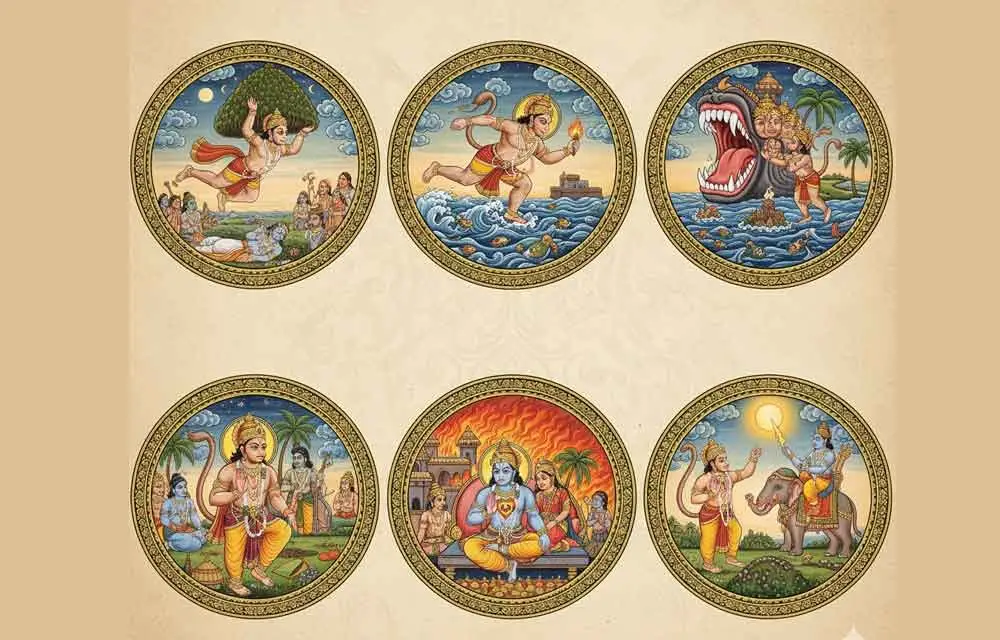
Hanuman Chalisa: Complete Lyrics, Meaning of All 40 Verses & Benefits
Complete guide to the Hanuman Chalisa — Goswami Tulsidas's 40-verse Awadhi hymn to Lord Hanuman. All 40 chaupais + opening + closing dohas with Hindi + transliteration + English meaning, origin story, verse 18 astronomical marvel, chanting method, benefits, NRI guide, FAQ.
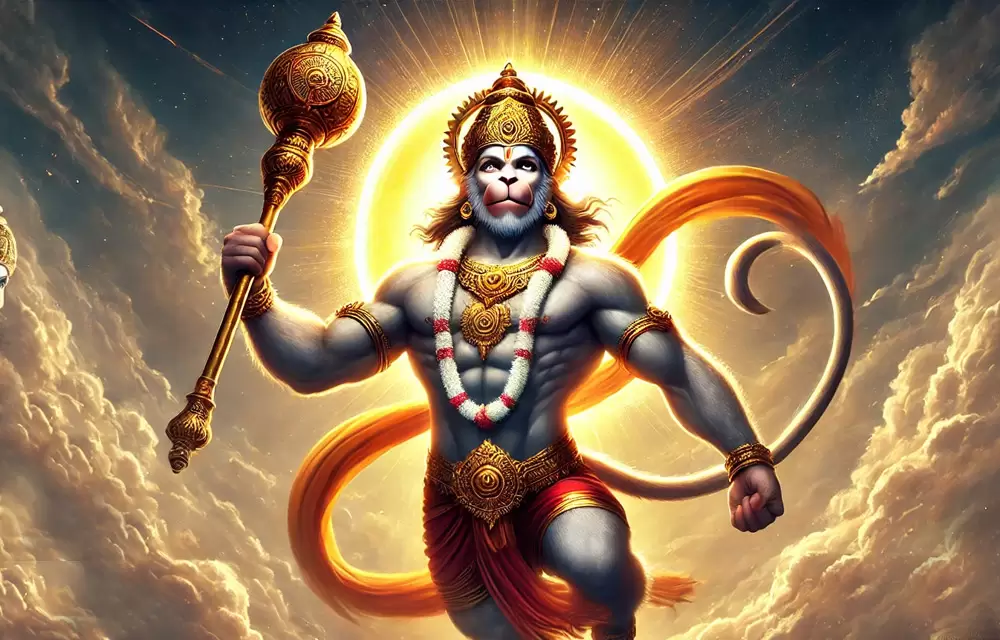
Complete guide to the Hanuman Chalisa — Goswami Tulsidas's 40-verse Awadhi hymn to Lord Hanuman. All 40 chaupais + opening + closing dohas with Hindi + transliteration + English meaning, origin story, verse 18 astronomical marvel, chanting method, benefits, NRI guide, FAQ.
The Hanuman Chalisa is the most recited Hindu prayer in the world. Composed by Goswami Tulsidas in the 16th century in Awadhi, its forty verses (chalisa = forty) praise Lord Hanuman's strength, devotion, and grace. Millions of devotees chant it every morning, and especially on Tuesdays and Saturdays, for courage, protection from negative energies, relief from Shani dosha, and success in difficult endeavours.
This guide gives you the complete Hanuman Chalisa — original lyrics in Devanagari, English transliteration, and the meaning of every single verse — followed by the benefits of recitation, the correct way to chant it, and answers to the questions devotees ask most.
Quick answer: The Hanuman Chalisa has 2 opening dohas, 40 chaupais, and 1 closing doha. Chanting it takes about 8–10 minutes. Devotees traditionally recite it 1, 7, 11, or 108 times; Tulsidas himself promises in verse 38 that one who recites it 100 times is freed from all bondage.
Advertisement
Opening Dohas (Invocation)
श्रीगुरु चरन सरोज रज, निज मनु मुकुरु सुधारि । बरनउँ रघुबर बिमल जसु, जो दायकु फल चारि ॥
Shri Guru charan saroj raj, nij manu mukuru sudhari, Baranau Raghubar bimal jasu, jo dayaku phal chari.
Cleansing the mirror of my mind with the dust of my Guru's lotus feet, I narrate the pure glory of Lord Rama, which bestows the four fruits of life — dharma, artha, kama, and moksha.
बुद्धिहीन तनु जानिके, सुमिरौं पवन-कुमार । बल बुधि बिद्या देहु मोहिं, हरहु कलेस बिकार ॥
Buddhiheen tanu janike, sumirau Pavan-Kumar, Bal budhi bidya dehu mohi, harahu kalesa bikar.
Knowing myself to be limited in intellect, I remember the Son of the Wind. Grant me strength, wisdom, and knowledge, and remove my afflictions and impurities.
The 40 Chaupais — Lyrics and Meaning
1. जय हनुमान ज्ञान गुन सागर । जय कपीस तिहुँ लोक उजागर ॥
Jai Hanuman gyan gun sagar, Jai Kapis tihu lok ujagar.
Victory to Hanuman, ocean of wisdom and virtue; victory to the lord of the vanaras, who illuminates all three worlds.
2. राम दूत अतुलित बल धामा । अंजनि-पुत्र पवनसुत नामा ॥
Ram doot atulit bal dhama, Anjani-putra Pavansut nama.
You are Rama's messenger, the abode of matchless strength — known as Anjani's son and the Son of the Wind.
3. महाबीर बिक्रम बजरंगी । कुमति निवार सुमति के संगी ॥
Mahabir bikram Bajrangi, kumati nivar sumati ke sangi.
Great hero, mighty as a thunderbolt — you remove evil thoughts and are the companion of good sense.
4. कंचन बरन बिराज सुबेसा । कानन कुंडल कुंचित केसा ॥
Kanchan baran biraj subesa, kanan kundal kunchit kesa.
Golden-hued and splendidly adorned, with earrings in your ears and curly hair.
5. हाथ बज्र औ ध्वजा बिराजै । काँधे मूँज जनेऊ साजै ॥
Hath bajra au dhwaja birajai, kandhe moonj janeu sajai.
The mace and a banner shine in your hands; the sacred thread of munja grass adorns your shoulder.
6. संकर सुवन केसरीनंदन । तेज प्रताप महा जग बन्दन ॥
Sankar suvan Kesarinandan, tej pratap maha jag bandan.
Embodiment of Shiva and son of Kesari — your radiance and glory are revered by the whole world.
7. विद्यावान गुनी अति चातुर । राम काज करिबे को आतुर ॥
Vidyavan guni ati chatur, Ram kaj karibe ko atur.
Learned, virtuous, supremely clever — ever eager to carry out Rama's work.
8. प्रभु चरित्र सुनिबे को रसिया । राम लखन सीता मन बसिया ॥
Prabhu charitra sunibe ko rasiya, Ram Lakhan Sita man basiya.
You delight in hearing the Lord's deeds; Rama, Lakshmana, and Sita dwell in your heart.
9. सूक्ष्म रूप धरि सियहिं दिखावा । बिकट रूप धरि लंक जरावा ॥
Sukshma roop dhari Siyahi dikhava, bikat roop dhari Lanka jarava.
In a subtle form you appeared before Sita; in a fearsome form you burned Lanka.
10. भीम रूप धरि असुर सँहारे । रामचंद्र के काज सँवारे ॥
Bhima roop dhari asur sanhare, Ramachandra ke kaj sanvare.
Taking a colossal form you destroyed the demons and accomplished Lord Rama's mission.
11. लाय सजीवन लखन जियाये । श्रीरघुबीर हरषि उर लाये ॥
Laya Sajivan Lakhan jiyaye, Shri Raghubir harashi ur laye.
Bringing the Sanjivani herb, you revived Lakshmana, and the delighted Rama embraced you.
12. रघुपति कीन्ही बहुत बड़ाई । तुम मम प्रिय भरतहि सम भाई ॥
Raghupati kinhi bahut badai, tum mam priya Bharatahi sam bhai.
Rama praised you greatly: "You are as dear to me as my brother Bharata."
13. सहस बदन तुम्हरो जस गावैं । अस कहि श्रीपति कंठ लगावैं ॥
Sahas badan tumharo jas gavai, as kahi Shripati kanth lagavai.
"May the thousand-headed serpent sing your glory" — so saying, the Lord of Lakshmi drew you to his heart.
14. सनकादिक ब्रह्मादि मुनीसा । नारद सारद सहित अहीसा ॥
Sanakadik Brahmadi munisa, Narad Sarad sahit Ahisa.
Sanaka and the sages, Brahma and the munis, Narada, Saraswati, and the king of serpents —
15. जम कुबेर दिगपाल जहाँ ते । कबि कोबिद कहि सके कहाँ ते ॥
Jam Kuber Digpal jahan te, kabi kobid kahi sake kahan te.
Yama, Kubera, and the guardians of the directions — even poets and scholars cannot fully describe your glory.
16. तुम उपकार सुग्रीवहिं कीन्हा । राम मिलाय राज पद दीन्हा ॥
Tum upkar Sugrivahi kinha, Ram milaya raj pad dinha.
You did Sugriva a great service — introducing him to Rama, you restored his kingship.
17. तुम्हरो मंत्र बिभीषन माना । लंकेस्वर भए सब जग जाना ॥
Tumharo mantra Bibhishan mana, Lankeswar bhaye sab jag jana.
Vibhishana heeded your counsel and became the king of Lanka — the whole world knows this.
18. जुग सहस्र जोजन पर भानू । लील्यो ताहि मधुर फल जानू ॥
Jug sahasra jojan par bhanu, lilyo tahi madhur phal janu.
The sun, thousands of yojanas away, you swallowed, taking it for a sweet fruit.
19. प्रभु मुद्रिका मेलि मुख माहीं । जलधि लाँघि गये अचरज नाहीं ॥
Prabhu mudrika meli mukh mahi, jaladhi langhi gaye acharaj nahi.
Holding the Lord's ring in your mouth, you leapt across the ocean — no wonder at all for you.
20. दुर्गम काज जगत के जेते । सुगम अनुग्रह तुम्हरे तेते ॥
Durgam kaj jagat ke jete, sugam anugraha tumhre tete.
Every difficult task in this world becomes easy by your grace.
21. राम दुआरे तुम रखवारे । होत न आज्ञा बिनु पैसारे ॥
Ram duare tum rakhvare, hot na agya binu paisare.
You are the guardian at Rama's door; none may enter without your leave.
22. सब सुख लहै तुम्हारी सरना । तुम रच्छक काहू को डर ना ॥
Sab sukh lahai tumhari sarna, tum rakshak kahu ko dar na.
All happiness is found in your refuge; with you as protector, there is nothing to fear.
23. आपन तेज सम्हारो आपै । तीनों लोक हाँक तें काँपै ॥
Aapan tej samharo aapai, teeno lok hank te kanpai.
You alone can contain your own radiance; all three worlds tremble at your roar.
24. भूत पिसाच निकट नहिं आवै । महाबीर जब नाम सुनावै ॥
Bhoot pisach nikat nahi avai, Mahabir jab naam sunavai.
Ghosts and evil spirits cannot come near when the name of the Great Hero is uttered.
25. नासै रोग हरै सब पीरा । जपत निरंतर हनुमत बीरा ॥
Nasai rog harai sab peera, japat nirantar Hanumat beera.
Disease is destroyed and all pain removed for one who constantly repeats brave Hanuman's name.
26. संकट तें हनुमान छुड़ावै । मन क्रम बचन ध्यान जो लावै ॥
Sankat te Hanuman chhudavai, man kram bachan dhyan jo lavai.
Hanuman frees from every crisis those who remember him in thought, deed, and word.
27. सब पर राम तपस्वी राजा । तिन के काज सकल तुम साजा ॥
Sab par Ram tapasvi raja, tin ke kaj sakal tum saja.
Rama, the ascetic king, reigns over all — and you accomplish all his works.
28. और मनोरथ जो कोई लावै । सोइ अमित जीवन फल पावै ॥
Aur manorath jo koi lavai, soi amit jeevan phal pavai.
Whoever brings any heartfelt wish to you obtains the boundless fruit of life.
29. चारों जुग परताप तुम्हारा । है परसिद्ध जगत उजियारा ॥
Charo jug partap tumhara, hai parsiddha jagat ujiyara.
Your glory shines through all four yugas; your fame illuminates the world.
30. साधु संत के तुम रखवारे । असुर निकंदन राम दुलारे ॥
Sadhu sant ke tum rakhvare, asur nikandan Ram dulare.
You are the protector of saints and sages, destroyer of demons, beloved of Rama.
31. अष्ट सिद्धि नौ निधि के दाता । अस बर दीन जानकी माता ॥
Asht siddhi nau nidhi ke data, as bar deen Janaki Mata.
Mother Sita granted you the boon to bestow the eight siddhis and nine nidhis (mystic powers and treasures).
32. राम रसायन तुम्हरे पासा । सदा रहो रघुपति के दासा ॥
Ram rasayan tumhre pasa, sada raho Raghupati ke dasa.
You hold the elixir of Rama's name and remain forever the servant of the Lord.
33. तुम्हरे भजन राम को पावै । जनम-जनम के दुख बिसरावै ॥
Tumhre bhajan Ram ko pavai, janam-janam ke dukh bisravai.
Through devotion to you, one reaches Rama and forgets the sorrows of countless births.
34. अन्तकाल रघुबर पुर जाई । जहाँ जन्म हरि-भक्त कहाई ॥
Antkal Raghubar pur jai, jahan janma Hari-bhakt kahai.
At life's end, one goes to Rama's abode — and if born again, is born as God's devotee.
35. और देवता चित्त न धरई । हनुमत सेइ सर्ब सुख करई ॥
Aur devta chitta na dharai, Hanumat sei sarba sukh karai.
One need hold no other deity in mind — serving Hanuman alone grants every happiness.
36. संकट कटै मिटै सब पीरा । जो सुमिरै हनुमत बलबीरा ॥
Sankat katai mitai sab peera, jo sumirai Hanumat Balbeera.
Every crisis is cut away and all pain erased for one who remembers the mighty Hanuman.
37. जै जै जै हनुमान गोसाईं । कृपा करहु गुरुदेव की नाईं ॥
Jai jai jai Hanuman Gosai, kripa karahu Gurudev ki nai.
Victory, victory, victory to Lord Hanuman! Bestow your grace upon me as my Guru would.
38. जो सत बार पाठ कर कोई । छूटहि बंदि महा सुख होई ॥
Jo sat bar path kar koi, chhutahi bandi maha sukh hoi.
Whoever recites this a hundred times is released from all bondage and gains supreme bliss.
39. जो यह पढ़ै हनुमान चालीसा । होय सिद्धि साखी गौरीसा ॥
Jo yah padhai Hanuman Chalisa, hoy siddhi sakhi Gaurisa.
Whoever reads this Hanuman Chalisa attains spiritual accomplishment — Lord Shiva himself is witness.
40. तुलसीदास सदा हरि चेरा । कीजै नाथ हृदय महँ डेरा ॥
Tulsidas sada Hari chera, kijai Nath hriday maha dera.
Tulsidas, ever the servant of Hari, prays: O Lord, make your dwelling in my heart.
Closing Doha
पवनतनय संकट हरन, मंगल मूरति रूप । राम लखन सीता सहित, हृदय बसहु सुर भूप ॥
Pavantanay sankat haran, mangal murati roop, Ram Lakhan Sita sahit, hriday basahu sur bhoop.
O Son of the Wind, remover of distress, embodiment of auspiciousness — with Rama, Lakshmana, and Sita, dwell in my heart, O king of gods.
Benefits of Reciting the Hanuman Chalisa
- Protection from fear and negative energies — verse 24 explicitly promises that evil spirits cannot approach where Hanuman's name is spoken; devotees recite it before journeys and at night for fearlessness.
- Relief from Shani (Saturn) dosha — Hanuman worship on Saturdays is the most prescribed remedy for Sade Sati and Shani-related obstacles in Vedic astrology.
- Health and recovery — verse 25 ("nasai rog harai sab peera") is chanted for healing and relief from chronic illness.
- Courage before challenges — interviews, exams, court dates, visa appointments; Hanuman grants bal (strength) and buddhi (clear intellect), exactly what the opening doha asks for.
- Removal of obstacles in impossible tasks — verse 20: every durgam (difficult) task becomes sugam (easy) by his grace.
- Spiritual progress and devotion to Rama — verses 32–34 frame the Chalisa as a path to liberation itself.
How to Chant the Hanuman Chalisa — Rules and Best Time
- Best days: Tuesday and Saturday; daily recitation is ideal.
- Best time: Brahma Muhurta (4:30–6:00 AM) or evening after lighting a diya; after bathing, facing east.
- Count: 1 path daily as a minimum; 7 or 11 paths for specific sankalpas; 108 paths for a major wish; 100 recitations as per verse 38 for release from bondage. A 40-day daily-recitation sankalpa is the classic practice for difficult situations.
- Offerings: sindoor and jasmine oil to Hanuman ji, boondi or banana as naivedya, a ghee or sesame-oil diya.
- Discipline: many devotees observe satvik food and brahmacharya on Tuesdays/Saturdays during a sankalpa.
- Women can recite the Hanuman Chalisa at all times; the tradition of devotion places no real restriction — bhakti is the only requirement.
Conclusion
Five centuries after Tulsidas composed it, the Hanuman Chalisa remains the prayer Hindus reach for first — in fear, in illness, before a journey, before an exam, in joy. Recite it slowly, understand each verse with the meanings above, and let its forty steps carry your mind from anxiety to fearlessness. Jai Bajrangbali!
Continue reading
- Hanuman Chalisa on Tuesday — Mangalwar puja, benefits & the correct way
- Benefits of chanting the Hanuman Chalisa daily
- Hanuman Chalisa — meaning, benefits & a 30-day practice (NRI guide)
- Why chanting the Hanuman Chalisa every day matters
Frequently Asked Questions
How many verses are in the Hanuman Chalisa?
The Hanuman Chalisa contains 40 chaupais (quatrains) — chalisa means forty — framed by two opening dohas and one closing doha, composed by Goswami Tulsidas in Awadhi.
How many times should I read the Hanuman Chalisa?
Once daily is the standard practice. For specific wishes, devotees recite it 7, 11, or 108 times, or undertake a 40-day daily sankalpa. Verse 38 promises that 100 recitations free one from all bondage.
What is the best time to recite the Hanuman Chalisa?
Early morning during Brahma Muhurta (4:30–6:00 AM) or in the evening after lighting a lamp. Tuesdays and Saturdays — the days sacred to Hanuman — are considered especially powerful.
Can women read the Hanuman Chalisa?
Yes. Devotion is the only requirement; women recite the Hanuman Chalisa daily across the Hindu world, and no verse of the Chalisa restricts who may chant it.
What are the main benefits of the Hanuman Chalisa?
Protection from fear and negativity (verse 24), relief from illness and pain (verse 25), rescue from crises (verses 26, 36), success in difficult tasks (verse 20), relief from Shani dosha, and growth in devotion leading to liberation (verses 33–34).
How long does it take to chant the Hanuman Chalisa once?
About 8–10 minutes at a steady devotional pace — roughly 20 minutes for those reading with the meanings for the first time.
Why is the Hanuman Chalisa recited on Tuesdays and Saturdays?
Tuesday is Hanuman's day of worship in the Hindu week, and Saturday is Shani's day — Hanuman worship is the foremost remedy for Saturn's afflictions, so devotees recite the Chalisa on both days.
Hanuman Chalisa for Protection (Shani Dosha Remedy)
Beyond its daily benefits, the Hanuman Chalisa is revered as one of the most powerful protective hymns in the Hindu tradition — a spiritual shield against fear, negative energies, the evil eye, and especially the harsh effects of Shani Dosha (Saturn afflictions such as Sade Sati and Dhaiya).
Why the Hanuman Chalisa Gives Strong Protection
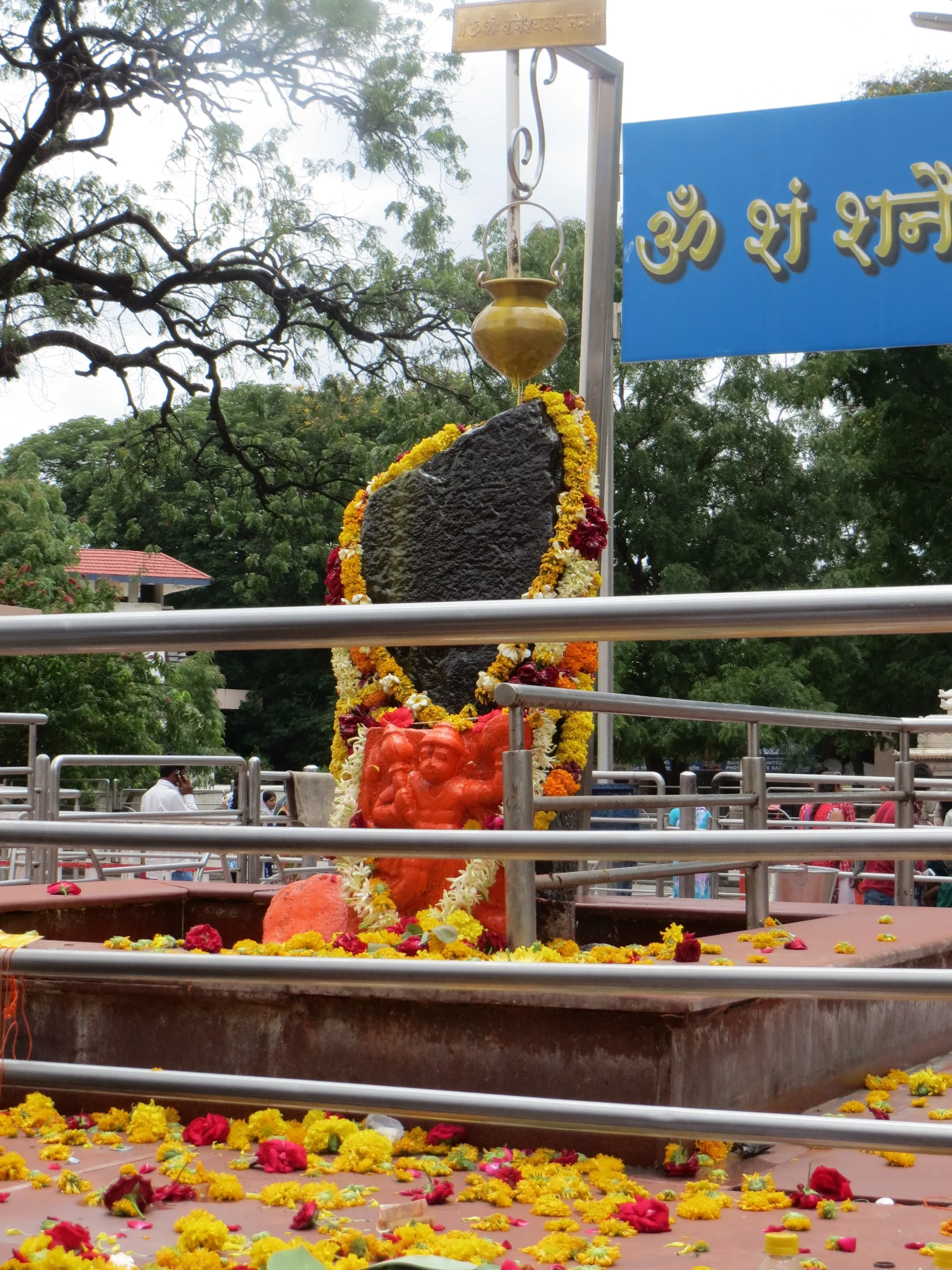
According to tradition, Shani Dev once tested Lord Hanuman's strength. Moved by Hanuman's power and his pure devotion to Lord Rama, Shani promised he would never severely trouble a sincere devotee of Hanuman. This is why reciting the Chalisa on Saturdays is considered one of the best remedies for Sade Sati, Dhaiya and general Shani problems.
Sincere recitation is believed to grant:
- Courage and mental strength
- Protection from fear, anxiety and nightmares
- Removal of obstacles and negative influences
- Relief from planetary afflictions, especially Shani (Saturn), Rahu and Mangal (Mars)
How to Recite for Maximum Protection
- Light a mustard-oil or ghee lamp before Hanuman's image or idol
- Sit facing east or north with a calm, pure mind
- Recite with full devotion — even once daily is powerful
- For strong protection: 11 times daily, or 11 / 21 times every Saturday
- For severe Shani issues: 40 consecutive days, or 108 times on Saturdays
You may offer sindoor, jaggery or black chana (black gram) after the recitation. Recite with pure devotion and a steady heart — even a single sincere reading is said to create a powerful shield of protection.
You might also like
Shani Dev Puja Vidhi: Complete Rituals, Mantras & Saturday Vrat Guide

Sundar Kand: Complete Guide to Tulsidas's 5th Book of Ramcharitmanas, 7-Day Saptaha Paath & Benefits
Hanuman Chalisa — Complete Meaning, Neuroscience & 30-Day NRI Practice Guide for 2026