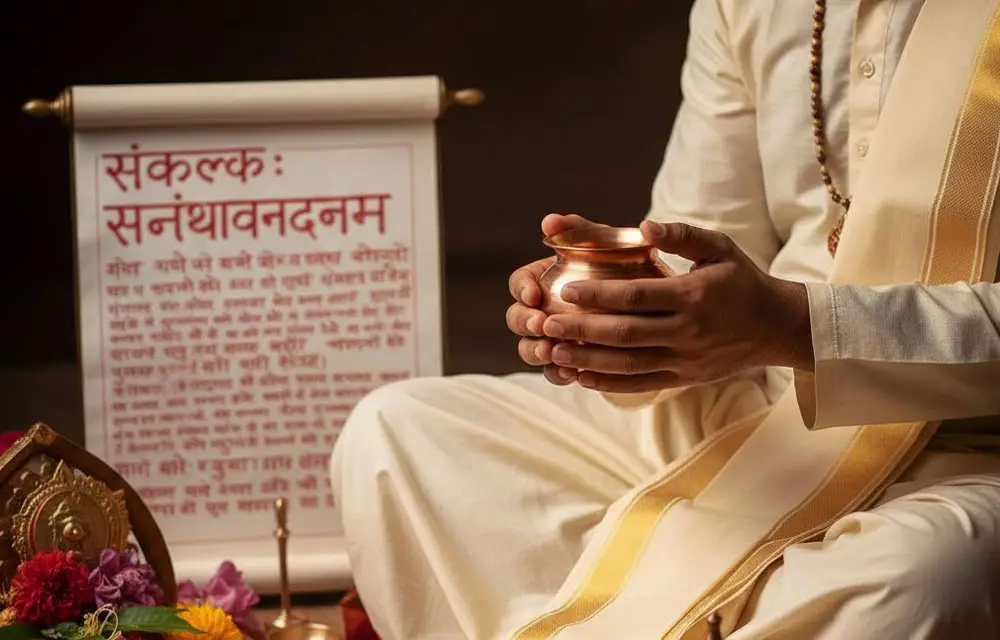
Shiv Tandava Stotram: Ravana's Cosmic Dance Hymn — Lyrics, Meaning & Benefits
Complete guide to the Shiv Tandava Stotram — Ravana's 17-verse Sanskrit hymn for Lord Shiva's cosmic dance. Sanskrit + transliteration + meaning of opening verses, panchachamara meter, origin story, chanting method, benefits, NRI guide, FAQ.
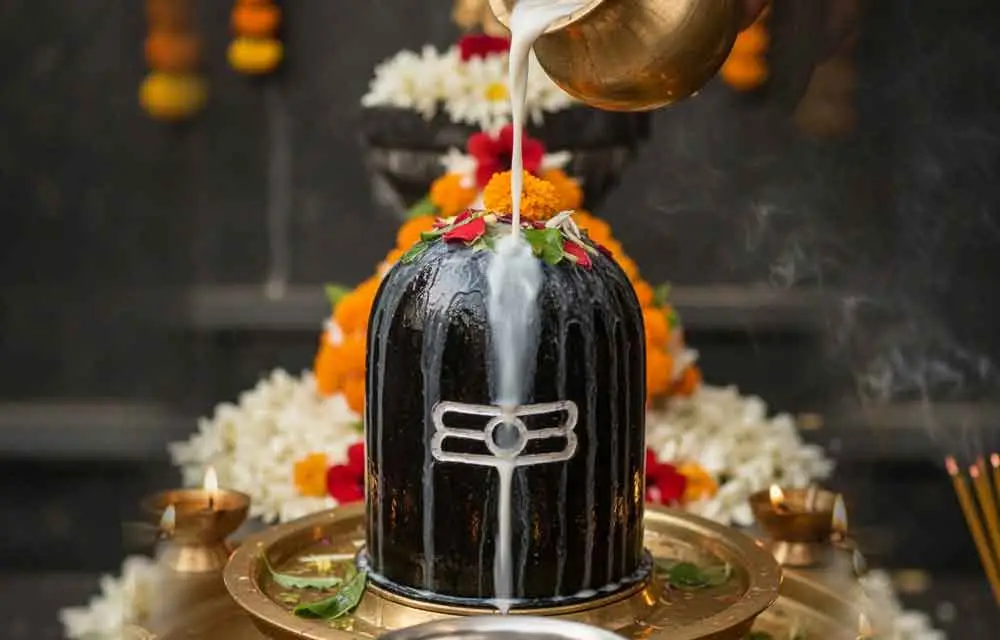
Complete guide to the Shiv Tandava Stotram — Ravana's 17-verse Sanskrit hymn for Lord Shiva's cosmic dance. Sanskrit + transliteration + meaning of opening verses, panchachamara meter, origin story, chanting method, benefits, NRI guide, FAQ.
Of all the Sanskrit hymns dedicated to Lord Shiva, none is more sonically powerful, lyrically dense, or rhythmically electrifying than the Shiv Tandava Stotram — "the hymn of Shiva's cosmic dance." Composed by the demon king Ravana himself while imprisoned beneath Mount Kailasha, this 17-verse Sanskrit masterpiece celebrates the fierce, ecstatic, world-transforming Tandava dance of Lord Shiva. The unique panchachamara meter — eight syllables per quarter-line repeating with thunder-like cadence — makes the hymn impossible to forget once heard.
This complete HinduTone guide covers everything about the Shiv Tandava Stotram — its dramatic Ravana origin story, the panchachamara meter that gives it musical power, the first five verses with Sanskrit + transliteration + meaning, the cosmic Tandava dance it describes, step-by-step chanting method, benefits documented across scripture and modern listeners, and answers to the most frequently asked questions.
🔱 Har Har Mahadev 🔱
What Is the Shiv Tandava Stotram?
The Shiv Tandava Stotram is a Sanskrit devotional hymn of 17 verses (or 17 plus a phalashruti = 18 in some manuscript traditions) that describes and praises Lord Shiva's Tandava — the cosmic dance of creation, preservation, dissolution, and concealment. Each verse paints a vivid sensory image: the matted hair of Shiva swaying as he dances, the Ganga flowing from his head, the snake garland around his neck, the third eye blazing fire, the damaru drum thundering "damad-damad," the kunkuma-smeared bodies of celestial dancers, the saffron radiance, the cremation-ground ashes.
The hymn is composed in the rare and dramatic Panchachamara meter — eight syllables per quarter-line (pada), four pada per verse, with alternating heavy-light syllables that create a hypnotic galloping rhythm. When recited correctly, the stotram's rhythm mimics the very Tandava it describes — the listener feels Lord Shiva's dance through the cadence of the Sanskrit itself.
The Origin Story — Ravana's Composition
The Shiv Tandava Stotram comes from a famous incident in the Ramayana. Ravana — the powerful ten-headed king of Lanka — was a devout Shiva-bhakta despite his demon nature. He undertook to lift Mount Kailasha — Shiva's abode — to demonstrate his strength and as an act of devotion.
Lord Shiva, displeased by this presumption, pressed the mountain down with His toe. Ravana found himself trapped beneath the immense weight of Kailasha. His arms were crushed; he could not move. In that moment of intense pain and humility, Ravana realized the futility of force and pride before the divine.
Ravana then spontaneously composed the Shiv Tandava Stotram — pouring forth verses of breathtaking beauty and devotion, describing Lord Shiva's Tandava dance, His matted hair, His crescent moon, His snake garland, His cosmic compassion. He sang the stotram out of pure devotional ecstasy, accepting his punishment as Shiva's mercy.
Lord Shiva, moved by the hymn's beauty and Ravana's sincere bhakti, lifted Mount Kailasha and freed the demon king. He granted Ravana the gift of Chandrahasa — a divine sword — and a new name: Ravana ("the roarer/wailer") — named after the loud cry Ravana made when crushed under the mountain. The Shiv Tandava Stotram became one of the most enduring offerings of Sanskrit Shaivite literature, demonstrating that even a demon king's pure devotion is welcomed by Lord Shiva.
"There is no devotee — neither the highest nor the lowest, neither saint nor sinner — to whom Lord Shiva does not respond when the devotion is true."
The Panchachamara Meter — Why the Hymn Is So Powerful
Sanskrit poetry uses dozens of meters (chhandas), but the Shiv Tandava Stotram's use of the panchachamara meter (also called nava-rasaka or pramana) is exceptionally rare and dramatic. The meter has these properties:
- Eight syllables per quarter-line (pada) — short and rapid
- Sixteen syllables per half-line, thirty-two per full verse
- Alternating heavy (guru) and light (laghu) syllables — laghu-guru-laghu-guru pattern
- Internal alliteration and assonance compound the rhythm
- The result is a galloping, thunderous, drum-like cadence that mimics Shiva's damaru
When chanted aloud at moderate pace, the panchachamara creates an auditory experience close to actual dance — the listener's breath synchronizes with the verses, the heart rate matches the rhythm, and a meditative state arises naturally. This is why even non-Sanskrit-speaking listeners report being deeply moved by recordings of the stotram — the meter does much of the spiritual work independent of conscious understanding.
The First Five Verses with Sanskrit + Transliteration + Meaning
Of the 17 verses, here are the first five — the foundation of the hymn and the most-recited stanzas:
Verse 1
Sanskrit:
जटाटवीगलज्जलप्रवाहपावितस्थले गलेऽवलम्ब्य लम्बितां भुजङ्गतुङ्गमालिकाम् । डमड्डमड्डमड्डमन्निनादवड्डमर्वयं चकार चण्डताण्डवं तनोतु नः शिवः शिवम् ॥
Transliteration:
Jatatavi-galaj-jala-pravaha-pavita-sthale · Galé-valambya lambitam · Bhujanga-tunga-malikam · Damad-damad-damad-daman-ninada-vad-damar-vayam · Chakara chanda-tandavam · Tanotu nah Shivah Shivam
Meaning: May Lord Shiva, on whose neck the great snake hangs like a garland, in the place sanctified by the flow of water from his forest of matted hair, who with the rhythmic damaru-drum sound — Damad-Damad — performed the fierce Tandava dance, bestow auspiciousness upon us.
Verse 2
Sanskrit:
जटाकटाहसंभ्रमभ्रमन्निलिम्पनिर्झरी विलोलवीचिवल्लरी विराजमानमूर्धनि । धगद्धगद्धगज्ज्वलल्ललाटपट्टपावके किशोरचन्द्रशेखरे रतिः प्रतिक्षणं मम ॥
Transliteration:
Jata-katahasambhrama-bhraman-nilimpa-nirjhari · Vilola-vichi-vallari · Virajamana-murdhani · Dhagad-dhagad-dhagaj-jvalal-lalata-patta-pavake · Kishora-chandra-shekharé · Ratih pratikshanam mama
Meaning: May my mind, every moment, find delight in Lord Shiva, on whose head the divine Ganga flows in turbulent waves, whose forehead is illuminated by the flaming dhagad-dhagad sound of the third-eye fire, and who wears the crescent moon as His crown jewel.
Verse 3
Sanskrit:
धराधरेन्द्रनन्दिनीविलासबन्धुबन्धुर स्फुरद्दिगन्तसन्ततिप्रमोदमानमानसे । कृपाकटाक्षधोरणीनिरुद्धदुर्धरापदि क्वचिद्दिगम्बरे मनो विनोदमेतु वस्तुनि ॥
Transliteration:
Dhara-dharendra-nandini-vilasa-bandhu-bandhura · Sphurad-diganta-santati-pramoda-manamanase · Kripa-kataksha-dhorani-niruddha-durdhar-apadi · Kvachid-digambare mano · Vinodam-etu vastuni
Meaning: May my mind ever rejoice in the supreme reality — Lord Shiva — the beloved companion of the daughter of the Mountain King (Parvati), whose mind delights in extending grace to all directions, whose compassionate sidelong glance dispels even the most insurmountable misfortunes, and who is digambara — clad in the directions themselves.
Verse 4
Sanskrit:
जटाभुजङ्गपिङ्गलस्फुरत्फणामणिप्रभा कदम्बकुङ्कुमद्रवप्रलिप्तदिग्वधूमुखे । मदान्धसिन्धुरस्फुरत्त्वगुत्तरीयमेदुरे मनो विनोदमद्भुतं बिभर्तु भूतभर्तरि ॥
Transliteration:
Jata-bhujanga-pingala-sphurat-phana-mani-prabha · Kadamba-kunkuma-drava-pralipta-dig-vadhumukhe · Mad-andha-sindhura-sphurat-tvag-uttariya-medure · Mano vinodam-adbhutam · Bibhartu bhuta-bhartari
Meaning: May my mind hold its joyful wonder in Lord Shiva, the supporter of all beings — whose head bears the serpent whose jewel emits a tawny radiance like saffron paste smeared on the cardinal directions, and whose upper garment is the skin of a mad elephant.
Verse 5
Sanskrit:
सहस्रलोचनप्रभृत्यशेषलेखशेखर प्रसूनधूलिधोरणी विधूसराङ्घ्रिपीठभूः । भुजङ्गराजमालया निबद्धजाटजूटक श्रियै चिराय जायतां चकोरबन्धुशेखरः ॥
Transliteration:
Sahasra-lochana-prabhrity-asesha-lekha-shekhara · Prasuna-dhuli-dhorani · Vidhusara-anghri-pitha-bhuh · Bhujanga-raja-malaya · Nibaddha-jata-jutaka · Shriyai chiraya jayatam · Chakora-bandhu-shekharah
Meaning: Long live Lord Shiva, the wearer of the crescent moon — friend of the chakora bird — whose feet rest on a seat dusted by the pollen falling from the bowed heads of countless devas including Indra (the thousand-eyed one), whose matted hair is bound by the king of serpents.
Phalashruti (Fruit of Recitation)
The concluding verse of the Shiv Tandava Stotram declares the fruits of its recitation:
स्तुतिमिमामभीष्टदां पठन्ति ये नरा सदा शिवं मेहेश्वरं प्रदान-मेधसा सुयोग-योगिनः । निरयं नरा यथेच्छिकं अमित-धनं भवन्ति शुद्ध-धी प्रसन्न-चित्तता ॥
Meaning: Whoever recites this Shiv Tandava Stotram daily with devotion will be granted by Lord Shiva — wisdom, immense wealth, a clear and joyful mind, freedom from any worldly bondage, and the path to liberation.
How to Chant the Shiv Tandava Stotram
Preparation
- Take a bath and wear clean, preferably white clothes
- Sit on a clean asana facing East or North
- Light a diya (oil lamp) and incense
- Place a Shiva Linga or image of Lord Shiva before you
- Apply vibhuti and kumkum
- Take three deep breaths to calm the mind
- Begin with three repetitions of "Om Namah Shivaya" as invocation
The Chanting Practice
- Recite the stotram aloud — the panchachamara meter requires audible chanting to create its acoustic effect
- Maintain steady, moderate pace — not too slow (loses rhythm), not too fast (loses clarity)
- Pay attention to rhythmic clusters: "Damad-damad-damad-daman" and "Dhagad-dhagad-dhagad-dhagad" should be enunciated with percussive precision
- Allow the meter to carry your breath — don't force the breath
- Visualize Lord Shiva's Tandava as you chant — the matted hair swaying, the third eye blazing, the damaru drum thundering, the cremation ashes glowing in the firelight
- Complete all 17 verses + the phalashruti in one continuous recitation if possible
- After the final verse, sit in silent meditation for 5-10 minutes
- Conclude with three repetitions of "Om Namah Shivaya" and the dedication: "May this devotion benefit all beings."
Pronunciation Tips for the Most Difficult Sounds
- "Jatatavi" — "Ja-ta-ta-vi" (four syllables, dental "ta")
- "Bhujanga-tunga-malikam" — "Bhu-jang-ga-tung-ga-ma-li-kam" (long "ng" sounds)
- "Damad-damad-damad" — short, percussive, clipped
- "Dhagad-dhagad-dhagaj-jvalal" — the "dh" is aspirated; "jvalal" has rolling "l" sounds
- "Sphurad-diganta" — the "sph" sound is challenging; practice it slowly
- "Krpa-kataksha" — soft "krpa" then sharper "kataksha"
- "Digambare" — "Di-gam-ba-ré" (four syllables; "digambara" means "clad in directions" = naked)
- "Mado-andha-sindhura" — flowing "andha" then sharp "sindhura"
Listen to HinduTone's reference recordings to master the rhythm. Even daily 5-minute practice of just the opening verse will train your ear to the panchachamara meter within 2-3 weeks.
When and How Often to Chant
Best Times
- Monday morning — Soma-Tandava combination
- Pradosham evenings — the natural pairing of Pradosham + Tandava
- Maha Shivratri — especially during the Tritiya Prahara (midnight to 3:00 AM)
- During major life transitions — to invoke Shiva's transforming dance
- During grief — the Tandava represents creative destruction, helping process loss
- Brahma Muhurta — most powerful time for any Shiva practice
Frequency
- Minimum — Once per week (Monday morning)
- Standard — Daily once during morning puja
- Deep practice — 11 times daily for 40 days (often used during life crises)
- On Maha Shivratri — chant continuously through one full prahara
Benefits of Chanting the Shiv Tandava Stotram
Spiritual Benefits
- Direct connection with Lord Shiva's most dynamic, creative-destructive aspect — Nataraja, the cosmic dancer
- Acceleration of spiritual transformation — the Tandava itself is the symbol of internal transformation
- Awakening of dormant creative energies (the Tandava represents both destruction of the old and emergence of the new)
- Burning away of accumulated negative karmas (the cremation-ground imagery is symbolic)
- Steady progress toward moksha (liberation)
- Deep familiarity with the Tandava cosmology — a foundational concept for advanced Shaivism
Mental & Emotional Benefits
- Calmness through complexity — the dense Sanskrit creates a "fullness" that paradoxically settles the mind
- Relief from anxiety and existential fear — the cosmic rhythm makes individual worries feel smaller
- Improved focus and concentration through the meter's demands
- Catharsis for grief, anger, or emotional intensity — the fierce energy of the hymn absorbs and transmutes
- Enhanced auditory and rhythmic intelligence (especially in children)
- A sense of being part of something cosmic and timeless
Physical Benefits
- Improved breathing patterns through the meter's pacing
- Strengthened vocal cords from regular aloud chanting
- Reduction in stress markers (cortisol) — similar effect to other Sanskrit mantras
- Better cardiovascular response to stress
- Vibrational massage to internal organs through chest resonance
Worldly Benefits (Per the Phalashruti)
- Wisdom (medhasa)
- Immense wealth and prosperity
- Clear and joyful mind (prasanna-chittata)
- Freedom from worldly bondage
- Family harmony
- Removal of major obstacles
The Tandava — Lord Shiva's Cosmic Dance
The stotram's subject — the Tandava — is one of the most profound concepts in Shaivism. The Tandava is not merely a dance but the cosmic activity of Lord Shiva expressed through five simultaneous functions called the Panchakrtya (five acts):
- Srishti — Creation. Shiva creates the universe in each instant.
- Sthiti — Preservation. Shiva sustains the universe through each instant.
- Samhara — Dissolution. Shiva dissolves the universe in each instant.
- Tirobhava — Concealment. Shiva veils the absolute reality behind apparent diversity (maya).
- Anugraha — Grace/Revelation. Shiva grants liberation by revealing the absolute reality to the devotee.
The Tandava — and by extension the Shiv Tandava Stotram — is the devotee's tool to witness all five acts simultaneously. The dance is not a metaphor — it is the actual cosmic rhythm of existence, and the chant tunes the devotee's awareness to it.
The Seven Types of Tandava
Shaivite tradition identifies seven specific Tandavas, each associated with different functions and depictions:
- Ananda Tandava — The dance of joy, performed at Chidambaram
- Sandhya Tandava — The twilight dance, at the boundary of day and night
- Tripura Tandava — The dance celebrating the destruction of Tripurasura
- Urdhva Tandava — The upward dance, often depicted in Nataraja statues
- Muni Tandava — The dance witnessed by sages
- Gauri Tandava — The dance performed with Parvati (also called Lalita Tandava)
- Samhara Tandava — The fierce destructive dance at the end of cosmic cycles
The Shiv Tandava Stotram refers most directly to the Chanda Tandava — the fierce, dynamic version that combines elements of Ananda and Samhara. This is the most cosmically intense form, and the reason the hymn carries such powerful energy.
Modern Resurgence — The Hymn in Pop Culture
The Shiv Tandava Stotram has experienced an extraordinary modern revival. Several factors have driven its popularity:
- Music — Several classical and devotional artists have recorded versions that have crossed 100 million YouTube views collectively
- Films — The hymn appeared prominently in S.S. Rajamouli's "Bahubali" (2015/17), bringing it to a global audience
- Cricket — Indian cricket fans began chanting the opening verse during matches, especially during Indian Premier League finals
- Youth culture — The thunderous rhythm appeals to younger generations in a way traditional bhajans do not
- Spotify/YouTube — Streaming has made the hymn freely accessible worldwide; the most-streamed version has 500M+ plays
- NRI communities — Hindu youth in the USA, UK, Canada, and Australia have made the hymn a connection point to heritage
Whatever its medium — temple chanting, classical music, devotional recordings, or stadium crowds — the Shiv Tandava Stotram has become a unifier of Hindu identity across generations and continents.
Common Mistakes to Avoid
- Reciting too fast — the meter is dramatic but mispronunciation negates the benefit. Better to chant 1 verse correctly than 17 incorrectly
- Mispronouncing the conjunct consonants ("sph", "dhag", "jval") — these carry specific vibrational properties
- Skipping the phalashruti — this is where the explicit benefits are declared
- Treating the stotram as performance — it is a sadhana, not a show
- Ignoring the breath patterns — let the meter dictate breathing, don't force the breath into the meter
- Comparing your recitation with others — even small daily practice yields enormous merit
- Stopping during difficult times — those are exactly when the stotram's transformative power is most needed
Shiv Tandava Stotram for NRI Hindus
NRI Hindus across the USA, UK, Canada, UAE, Australia, Singapore can chant the Shiv Tandava Stotram with full devotion from any home:
- Begin with audio recordings — internalize the panchachamara meter before attempting recitation
- Learn one verse per week — by 17-18 weeks (4 months), you can recite the entire hymn
- Family practice — many NRI families gather Monday evenings for joint recitation; teaches children Sanskrit + heritage
- Wedding/special occasions — recite at family functions to invoke Lord Shiva's blessings
- Maha Shivratri — the all-night vigil is the perfect occasion for repeated Shiv Tandava recitation
- Connect with local temples — most BAPS, ISKCON, and community Hindu temples in NRI hubs hold group recitation sessions
- Use commute time — many NRIs play the hymn during their morning drive; the rhythm helps with mental alertness
Combining with Other Shiva Practices
The Shiv Tandava Stotram pairs powerfully with broader Shaivite practices:
- Morning — Lingashtakam + Shiv Tandava Stotram + Om Namah Shivaya 108 times
- Monday (Somavar Vrat) — Bilvashtakam + Shiv Tandava Stotram + extended chanting
- Pradosham — Pradosha Stotra + Shiv Tandava during evening puja
- Maha Shivratri — Shiv Tandava during Tritiya Prahara (midnight to 3:00 AM) — most powerful time
- During grief — Shiv Tandava represents the cycle of destruction and renewal — daily recitation helps process loss
- During illness — Maha Mrityunjaya Mantra + Shiv Tandava combination for healing + transformation
Also read: the ten heads of Ravana explained.
Frequently Asked Questions
Q1. Can women recite the Shiv Tandava Stotram?
Yes, absolutely. The stotram is open to all devotees. There is no scriptural restriction. Women — including saints like Akka Mahadevi — have recited the Shiv Tandava Stotram throughout history.
Q2. Do I need to know Sanskrit to chant it?
No. The Sanskrit sound itself carries spiritual potency independent of intellectual understanding. Listen to recordings, internalize the rhythm, and chant the transliteration with sincere devotion. Understanding the meaning enhances but doesn't condition the benefit.
Q3. How long does it take to chant the full stotram?
Approximately 5-7 minutes at moderate devotional pace. Some classical recordings stretch it to 8-10 minutes for musical effect.
Q4. Is it okay to listen rather than recite?
Yes — shravana (listening) is itself a form of worship. Many devotees who cannot yet recite the dense Sanskrit text begin with listening and gradually transition to recitation. The vibrational benefit operates similarly in both modes.
Q5. Why was a demon (Ravana) allowed to compose such a holy hymn?
Lord Shiva's grace transcends moral categories. Ravana was a complex figure — a great Shaivite, a brilliant scholar, and yes, a tyrant whose pride led him to ruin. The stotram's composition under Mount Kailasha represents the moment Ravana transcended his demonic nature through pure devotion. The hymn's acceptance by Shiva is a teaching: divine grace is available to anyone with sincere devotion, regardless of past karma.
Q6. What if I cannot recite the entire 17 verses?
Start with the first verse only. Master it. Then add a second. Within 4-6 months, you can recite the entire hymn. Even reciting only the opening verse daily yields significant spiritual benefit.
Q7. Can children learn the Shiv Tandava Stotram?
Yes, and the panchachamara meter's rhythm actually appeals to children's natural sense of rhythm. Many NRI parents teach children one verse at a time as a beautiful way to introduce Sanskrit and Hindu heritage. Children who memorize even 5-6 verses develop a lifelong connection to Lord Shiva.
Q8. Is the stotram appropriate during periods of mourning?
Yes — particularly so. The Tandava represents the cosmic cycle of destruction and renewal. Reciting the stotram during grief transforms the personal experience of loss into participation in the universal rhythm of existence. Many devotees find profound comfort in the hymn during bereavement.
Begin Your Shiv Tandava Stotram Practice
The Shiv Tandava Stotram is unique among Sanskrit hymns — its meter, its imagery, its origin story, and its capacity to transport the listener into the very cosmic dance it describes. Whether you chant it once daily, once weekly on Monday, or only on Maha Shivratri night, the hymn rewards every effort with depths that unfold over years of practice.
Begin tomorrow. Listen to a quality recording of the opening verse. Sit before a Shiva Linga or simply face East. Let the panchachamara rhythm — Damad-damad-damad-daman — fill your morning. Within a month, you will feel the cosmic dance not as something distant but as the very heartbeat of your own existence.
🔱 Har Har Mahadev — Om Namah Shivaya 🔱
Related Reading on HinduTone
- How to Chant Lingashtakam on Monday – Complete Guide
- Bilvashtakam Lyrics, Meaning, and Monday Puja Guide
- Maha Mrityunjaya Mantra: Lyrics, Meaning & How to Chant
- Om Namah Shivaya: 108 Times Chanting Benefits & Method
- Best Shiva Songs and Bhajans for Monday Morning – NRI Guide
- Somavar Vrat Katha: The Complete Monday Fast Story
- Pradosham: Complete Guide to Monday Shiva Puja
- Maha Shivratri 2026 Complete Puja Guide
You might also like
Rudrashtakam Stotram: Tulsidas's 8-Verse Shiva Hymn — Lyrics, Meaning & Benefits
Maha Mrityunjaya Mantra: Lyrics, Meaning, Benefits, and How to Chant — Complete Guide
Bilvashtakam Lyrics, Meaning, and Monday Puja Guide – Complete Shiva Devotional