How to Begin Studying Sanatana Dharma: A Complete Learning Path
Quick answer: Start with the basics and the stories, then the Bhagavad Gita, then the Upanishads and philosophy. A practical order is: (1) a simple overview of Hindu beliefs and practice; (2) the Ramayana and Mahabharata in a good retelling; (3) the Bhagavad Gita with a traditional commentary; (4) t
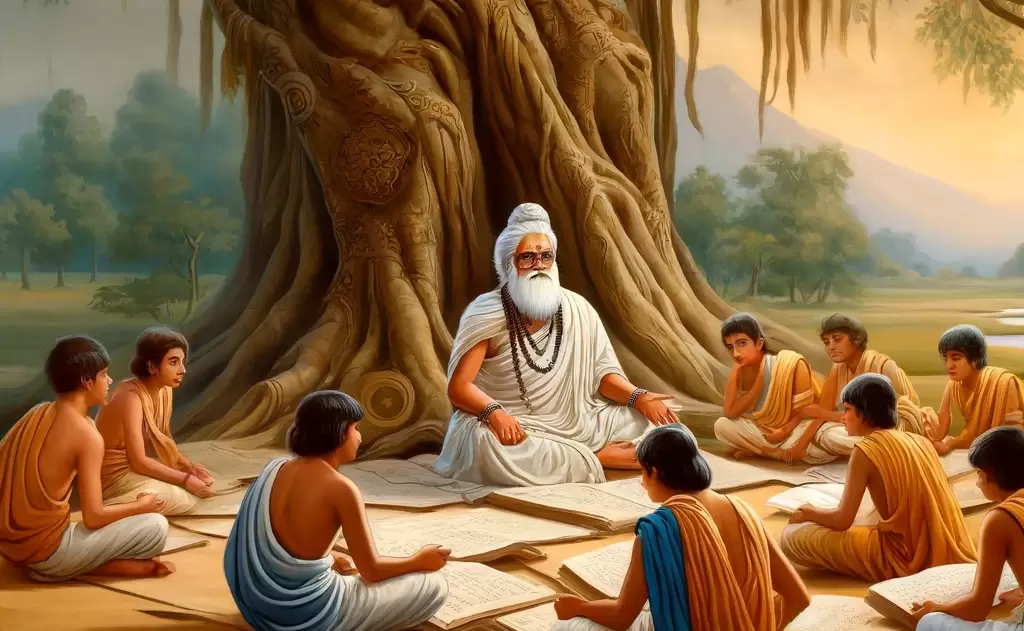
Quick answer: Start with the basics and the stories, then the Bhagavad Gita, then the Upanishads and philosophy. A practical order is: (1) a simple overview of Hindu beliefs and practice; (2) the Ramayana and Mahabharata in a good retelling; (3) the Bhagavad Gita with a traditional commentary; (4) the principal Upanishads; (5) the Puranas, especially the Srimad Bhagavatam; (6) the schools of philosophy. Read a little every day, use reliable translations, keep a practice alongside study, and, when you can, learn from a qualified teacher in a living tradition.
Hindu scripture is vast, and many people do not know where to begin. Some start with a difficult Upanishad and give up; others read only social-media quotations. This guide gives a calm, step-by-step path that works for teenagers, busy professionals and families abroad. It recommends no single organisation; it names well-known, widely used resources from several traditions.
The Learning Path at a Glance
| Stage | Focus | Why at this point |
|---|---|---|
| 1 | Basics: beliefs, practices, terms | You need the vocabulary first |
| 2 | Itihasas: Ramayana and Mahabharata | Stories carry the values and context for everything else |
| 3 | Bhagavad Gita | The most accessible summary of Hindu philosophy and practice |
| 4 | Principal Upanishads | The philosophical heart of the Vedas |
| 5 | Puranas, especially the Bhagavatam | Devotion, cosmology and the lives of the avataras |
| 6 | Darshanas: Vedanta, Yoga, Samkhya and others | Systematic thought and debate |
| 7 | Sanskrit, the Vedas and the Agamas | Deeper study, ideally with a teacher |
Stage 1: Learn the Basics
Begin with clear overviews of the key ideas: Brahman and atman, dharma, karma, samsara and moksha, the deities, worship and the main traditions. On HinduTone you can start with:
- What Is Sanatana Dharma? A Complete Beginner's Guide
- What Is Dharma?
- Hindu Scriptures Explained: Shruti and Smriti
- Shaiva, Vaishnava, Shakta and Smarta Traditions
A good academic overview is Gavin Flood's An Introduction to Hinduism (Cambridge University Press, 1996).
Stage 2: The Epics
The Ramayana and Mahabharata are the shared memory of Hindu civilisation. Their characters are the examples every later teacher uses.
- Start with a faithful abridged retelling, such as C. Rajagopalachari's Ramayana and Mahabharata (Bharatiya Vidya Bhavan).
- Then read the Valmiki Ramayana in a verse-by-verse translation; the Valmiki Ramayana project at IIT Kanpur gives the text with translation online: valmiki.iitk.ac.in.
- For the Mahabharata, a complete translation such as Bibek Debroy's unabridged translation (Penguin) rewards slow reading over a year or two.
Stage 3: The Bhagavad Gita
The Gita's 700 verses summarise Hindu teaching on duty, devotion, knowledge and the Self. Read it at least twice:
- Once quickly, in a clear translation, to see the whole.
- Once slowly, a few verses a day, with a traditional commentary.
The Gita Supersite at IIT Kanpur gives every verse with several classical commentaries (Shankara, Ramanuja, Madhva and others) and translations: gitasupersite.iitk.ac.in. Widely used print editions come from the Gita Press, the Chinmaya Mission, the Ramakrishna Order and other traditions. See Bhagavad Gita for Beginners: All 18 Chapters.
Stage 4: The Upanishads
Begin with the short principal Upanishads, in this order:
| Order | Upanishad | Why |
|---|---|---|
| 1 | Isha | 18 verses: the whole of Vedanta in miniature |
| 2 | Katha | The story of Nachiketa and Yama; vivid and accessible |
| 3 | Kena | Short; who is the knower behind the mind? |
| 4 | Mundaka | The two kinds of knowledge |
| 5 | Mandukya | Om and the four states of consciousness |
| 6 | Taittiriya | The five sheaths and the bliss of Brahman |
| 7 | Chandogya and Brihadaranyaka | Long and rich; read last |
HinduTone guides: Isha Upanishad: The 18 Verses Explained, Katha Upanishad: Nachiketa and Yama and What Are the 108 Upanishads?. Reliable translations include Patrick Olivelle's Upaniṣads (Oxford World's Classics) and Swami Gambhirananda's Eight Upanishads with Shankara's commentary (Advaita Ashrama).
Stage 5: The Puranas
The Puranas teach through stories of the gods, sages and kings. The Srimad Bhagavatam is the most widely studied; the Vishnu, Shiva and Devi Bhagavata Puranas are important in their traditions. See Srimad Bhagavatam: The 12 Skandhas and The Puranas: A Complete Guide.
Stage 6: Philosophy
Now the systematic schools make sense:
- Six Schools of Hindu Philosophy
- Advaita vs Vishishtadvaita vs Dvaita
- Brahman, Atman and Maya Explained
M. Hiriyanna's Outlines of Indian Philosophy (1932, reprinted by Motilal Banarsidass) remains a clear, balanced survey. For any single school, read its own classic texts in translation, preferably guided by a teacher of that school.
Stage 7: Going Deeper
- Sanskrit: even basic Sanskrit transforms your reading. Many organisations run spoken-Sanskrit and online courses.
- The Vedas: the Samhitas are best approached through a teacher; Vedic chanting is learned orally. See The Four Vedas Explained.
- Agamas and temple traditions: for those drawn to worship and temple life.
A 12-Month Study Plan
| Month | Read | Daily time |
|---|---|---|
| 1 | Basics pages and one overview book | 15 minutes |
| 2–3 | Ramayana (retelling, then selected Valmiki chapters) | 15–20 minutes |
| 4–5 | Mahabharata (retelling) | 15–20 minutes |
| 6–7 | Bhagavad Gita, slowly, with a commentary | 2–3 verses a day |
| 8–9 | Isha, Katha, Kena and Mundaka Upanishads | 20 minutes |
| 10 | Selected stories from the Bhagavatam | 15 minutes |
| 11 | Six schools and the three Vedanta schools | 20 minutes |
| 12 | Review; choose one text for deep study next year | 20 minutes |
Study Habits That Work
- Little and often. Ten minutes daily beats three hours once a month. This is svadhyaya, daily self-study, one of the five daily duties.
- Read with a notebook. Write one idea and one question each day.
- Read in a group. Family or friends' study circles (satsang) keep you going.
- Practise what you read. The tradition insists that study and practice go together: puja, japa, meditation and service.
- Prefer original texts and named translators over unsourced quotations online.
- Respect the traditions. Different sampradayas read the same verse differently; learn one well before comparing.
Finding a Teacher
The Upanishads stress learning from a teacher who knows the scriptures and is established in Brahman (Mundaka Upanishad 1.2.12). Look for teachers who belong to a recognised lineage (sampradaya), teach the texts systematically, do not charge for spiritual promises, and encourage your own understanding. Many traditional mathas, missions and temple study groups run classes in person and online.
Common Mistakes to Avoid
- Starting with the hardest texts, such as the Brihadaranyaka or the Brahma Sutras.
- Relying on quotations without checking the source and context.
- Treating one commentary as the only possible reading.
- Studying without any practice.
- Giving up when a passage is hard: mark it and return later.
Frequently Asked Questions
Where should a beginner start with Hindu scriptures?
With a simple overview and the epics, then the Bhagavad Gita. Leave the longer Upanishads and philosophical texts for later.
Do I need to learn Sanskrit?
No. Good translations are enough to begin. Learning some Sanskrit deepens your study later.
Can I study Sanatana Dharma without a guru?
You can begin on your own with good translations. The tradition strongly recommends a qualified teacher for deeper study, especially of the Upanishads and Vedanta.
Which translation of the Gita is best?
There is no single best. Choose one with the Sanskrit, a word-by-word meaning and a traditional commentary, and compare a second translation when a verse is unclear.
How long does it take?
The basics, the epics and the Gita can be covered in a year at fifteen to twenty minutes a day. Deeper study is lifelong.
Related Reading on HinduTone
- What Is Sanatana Dharma? A Complete Beginner's Guide
- Hindu Scriptures Explained: Shruti and Smriti
- The Four Vedas Explained
- Samkhya Philosophy Explained
- Hinduism for Kids: A Simple Guide
Sources
- Gita Supersite, IIT Kanpur (Bhagavad Gita text, translations and classical commentaries): gitasupersite.iitk.ac.in
- Valmiki Ramayana, IIT Kanpur (text and translation): valmiki.iitk.ac.in
- Patrick Olivelle (tr.), Upaniṣads, Oxford World's Classics, 1996 (Mundaka 1.2.12).
- Gavin Flood, An Introduction to Hinduism, Cambridge University Press, 1996.
- M. Hiriyanna, Outlines of Indian Philosophy, George Allen & Unwin, 1932.
Last reviewed: 12 November 2026.
Share this with family and friends
Send it on WhatsApp, post it, or copy the link.
More from Hinduism
- Dvaita Philosophy Explained: Madhvacharya's Vedanta of Difference
- Vishishtadvaita Explained: Ramanuja's Philosophy of Qualified Non-Dualism
- The Swastika in Hinduism: Meaning and History
- Hindu Symbols and Their Meanings
- Shiva Purana: Structure and Main Stories