A Hindu Day: Daily Practices from Waking to Sleep
Quick answer: A traditional Hindu day (dinacharya) is built around remembering God at its turning points. Many families wake early, ideally in the hour and a half before sunrise (brahma muhurta), say a short prayer on waking, bathe, apply a tilak, light a lamp at the home shrine and offer a simple p
Quick answer: A traditional Hindu day (dinacharya) is built around remembering God at its turning points. Many families wake early, ideally in the hour and a half before sunrise (brahma muhurta), say a short prayer on waking, bathe, apply a tilak, light a lamp at the home shrine and offer a simple puja. Food is offered to God before it is eaten. At dusk a lamp is lit again with prayers, and the day ends with a short prayer before sleep. Through the day, the five daily duties (pancha mahayajna) remind a household of its debts to God, sages, ancestors, other beings and guests.
No single rulebook governs every Hindu home. Customs vary by region, sampradaya, family and stage of life, and the scriptures themselves allow for circumstance (desha, kala). What follows is a broad, practical picture that most traditions would recognise, with suggestions for busy families and those living abroad. For the step-by-step puja itself, see How to Perform Hindu Puja at Home.
The Day at a Glance
| Time | Practice | Purpose |
|---|---|---|
| Before sunrise | Wake in brahma muhurta; prayer on waking | Begin the day with God, when the mind is quiet |
| Early morning | Bath, tilak, lighting the lamp, morning puja | Purity and offering |
| Sunrise | Prayers at dawn; offering water to the Sun in many families | Gratitude to the source of light and life |
| Morning | Study or recitation (a few verses of the Gita, a stotra) | Svadhyaya, keeping scripture alive |
| Meals | Offer food to God first; a short prayer before eating | Eating as prasada |
| Work hours | Doing one's duty well, without attachment to results | Karma yoga |
| Dusk | Lighting the evening lamp; family prayers or bhajans | Welcoming light as darkness falls |
| Night | Reflection, a short prayer before sleep | Closing the day with gratitude |
1. Waking: Brahma Muhurta
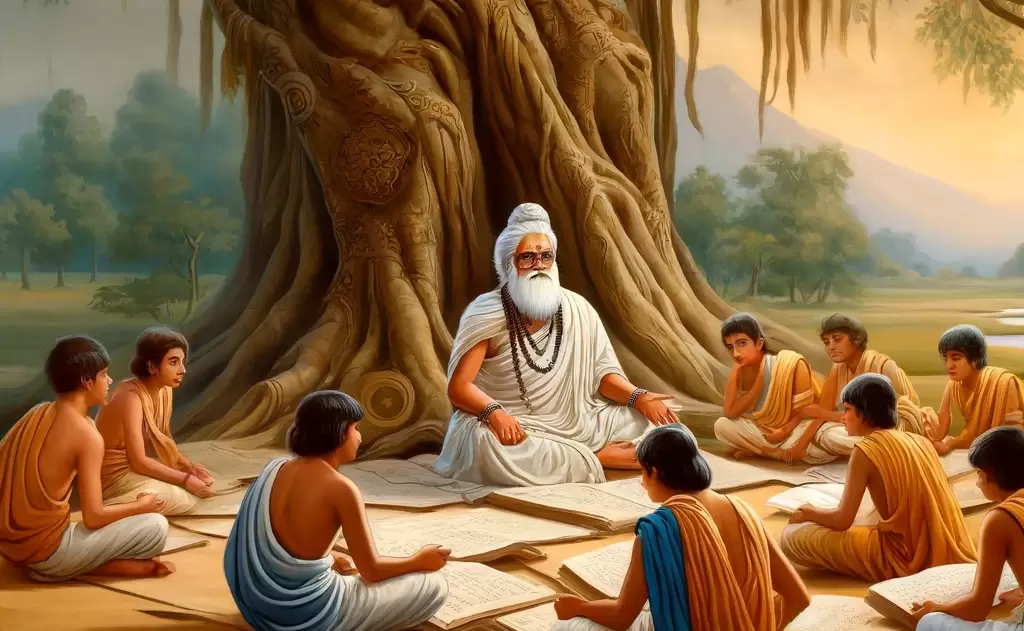
Ayurvedic and dharma texts recommend rising in brahma muhurta, the period of roughly ninety-six minutes (two muhurtas) before sunrise. It is regarded as the best time for prayer, meditation and study, when the mind is calm.
Many Hindus begin the day with a short verse while looking at the palms of their hands. The verse, widely taught to children, says that Lakshmi dwells at the fingertips, Saraswati in the middle of the hand and Govinda (or Gauri, in some versions) at its base, so that one's own hands are seen as a place of the Divine and of honest work. Another common prayer, said before stepping on the floor, asks forgiveness of Mother Earth for touching her with one's feet. Families learn these in slightly different wordings; a few such prayers are collected in 10 Essential Prarthana Slokas.
2. Bath and Purity
A bath (snana) before worship is a near-universal Hindu custom. Many people recall the sacred rivers while bathing, imagining the water as the Ganga, Yamuna, Godavari, Saraswati, Narmada, Sindhu and Kaveri. After bathing, clean clothes are worn for puja.
Tilak: a mark is then applied to the forehead. Its form tells you the tradition: three horizontal lines of vibhuti for Shaiva families, a vertical namam for Vaishnava families, a kumkum dot for many others. See Hindu Symbols and Their Meanings.
3. Morning Puja at the Home Shrine
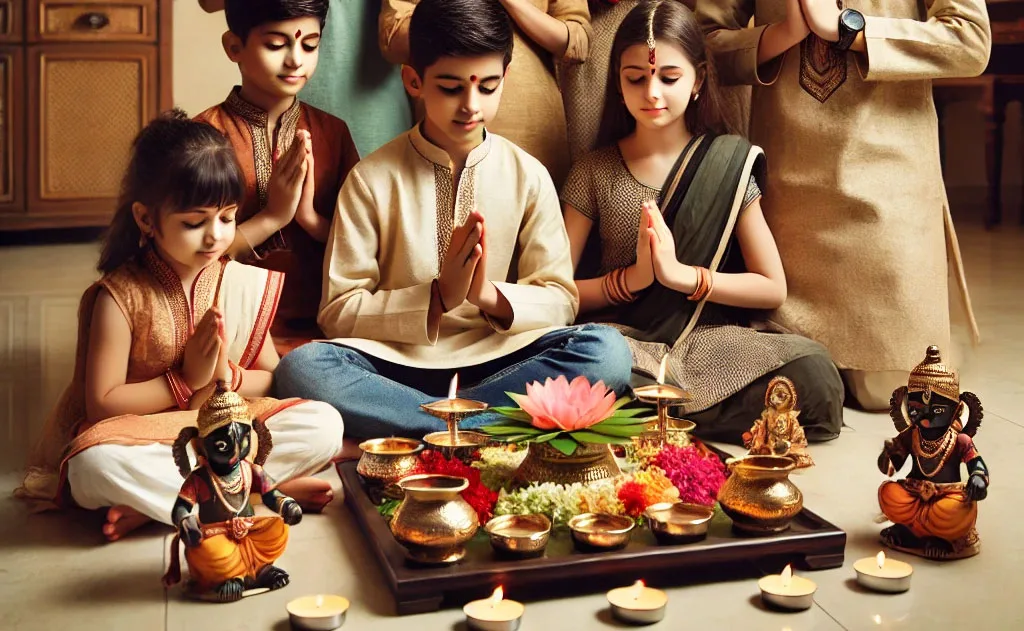
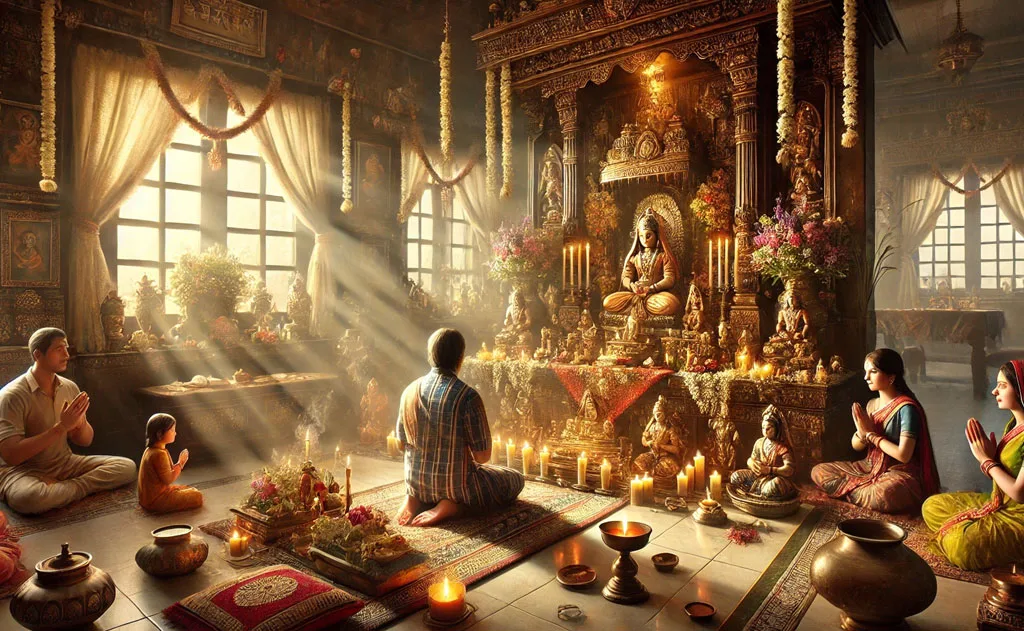
The home shrine, however small, is the centre of the Hindu day. A simple morning worship includes:
- Cleaning the shrine and removing yesterday's flowers.
- Lighting the lamp (deepa) and incense.
- Remembering Ganesha first, then the family deity (ishta or kula devata).
- Offering water, flowers, and if possible some fruit or sweet as naivedya.
- Reciting a prayer, mantra or a few names of God.
- Aarti, and a bow (namaskara).
It can take five minutes or an hour. For short versions, see Daily Puja for Busy People: 5-Minute Rituals.
At sunrise: many Hindus face the rising Sun with folded hands, and some offer water from a small vessel. Families that keep the Vedic twilight rite perform sandhyavandanam at dawn, noon and dusk, as their tradition and initiation direct.
Tulsi: in many Vaishnava and North Indian homes, the tulsi plant is watered, a lamp is lit before it and it is circled in pradakshina.
4. The Five Daily Duties (Pancha Mahayajna)
The Shatapatha Brahmana and the Dharmashastras describe five "great sacrifices" that every householder owes each day. They are less about elaborate ritual than about remembering what we owe:
| Duty | Owed to | Simple modern form |
|---|---|---|
| Brahma yajna (Rishi yajna) | The sages and scripture | Read or recite a few verses each day |
| Deva yajna | The gods | Daily puja; a lamp and an offering |
| Pitri yajna | Ancestors | Remembering and honouring them; tarpana on the days the family observes |
| Bhuta yajna | All living beings | Feeding birds, animals or a cow; care for nature |
| Manushya (Nri) yajna | Fellow human beings, guests | Hospitality, feeding the hungry, giving in charity |
See The Four Ashramas for why the householder carries these duties.
5. Meals as Prasada
In a Hindu home food is first offered to God, then eaten as prasada, blessed food. Many people sprinkle a little water around the plate and say a short prayer before eating. A very common one is Bhagavad Gita 4.24, which says that the act of offering, the offering, the fire and the one who offers are all Brahman. Others say a prayer of thanks in their own language.
Traditional guidance also asks us to eat with gratitude, not waste food, share with others and, for many families, prefer sattvic (pure, fresh, vegetarian) food.
6. Work as Worship
The Bhagavad Gita teaches that one's own duty, done well and offered to God without attachment to its fruits, is itself spiritual practice (karma yoga). For a student that means study; for a parent, caring for the family; for a professional, honest and skilful work. Read What Is Dharma? for more.
7. Dusk: The Evening Lamp
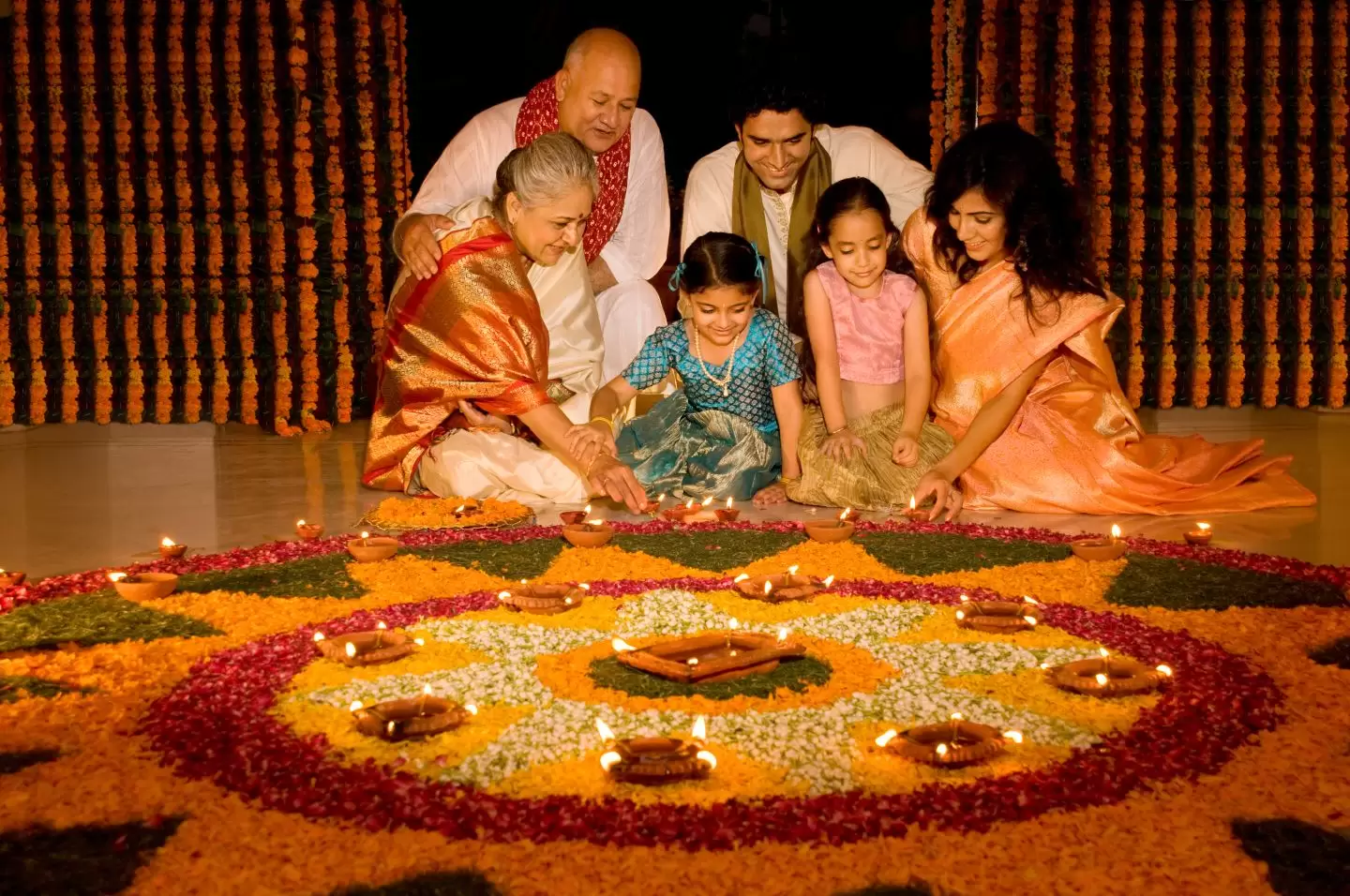
At sandhya, the meeting of day and night, many households light a lamp at the shrine and at the door. Children are often taught a short lamp prayer, and in some homes the family gathers for bhajans, a stotra or the evening aarti. In South India the lamp is often lit at the threshold; in many North Indian homes, the evening aarti is the main family worship.
8. Before Sleep
The day closes with a few minutes of reflection: thanks for the day, asking forgiveness for mistakes, and a prayer or the name of God. Some families read a story from the Ramayana, Mahabharata or Bhagavatam to the children at bedtime.
Special Days in the Week, Month and Year
The daily rhythm sits inside a larger calendar:
- Weekdays are associated with particular deities, such as Monday with Shiva and Saturday with Shani and Hanuman. See Hindu Days of the Week.
- Ekadashi, twice a month, is a day of fasting for many.
- Festivals and samskaras mark the year and the life cycle; see The 16 Samskaras.
Keeping a Hindu Day Abroad
Work schedules, small apartments and long commutes make the full routine hard for many families outside India. A realistic plan:
- A five-minute morning: a lamp (or an LED diya where flames are not allowed), one prayer, one bow.
- One family moment a day: evening aarti or a bedtime story rather than a long ritual.
- Commute recitation: listen to or recite the Vishnu Sahasranama, Hanuman Chalisa or a Gita chapter.
- Weekend temple visit in place of daily visits.
- Keep the spirit of the five duties: a few verses read, a call to an elder, a donation, a meal shared.
Tradition values sincerity over elaborate form. Doing a little every day is better than doing a lot occasionally. For more ideas, see Incorporating Hindu Practices into Modern Life.
Frequently Asked Questions
What time is brahma muhurta?
Roughly the ninety-six minutes before sunrise, so the exact clock time changes with the date and your location. Many people simply aim to wake about an hour and a half before local sunrise.
Do all Hindus follow the same daily routine?
No. Practice varies by region, sampradaya, family and stage of life. The common thread is remembering God at waking, worship, meals and nightfall.
Can I do puja without a bath?
Bathing before puja is the traditional norm. When illness, travel or circumstance prevents it, many teachers say that washing hands, feet and face and remembering God with sincerity is acceptable. Follow your family's guidance.
What are the five daily duties of a Hindu householder?
The pancha mahayajna: study of scripture (to the sages), worship (to the gods), remembrance of ancestors, feeding other living beings, and hospitality to human beings.
Is it necessary to have a home shrine?
It is not compulsory, but most Hindu homes keep one, even a small shelf with a picture or murti and a lamp. It gives the day a centre.
Related Reading on HinduTone
- How to Perform Hindu Puja at Home
- Daily Puja for Busy People: 5-Minute Rituals
- Why Hindus Worship Murtis
- Bhakti Yoga and the Nine Forms of Devotion
- What Is Sanatana Dharma? A Complete Beginner's Guide
Sources
- Gavin Flood, An Introduction to Hinduism, Cambridge University Press, 1996 (domestic worship, pancha mahayajna).
- Patrick Olivelle (tr.), The Law Code of Manu, Oxford World's Classics, 2004 (chapter 3, the five great sacrifices of the householder).
- Bhagavad Gita 3.9–3.16 and 4.24, text and translations at the Gita Supersite, IIT Kanpur: gitasupersite.iitk.ac.in
- Ministry of AYUSH, Government of India, guidance on daily routine (dinacharya) in Ayurveda: ayush.gov.in
Last reviewed: 12 November 2026.
Share this with family and friends
Send it on WhatsApp, post it, or copy the link.
More from Hinduism
- Vishishtadvaita Explained: Ramanuja's Philosophy of Qualified Non-Dualism
- The Swastika in Hinduism: Meaning and History
- Hindu Symbols and Their Meanings
- Shiva Purana: Structure and Main Stories
- Atharvaveda: What It Contains and Why It Matters