
Skanda Sashti 2026 (Kanda Sashti): Soora Samharam Date 15 November, Shashthi Tithi by City, Six-Day Vratam, Story and Tiruchendur
Skanda Sashti 2026 falls on Sunday 15 November 2026, the day of Soora Samharam. The six-day Kanda Sashti vratam begins on Tuesday 10 November. This guide gives the day-by-day tithi table for New Delhi, the Shashthi tithi in local time for the USA, Canada, the UK, the Gulf, Singapore, Malaysia and Australia, the story of Murugan and Surapadman as commonly told, how the fast is kept, the Tiruchendur tradition and tips for NRI families.
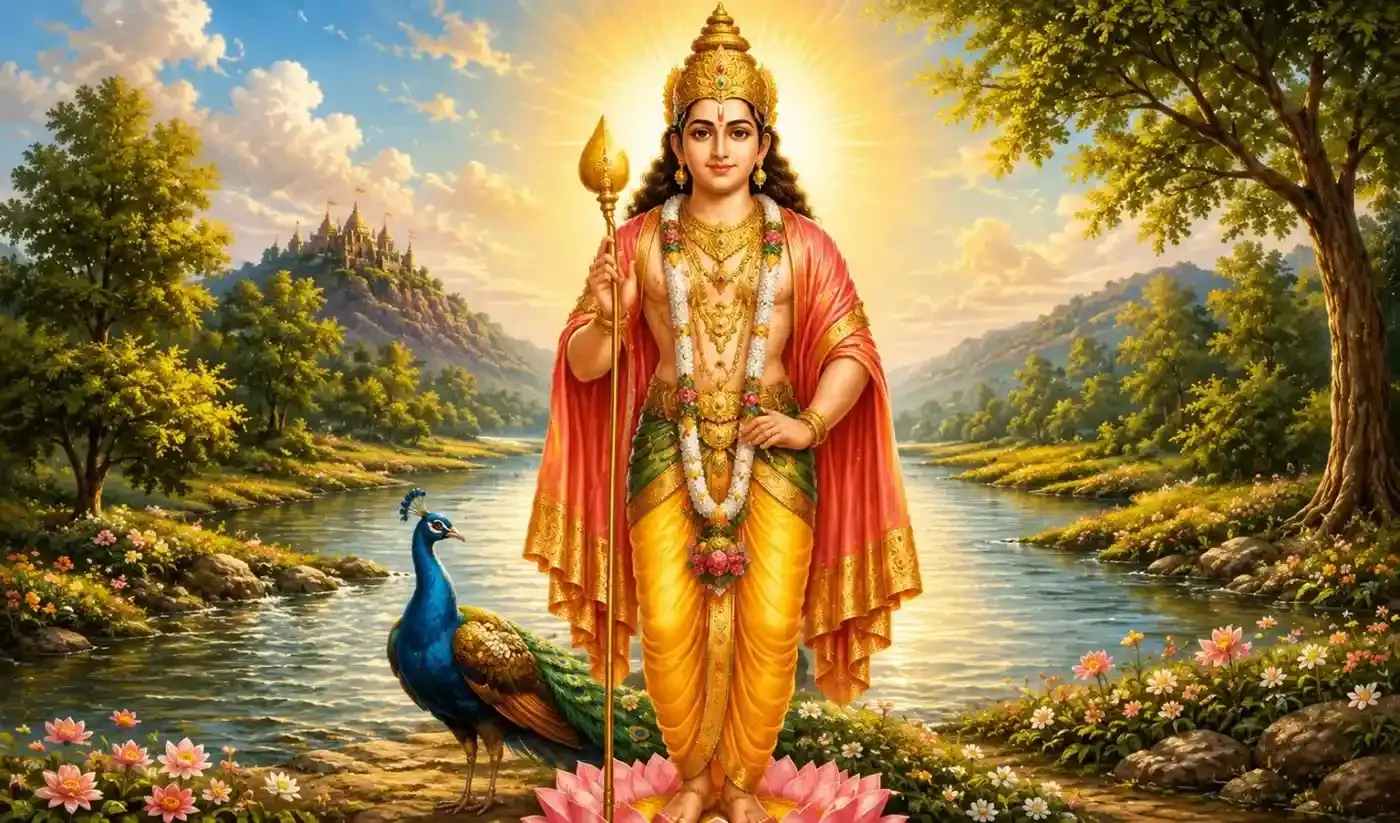
Quick answer: Skanda Sashti 2026 falls on Sunday 15 November 2026, the day of Soora Samharam. The six-day Kanda Sashti vratam starts on Tuesday 10 November 2026 (Kartika Shukla Pratipada) and ends on Sashti, 15 November. Drik Panchang for New Delhi lists Skanda Sashti and Soora Samharam together on 15 November. Shashthi tithi lasts until 02:00 AM on 16 November (IST).
Skanda Sashti is the most important yearly festival of Lord Murugan, also called Skanda, Kartikeya, Subrahmanya and Kumara. It celebrates his victory over the demon Surapadman. The festival is strongest in Tamil Nadu and among Tamil communities in Sri Lanka, Malaysia, Singapore and other countries.
Skanda Sashti is also called Kanda Sashti, Kandha Shashti and, by many devotees, Maha Kanda Shashti. The last day of the six-day vratam is Soora Samharam.
Last updated: 15 November 2026. We have added the Shashthi tithi in local time for cities abroad (with the 2026 western Canada clocks), a verse from the Subrahmanya Bhujangam and a note on the Telugu Subrahmanya Shashti, which falls in December.
Skanda Sashti 2026 kab hai? Date and day-by-day tithi table
The table below follows Drik Panchang for New Delhi. Times are in IST. Sunrise and sunset apply to New Delhi only; for cities abroad, see the local-time table further down.
| Vratam day | Date (2026) | Tithi and end time (New Delhi, IST) | Sunrise / sunset (New Delhi) |
|---|---|---|---|
| Day 1 | Tue 10 Nov | Shukla Pratipada upto 02:00 PM | 06:40 AM / 05:30 PM |
| Day 2 | Wed 11 Nov | Dwitiya upto 03:53 PM | 06:40 AM / 05:29 PM |
| Day 3 | Thu 12 Nov | Tritiya upto 06:09 PM | 06:41 AM / 05:29 PM |
| Day 4 | Fri 13 Nov | Chaturthi upto 08:42 PM | 06:42 AM / 05:28 PM |
| Day 5 | Sat 14 Nov | Panchami upto 11:23 PM | 06:43 AM / 05:28 PM |
| Day 6: Skanda Sashti, Soora Samharam | Sun 15 Nov | Shashthi upto 02:00 AM, 16 Nov | 06:44 AM / 05:28 PM |
Shashthi tithi begins when Panchami ends, at 11:23 PM on Saturday 14 November, and continues until 02:00 AM on Monday 16 November (New Delhi, IST). Because Shashthi covers the whole of Sunday 15 November, that is the festival day in the Drik listing.
Skanda Sashti 2026 abroad: Shashthi tithi in your time zone
A tithi begins and ends at the same moment everywhere, so this table shows that moment in each city's own 2026 clock. In the Americas, Shashthi is current at sunset on Saturday 14 November and at sunrise on Sunday 15 November, so temples there may hold the Soora Samharam on either evening; confirm with your temple. From the UK eastwards, Shashthi covers the whole of Sunday 15 November.
| City | Shashthi (local time) | Likely Soora Samharam evening |
|---|---|---|
| New York, Toronto, Montreal | 12:53 PM Sat 14 Nov to 3:30 PM Sun 15 Nov | Sat 14 or Sun 15 (temple's choice) |
| Winnipeg (MB, UTC-5) | 12:53 PM Sat 14 Nov to 3:30 PM Sun 15 Nov | Sat 14 or Sun 15 (temple's choice) |
| Chicago, Houston, Dallas | 11:53 AM Sat 14 Nov to 2:30 PM Sun 15 Nov | Sat 14 or Sun 15 (temple's choice) |
| Calgary, Edmonton (AB, UTC-6) | 11:53 AM Sat 14 Nov to 2:30 PM Sun 15 Nov | Sat 14 or Sun 15 (temple's choice) |
| Vancouver, Surrey (BC, UTC-7) | 10:53 AM Sat 14 Nov to 1:30 PM Sun 15 Nov | Sat 14 or Sun 15 (temple's choice) |
| Los Angeles, Bay Area, Seattle | 9:53 AM Sat 14 Nov to 12:30 PM Sun 15 Nov | Sat 14 or Sun 15 (temple's choice) |
| London (GMT) | 5:53 PM Sat 14 Nov to 8:30 PM Sun 15 Nov | Sunday 15 November |
| Dubai | 9:53 PM Sat 14 Nov to 12:30 AM Mon 16 Nov | Sunday 15 November |
| Singapore, Kuala Lumpur, Perth | 1:53 AM Sun 15 Nov to 4:30 AM Mon 16 Nov | Sunday 15 November |
| Sydney, Melbourne | 4:53 AM Sun 15 Nov to 7:30 AM Mon 16 Nov | Sunday 15 November |
Clock note for 2026: the USA, Ontario, Quebec and the Atlantic provinces fell back on 1 November and the UK on 25 October, while British Columbia (UTC-7), Alberta (UTC-6) and Manitoba (UTC-5) stay on their summer clock. Also read: Skanda Sashti 2026 in Singapore and Malaysia and Skanda Sashti 2026 in the USA, Canada, UK and Australia.
Why your Tamil calendar may differ
Tamil panchangams, Sri Lankan calendars and individual temples may fix Skanda Sashti by their own rules and local sunrise. In some years this moves the date by one day. If your family follows a Tamil panchangam, or your local Murugan temple has announced a date, follow that.
The story of Soora Samharam, as commonly told
Skanda Sashti remembers the battle between Murugan and the asura Surapadman. The story is told in the Skanda Purana and, in Tamil, in the Kanda Puranam of Kachiyappa Sivacharyar. The main points, as commonly told, are these:
- The asuras grow powerful: Surapadman and his brothers, Simhamukha and Tarakasura, gained great boons through penance. They then troubled the devas and the three worlds.
- Murugan is born: The devas prayed to Shiva. Six sparks from Shiva's third eye became six children in the Saravana pond, cared for by the Krittika mothers. Parvati embraced them, and they became one child with six faces: Shanmukha, or Arumugam.
- The Vel: Parvati gave Murugan the Vel, a divine spear. It stands for sharp, pure knowledge that cuts through ignorance.
- Six days of battle: Murugan led the army of the devas. He defeated Tarakasura and Simhamukha, and then fought Surapadman.
- The victory: On the sixth day, Surapadman took the form of a huge mango tree. Murugan split the tree with his Vel. One half became the rooster on his flag, and the other became the peacock that is his vehicle. The demon was not only destroyed but also transformed and accepted by the Lord.
Devotees read the story as the victory of wisdom over ego, anger and pride. The six days are also seen as a time to overcome six inner enemies: desire, anger, greed, delusion, pride and jealousy.
The divine Vel from Parvati and what it means
Before the battle, Goddess Parvati gave Murugan the Vel, the divine spear that carries her own Shakti. Tradition at the Sikkal Singaravelar temple holds that he received it there, and devotees still say "get the Vel at Sikkal, perform Soora Samharam at Tiruchendur". Our full Soorasamharam story compares how the sources tell it.
Devotees understand the Vel in five ways:
- Wisdom: its sharp, broad tip stands for knowledge that cuts through ignorance.
- Courage: the strength to stand against injustice.
- Protection: devotees pray to the Vel as a shield for the family.
- Ego overcome: pride and arrogance, the qualities of Surapadman, are what the Vel defeats.
- Dharma restored: the victory of righteousness over wrongdoing.
In many Murugan temples the Vel itself receives worship, and the cry "Vetri Vel! Veera Vel!" ("victorious Vel, valiant Vel") is heard at every Soora Samharam.
On Maha Kanda Shashti day this year, a devotee shared the story in brief on X:
"Maha Kandha Shashti Today
Subramanya accepted 'Vel' ayutham from Parvati devi & fought with Soorapadman. Festival marks Muruga's victory over asura Soorapadman"
— Anu Satheesh (@AnuSatheesh5), 15 November 2026. View the original post and video on X
How the six-day Kanda Sashti vratam is kept
Practices differ between families and regions. Common practices include:
- Fasting: Some devotees eat one simple vegetarian meal a day. Others take only fruit and milk, and some keep a stricter fast on the final day. Onion, garlic, meat, eggs and alcohol are usually avoided for all six days.
- Prayer: Daily puja to Murugan with a lamp, flowers and simple naivedyam. Many families keep a picture of Murugan with his Vel and peacock.
- Recitation: Reading or listening to the Kanda Sashti Kavasam, Thiruppugazh songs or the Skanda Purana.
- Temple visits: Visiting a Murugan temple on one or more of the six days, especially on Sashti.
- Ending the fast: Many devotees break the fast after Soora Samharam on the sixth day, or the next morning, as their family tradition directs.
A health note on fasting
Fasting is a personal choice, not a test. Elderly people, pregnant or nursing women, children, people with diabetes and anyone on regular medication should consult a doctor before fasting. A lighter vratam, such as one meal a day or giving up only certain foods, is fully accepted in most families. Drink enough water, especially if you work long hours.
A verse from the Subrahmanya Bhujangam
Adi Shankaracharya's Subrahmanya Bhujangam is traditionally linked with Tiruchendur. Its fourth verse describes the Lord who stands on the seashore:
यदा सन्निधानं गता मानवा मे
भवाम्भोधिपारं गतास्ते तदैव ।
इति व्यञ्जयन्सिन्धुतीरे य आस्ते
तमीडे पवित्रं पराशक्तिपुत्रम् ॥ ४॥
yadā sannidhānaṃ gatā mānavā me
bhavāmbhodhipāraṃ gatāste tadaiva |
iti vyañjayansindhutīre ya āste
tamīḍe pavitraṃ parāśaktiputram || 4||
Meaning (our summary): 'Those who come into my presence cross the ocean of worldly life at that very moment.' As if to show this, he stands on the shore of the sea. I praise him, the pure son of Parashakti.
Kanda Sashti Kavasam
The Kanda Sashti Kavasam is a Tamil hymn of protection, traditionally attributed to Devaraya Swamigal. "Kavasam" means armour. The hymn asks Murugan to protect every part of the body and every part of life. Many Tamil homes play it daily, and it is recited widely during the six days of the festival. If you are new to it, listening along with a recording while reading the Tamil text or a transliteration is a good way to start.
Simple Murugan mantras for Skanda Sashti
These short name-mantras are widely chanted during the vratam, at home or in the temple:
- Om Saravanabhavaya Namah: salutations to Saravanabhava, the Lord born in the Saravana pond.
- Om Subrahmanyaya Namah: salutations to Lord Subrahmanya.
- Om Velayudhaya Namah: salutations to the Lord whose weapon is the Vel.
Chant with a calm mind, 11, 27 or 108 times as your family practice allows. Many devotees close with "Hara Hara Muruga!"
Tiruchendur and the Arupadai Veedu
Tiruchendur, on the seashore in Thoothukudi district of Tamil Nadu, is one of the Arupadai Veedu, the six sacred abodes of Murugan. It is traditionally linked with Murugan's victory over Surapadman. For this reason, its Soora Samharam re-enactment on the seashore is the most famous in the world and draws very large crowds.
The other five abodes are Thiruparankundram, Palani, Swamimalai, Thiruthani and Pazhamudircholai. All of them, and most Murugan temples elsewhere, mark Skanda Sashti with special worship. Many temples also celebrate Thirukalyanam, Murugan's divine wedding, on the day after Soora Samharam.
Outside Tamil Nadu, Kukke Subramanya in the Western Ghats of Karnataka is one of the best-known Subrahmanya shrines. For all six abodes, see our Arupadai Veedu temples guide.
Timings: We do not publish event or darshan times. The Tiruchendur temple administration announces the Soora Samharam schedule each year. Please check the temple's official website or official announcements for current timings, crowd arrangements and rules.
Skanda Sashti for NRI families
Murugan worship is strong wherever Tamil communities have settled, including Sri Lanka, Malaysia, Singapore, Mauritius, South Africa, the UK, Canada, the USA and Australia. Many Murugan temples and Hindu temples with a Murugan shrine abroad hold special pujas during Kanda Sashti, and some stage a Soora Samharam enactment.
- Check your local temple's calendar. Temples abroad set their own dates and schedules for their location.
- Use the local-time table above or a panchang set to your own city, and follow your temple's chosen evening.
- If the temple is far away, keep the vratam at home. Light a lamp each evening, recite or play the Kanda Sashti Kavasam, and offer fruit or a simple sweet.
- Tell children the story in simple terms: the brave young Lord with a spear who changed a proud demon into a rooster and a peacock.
- If work makes a full fast hard, choose a lighter form. Sincerity matters more than strictness.
Telugu Subrahmanya Shashti is a different day
In Andhra Pradesh, Telangana and Karnataka, the best-known Shashti of Subrahmanya Swamy (Subbarayudu Shashti) falls a month later, on Margashirsha Shukla Shashthi. Drik Panchang lists Subrahmanya Sashti on Tuesday 15 December 2026, the same day as Champa Shashthi. See our panchangam for 15 December 2026.
Other festivals around Skanda Sashti 2026
Skanda Sashti falls early in the Karthika month in the amanta calendar. The same week includes Govardhan Puja (10 November), Bhai Dooj (11 November), Nagula Chavithi (13 November) and Labh Panchami (14 November). Chhath Puja is also listed on 15 November in Drik Panchang for New Delhi. See our November 2026 Hindu festival calendar and our Karthika Masam 2026 guide for the full month.
Frequently asked questions
When is Skanda Sashti 2026?
Skanda Sashti 2026 is on Sunday 15 November 2026. Drik Panchang lists both Skanda Sashti and Soora Samharam on this day for New Delhi. Shashthi tithi lasts until 02:00 AM on 16 November (IST).
When does the six-day Kanda Sashti vratam begin in 2026?
The vratam begins on Kartika Shukla Pratipada, which is Tuesday 10 November 2026. It ends on Sashti, Sunday 15 November 2026, the day of Soora Samharam.
Could my Tamil calendar show a different date?
Yes, it is possible. Tamil panchangams and temple calendars calculate the day by their own rules and local sunrise. The difference, when it happens, is usually one day. Follow your family's panchangam or your local Murugan temple.
What time is Soora Samharam at Tiruchendur?
We do not publish an event time. The Tiruchendur temple administration announces the Soora Samharam schedule each year. Check the temple's official website or official announcements closer to the date.
What do people eat during the Kanda Sashti fast?
Customs vary. Some devotees eat one simple vegetarian meal a day. Others take only fruit, milk or water, and a few keep a full fast. Most families avoid onion, garlic and non-vegetarian food during the six days. People with health conditions should speak to a doctor before fasting.
What is the Kanda Sashti Kavasam?
It is a popular Tamil hymn of protection addressed to Murugan, traditionally attributed to Devaraya Swamigal. Many devotees recite or listen to it every day, and especially during the six days of Kanda Sashti.
Is Maha Kanda Shashti the same as Skanda Sashti?
Yes. Maha Kanda Shashti, Kanda Sashti and Skanda Sashti are names for the same festival. In 2026 it falls on Sunday 15 November, the day of Soora Samharam.
Who gave the Vel to Lord Murugan?
Goddess Parvati, his mother, gave Murugan the Vel before the battle with Surapadman. Tradition places this at Sikkal in Tamil Nadu.
What does Murugan's Vel symbolise?
The Vel stands for wisdom that destroys ignorance, courage, protection and the victory of dharma. It carries the Shakti of the Divine Mother.
Editor's note
Editor's note (21 October 2026): Dates and tithi times come from Drik Panchang for New Delhi. The local-time table shows those same tithi moments on each city's 2026 clock (western Canada on its permanent summer clock), with the sunrise and sunset check made by our Drik-method calculator. Tamil calendars and temples may differ by a day. We do not give event, darshan or Soora Samharam times; the temples announce these. The story is our summary as commonly told in the Skanda Purana and Kanda Puranam traditions, and the Sanskrit verses are from the sanskritdocuments.org text.
Update (15 November 2026): we added a section on the Vel and its meaning, a social post from Maha Kanda Shashti day, simple Murugan mantras, a link to Kukke Subramanya and three questions to the FAQ.
Related guides
- Karthika Masam 2026: the complete month guide
- November 2026 Hindu festival calendar
- Nagula Chavithi 2026: Naga puja and rituals
- Chhath Puja 2026: dates and arghya
- Karthika Somavaram 2026
- Diwali 2026: complete five-day guide
- Bhai Dooj 2026
- Labh Panchami 2026
- Gopashtami 2026
- Karthika Masam 2026 rules: food, dos and don'ts
- Subrahmanya Bhujangam with meaning
- Karthigai Deepam 2026
- Dhanteras 2026
- Govardhan Puja and Annakut 2026
- Akshaya Navami (Amla Navami) 2026
- Murugan days of July 2026: Masik Karthigai and Skanda Sashti
Share this with family and friends
Send it on WhatsApp, post it, or copy the link.
More on Skanda Shashti
- Kumbakonam: Thousands Gather at Swamimalai, Lord Murugan's Fourth Abode, for Kanda Sashti 2026
- Jejuri Khandoba Temple Guide: History, the Hill and Steps, Bhandara, Somvati Amavasya, Champa Shashti and How to Reach
- Khandoba and the Demons Mani and Malla: The Champa Shashti Story, Its Versions and Its Meaning
- Soorasamharam Story: Murugan, the Vel, Surapadman, the Peacock and the Rooster
- Skanda Shashti Vratham: The Six-Day Fast Day by Day, Fasting Rules, Home Puja and What to Recite
- Diwali 2026 in Coimbatore: Deepavali Oil Bath, Lakshmi Puja Muhurat, Cracker Timings, Temples and Kanda Sashti
More from Festivals
- Chhath Puja 2026 in Dubai and the UAE: Dates, Arghya Times and How Families Celebrate
- Importance of Lakes in Chhath Puja: Spiritual Significance, Rituals and the Message of Water Conservation
- Makar Sankranti in Rajasthan: Kites, Holy Dips, Daan and Winter Sweets
- Makar Sankranti Sayings by Region: What They Mean and When They Are Said
- Haridwar Makar Sankranti Snan: A Guide to Har Ki Pauri, the Ganga Aarti and the Ardh Kumbh
You might also like
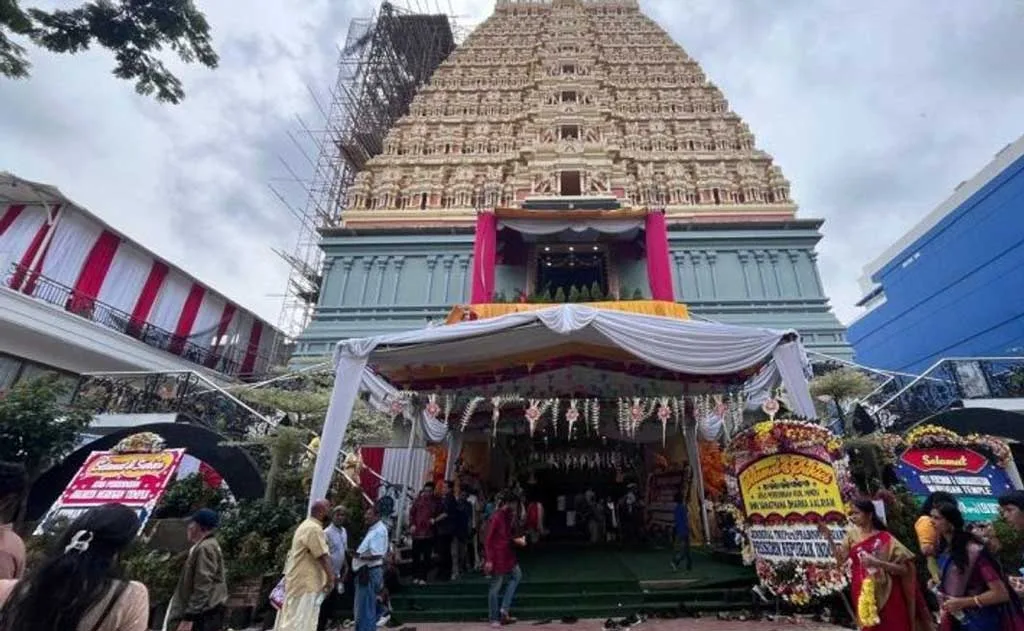
Skanda Sashti 2026 in Singapore and Malaysia: Soora Samharam on 15 November, Six-Day Vratam and Murugan Temples
Skanda Sashti 2026 in the UAE and the Gulf: Soora Samharam on Sunday 15 November, Shashti Times by City and a Home Vratam
Skanda Sashti June 2026: Murugan Vrat, Date, Rituals & Mantras