Makar Sankranti Sayings by Region: What They Mean and When They Are Said
Quick answer: The best-documented Sankranti sayings are the Marathi "Tilgul ghya ani god god bola" (take this sesame sweet and speak kindly), the Kannada "ellu bella thindu olle maathadi" (eat sesame and jaggery and speak good words), the Tamil "Thai piranthal vazhi pirakkum" (when Thai is born, a w
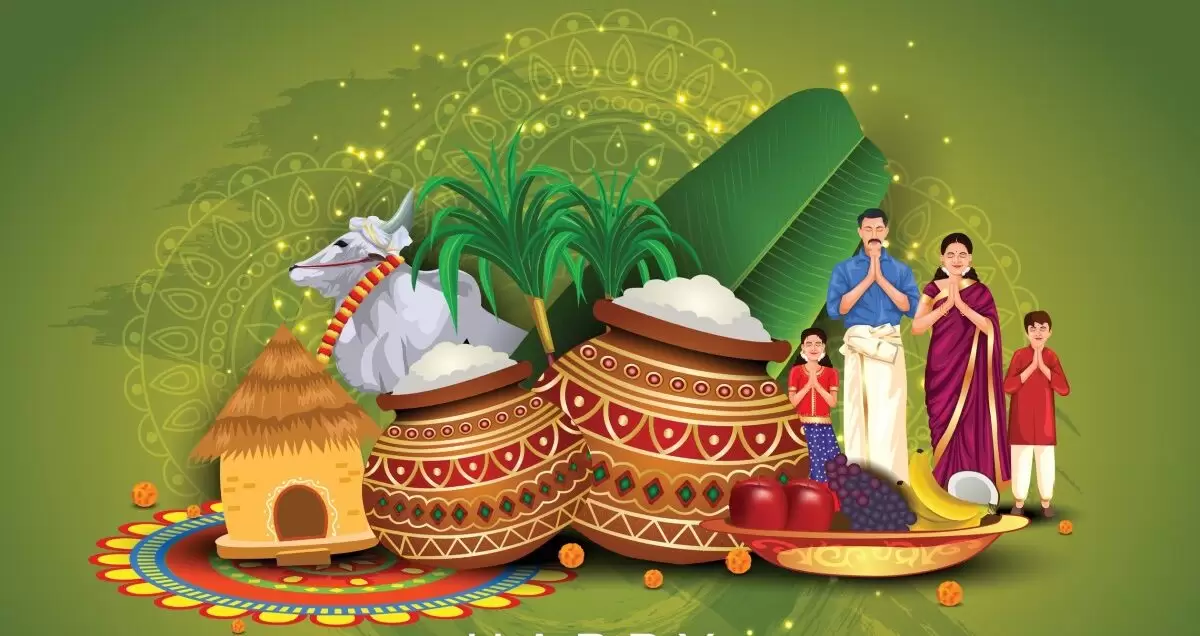
Quick answer: The best-documented Sankranti sayings are the Marathi "Tilgul ghya ani god god bola" (take this sesame sweet and speak kindly), the Kannada "ellu bella thindu olle maathadi" (eat sesame and jaggery and speak good words), the Tamil "Thai piranthal vazhi pirakkum" (when Thai is born, a way opens) and the Pongal cry "Pongalo Pongal!" (it is boiling over). Each is printed below only because two independent sources give the same words.
Native-speaker review of the scripts and transliterations is pending.
How we chose these sayings
Many Sankranti "quotes" online are modern greeting-card lines. This page lists only traditional sayings, and only when two independent, reputable sources (a government portal or established newspapers) print the same words. Where the two sources spell a word differently in Roman letters, we say so. We have not printed any native script, because we did not find two reputable sources showing the same script. Song lyrics are not included; the songs are described further down.
Makar Sankranti falls on Friday 15 January 2027 in India, per the panchang; the Sun enters Makara (Capricorn) at 9:14 PM IST on Thursday 14 January 2027. Thai Pongal, the first day of the Tamil month of Thai, falls on the same Friday in India. See our Makar Sankranti 2027 guide for the full timetable.
1. "Tilgul ghya ani god god bola" (Marathi, Maharashtra)
Transliteration: Tilgul ghya ani god god bola
Literal meaning: "Take tilgul and speak sweet, sweet."
Plain meaning: Accept this sesame-and-jaggery sweet and let your words to me be kind. It is a small act of making peace: whatever was said in the past year, the sweet and the words start things afresh.
When it is said: On Sankrant day and in the weeks after, as people hand out tilgul (sesame and jaggery sweets or ladoos) to family, neighbours, friends and colleagues. Women say it at haldi-kunku gatherings too. More on the day in our Maharashtra Sankrant guide and the tilgul ladoo recipe.
Sources: Maharashtra Tourism (Government of Maharashtra) prints "Tilgul ghya ani god god bola"; Scroll (Priyadarshini Chatterjee, 14 January 2018) prints "til gul ghya ani god god bola". The words are the same; Scroll writes "tilgul" as two words.
2. "Ellu bella thindu olle maathadi" (Kannada, Karnataka)
Transliteration: ellu bella thindu olle maathadi
Literal meaning: "Sesame, jaggery, having eaten, good words speak."
Plain meaning: Eat the sesame-and-jaggery mix and speak only good words.
When it is said: On Sankranti, when families carry plates of ellu bella (white sesame, jaggery, dry coconut, roasted gram and groundnuts) to neighbours and relatives. Karnataka Tourism calls the exchange "Ellu Birodhu". See our Karnataka Sankranti guide and the ellu bella recipe.
Sources: The Hans India (13 January 2014) prints "ellu bella thindu olle maathadi"; The South First (Rama Ramanan, 14 January 2024) prints "Ellu Bella Tindu Olle Maathadi". The words are the same; the two papers spell the third word "thindu" and "Tindu". Karnataka Tourism gives a third spelling, "Ellu Bella thindu olle mathaadi", with the same meaning.
3. "Thai piranthal vazhi pirakkum" (Tamil, Tamil Nadu and the Tamil diaspora)
Transliteration: Thai piranthal vazhi pirakkum
Literal meaning: "When Thai is born, a way is born."
Plain meaning: The start of the month of Thai, which begins with Thai Pongal, opens a way forward: new chances, a solution to a stuck problem, a fresh start.
When it is said: Around Thai Pongal, as a word of hope at the turn of the season: whatever has been difficult, the new month may bring a way through. The same phrase was also used as the title of a 1958 Tamil film, which made it even more familiar. See our Thai Pongal guide.
Sources: The South First (Roshne Balasubramanian, 15 January 2024) prints "Thai Piranthal Vazhi Pirakkum"; The Star, Malaysia (12 January 2021) prints "Thai piranthal vazhi pirakkum" and calls it a Tamil proverb. Malay Mail (Bernama, 14 January 2020) uses the same spelling.
4. "Pongalo Pongal!" (Tamil, Thai Pongal)
Transliteration: Pongalo Pongal
Literal meaning: "Pongal, oh Pongal!" (from "pongu", to boil up and overflow).
Plain meaning: It is boiling over! The overflow of milk and rice from the new pot is taken as a sign of plenty for the year ahead.
When it is said: At the moment the milk in the Pongal pot rises and spills over, on Thai Pongal morning. Everyone present shouts it together. The full meaning is in our page Pongalo Pongal: what it means.
Sources: Hinduism Today (April 2010, "Sankranti or Pongal") prints "Pongalo Pongal!" with the gloss "It's boiling over!"; the Sunday Times, Sri Lanka (14 January 2018) uses "Pongalo Pongal!" as its Thai Pongal headline. Malaysian reports sometimes write "Ponggalo Ponggal", the Malaysian spelling.
Sayings we checked but did not print
- Gujarati "Kai po che" is a shout from kite fights on Uttarayan ("I have cut it"), not a proverb, and we did not find two reputable sources with the same spelling (Kai po che, Kai po chhe and Kapyo che all appear).
- Telugu, Odia, Bengali, Assamese and Punjabi Sankranti proverbs: we found none printed in two reputable sources. We will add them when a dictionary, folklore collection or government culture page prints them.
- Hindi-belt sayings about til and gur appear only on recipe and greetings sites, so they are left out.
Harvest songs of the season (described, not quoted)
Lohri (Punjab): Lohri bonfire gatherings include songs that remember Dulla Bhatti, a Punjabi folk hero of Akbar's time who, in the popular story, rescued girls and arranged their marriages. The Tribune and The Quint describe the songs and the bonfire, where groundnuts, gachak and rewri are thrown into the fire; historians note that parts of the legend may be folk memory rather than record. More in our Lohri guide.
Tusu (Jharkhand, western Bengal, northern Odisha): Through the month of Poush, young unmarried women of the Kurmi and neighbouring communities sing Tusu songs every evening to the goddess Tusu, often imagined as a daughter visiting her parents' home. The singing is itself the worship. On Makar Sankranti the decorated chaudal (a bamboo-and-paper frame) is carried to a river and immersed. The Government of Jharkhand and Sahapedia describe the tradition. See our Bihar and Jharkhand guide and Poush Sankranti in West Bengal.
Gobbemma songs (Andhra Pradesh and Telangana): In the month before Sankranti, girls place gobbemmalu (small cow-dung cones decorated with flowers) on the muggu in front of the house and dance in a circle around them, singing, without instruments. C. P. Brown's Telugu dictionary records "gobbillu" as dancing in honour of a god. See Sankranti muggulu and gobbemmalu.
Bihu (Assam): Bihu songs (Bihugeet) belong mainly to Bohag (Rongali) Bihu in April. Magh Bihu in January is a feast-and-bonfire festival (uruka night, the meji fire); we found no reliable source describing a separate body of Magh Bihu songs. See our Magh Bihu guide.
FAQ
What do people say on Makar Sankranti in Maharashtra?
They say "Tilgul ghya ani god god bola" while handing over tilgul: take this sesame-jaggery sweet and speak kindly.
What is the Kannada Sankranti saying?
"Ellu bella thindu olle maathadi": eat the sesame-and-jaggery mix and speak good words. It is said while exchanging plates of ellu bella.
What does "Thai piranthal vazhi pirakkum" mean?
When the month of Thai begins, a way opens. It is a Tamil saying of hope said around Thai Pongal.
When do people shout "Pongalo Pongal"?
At the moment the milk in the Pongal pot boils over on Thai Pongal morning.
Why are there no native-script spellings on this page?
We print a script only when two reputable sources show it. We did not find that for these sayings. Native-speaker review of the scripts and transliterations is pending.
Sources
- Maharashtra Tourism (Government of Maharashtra), "Makar Sankranti": https://maharashtratourism.gov.in/festivals/makar-sankranti/ (accessed 12 November 2026).
- Priyadarshini Chatterjee, Scroll, 14 January 2018: https://scroll.in/magazine/864777/scroll_in (accessed 12 November 2026).
- The Hans India, "The Harvest festival of India", 13 January 2014: https://thehansindia.com/posts/index/2014-01-13/The-Harvest-festival-of-India-82198 (accessed 12 November 2026).
- Rama Ramanan, The South First, "Celebrating the flavours and fervour of Makar Sankranti in Andhra, Telangana, and Karnataka", 14 January 2024: https://thesouthfirst.com/featured/flashback-of-flavours-and-fervour-of-makar-sankranti-in-andhra-and-telangana/ (accessed 12 November 2026).
- Karnataka Tourism, "Sankranti in Karnataka": https://karnatakatourism.org/sankranti-in-karnataka/ (accessed 12 November 2026).
- Roshne Balasubramanian, The South First, "Pongal 2024: Celebrations spin a tale of nostalgia and tradition in Tamil Nadu", 15 January 2024: https://thesouthfirst.com/featured/pongal-2024-celebrations-spin-a-tale-of-nostalgia-and-tradition-in-tamil-nadu/ (accessed 12 November 2026).
- The Star (Malaysia), "Keeping the Ponggal tradition alive in the new normal", 12 January 2021: https://www.thestar.com.my/lifestyle/family/2021/01/12/keeping-the-ponggal-traditon-alive-in-the-new-normal (accessed 12 November 2026).
- Malay Mail (Bernama), 14 January 2020: https://www.malaymail.com/news/malaysia/2020/01/14/ponggal-festival-marks-a-new-dawn-for-tamil-community/1827825 (accessed 12 November 2026).
- Hinduism Today, "Sankranti or Pongal", April 2010: https://www.hinduismtoday.com/2010-04-festivals-sankranti-or-pongal/ (accessed 12 November 2026).
- Sunday Times (Sri Lanka), "Pongalo Pongal!", 14 January 2018: https://www.sundaytimes.lk/180114/news/pongalo-pongal-277307.html (accessed 12 November 2026).
- The Tribune, "Bonfire of warmth, love", 14 January 2023: https://www.tribuneindia.com/news/jalandhar/bonfire-of-warmth-love-470323 (accessed 12 November 2026).
- The Quint, on Dulla Bhatti and the Lohri song: https://www.thequint.com/news/india/dulla-bhatti-robinhood-of-punjab-lohri-song-sundar-mundriye (accessed 12 November 2026).
- Government of Jharkhand (Chief Minister's site), Tusu: https://cm.jharkhand.gov.in/node/614 (accessed 12 November 2026).
- Sahapedia, "Festival of Tusu: an introduction": https://www.sahapedia.org/festival-of-tusu-introduction (accessed 12 November 2026).
- C. P. Brown, Telugu-English Dictionary (1903), "gobbi", via DSAL, University of Chicago: https://dsal.uchicago.edu/cgi-bin/app/brown_query.py?qs=%E0%B0%97%E0%B1%8A%E0%B0%AC%E0%B1%8D%E0%B0%AC%E0%B0%BF (accessed 12 November 2026).
- Drik Panchang, Makar Sankranti 2027 (moment of the Sun's entry into Makara), via our 2027 date data (accessed November 2026).
Last reviewed: 12 November 2026.
Related guides
Share this with family and friends
Send it on WhatsApp, post it, or copy the link.
More from Festivals
- Chhath Puja 2026 in Dubai and the UAE: Dates, Arghya Times and How Families Celebrate
- Importance of Lakes in Chhath Puja: Spiritual Significance, Rituals and the Message of Water Conservation
- Magh Mela at Prayagraj: A Guide to the Sangam, Kalpvas and the Bathing Days
- Gangasagar Mela: A Guide to the Makar Sankranti Pilgrimage at Sagar Island
- Sankranti and Pongal Wishes in 9 Indian Languages