Karthika Masam Rules 2026: Food to Avoid, Dos and Don'ts, Snanam, Deepam and Fasting
Karthika Masam rules explained for 2026. In the South Indian amanta calendar the month runs from Tuesday 10 November to Tuesday 8 December 2026. Learn which foods are traditionally avoided, the daily snanam and deepam, Somavaram and Ekadashi fasting options, tulasi puja, deepa daanam and vana bhojanam, with a health caveat and practical tips for NRI families.
Quick answer: Karthika Masam rules apply in 2026 from Tuesday 10 November to Tuesday 8 December 2026 in the South Indian amanta calendar, per Drik Panchang. In the North Indian purnimanta calendar, Kartik runs from 27 October to Tuesday 24 November 2026.
Why the rule exists: Why Hindus avoid non-veg in Karthika Masam
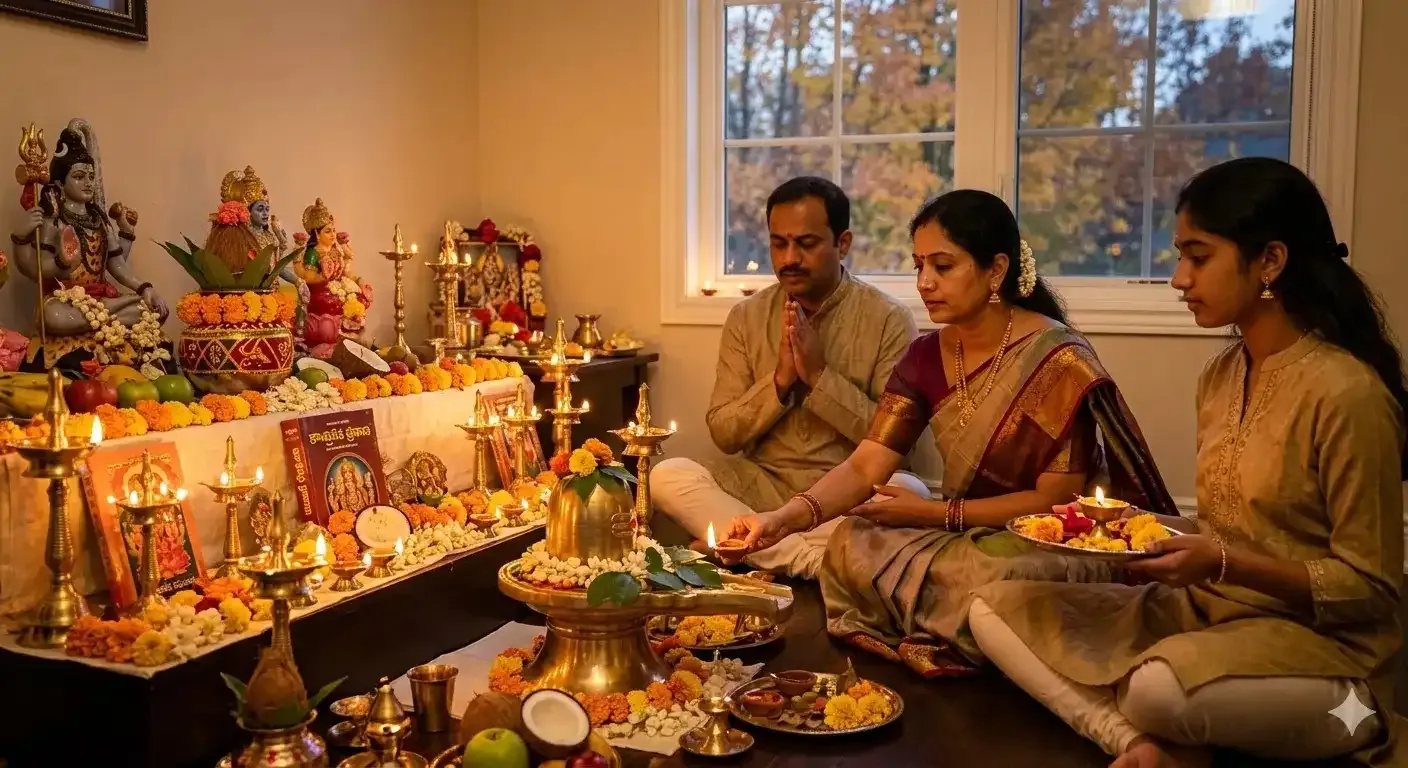
The main traditions are an early morning bath (snanam), lighting a lamp (deepam) at dusk and dawn, vegetarian food without onion and garlic, Monday worship of Shiva, Ekadashi fasting, tulasi puja and giving lamps (deepa daanam).
These are traditions, not fixed laws. Customs vary by family, region and community. Follow your own family's practice, and use this guide as a general reference. Karthika begins on Tuesday 10 November in India, only ten days from now, so this page has been updated for the season.
Karthika Masam 2026 dates
Karthika is the eighth lunar month. Different regions start and end the month differently:
- Amanta (Telugu, Kannada, Marathi, Gujarati): Tuesday 10 November 2026 (Kartika Shukla Pratipada) to Tuesday 8 December 2026 (Amavasya), per Drik Panchang for New Delhi.
- Purnimanta (North India): Kartik runs from 27 October to Tuesday 24 November 2026, ending on Kartika Purnima.
- Tamil Nadu: The Tamil solar month Karthigai follows a different calendar. Karthigai Deepam falls on Tuesday 24 November 2026 in the Drik listing.
This guide follows the amanta month used in Andhra Pradesh, Telangana and Karnataka.
Key Karthika Masam 2026 dates (New Delhi, IST)
The table follows Drik Panchang for New Delhi. Times are in IST and apply to New Delhi only. Outside India, use a panchang set to your own city and do not convert these times.
| Date (2026) | Observance | Tithi (New Delhi, IST) | Sunrise / sunset (New Delhi) |
|---|---|---|---|
| Tue 10 Nov | Karthika Masam begins | Shukla Pratipada upto 02:00 PM | 06:40 AM / 05:30 PM |
| Fri 13 Nov | Nagula Chavithi | Chaturthi upto 08:42 PM | 06:42 AM / 05:28 PM |
| Mon 16 Nov | 1st Karthika Somavaram | Saptami upto 04:19 AM, 17 Nov | 06:44 AM / 05:27 PM |
| Fri 20 Nov | Devutthana (Prabodhini) Ekadashi | Dashami upto 07:15 AM, then Ekadashi | 06:48 AM / 05:26 PM |
| Sat 21 Nov | Ksheerabdi Dwadasi, Tulasi Vivah | Dwadashi upto 04:56 AM, 22 Nov | 06:48 AM / 05:25 PM |
| Mon 23 Nov | 2nd Somavaram, Vaikuntha Chaturdashi | Chaturdashi upto 11:42 PM | 06:50 AM / 05:25 PM |
| Tue 24 Nov | Karthika Pournami | Purnima upto 08:23 PM | 06:51 AM / 05:25 PM |
| Mon 30 Nov | 3rd Karthika Somavaram | Krishna Saptami upto 12:11 AM, 1 Dec | 06:55 AM / 05:24 PM |
| Fri 4 Dec | Utpanna Ekadashi | Ekadashi upto 11:44 PM | 06:59 AM / 05:24 PM |
| Mon 7 Dec | 4th Somavaram, Masik Shivaratri | Chaturdashi upto 04:12 AM, 8 Dec | 07:01 AM / 05:24 PM |
| Tue 8 Dec | Karthika Amavasya, month ends | Amavasya upto 06:21 AM, 9 Dec | 07:01 AM / 05:24 PM |
Your local Telugu or Kannada panchangam may list some days slightly differently. Follow it if your family uses it.
Karthika Masam 2026 dates by country
Tithis run through the day, so the month can begin a day earlier in the Americas and the UK, where Pratipada is already in force at local sunrise on Monday 9 November. HinduTone's panchang calculator matched Drik on every tithi we checked. Temples abroad often follow the India date, so ask yours.
| Country or region | Karthika Masam begins | Karthika Pournami | Karthika Masam ends |
|---|---|---|---|
| India (Drik, IST) | Tue 10 Nov | Tue 24 Nov | Tue 8 Dec |
| USA, Canada, UK, Brazil | Mon 9 Nov | Tue 24 Nov | Tue 8 Dec |
| UAE, Germany, Europe, South Africa | Tue 10 Nov | Tue 24 Nov | Tue 8 Dec |
| Singapore, Malaysia | Tue 10 Nov | Tue 24 Nov | Tue 8 Dec |
| Australia (Sydney) | Tue 10 Nov | Tue 24 Nov | Wed 9 Dec |
In Calgary, Edmonton, Vancouver, the San Francisco Bay Area and Seattle, Drik city pages put Kartika Purnima on Monday 23 November; see our USA country guide and Canada country guide. British Columbia, Alberta and Manitoba keep permanent daylight time from November 2026, so use a panchang made for your city and the current clock. Country guides: UK, UAE, Australia and Singapore.
Karthika Masam rules for food
Food rules are the part of Karthika Masam that people ask about most. The idea behind them is sattvic food: simple, light, fresh and vegetarian, to keep the mind calm for prayer.
Foods traditionally avoided
- Non-vegetarian food: meat, fish and eggs. This is the most widely followed rule.
- Alcohol and tobacco: avoided for the whole month.
- Onion and garlic: avoided by many families, especially on Mondays, Ekadashi and Pournami, and by some for the whole month.
- Family-specific foods: some families also avoid brinjal, urad dal, certain gourds, or masoor dal. Others avoid stale food or food cooked the day before. These customs vary widely.
Foods commonly eaten
- Rice, wheat, millets, moong dal and toor dal.
- Fresh vegetables, especially those your family allows during the month.
- Milk, curd, ghee and buttermilk.
- Fruit, and amla (Indian gooseberry), which is closely linked with this month.
- Simple sweets such as payasam, pongal or halwa offered as naivedyam.
If you are unsure about a particular vegetable or dal, ask an elder in your family. There is no single list that every family follows.
Sample light menu for a Karthika Monday
- Morning: fruit, a glass of milk or a little curd rice if you are not keeping a full fast.
- Midday: a simple vegetarian meal without onion and garlic, such as moong dal, rice and one vegetable, or a pongal.
- Evening, after the lamp: a light meal such as upma, khichdi or fruit with milk, and a sweet offered as naivedyam.
This is an illustration of the sattvic idea, not a prescribed menu. Choose what suits your family and your health.
Daily dos in Karthika Masam
- Early morning snanam: Bathe before sunrise. Bathing in a river, tank or sea is traditional where possible. At home, a bath before sunrise with a prayer is fully accepted. See our Karthika snanam and deepa daanam guide.
- Deepam at dusk and dawn: Light a ghee or sesame-oil lamp at sunset every evening. Many families also light one before dawn. Lamps are placed at the doorway, in the puja room and near the tulasi plant.
- Tulasi puja: Water the tulasi plant, light a lamp beside it and offer a prayer every day.
- Shiva and Vishnu worship: Karthika is sacred to both. Recite the Shiva Panchakshari 'Om Namah Shivaya' or a Vishnu prayer your family knows.
- Deepa daanam: Give lamps to a temple or to a priest, or light lamps at a temple. This is considered very meritorious in this month.
- Charity: Give food, clothes or help to those in need, according to your means.
Things traditionally avoided in Karthika Masam
- Non-vegetarian food, alcohol and, in many families, onion and garlic.
- Sleeping late. The month encourages waking before sunrise.
- Anger, harsh words and quarrels. The month is meant for calm and devotion.
- Wasting food.
- Some families avoid cutting hair or shaving on certain days, especially Mondays. Follow your own family custom.
Karthika Somavaram fasting options
Mondays in Karthika are especially sacred to Shiva. In 2026 the Karthika Somavarams in the amanta month are 16 November, 23 November, 30 November and 7 December. Fasting options include:
- Full fast: No food during the day. The fast is broken after the evening puja and lamp lighting, often after seeing the stars.
- One meal (ekabhuktam): A single vegetarian meal, usually at night after puja.
- Fruit and milk: Only fruit, milk or light foods during the day.
- Simple observance: No fast, but vegetarian food, an early bath, a temple visit or abhishekam, and a lamp at dusk.
For dates, rituals and mantras, see our Karthika Somavaram 2026 guide.
Health caveat for fasting
Fasting is a devotional choice, never a requirement. Elderly people, pregnant or nursing women, children, people with diabetes, low blood pressure, kidney problems or any long-term illness, and anyone on regular medication should consult a doctor before fasting. Do not stop medicines because of a fast. Drink enough water. A lighter observance is fully respected in every tradition.
Rules for the key days at a glance
| Day | Date (India) | What families commonly do |
|---|---|---|
| Karthika Somavaram | 16, 23, 30 Nov and 7 Dec | Shiva abhishekam, a day fast or one meal, evening lamp |
| Devutthana (Prabodhini) Ekadashi | Fri 20 Nov | Vishnu worship; fast per family custom, without grains |
| Tulasi Vivah / Ksheerabdi Dwadasi | Sat 21 Nov | Tulasi with an amla branch, lamps, simple naivedyam |
| Vaikuntha Chaturdashi | Mon 23 Nov | Hari and Hara worship together; lamps in the evening |
| Karthika Pournami | Tue 24 Nov | Deepa daanam, 365 wicks, temple deepotsavam |
| Akshaya (Amla) Navami | Wed 18 Nov | Worship of the amla tree; meal under it where possible |
| Karthika Amavasya | Tue 8 Dec | Lamps, charity; the month ends |
Ekadashi, Dwadasi and Pournami
- Prabodhini Ekadashi (20 November): Vishnu is believed to wake from his four-month rest. Many devotees fast and worship Vishnu. See our Karthika Ekadashi 2026 guide.
- Ksheerabdi Dwadasi and Tulasi Vivah (21 November): Tulasi is worshipped with an amla branch, representing Vishnu. See our Ksheerabdi Dwadasi and Tulasi Vivah guide.
- Karthika Pournami (24 November): Many people light 365 wicks together, which is believed to cover the lamp of every day of the year. See our Karthika Pournami 2026 guide.
Vana bhojanam
Vana bhojanam, or Karthika vana bhojanalu, is a shared meal in a garden or grove, traditionally under an amla tree. Families and communities gather, worship the amla tree and eat a vegetarian meal together. See our Karthika vana bhojanalu guide.
Practical tips for NRI families
- Use a panchang set to your own city for tithi, sunrise and sunset. Do not convert New Delhi IST times.
- Treat your morning shower before work as your Karthika snanam, with a short prayer.
- If open flames are not allowed in your apartment or dorm, use an LED diya. Light a real lamp at the temple instead.
- Pack vegetarian, onion-free lunches for work on Mondays. Simple dal-rice, upma or curd rice travel well.
- Many temples abroad hold Karthika Somavaram abhishekam and Karthika Pournami deepotsavam, often on the nearest weekend. Check your temple's calendar.
- For vana bhojanam, check park rules on cooking and fires before planning a picnic. A potted amla plant or amla fruit can stand in for the tree.
- Explain the month to children as a 'month of lamps'. Let them light the evening lamp.
A five-minute daily routine for working people
- Wake a little earlier and bathe before work. Say "Om Namah Shivaya" or a Vishnu name three times.
- At dusk, light one lamp at the doorway or beside the tulasi plant. An LED diya is fine where flames are not allowed.
- Eat one vegetarian meal without onion and garlic if you cannot keep all meals simple.
- Do one small act of giving each week: food, clothes or a donation according to your means.
- On Mondays, visit a Shiva temple or pray at home.
The month is about steady habits, not perfection. Missing a day is not a failure.
Also read: Somavaram upavasam rules (ekabhuktam, naktam), daily Tulasi pooja in Karthika and Akasha Deepam.
Why Karthika Masam is special: the month of Hari and Hara
Karthika Masam is regarded as a month of spiritual discipline, devotion and purification, and it is especially associated with two deities. Lord Shiva is worshipped through Rudrabhishekam, Bilva archana, Shiva nama smarana and the Karthika Somavara vratam. Lord Vishnu is worshipped through Tulasi puja, Vishnu Sahasranama parayanam and the Ekadashi vratam. That is why Karthika is often called the month of Hari-Hara, of Vishnu (Hari) and Shiva (Hara) together.
Lighting lamps, taking the early holy bath, chanting mantras and helping people in need are the most widely followed traditions of the month.
Tulasi puja in Karthika: a simple daily procedure
Tulasi Devi is traditionally associated with Lord Vishnu, and in Karthika the Tulasi plant is worshipped with special devotion. A simple daily puja:
- Clean the area around the Tulasi plant.
- Offer water according to the plant's needs.
- Apply turmeric and kumkum to the Tulasi pot, if that is your family custom.
- Light a small oil lamp nearby.
- Offer flowers.
- Chant Vishnu mantras.
- Do pradakshina (circumambulation) as your family tradition prescribes.
Tulasi Vivah and Ksheerabdi Dwadashi are important Tulasi observances within this month.
Mantras to chant in Karthika Masam
Mantra chanting is at the heart of Karthika worship. Devotees commonly chant the following each day:
- For Lord Shiva: Om Namah Shivaya
- Maha Mrityunjaya mantra: Om Tryambakam Yajamahe Sugandhim Pushtivardhanam, Urvarukamiva Bandhanan Mrityor Mukshiya Maamritat
- For Lord Vishnu: Om Namo Bhagavate Vasudevaya
- Vishnu Sahasranamam: recite it, or listen to a devotional rendition
Even a few minutes of sincere prayer every day makes the month spiritually meaningful.
Charity and annadanam in Karthika
Charity is an important part of the month. Devotees traditionally offer annadanam (food to people), donate clothes, offer lamps to temples (deepa danam), help poor and needy families, support temple activities and feed animals responsibly. Give according to your ability, without expecting anything in return.
Conduct to avoid: anger, waste and family customs
Karthika is a month to practise patience and kindness as much as ritual. Devotees try to avoid unnecessary arguments, harsh words, jealousy, dishonesty and hurting others. Food, water and other resources are treated as sacred, so avoid waste and share food with people in need.
If your schedule is busy, do not drop daily prayer altogether: light a lamp, chant one mantra or offer a short prayer. Sincerity and consistency matter more than the number of rituals.
Some families avoid haircuts, shaving or certain personal activities on particular days of Karthika, especially Mondays and vrat days. These customs differ from place to place, so follow your family tradition and local temple guidance rather than assuming one rule applies to everyone.
The spiritual significance of the Karthika deepam
Lighting a lamp is one of the most cherished traditions of the month. The lamp stands for the victory of light over darkness and of knowledge over ignorance. Many Shiva temples hold special deepotsavams through Karthika, and on Karthika Pournami devotees light rows of lamps.
The famous Karthigai Deepam at Tiruvannamalai is associated with Lord Shiva appearing as an infinite column of divine light. The lamp reminds devotees to remove negativity from their thoughts and to bring compassion, wisdom and devotion into their lives. When you light deepams at home, keep basic fire safety in mind.
Frequently asked questions
When is Karthika Masam in 2026?
In the amanta calendar followed in Andhra Pradesh, Telangana, Karnataka, Maharashtra and Gujarat, Karthika Masam runs from Tuesday 10 November to Tuesday 8 December 2026, per Drik Panchang for New Delhi. In the North Indian purnimanta calendar, Kartik runs from 27 October to Tuesday 24 November 2026.
What foods are avoided in Karthika Masam?
Most families avoid meat, fish, eggs and alcohol for the whole month. Many also avoid onion and garlic. Some families avoid brinjal, urad dal, certain other vegetables, or food cooked the previous day. Customs vary by family, so follow your elders' practice.
Is it compulsory to fast on Karthika Somavaram?
No. Fasting is a personal devotional choice. Some devotees keep a full fast until evening, some eat one meal, and some take only fruit and milk. Elderly people, pregnant women, people with diabetes and anyone on medication should consult a doctor before fasting.
When should I light the Karthika deepam?
Traditionally a lamp is lit at dusk every evening of the month, and many families also light one before dawn after the early bath. Sunrise and sunset times depend on your city, so check a local panchang.
Can I follow Karthika Masam rules while living abroad?
Yes. Take your morning bath before work as your Karthika snanam, light a lamp or LED diya at home in the evening, keep vegetarian food, and visit a local temple on Mondays or on Karthika Pournami. Use a panchang set to your own city.
What is the most important day of Karthika Masam?
Karthika Pournami, on Tuesday 24 November 2026, is usually considered the most important day. Karthika Somavarams, Prabodhini Ekadashi and Ksheerabdi Dwadasi are also very important.
Can I eat onion and garlic in Karthika Masam?
Many families avoid onion and garlic for the whole month, and many more avoid them on Mondays, Ekadashi and Pournami. Others do not avoid them. It is a family custom, not a universal rule, so follow your elders. Keeping meals simple and vegetarian matters more than any single ingredient.
Can women perform Karthika Masam puja?
Yes. Women traditionally take part in Karthika prayers, Tulasi puja, deepam and the other devotional practices of the month. Individual family and temple customs may guide specific observances.
Which God should we worship during Karthika Masam?
Both Lord Shiva and Lord Vishnu are worshipped in Karthika, which is why it is called the month of Hari-Hara. Devotees also worship Tulasi Devi and other deities according to family tradition.
Can we light the Karthika deepam at home?
Yes. Devotees commonly light oil or ghee lamps in the home shrine, near the Tulasi plant and at the entrance. Follow basic fire-safety precautions.
What is the importance of Karthika Somavaram?
Karthika Somavaram means the Mondays of Karthika Masam. They are especially dedicated to Lord Shiva and are observed with abhishekam, Bilva archana, fasting according to one's capacity and prayer.
Editor's note
Editor's note (31 October 2026): We updated this guide on 31 October 2026. Changes: a date-by-country table, a day-by-day rules table, a sample light menu, a five-minute routine for working families, health notes for fasting, links to the country guides and one more FAQ. Dates and tithi times come from Drik Panchang for New Delhi and are given in IST. They are not converted to other time zones. Dates abroad follow the HinduTone calculator, which matched Drik on every tithi we checked. The rules described here are common traditions; customs vary by family, region and community. No particular benefit is promised from any observance. Nothing here is medical advice. Please consult a doctor before fasting if you have any health condition.
Related guides
Share this with family and friends
Send it on WhatsApp, post it, or copy the link.
More from Festivals
- Importance of Lakes in Chhath Puja: Spiritual Significance, Rituals and the Message of Water Conservation
- Makar Sankranti in Rajasthan: Kites, Holy Dips, Daan and Winter Sweets
- Makar Sankranti Sayings by Region: What They Mean and When They Are Said
- Haridwar Makar Sankranti Snan: A Guide to Har Ki Pauri, the Ganga Aarti and the Ardh Kumbh
- Magh Mela at Prayagraj: A Guide to the Sangam, Kalpvas and the Bathing Days
You might also like
Karthika Masam 2026 in UK: Complete City-Wise Hindu Temple Guide, Dates, Karthika Somavaram, Pournami and Special Pujas

Karthika Masam 2026 in USA: Complete State-Wise Hindu Temple Guide, Dates, Somavaram, Pournami and Special Pujas
Karthika Masam 2026 Celebrations at Indian Temples: The Ultimate Complete Guide to Dates, Rituals, Legends, Temple Festivities & Spiritual Practices