Karthika Amavasya 2026: Tuesday 8 December, the Last Day of Karthika Masam, Amavasya Timings by City, Deepa Daanam, Pitru Tarpan and Poli Swargam on 9 December
Karthika Amavasya 2026, the last day of Karthika Masam in the Telugu and Kannada calendar, is on Tuesday 8 December 2026. Amavasya tithi runs from 4:12 AM on 8 December to 6:21 AM on 9 December (IST), per Drik Panchang, which lists the day as Margashirsha Amavasya in the North Indian calendar. Timings for 28 cities, how to offer lamps and tarpan for the ancestors, and Poli Swargam, the dawn lamp-floating custom of Wednesday 9 December.
Quick answer: Karthika Amavasya 2026 is on Tuesday 8 December 2026, the last day of Karthika Masam in the Telugu and Kannada calendar. Amavasya tithi runs from 4:12 AM on 8 December to 6:21 AM on 9 December (IST), per Drik Panchang, which lists the day as Margashirsha Amavasya in the North Indian calendar.
Margasira Masam and the dawn custom of Poli Swargam follow on Wednesday 9 December.
Last updated: 25 October 2026. India timings are from Drik Panchang (New Delhi Amavasya list and Hyderabad day pages). Times for other cities are calculated with HinduTone's panchang calculator, which matches Drik's tithi times for these days.
Karthika Amavasya 2026 date and timings
| Detail | 2026 (India) |
|---|---|
| Karthika Amavasya (amanta) | Tuesday 8 December 2026 |
| Amavasya tithi | 4:12 AM, Tue 8 Dec to 6:21 AM, Wed 9 Dec (IST) |
| North Indian name | Margashirsha Amavasya, Darsha Amavasya (Drik Panchang) |
| Night before | Karthika Masa Shivaratri and the last Karthika Somavaram, Mon 7 Dec |
| Karthika Masam | Tue 10 Nov – Tue 8 Dec 2026 (amanta) |
| Next day | Margasira Shukla Padyami: Margasira Masam begins; Poli Swargam at dawn, Wed 9 Dec |
| Not to be confused with | Diwali Amavasya, Sun 8 Nov 2026 (Kartik Amavasya in the North Indian calendar) |
Two calendars, two "Kartika" Amavasyas
Families who follow the North Indian purnimanta calendar call the Diwali new moon of 8 November the Kartik Amavasya. Families who follow the Telugu and Kannada amanta calendar start Karthika Masam the day after Diwali and end it with the next new moon, on 8 December. Both are correct within their own calendar. If you lit Karthika deepams through November and kept the Karthika Somavaram fasts, your Karthika Amavasya is 8 December. For North American timings of both, see Kartika Amavasya 2026 for USA and Canada.
Karthika Amavasya 2026 by city
All times are local. The Amavasya day is the day the tithi covers the afternoon, when lamps and tarpan for the ancestors are offered. The morning bath follows the tithi at sunrise. Canada's winter clocks for 2026–27: British Columbia UTC−7, Alberta UTC−6, Manitoba UTC−5.
| City | Amavasya tithi (local) | Amavasya day (lamps, tarpan) | Morning bath (Amavasya at sunrise) | Poli Swargam (dawn of Padyami) |
|---|---|---|---|---|
| Delhi (Drik) | Tue 8 Dec 4:12 AM to Wed 9 Dec 6:21 AM | Tue 8 Dec | Tue 8 Dec | Wed 9 Dec |
| Mumbai | Tue 8 Dec 4:12 AM to Wed 9 Dec 6:21 AM | Tue 8 Dec | Tue 8 Dec | Wed 9 Dec |
| Hyderabad | Tue 8 Dec 4:12 AM to Wed 9 Dec 6:21 AM | Tue 8 Dec | Tue 8 Dec | Wed 9 Dec |
| Chennai | Tue 8 Dec 4:12 AM to Wed 9 Dec 6:21 AM | Tue 8 Dec | Tue 8 Dec | Wed 9 or Thu 10 Dec (Amavasya ends at about sunrise) |
| Bengaluru | Tue 8 Dec 4:12 AM to Wed 9 Dec 6:21 AM | Tue 8 Dec | Tue 8 Dec | Wed 9 Dec |
| Kolkata | Tue 8 Dec 4:12 AM to Wed 9 Dec 6:21 AM | Tue 8 Dec | Tue 8 Dec | Thu 10 Dec |
| New York | Mon 7 Dec 5:42 PM to Tue 8 Dec 7:51 PM | Tue 8 Dec | Tue 8 Dec | Wed 9 Dec |
| New Jersey (Edison) | Mon 7 Dec 5:42 PM to Tue 8 Dec 7:51 PM | Tue 8 Dec | Tue 8 Dec | Wed 9 Dec |
| Toronto | Mon 7 Dec 5:42 PM to Tue 8 Dec 7:51 PM | Tue 8 Dec | Tue 8 Dec | Wed 9 Dec |
| Winnipeg (UTC−5) | Mon 7 Dec 5:42 PM to Tue 8 Dec 7:51 PM | Tue 8 Dec | Tue 8 Dec | Wed 9 Dec |
| Chicago | Mon 7 Dec 4:42 PM to Tue 8 Dec 6:51 PM | Tue 8 Dec | Tue 8 Dec | Wed 9 Dec |
| Houston | Mon 7 Dec 4:42 PM to Tue 8 Dec 6:51 PM | Tue 8 Dec | Tue 8 Dec | Wed 9 Dec |
| Dallas | Mon 7 Dec 4:42 PM to Tue 8 Dec 6:51 PM | Tue 8 Dec | Tue 8 Dec | Wed 9 Dec |
| Calgary (UTC−6) | Mon 7 Dec 4:42 PM to Tue 8 Dec 6:51 PM | Tue 8 Dec | Tue 8 Dec | Wed 9 Dec |
| Edmonton (UTC−6) | Mon 7 Dec 4:42 PM to Tue 8 Dec 6:51 PM | Tue 8 Dec | Tue 8 Dec | Wed 9 Dec |
| Vancouver (UTC−7) | Mon 7 Dec 3:42 PM to Tue 8 Dec 5:51 PM | Tue 8 Dec | Tue 8 Dec | Wed 9 Dec |
| Bay Area (San Jose) | Mon 7 Dec 2:42 PM to Tue 8 Dec 4:51 PM | Tue 8 Dec | Tue 8 Dec | Wed 9 Dec |
| Los Angeles | Mon 7 Dec 2:42 PM to Tue 8 Dec 4:51 PM | Tue 8 Dec | Tue 8 Dec | Wed 9 Dec |
| Seattle | Mon 7 Dec 2:42 PM to Tue 8 Dec 4:51 PM | Tue 8 Dec | Tue 8 Dec | Wed 9 Dec |
| London | Mon 7 Dec 10:42 PM to Wed 9 Dec 12:51 AM | Tue 8 Dec | Tue 8 Dec | Wed 9 Dec |
| Frankfurt | Mon 7 Dec 11:42 PM to Wed 9 Dec 1:51 AM | Tue 8 Dec | Tue 8 Dec | Wed 9 Dec |
| Durban | Tue 8 Dec 12:42 AM to Wed 9 Dec 2:51 AM | Tue 8 Dec | Tue 8 Dec | Wed 9 Dec |
| Dubai | Tue 8 Dec 2:42 AM to Wed 9 Dec 4:51 AM | Tue 8 Dec | Tue 8 Dec | Wed 9 Dec |
| Singapore | Tue 8 Dec 6:42 AM to Wed 9 Dec 8:51 AM | Tue 8 Dec | Tue 8 Dec | Thu 10 Dec |
| Kuala Lumpur | Tue 8 Dec 6:42 AM to Wed 9 Dec 8:51 AM | Tue 8 Dec | Tue 8 Dec | Thu 10 Dec |
| Sydney | Tue 8 Dec 9:42 AM to Wed 9 Dec 11:51 AM | Tue 8 Dec | Wed 9 Dec | Thu 10 Dec |
| Melbourne | Tue 8 Dec 9:42 AM to Wed 9 Dec 11:51 AM | Tue 8 Dec | Wed 9 Dec | Thu 10 Dec |
| Auckland | Tue 8 Dec 11:42 AM to Wed 9 Dec 1:51 PM | Tue 8 Dec | Wed 9 Dec | Thu 10 Dec |
In Australia and New Zealand the Amavasya begins on the morning of 8 December, so the bath is on 9 December and Poli Swargam on 10 December. In Singapore and Malaysia the Amavasya is still running at sunrise on 9 December, so Poli Swargam is also on Thursday 10 December.
Why Karthika Amavasya matters
The dark night that closes Karthika is a night of lamps for those who are no longer with us. Through the month, families have lit a lamp every evening; on the last night the same light is offered for the ancestors (pitru), with gratitude and a prayer for their peace. Many people also see it as a quiet close to a month of discipline: early baths, simple food, Shiva and Vishnu worship and daily deepam.
In the Telugu country the day is also linked with the story of Poli, the young woman who kept her Karthika lamp alive at home when she could not go to the river, and whose devotion is remembered at dawn the next morning.
How to observe Karthika Amavasya
- Bathe before sunrise on the day the Amavasya covers sunrise (see the table). A warm bath with a prayer to the holy rivers is the usual practice abroad.
- Worship Shiva or Vishnu in the morning with water, bilva or tulasi, a lamp and a simple naivedyam.
- In the afternoon, those who follow it offer tarpan: water with black sesame, poured with the names of the departed. Temples in India and abroad can also do it on your behalf.
- After sunset, light lamps for the ancestors and the last Karthika deepam: at the altar, by the tulasi and at the doorstep.
- Give food, a blanket or warm clothes to someone in need, or donate to a temple or food bank in their memory.
- Keep the evening quiet: a short reading, the Karthika Puranam or the Damodarashtakam, and an early night before Poli Swargam.
Mantras for the day:
ॐ नमः शिवाय॥
oṃ namaḥ śivāya||
ॐ नमो नारायणाय॥
oṃ namo nārāyaṇāya||
For a Karthika hymn, read the Damodarashtakam with meaning.
Fasting and health
A fast on Karthika Amavasya is optional. Those who keep one usually take fruit and milk until the evening lamp. Children, older people, pregnant or breastfeeding women and anyone with diabetes, low blood pressure or a condition that needs regular meals should not fast without a doctor's advice.
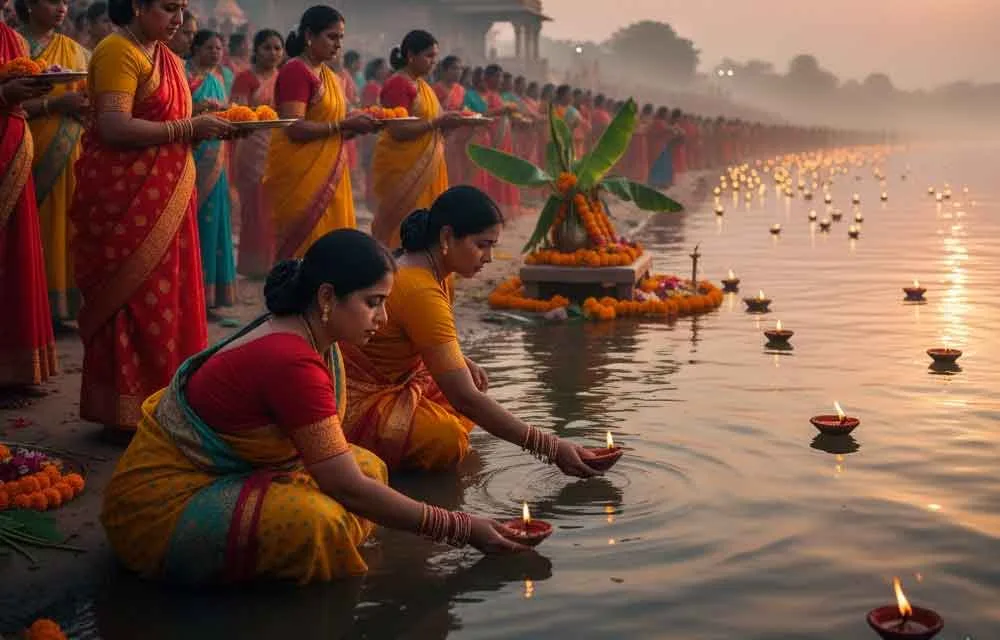
Poli Swargam on Wednesday 9 December
Poli Swargam, also called Poli Padyami, is kept on Margasira Shukla Padyami, the first day of Margasira after Karthika Amavasya. It is mainly a women's observance in Andhra Pradesh and Telangana.
The story of Poli
A woman had five daughters-in-law, and Poli, the youngest, was the most devoted. Through Karthika the mother-in-law took the others to the river for the dawn bath and lamp, but kept Poli at home with the housework and left her nothing for the puja. Poli did not give up. She bathed at the well, made a wick from cotton in the garden and lit a lamp with butter from the churn. Pleased with her sincerity, the gods sent a celestial chariot to carry her to heaven. The mother-in-law and the others caught hold of her to go too, but they fell back, and Poli alone reached swarga. The story is told as a lesson that sincere devotion counts for more than show.
How Poli Swargam is kept
- Wake before dawn and bathe.
- Prepare lamps with cotton wicks and ghee or oil in small boats of banana stem, banana leaf or leaf cups. Many families light a lamp with many wicks; the number follows family custom.
- Go to a river, canal, pond or temple tank before sunrise and float the lamps, praying for the family's well-being.
- Tell or listen to the story of Poli, put a few grains of akshata on the head, and give a lamp as daanam.
- At home, float the lamps in a wide basin or tub of water and later return the water to a plant.
Safety abroad: many parks and waterways in the USA, Canada, the UK and Australia do not allow open flames or floating objects. A basin at home, or the event at your local temple, is the safer way. Never leave lamps unattended, and keep children at a safe distance from flames.
Tips for families abroad
- Tuesday is a workday: light the ancestors' lamp after you get home; the Amavasya runs until the evening in North America (7:51 PM in New York).
- Monday night first: Karthika Masa Shivaratri and the last Karthika Somavaram are on Monday 7 December, so many families keep a longer vigil that night and close the month the next evening. See Karthika Masa Shivaratri 2026.
- Tarpan at a temple: temples with priests from South India often offer Amavasya tarpan; book ahead.
- Poli Swargam with children: tell the story at breakfast and let them watch the lamps float in a basin. It is a gentle way to close Karthika.
How to close Karthika Masam
Karthika Amavasya is the last day of the month, but most families close Karthika over its final days. In India they fall like this in 2026:
- Monday 7 December: Karthika Masa Shivaratri and the last Karthika Somavaram. A longer evening puja to Shiva and, for those who keep it, a fast or a night vigil.
- Tuesday 8 December: Karthika Amavasya, the final day. A bath before sunrise, the ancestors' lamp after sunset and the last Karthika deepam.
- Wednesday 9 December: Margasira (Margashirsha) Masam begins, with Poli Swargam at dawn.
Abroad, take the Amavasya day and the Poli Swargam day for your city from the table above.
Deepa daanam on the last days
Deepa daanam, the gift of a lit lamp, is the Karthika practice most often kept to the very end. A clay or flour lamp with ghee or oil is lit and given at a temple, to a priest or to an elder, or placed at the temple's lamp stand. If you have lit a lamp every evening, offer the last one as daanam. At home abroad, a lamp set at the tulasi or the doorstep with a prayer for the family and the ancestors carries the same intention. Method and meaning: Karthika Snanam and Deepa Daanam guide. Before the final evening, check the Karthika puja samagri checklist so you have spare lamps, wicks and oil, and keep lamps on a tray and in sight (deepam safety at home and abroad).
Anna daanam: food to close the month
Feeding others is a natural way to end a month of simple food. Cook a little extra on Amavasya and share it with family, neighbours or someone in need, give dry rations to a temple kitchen, or volunteer at or donate to a local food bank in memory of the ancestors. Give what you can afford; the spirit of the gift matters more than its size.
Finishing the Karthika Puranam
If you have been reading the Karthika Puranam a chapter a day, plan the last week so the reading ends with the month. If you are behind, read two chapters a day or set aside a longer sitting on the weekend before the end. Then read the closing chapter by the evening lamp on Amavasya, offer a simple naivedyam and give thanks for the month.
Closing your Karthika vow at home
- If you kept a vow, such as a daily lamp, one meal a day or no onion and garlic, many families end it after the evening puja on Amavasya with a simple vegetarian meal. Follow your family's custom if it differs.
- Thank the deity, and the people at home who made your daily routine possible.
- Clean and dry the lamps and store them with the wicks for the next festival. Leftover oil can go into the daily lamp of the coming month.
What begins next: Margasira Masam
On Wednesday 9 December Margasira Masam begins in India, the month of the Margasira Lakshmivara vratam in Telugu homes. For start dates by calendar and the festivals ahead, see Karthika to Margasira 2026 and Margasira Masam 2026: Lakshmivara vratam dates. The full month that is ending is in our Karthika Masam 2026 guide.
Frequently asked questions
When is Karthika Amavasya 2026?
In the Telugu and Kannada amanta calendar, Karthika Amavasya is on Tuesday 8 December 2026, the last day of Karthika Masam. Amavasya tithi runs from 4:12 AM on 8 December to 6:21 AM on 9 December, IST (Drik Panchang, New Delhi). Drik Panchang calls the same day Margashirsha Amavasya, its North Indian name.
Is Karthika Amavasya the same as Diwali?
Not in the Telugu calendar. In the North Indian calendar, the Amavasya of Kartik is Diwali, which fell on Sunday 8 November 2026. In the amanta calendar, Karthika Masam begins after that Amavasya, on 10 November, and ends with the next one on 8 December. That later new moon is the Karthika Amavasya of Andhra Pradesh, Telangana and Karnataka.
What is Poli Swargam and when is it in 2026?
Poli Swargam (Poli Padyami) is a Telugu custom kept at dawn on Margasira Shukla Padyami, the day after Karthika Amavasya. Women float small lamps on banana-stem or leaf boats in a river, pond or tank, or in a basin of water at home, and tell the story of Poli. In 2026 it falls on Wednesday 9 December in India, the USA, Canada, the UK and the Gulf, and on Thursday 10 December in Singapore, Malaysia, Australia and New Zealand.
What should I do on Karthika Amavasya?
The usual practices are a bath before sunrise, a lamp for the ancestors in the evening, tarpan with water and sesame for those who follow it, charity such as food or a blanket, and worship of Shiva or Vishnu. Since it is the last day of Karthika Masam, many families light their final Karthika deepam that evening.
What are the timings in the USA and the UK?
In New York and Toronto Amavasya runs from 5:42 PM on Monday 7 December to 7:51 PM on Tuesday 8 December. In Chicago and Houston it is 4:42 PM to 6:51 PM, and on the West Coast 2:42 PM to 4:51 PM. In London it runs from 10:42 PM on 7 December to 12:51 AM on 9 December. Tuesday 8 December is the Amavasya day in all these places.
Can women and children take part in the tarpan?
Customs differ from family to family. In many homes the tarpan is offered by one family member while everyone joins in the prayer, the lamp and the giving. Lighting a lamp and remembering the departed with gratitude is open to everyone.
Should I fast on Karthika Amavasya?
Some families keep a light fast until the evening puja; it is optional. Children, older people, pregnant women and anyone with diabetes or another medical condition should eat normally or ask a doctor first.
How do I close Karthika Masam in 2026?
Close it over the last days. In India, keep Karthika Masa Shivaratri and the last Somavaram on Monday 7 December. On Karthika Amavasya, Tuesday 8 December, bathe before sunrise, light the ancestors' lamp and the last Karthika deepam after sunset, give a lamp (deepa daanam) and food (anna daanam), and finish the Karthika Puranam. Margasira Masam begins on Wednesday 9 December.
Editor's note
Editor's note (25 October 2026): This page was rewritten on 25 October 2026. The earlier version gave no date. It now gives Karthika Amavasya 2026 as Tuesday 8 December, with Drik Panchang's Amavasya timings (New Delhi list, fetched for HinduTone's 2026 calendar), a 28-city table calculated by HinduTone's panchang calculator, and a section on Poli Swargam with its 2026 dates. The mantras are from HinduTone's verified mantra list. The Poli story is told as it is commonly recited in Telugu homes; details vary by family. Fasting is optional; please follow medical advice.
Also read
Share this with family and friends
Send it on WhatsApp, post it, or copy the link.
More from Festivals
- Importance of Lakes in Chhath Puja: Spiritual Significance, Rituals and the Message of Water Conservation
- Makar Sankranti in Rajasthan: Kites, Holy Dips, Daan and Winter Sweets
- Makar Sankranti Sayings by Region: What They Mean and When They Are Said
- Haridwar Makar Sankranti Snan: A Guide to Har Ki Pauri, the Ganga Aarti and the Ardh Kumbh
- Magh Mela at Prayagraj: A Guide to the Sangam, Kalpvas and the Bathing Days
You might also like
Karthika Masam 2026 in UK: Complete City-Wise Hindu Temple Guide, Dates, Karthika Somavaram, Pournami and Special Pujas

Karthika Masam 2026 in USA: Complete State-Wise Hindu Temple Guide, Dates, Somavaram, Pournami and Special Pujas
Karthika Masam 2026 Celebrations at Indian Temples: The Ultimate Complete Guide to Dates, Rituals, Legends, Temple Festivities & Spiritual Practices