
Goa Diwali 2026: Burning Large Effigies of Narakasura Marks Lord Krishna’s Victory Over Evil
People in Goa celebrate Diwali by burning large effigies of the demon Narakasura to mark the victory of Lord Krishna over evil.

People in Goa celebrate Diwali by burning large effigies of the demon Narakasura to mark the victory of Lord Krishna over evil. This fiery, community-driven tradition—unique to Goa—turns Naraka Chaturdashi into a spectacular night-and-dawn event that blends mythology, craftsmanship, and joyous ritual.
In 2026, the main burning took place in the pre-dawn hours of Sunday, 8 November, after neighbourhood groups paraded towering effigies through the streets on the night of 7 November.
The Legend: Narakasura, Krishna and Satyabhama
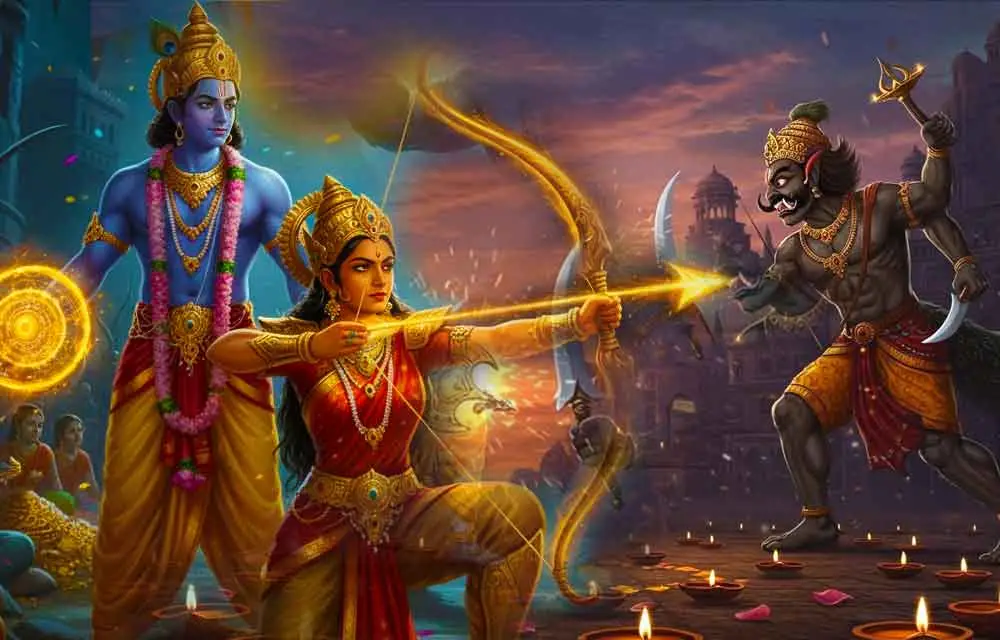
According to the traditional telling, Narakasura (also called Narakasur or Narkasur) was a powerful asura, son of Bhudevi (Mother Earth). He grew arrogant, oppressed the gods and humans, stole divine treasures, and held thousands of women captive.
The people and the gods sought help from Lord Krishna. Accompanied by his consort Satyabhama (regarded as an incarnation of Bhudevi), Krishna confronted Narakasura. In the battle that ended at dawn on Chaturdashi, the demon was defeated. Before dying, Narakasura is said to have requested that his death be remembered with light and celebration rather than mourning. The freed captives lit lamps, and the day became associated with the triumph of dharma over adharma—the victory of good over evil.
Goa’s local lore sometimes links the story more closely to the ancient land of Gomantak. The public burning of effigies makes this victory visible and collective.
How Goa Celebrates: Giant Effigies and Pre-Dawn Burning
Weeks before Diwali, youth groups, clubs and neighbourhoods across Goa—Panaji (Mala, Taleigao, Bhatlem), Margao, Mapusa, Ponda, Vasco and villages—begin building large Narakasura effigies. Frames of bamboo, metal or steel are covered with hay, newspaper, paper-mache, cloth, thermocol and paint. Some reach 40–50 feet or more and may include mechanical or hydraulic elements. Competitions reward the most impressive creations.
On the night of Naraka Chaturdashi eve, the effigies are paraded through the streets with music, drums and crowds. In the early morning hours (typically between 3 am and 6 am), they are set alight—often with crackers—symbolising the destruction of the demon. In many places a performer dressed as Krishna participates in the symbolic “Narakasura Vadh.”
After the burning, families return home for traditional observances.
Key Rituals That Follow
- Abhyanga Snan – The early-morning oil bath with fragrant oils and herbal pastes, purifying body and mind after the night’s events.
- Kareet (Karit) custom – Crushing the bitter kareet fruit underfoot (often by a male family member) and sometimes tasting a drop of its juice. This act symbolises the destruction of bitterness, ego and evil.
- Fov (beaten rice) preparations – Several traditional varieties of poha/fov are prepared and shared, linked in local custom to hospitality and the spirit of the festival.
- Lamps, aarti and later Lakshmi Puja complete the day’s observances.
These practices turn the public spectacle into a private, family renewal of light and purity.
Why This Tradition Matters
Burning Narakasura effigies is Goa’s distinctive way of celebrating the same core Diwali message found across India: the victory of light over darkness and righteousness over tyranny. It is community-built, youth-led and highly visual. The tradition is said to have continued in subdued form even during Portuguese rule and flourished more openly after Liberation, especially among younger generations.
It is distinct from the Ravana Dahan of Dussehra in North and Central India. Here the focus is Krishna and Satyabhama’s victory on the threshold of Diwali.
Practical Notes for 2026
- Parades: Night of Saturday 7 November
- Burning: Pre-dawn Sunday 8 November
- Major viewing areas: Panaji neighbourhoods, Margao, Mapusa, Ponda and other towns
- Expect crowds, traffic restrictions and (in some years) noise-related guidelines from authorities
Always check local updates for exact timings and any administrative advisories.
FAQs
Why does Goa burn Narakasura instead of only lighting lamps?
Goa centres its Diwali opening on the mythological defeat of Narakasura by Krishna (with Satyabhama). The public burning makes that victory tangible before the quieter oil bath and lamp-lighting of the morning.
When exactly are the effigies burned?
Traditionally in the early hours before sunrise on Naraka Chaturdashi (8 November 2026 in India).
Is this the same as Ravana burning?
No. Ravana Dahan occurs on Dussehra and commemorates Rama’s victory. Narakasura burning is specific to Goa (and some coastal areas) and is tied to Krishna’s victory just before Diwali.
What happens after the burning?
Families perform Abhyanga Snan, observe the kareet ritual, share fov dishes, light lamps and continue into Lakshmi Puja observances.
People in Goa celebrate Diwali by burning large effigies of the demon Narakasura to mark the victory of Lord Krishna over evil—a living tradition of light, community and dharma that continues to define the festival in the coastal state.
Related: Goa's Narakasura effigies 2026: Naraka Chaturdashi before dawn, kareet and fov, Story of Narakasura and Krishna and Naraka Chaturdashi 2026.
Share this with family and friends
Send it on WhatsApp, post it, or copy the link.
More from Diwali 2026
- Diwali 2026 in Guwahati: Lakshmi Puja Muhurat, Kali Puja Night, Kamakhya, Markets and Cracker Rules
- Diwali 2026 in Tirupati and Tirumala: Deepavali Asthanam, Arjitha Sevas Cancelled, Lakshmi Puja Muhurat and Karthika Masam
- Diwali 2026 in Madurai: Deepavali Oil Bath, Lakshmi Puja Muhurat, Cracker Timings, Meenakshi Temple and Thiruparankundram
- Diwali 2026 in Mysuru: Deepavali Date, Lakshmi Puja Muhurat, Balipadyami, Chamundi Hill and Cracker Timings
- Diwali 2026 in Coimbatore: Deepavali Oil Bath, Lakshmi Puja Muhurat, Cracker Timings, Temples and Kanda Sashti
You might also like
Goa's Narakasura Effigies 2026: Naraka Chaturdashi Before Dawn, Kareet, Fov and Diwali in Goa
Satyabhama and Narakasura Vadha: The Victory of Good Over Evil
Story of Narakasura and Krishna: The Origin of Naraka Chaturdashi
