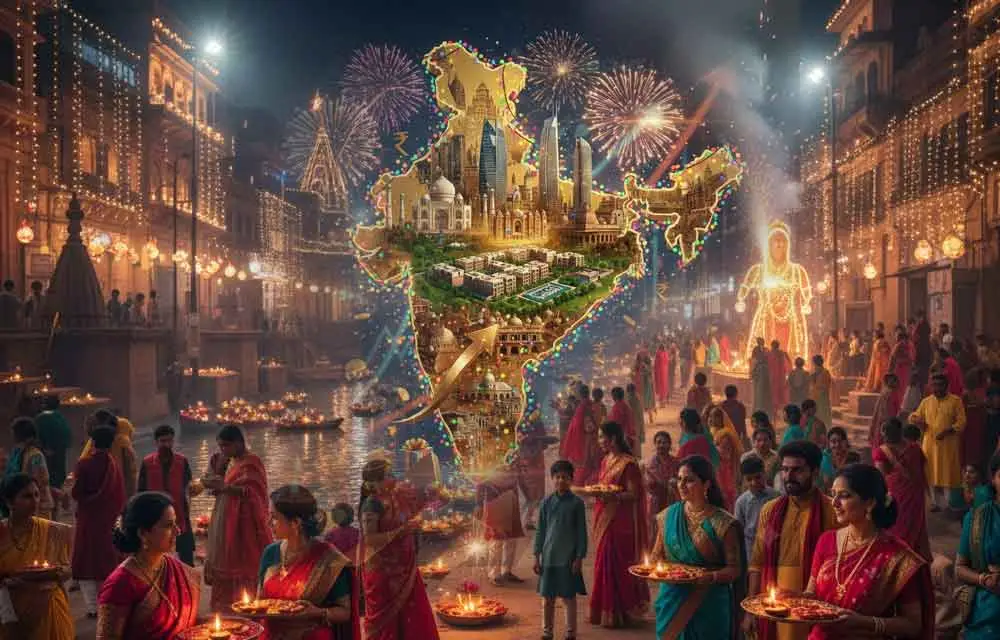
Goa's Narakasura Effigies 2026: Naraka Chaturdashi Before Dawn, Kareet, Fov and Diwali in Goa
Goa's Diwali is centred on Narakasura: neighbourhood groups build large effigies of the demon, parade them at night and burn them before dawn on Naraka Chaturdashi (Sunday 8 November 2026), followed by oil baths, the bitter kareet custom, fov (beaten rice) dishes and Lakshmi puja, with the calculated Panaji muhurat.
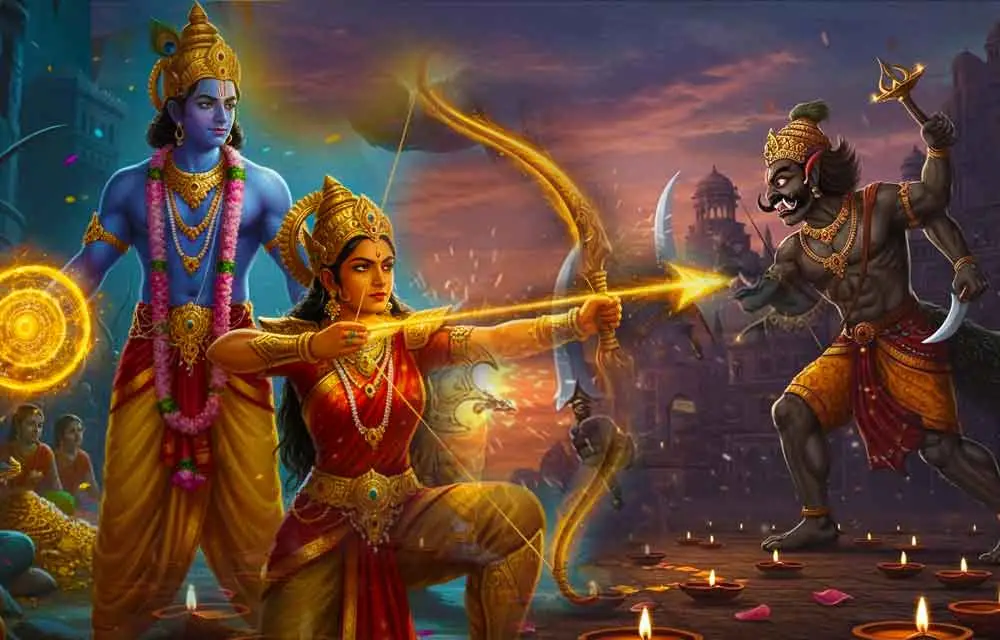
Goa's Diwali is centred on Narakasura: neighbourhood groups build large effigies of the demon, parade them at night and burn them before dawn on Naraka Chaturdashi (Sunday 8 November 2026), followed by oil baths, the bitter kareet custom, fov (beaten rice) dishes and Lakshmi puja, with the calculated Panaji muhurat.
Quick answer: In Goa, Diwali's most distinctive moment is the burning of Narakasura effigies before dawn on Naraka Chaturdashi, which falls on Sunday 8 November 2026 in India (Drik Panchang). Neighbourhood groups build large effigies, parade them through the night of Saturday 7 November, and set them alight in the early hours of Sunday. Families then take the oil bath, crush a bitter kareet, and share plates of fov (beaten rice). Lakshmi puja is on Sunday evening; calculated muhurat for Panaji: 6:30 PM to 8:31 PM.
Diwali 2026 dates for Goa
| Day | Date (India) | In Goa |
|---|---|---|
| Dhanteras | Fri 6 Nov | Shopping and lamps; effigy-making in full swing |
| Narakasura night | Night of Sat 7 Nov | Effigies paraded through villages and towns |
| Naraka Chaturdashi | Sun 8 Nov (pre-dawn) | Effigies burned, oil bath, kareet, fov |
| Diwali / Lakshmi Puja | Sun 8 Nov (evening) | Lakshmi puja, lamps and akash kandil |
| Bali Pratipada / Govardhan Puja | Tue 10 Nov | Padwa; cattle worship in farming homes |
| Bhau Beej / Bhai Dooj | Wed 11 Nov | Brothers visit sisters |
Source: Drik Panchang (India). Because the Chaturdashi tithi prevails at sunrise on Sunday 8 November, the pre-dawn effigy burning and the evening Lakshmi puja fall on the same day this year. Village and ward timings vary; follow local announcements.
The story behind the effigies
Narakasura, as traditionally told, was the son of Bhudevi (Mother Earth) who became a tyrant, harassed the gods and held thousands of people captive. Krishna, with Satyabhama, fought and killed him at dawn on Chaturdashi, freeing the captives. Before dying, Narakasura asked that the day be remembered with light and celebration. Goa's custom turns this story into a community event: the demon is built, paraded and then burned at the hour of his defeat. Read the full story in the story of Narakasura and Krishna.
How the Narakasura effigies are made
In the weeks before Diwali, groups of young people in wards, villages and housing colonies across Goa build effigies of Narakasura. Frames of bamboo or wood are covered with paper, cloth, grass and papier-mache, painted in bold colours and given fierce faces, horns, fangs and costumes. Sizes range from small figures made by children to towering structures built by bigger groups, and many groups raise money locally for materials.
Some localities hold competitions for the best effigy, judged on craft and presentation. These are organised locally and vary every year, so we do not list venues or prizes here.
The night parade and pre-dawn burning
On the night before Naraka Chaturdashi, effigies are carried or wheeled through streets, often with music and crowds following. In many places a person dressed as Krishna takes part in the final act. In the pre-dawn hours, the effigy is set alight with crackers, marking Narakasura's defeat, and people head home for the ritual bath. As commonly described, the town or village then wakes to Diwali morning.
- Expect road congestion on the night of Saturday 7 November in towns such as Panaji, Margao, Mapusa and Ponda, and in many villages.
- Keep a safe distance from burning effigies and fireworks; children should stay with adults.
- Follow the current rules of the district administration and police on timings, sound levels, road use and fireworks, which can change from year to year.
- Visitors are welcome to watch, but respect that this is a local, community-run tradition, and ask before photographing families or children up close.
After the burning: oil bath, kareet and fov
Back home, the Diwali morning rituals begin before sunrise:
- Abhyanga snan: elders apply fragrant oil and an ubtan paste, followed by a bath. See Naraka Chaturdashi 2026: abhyanga snanam.
- Kareet: in many Goan Hindu homes, a small bitter kareet fruit is crushed underfoot after the bath to symbolise Narakasura's destruction, and a drop of its bitter juice is tasted, as commonly described.
- New clothes, a visit to the family deity or the local temple, and lamps at the doorway and tulsi vrindavan.
- Fov: families prepare several kinds of beaten-rice dishes, often with coconut, jaggery, milk or spices, and exchange them with relatives and neighbours. Visiting homes to share fov is a much-loved part of the morning.
Lakshmi puja and lamps on Diwali evening
Later on Sunday, Goan Hindu families perform Lakshmi puja at home and shops, and hang an akash kandil, a paper or bamboo lantern, outside the house, much as in Maharashtra and coastal Karnataka. Diyas line the doorways and windows. Business families worship their account books and cash boxes.
| City | Lakshmi Puja, Sun 8 Nov 2026 (IST) | Dhanteras puja, Fri 6 Nov 2026 (IST) | Source |
|---|---|---|---|
| Goa (Panaji) | 6:30 PM to 8:31 PM | 6:37 PM to 8:33 PM | Calculated (HinduTone, Drik method) |
Calculated with the Drik method (Pradosh Kaal with a fixed Vrishabha lagna); times elsewhere in Goa will be within a minute or two. Confirm with your family purohit or on Drik Panchang. More cities: Lakshmi Puja muhurat 2026 India city-wise and Diwali 2026 date and Lakshmi Puja muhurat.
Padwa, Bhau Beej and Tulsi Vivah
Bali Pratipada (Padwa) on Tuesday 10 November remembers King Bali, and in farming homes cattle are honoured. Bhau Beej, when brothers visit their sisters, falls on Wednesday 11 November. Goa's Diwali season then continues to Tulsi Vivah, the ceremonial marriage of the tulsi plant, which Drik Panchang lists on Saturday 21 November 2026 and which many Goan families celebrate at the tulsi vrindavan in front of the house. See Ksheerabdi Dwadasi and Tulasi Vivah 2026 and the legend of Bali Raja and Diwali in South India.
For Goans abroad
- Many Goan families in the Gulf, the UK and elsewhere keep the kareet and fov customs at home on Naraka Chaturdashi morning.
- Dates differ abroad: in the UK, Drik Panchang lists Naraka Chaturdashi on Saturday 7 November and Diwali on Sunday 8 November. See Diwali 2026 in the UK city by city and Diwali 2026 in Dubai and the UAE.
- Use your own city's muhurat; never convert Panaji's times to your local time.
Frequently asked questions
When are Narakasura effigies burned in Goa in 2026?
Naraka Chaturdashi falls on Sunday 8 November 2026 in India (Drik Panchang). In Goa, effigies are commonly paraded through the night and burned in the pre-dawn hours of Naraka Chaturdashi, so expect the burning in the early hours of Sunday 8 November, with preparations and parades on the night of Saturday 7 November. Local timings vary by village and ward.
What is kareet and why is it crushed?
Kareet is a small bitter wild fruit. In many Goan Hindu homes, after the effigy is burned and the oil bath is taken, a kareet is crushed underfoot to symbolise destroying Narakasura, and a little of its bitter juice is tasted, as commonly described, to remember the bitterness of evil being overcome.
What is fov?
Fov (also spelled phov) is beaten rice (poha). On Naraka Chaturdashi, Goan families prepare several varieties of fov, sweet and savoury, and share them with relatives and neighbours.
What is the Lakshmi Puja muhurat in Goa on Diwali 2026?
The HinduTone calculator (Drik method) gives 6:30 PM to 8:31 PM for Panaji (Goa) on Sunday 8 November 2026. It is a calculated time; confirm with your purohit or on Drik Panchang.
Are there rules for Narakasura effigies?
Local authorities in Goa have in various years issued guidance on effigy size, road use, sound levels, timings and fireworks. Rules can change each year, so organisers and visitors should follow the current orders of the district administration and police.
Editor's note (9 October 2026)
Dates follow Drik Panchang for India, and the Panaji muhurat is calculated with the HinduTone calculator (Drik method); confirm locally. The effigy tradition, kareet and fov customs are described as commonly practised in Goan Hindu homes; details differ between villages, talukas and families. We have not listed competitions, venues or timings, which are organised locally and change each year.
Related guides
You might also like
Deepavali 2026 in Kerala: Naraka Chaturdashi Oil Bath, Community Traditions and Thrikarthika
Telugu Deepavali 2026: Traditions in Andhra Pradesh and Telangana, from Naraka Chaturdashi to Bhagini Hasta Bhojanam
Diwali 2026 in Punjab: Hindu Diwali Traditions and Bandi Chhor Divas in Amritsar