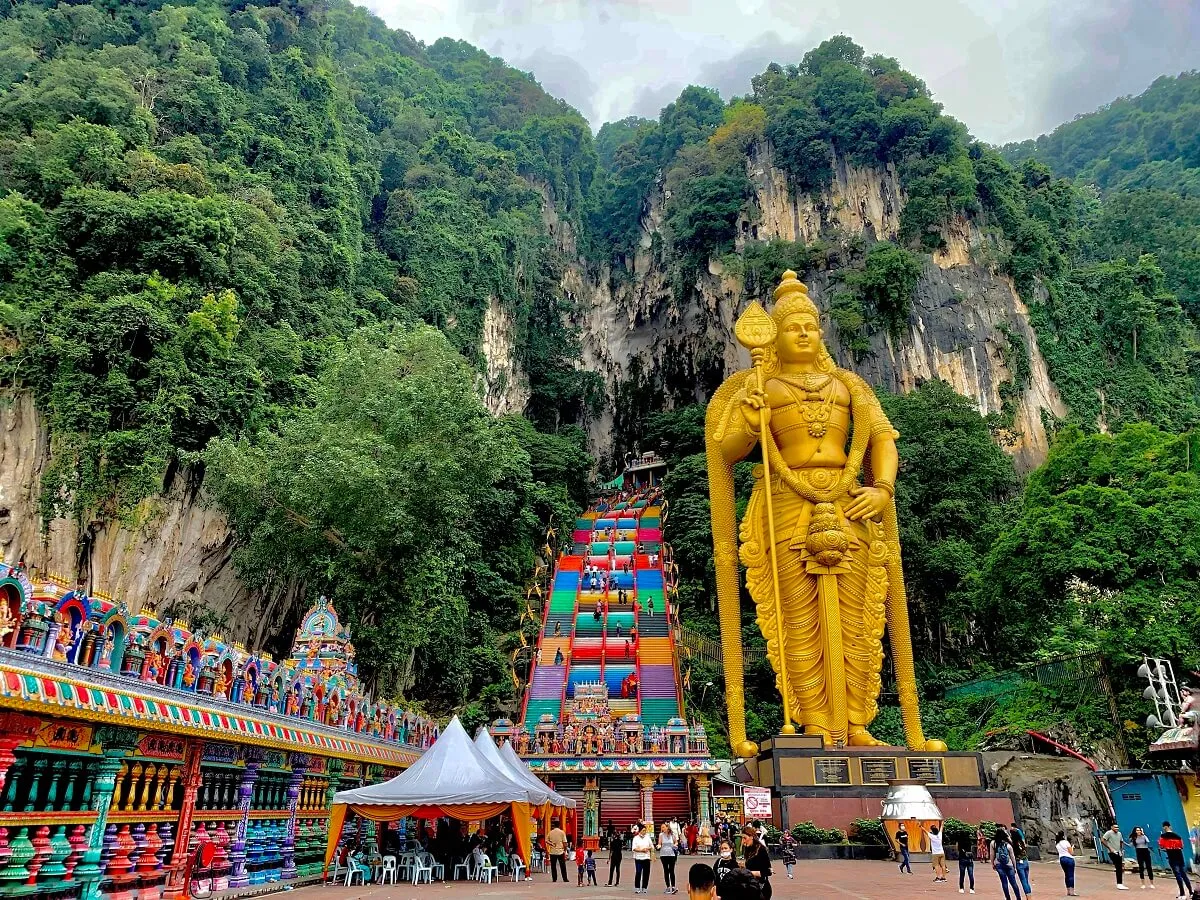
Hindus in Thailand: Hindu Temples, Heritage, Festivals and Community Guide
Quick answer: Thailand is a Buddhist-majority country, but Hindu deities and rituals are woven into Thai life. Bangkok has the Sri Maha Mariamman Temple (Wat Khaek) on Silom Road, built in 1879 by Tamil immigrants, the royal Brahmin temple Devasathan beside the Giant Swing, and the famous Erawan Shr

Quick answer: Thailand is a Buddhist-majority country, but Hindu deities and rituals are woven into Thai life. Bangkok has the Sri Maha Mariamman Temple (Wat Khaek) on Silom Road, built in 1879 by Tamil immigrants, the royal Brahmin temple Devasathan beside the Giant Swing, and the famous Erawan Shrine to Brahma at Ratchaprasong, where Thais and visitors pray daily. Thailand's national epic, the Ramakien, is the Thai Ramayana. The Indian community is centred in Bangkok, with Tamil, Punjabi, Sindhi and other families. Thailand is 1½ hours ahead of India, so festival dates match India's. The next big date is Vaikuntha Ekadashi on Sunday 20 December 2026.
This is HinduTone's starting point for Hindus in Thailand and visitors interested in Thailand's Hindu heritage: the temples and shrines, the festival year and practical etiquette.
Editor's note (8 November 2026): temple histories are from published sources, including the Thai Department of Religious Affairs. Festival dates are HinduTone's calculation for Bangkok using Drik Panchang rules. Check temple timings before you visit.
Hindu temples and shrines in Bangkok
- Sri Maha Mariamman Temple (Wat Khaek), Silom Road: the colourful South Indian temple built in 1879 by Vaithi Padayatchi, a Tamil immigrant, dedicated to Goddess Mariamman. Its Navratri festival ends with a street procession on Vijayadashami, one of Bangkok's most striking festival sights.
- Devasathan, near the Giant Swing: the temple of the court Brahmins, who still perform royal ceremonies such as the Royal Ploughing Ceremony.
- Erawan Shrine, Ratchaprasong: the shrine of Phra Phrom (Brahma), with Thai dancers performing for devotees who have had their wishes granted.
- Ganesha shrines: Ganesha (Phra Phikanet) is honoured across Thailand as the god of arts and success, with popular shrines in Bangkok and beyond.
Hindu heritage in Thai culture
- The Ramakien: the Thai version of the Ramayana, painted in the galleries of the Temple of the Emerald Buddha and performed in khon masked dance.
- Deities in Thai life: Brahma, Vishnu (Phra Narai), Shiva (Phra Isuan), Indra and Ganesha appear in royal symbols, temple art and everyday worship; the Garuda is the emblem of the Thai state.
- Ancient temples: Khmer-era sanctuaries in north-east Thailand, such as Phanom Rung, which was dedicated to Shiva, show the Hindu roots of the region's art.
Note that Wat Rong Khun, the "White Temple" in Chiang Rai, is a modern Buddhist artwork, not a Hindu temple; see Wat Rong Khun.
The festival year in Thailand
| Festival | Thailand date | Guide |
|---|---|---|
| Vaikuntha Ekadashi | Sunday 20 December 2026 (parana Monday 21 December) | Vaikuntha Ekadashi 2026 in Thailand |
| Makar Sankranti / Thai Pongal | mid-January 2027 | Makar Sankranti and Pongal 2027 abroad |
| Holi | late March 2027 | Holi 2027 |
| Navratri and Vijayadashami procession, Silom | October 2027 | Dussehra in Thailand |
| Diwali | autumn 2027 | Diwali in Thailand |
Etiquette
- Dress: cover shoulders and knees at temples and shrines, and remove shoes where asked.
- Offerings: flowers, incense and candles are sold at the entrance of most shrines; follow local practice.
- Photography: many temples do not allow photos inside the sanctum; check signs.
- Respect for the monarchy and Buddhism: both are deeply respected in Thailand; behave accordingly at royal and Buddhist sites.
Frequently asked questions
Are there Hindu temples in Thailand?
Yes. The best known are the Sri Maha Mariamman Temple on Silom Road, built in 1879, and Devasathan, the royal Brahmin temple, both in Bangkok, along with the Erawan Shrine to Brahma.
Why are Hindu gods worshipped in Buddhist Thailand?
Hindu deities came to the region with Indian and Khmer culture over many centuries and became part of Thai royal ritual, art and popular worship alongside Buddhism.
What is the Ramakien?
The Thai national epic, based on the Ramayana.
When is Vaikuntha Ekadashi 2026 in Thailand?
Sunday 20 December 2026, with parana on Monday 21 December.
Share this with family and friends
Send it on WhatsApp, post it, or copy the link.
More from Global Hindu Presence
- R-1 Visa Documentation Guide for Hindu Temple Priests Coming to the USA
- R-2 Visa for Families of R-1 Hindu Temple Priests in the USA
- Hindu Events in GCC Countries 2026: Country-Wise Guide to Temple Festivals & Community Programs
- Hindu Events in Europe 2026: Country-Wise Guide to Temple Festivals & Community Programs (Late May–June)
- BAPS Temples Worldwide 2026: Complete List of Swaminarayan Mandirs, Locations & Visiting Guide
You might also like
Hindus in Singapore: Temples, Festivals, Little India and Community Guide
Hindus in Brazil: Temples, Festivals, Spiritual Centres and Community Guide
Hindus in New Zealand: Temples, Festivals, Community and City Guide