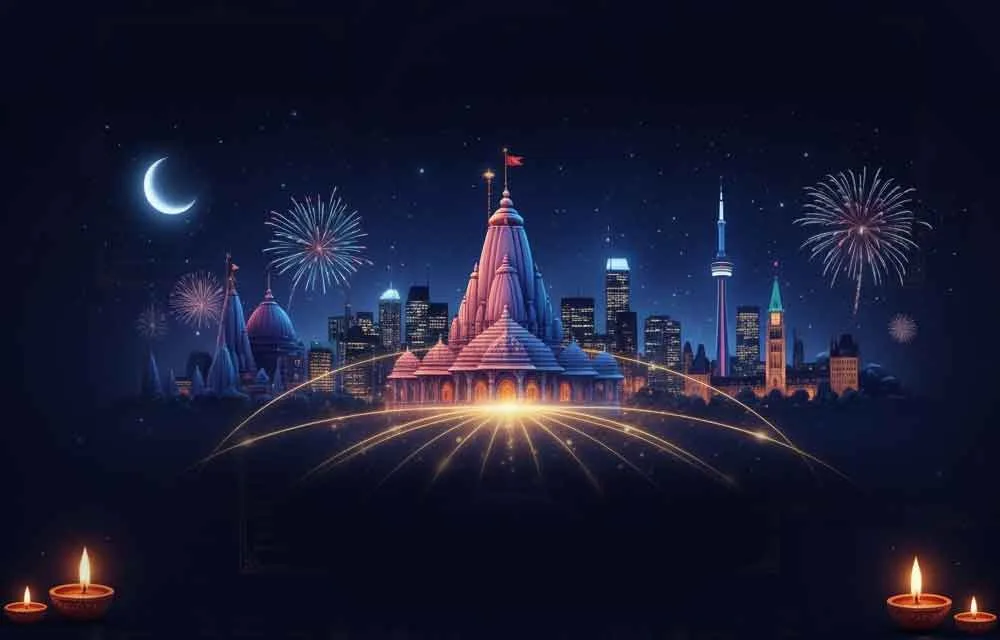
Karthika Masam 2026 in Australia: Dates, Somavarams and Karthika Pournami Timings City by City
In Australia, Karthika Masam 2026 runs from Tuesday 10 November to Karthika Amavasya on Wednesday 9 December, with four Karthika Somavarams. Here are all the key dates, Purnima begin and end times and sunsets for Sydney, Melbourne, Brisbane, Perth, Adelaide, Canberra, Hobart and Darwin, and practical tips for a summer Karthika.
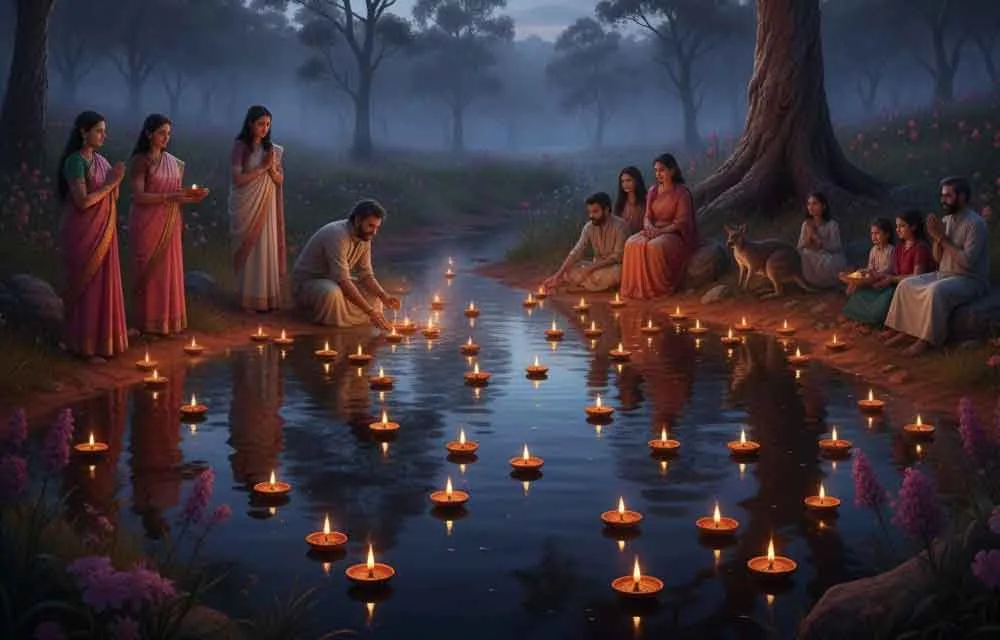
In Australia, Karthika Masam 2026 runs from Tuesday 10 November to Karthika Amavasya on Wednesday 9 December, with four Karthika Somavarams. Here are all the key dates, Purnima begin and end times and sunsets for Sydney, Melbourne, Brisbane, Perth, Adelaide, Canberra, Hobart and Darwin, and practical tips for a summer Karthika.
Quick answer: Karthika Masam 2026 in Australia begins on Tuesday 10 November 2026 and ends with Karthika Amavasya on Wednesday 9 December 2026. There are four Karthika Somavarams: 16, 23 and 30 November and 7 December. Karthika Pournami is Tuesday 24 November: in Sydney and Melbourne Purnima tithi runs from 5:12 AM that morning to 1:53 AM on Wednesday 25 November (AEDT), so the whole evening of the 24th is ideal for the Pournami lamps. Devutthana Ekadashi falls on Saturday 21 November and Ksheerabdi Dwadasi / Tulasi Vivah on Sunday 22 November — a weekend this year.
Editor's note (5 October 2026): Dates in this guide were calculated with Drik Panchang rules for local sunrise in Australia (the tithi current at sunrise names the day; Nagula Chavithi takes Chaturthi at midday, Masik Shivaratri takes Krishna Chaturdashi at midnight, and Karthigai Deepam takes Krittika nakshatra at sunset). The method was checked against Drik Panchang for New York, Toronto, London and New Delhi, and Ekadashi, Tulasi Vivah, Sankranti and Kalabhairav dates follow Drik Panchang's Australian calendar. Purnima begin and end times are exact tithi instants shown in each city's local time, and sunsets use the NOAA method. Temple programmes for 2026 have not been confirmed, so none are listed here.
Karthika Masam is the most cherished month of the year for Telugu, Kannada and many South Indian families — a month of early baths, evening lamps, Monday fasts for Lord Shiva and Tulasi worship for Lord Vishnu. In the Northern Hemisphere it comes with cold, dark evenings; in Australia it arrives with long summer twilights, daylight saving and the start of the bushfire season. The devotion is the same, but the practical details are different, and this guide covers them city by city. For the meaning of the whole month, see our Karthika Masam 2026 guide.
Karthika Masam 2026 dates in Australia
These dates hold for every Australian city, from Perth to Sydney. New South Wales, Victoria, the ACT, Tasmania and South Australia have been on daylight saving time since Sunday 4 October 2026; Queensland, Western Australia and the Northern Territory do not observe it.
| Date | Weekday | Observance (Australian local panchang) |
|---|---|---|
| 8 Nov | Sunday | Diwali (Lakshmi Puja) — the Amavasya before the month begins |
| 10 Nov | Tuesday | Karthika Masam begins (Kartika Shukla Pratipada) |
| 13 Nov | Friday | Nagula Chavithi |
| 16 Nov | Monday | 1st Karthika Somavaram |
| 17 Nov | Tuesday | Vrishchika Sankranti |
| 21 Nov | Saturday | Devutthana (Uttana / Prabodhini) Ekadashi |
| 22 Nov | Sunday | Ksheerabdi Dwadasi / Tulasi Vivah |
| 23 Nov | Monday | 2nd Karthika Somavaram |
| 24 Nov | Tuesday | Karthika Pournami (Kartika Purnima); Karthigai Deepam |
| 30 Nov | Monday | 3rd Karthika Somavaram |
| 1 Dec | Tuesday | Kalabhairav Jayanti |
| 4 Dec | Friday | Utpanna Ekadashi |
| 7 Dec | Monday | 4th Karthika Somavaram; Masik Shivaratri |
| 9 Dec | Wednesday | Karthika Amavasya — the month ends |
Australia starts the month on the same day as India but differs on several others. Because Australian sunrise comes several hours before Indian sunrise, a tithi that begins during the Indian night may not yet be running at dawn in Sydney — so the Australian day can fall one later. In 2026 that moves Devutthana Ekadashi (India: Friday 20 November), Ksheerabdi Dwadasi (India: Saturday 21 November), Vrishchika Sankranti (India: Monday 16 November) and Karthika Amavasya (India: Tuesday 8 December) one day later in Australia. Nagula Chavithi, Karthika Pournami, Karthigai Deepam, Kalabhairav Jayanti, Utpanna Ekadashi and Masik Shivaratri fall on the same dates in both countries.
Many Australian temples follow a panchangam printed in India, and some follow a local calculation. Before the month begins, ask your temple which calendar it uses and keep the days it announces. Where they differ, it is only by a day, and the devotion is what matters.
Karthika Somavaram 2026 dates and the Monday vratham
Monday (Somavaram) is Lord Shiva's day, and in Karthika Masam each Monday becomes a vratham. In Australia the four Karthika Somavarams are Monday 16 November, Monday 23 November, Monday 30 November and Monday 7 December 2026. The last is special this year: Masik Shivaratri falls on the same day, so 7 December combines the final Karthika Monday with the monthly night of Shiva.
| Somavaram | Date | Note |
|---|---|---|
| 1st | Mon 16 Nov | The day before Vrishchika Sankranti |
| 2nd | Mon 23 Nov | The eve of Karthika Pournami |
| 3rd | Mon 30 Nov | The day before Kalabhairav Jayanti |
| 4th | Mon 7 Dec | Also Masik Shivaratri |
How to keep the Somavaram vratham
- Choose a fast you can sustain: traditionally a full fast (upavasam) until evening; many keep a fruit-and-milk fast; others take one simple sattvic meal. Elders, children, pregnant women and anyone with a health condition should choose a gentle form. On hot days, keep drinking water — devotion never asks you to risk your health.
- Morning: bathe early, light a lamp before Shiva, and offer water, milk or bilva leaves to a Shiva lingam if you have one. Chanting "Om Namah Shivaya" 108 times takes only a few minutes.
- Rudrabhishekam: many Shiva and Venkateswara temples in Australia offer abhishekam on Karthika Mondays; check their calendars and book ahead where needed. At home, a simple abhishekam with water and milk while reciting the Panchakshari is a complete offering.
- Evening lamp: light a ghee or sesame-oil deepam after sunset. With daylight saving, sunset in Melbourne, Adelaide and Hobart comes after 8 PM in late November, so the lamp may be lit after the children's dinner.
- Nakta meal: those keeping the traditional nakta vratham break the fast with a sattvic meal after sunset or after the moon is seen. Many families also avoid onion, garlic, meat, eggs and alcohol for the whole month.
Working-week tips for Australian devotees
All four Somavarams are working days. Late daylight-saving sunsets make a full fast until nightfall long, so many working devotees keep a fruit-and-milk fast through the day and take the nakta meal soon after sunset. If you cannot reach the temple on a Monday evening, do the abhishekam at home and visit on the weekend — and the weekend of 21 and 22 November, with Ekadashi and Ksheerabdi Dwadasi, is a natural time for a family temple visit. Read the Karthika Somavaram vratham katha and the significance in Karthika Somavaram 2026.
Karthika Pournami 2026 in Australia, city by city
Karthika Pournami is the brightest night of the month: Tripura Purnima, when Lord Shiva destroyed the three flying cities of the asuras, and the night when lamps are lit by the hundreds in homes and temples. Purnima begins and ends at one instant everywhere in the world; the table shows that instant in each city's local time, with local sunsets.
| City | Time zone | Purnima begins | Purnima ends | Sunset Mon 23 Nov | Sunset Tue 24 Nov |
|---|---|---|---|---|---|
| Sydney | AEDT | Tue 24 Nov, 5:12 AM | Wed 25 Nov, 1:53 AM | 7:43 PM | 7:44 PM |
| Melbourne | AEDT | Tue 24 Nov, 5:12 AM | Wed 25 Nov, 1:53 AM | 8:17 PM | 8:18 PM |
| Brisbane | AEST (no DST) | Tue 24 Nov, 4:12 AM | Wed 25 Nov, 12:53 AM | 6:22 PM | 6:23 PM |
| Perth | AWST (no DST) | Tue 24 Nov, 2:12 AM | Tue 24 Nov, 10:53 PM | 7:00 PM | 7:01 PM |
| Adelaide | ACDT | Tue 24 Nov, 4:42 AM | Wed 25 Nov, 1:23 AM | 8:06 PM | 8:07 PM |
| Canberra | AEDT | Tue 24 Nov, 5:12 AM | Wed 25 Nov, 1:53 AM | 7:55 PM | 7:56 PM |
| Hobart | AEDT | Tue 24 Nov, 5:12 AM | Wed 25 Nov, 1:53 AM | 8:22 PM | 8:23 PM |
| Darwin | ACST (no DST) | Tue 24 Nov, 3:42 AM | Wed 25 Nov, 12:23 AM | 6:55 PM | 6:55 PM |
Which evening for the Pournami lamps?
Australia has the clearest answer of any diaspora country this year. Purnima tithi begins in the early hours of Tuesday 24 November in every city — 5:12 AM in Sydney, Melbourne, Canberra and Hobart, 4:42 AM in Adelaide, 4:12 AM in Brisbane, 3:42 AM in Darwin and 2:12 AM in Perth — and runs through the whole of that day. It is current at sunrise (so Tuesday is the calendar date of Kartika Purnima) and at sunset (so Tuesday evening is the ideal time for the lamps).
- Sydney, Melbourne, Canberra, Hobart, Adelaide, Brisbane, Darwin: Purnima continues past midnight into Wednesday 25 November, so the whole evening of Tuesday 24 November is within Purnima.
- Perth: Purnima ends at 10:53 PM AWST on Tuesday 24 November. Sunset is at 7:01 PM, so light the lamps in the early evening and complete the main deepam well before Purnima ends.
- Monday 23 November: Purnima has not begun in Australia on Monday evening. Keep that evening as an ordinary Karthika Somavaram, and save the Pournami lamps for Tuesday.
Please do not use India's Purnima times (which begin at 11:42 PM IST on 23 November) directly — the table above already shows the same instant in Australian time.
Pournami traditions: 365 wicks, Jwala Thoranam and deepa daanam
- 365 wicks: many Telugu families light a lamp of 365 cotton wicks soaked in ghee — one for each day of the year — so that the merit of a full year of lamps is gained in one evening. See 365 wick oil deepam (vattulu). A 365-wick lamp makes a large flame: light it indoors on a metal tray, away from curtains, and never leave it unattended.
- Jwala Thoranam: in Indian temples a burning arch is raised before the deity on Pournami night and devotees pass beneath it. Outdoor fire rituals in Australia depend on local permits and the fire danger on the day, so do not expect it everywhere.
- Deepa daanam: giving a lit lamp — to a temple, a priest or a neighbour — is one of the most praised acts of the month. Read more in Karthika snanam and deepa daanam 2026.
- Floating lamps: please do not float burning lamps on rivers, beaches or lakes. A bowl of water with a floating diya at home keeps the custom safely.
More on the night's meaning is in Karthika Pournami 2026, and for local celebrations see Karthika Pournami 2026 Australia.
Nagula Chavithi, Ksheerabdi Dwadasi, Karthigai Deepam and Masik Shivaratri
Nagula Chavithi — Friday 13 November
On Nagula Chavithi Telugu families worship the serpent deities for the health and protection of children. In India milk is poured into anthills; in Australia — where snakes are very real in suburban gardens in November — please keep the worship indoors, offering milk, turmeric and flowers to a silver or clay naga image or a picture, or join a temple's Naga puja. The date is Friday 13 November, the same as in India. See Nagula Chavithi and Karthika Deepam.
Devutthana Ekadashi and Ksheerabdi Dwadasi — Saturday 21 and Sunday 22 November
Lord Vishnu wakes from his four-month yogic sleep on Devutthana (Uttana or Prabodhini) Ekadashi, which falls on Saturday 21 November in Australia. The next day, Sunday 22 November, is Ksheerabdi Dwadasi, when Telugu families perform the Tulasi kalyanam — the wedding of the Tulasi plant with Lord Vishnu, often represented by an amla (usirika) branch — and light lamps around the Tulasi pot. North Indian families celebrate Tulasi Vivah the same day. Both fall a day later than in India, and both on a weekend, so the whole family can take part. More in Karthika Ekadashi (Prabodhini) 2026.
Karthigai Deepam (Tamil) — Tuesday 24 November
Tamil families keep Karthigai Deepam when Krittika nakshatra prevails at sunset in the solar month of Karthigai (Vrishchika). In Australia that is Tuesday 24 November, the same evening as Karthika Pournami and the same date as in India. Rows of agal vilakku are lit at the doorstep and in every room, recalling the column of fire at Tiruvannamalai. See Karthigai Deepam 2026 and our Arunachaleswara temple guide.
Masik Shivaratri — Monday 7 December
The Shivaratri of Karthika Masam falls on Monday 7 December in Australia, the same day as the fourth and final Karthika Somavaram. Many devotees make this the most intense day of the month: a fast through the day, abhishekam in the evening and Shiva japa into the night.
Other days: Sankranti, Kalabhairav Jayanti, Utpanna Ekadashi, Amavasya
Vrishchika Sankranti, the sun's entry into Scorpio, is on Tuesday 17 November in Australia. Kalabhairav Jayanti, honouring the fierce form of Shiva who guards Kashi, is on Tuesday 1 December. Utpanna Ekadashi is on Friday 4 December, and the month closes with Karthika Amavasya on Wednesday 9 December.
Daily Karthika practices in Australia
The heart of Karthika Masam is daily: a bath before dawn, a lamp at dusk, sattvic food and the name of the Lord. In an Australian late spring and early summer these come easily — with a few precautions.
- Karthika snanam: the ideal is a bath in a river before sunrise. Warm mornings make an early bath pleasant; at home, bathe before sunrise with a prayer to Ganga, Godavari and the sacred rivers. If you bathe at the beach or a river, choose patrolled places and daylight — never swim alone in the dark.
- Deepam every evening: light a lamp at the threshold or by the Tulasi plant after sunset. Tulasi grows well in Australian summers; give it morning sun and shelter from the harshest afternoon heat.
- Fire safety and Total Fire Ban days: November is fire season in much of Australia. On days of high fire danger or a declared Total Fire Ban, check your state or territory fire service, keep every flame indoors on a non-flammable plate, and use LED diyas for balconies, verandahs and gardens. Indoors, test your smoke alarm, keep lamps away from curtains, never leave them unattended, and keep children and pets clear. Apartment and strata by-laws may also restrict open flames.
- Food: many families give up onion, garlic, meat and eggs for the month. See Karthika Masam food rules and fasting recipes for NRIs.
- Vana bhojanam: Australia is perhaps the best diaspora country for the traditional Karthika picnic in a garden or park, under trees — check park rules on barbecues and open fires. See Karthika Vana Bhojanalu 2026.
- Reading and mantras: a chapter of the Karthika Puranam each day is a beautiful family habit; see Karthika Mahatmya stories and Karthika Masam mantras.
A step-by-step home routine is in how to perform Karthika Masam vratham at home.
Telugu Karthika Masam vs North Indian Kartik
This guide follows the amanta calendar used in Andhra Pradesh, Telangana, Karnataka, Maharashtra and Gujarat, where a month runs from the day after Amavasya to the next Amavasya. North Indian families follow the purnimanta calendar, in which Kartik runs from the day after one full moon to the next. Their Kartik began in late October, around 26 October, and ends at Kartika Purnima on Tuesday 24 November. The festivals themselves — Prabodhini Ekadashi, Tulasi Vivah and Kartik Purnima — fall on the same days in both systems; only the month names around them differ.
Temples and community in Australia
Australia's Hindu temples and Telugu, Kannada and Tamil associations keep Karthika Masam with devotion. Well-known temples such as the Sri Venkateswara Temple at Helensburgh, near Sydney, and the BAPS Swaminarayan mandirs in several cities publish their own festival calendars, and many Shiva, Venkateswara and Murugan temples hold Karthika Somavaram abhishekams, Karthika Deepotsavam and Pournami programmes. We have not listed specific events because 2026 schedules are not yet published — please check your temple's website or notice board. For a wider look at the season, see Karthika Masam 2026 Australia.
Frequently asked questions
When does Karthika Masam 2026 start in Australia?
Karthika Masam (amanta, as followed by Telugu, Kannada and Marathi families) begins on Tuesday 10 November 2026 in Australia, the same day as in India. It ends with Karthika Amavasya on Wednesday 9 December 2026 — one day later than India, where Amavasya falls on Tuesday 8 December.
What are the Karthika Somavaram dates in Australia in 2026?
There are four Karthika Somavarams in Australia: Monday 16 November, Monday 23 November, Monday 30 November and Monday 7 December 2026. The last one coincides with Masik Shivaratri, making 7 December a doubly sacred day for Shiva devotees.
When is Karthika Pournami 2026 in Australia?
Karthika Pournami (Kartika Purnima) is on Tuesday 24 November 2026 in every Australian city. In Sydney, Melbourne, Canberra and Hobart, Purnima tithi runs from 5:12 AM on Tuesday 24 November to 1:53 AM on Wednesday 25 November (AEDT), so it covers the whole day and evening of the 24th.
What time should I light the Karthika Pournami lamps in Sydney?
Light the Pournami deepam after sunset on Tuesday 24 November. Sunset in Sydney is 7:44 PM that evening, and Purnima continues until 1:53 AM on Wednesday, so the whole evening is within Purnima. In Perth, where Purnima ends at 10:53 PM AWST, light the lamps soon after the 7:01 PM sunset.
When are Ksheerabdi Dwadasi and Devutthana Ekadashi in Australia?
Devutthana (Uttana / Prabodhini) Ekadashi is on Saturday 21 November 2026 and Ksheerabdi Dwadasi / Tulasi Vivah on Sunday 22 November 2026 in Australia — one day later than in India, and conveniently on a weekend.
Can I light Karthika lamps on a Total Fire Ban day?
Total Fire Ban rules are set by each state and territory and mainly restrict fire in the open. Keep your Karthika deepam indoors on a non-flammable plate, never unattended, and check your state fire service for the rules that apply on the day. On a ban day, use LED diyas for balconies, gardens and outdoor spaces.
Related guides
- Karthika Masam 2026 — dates, rituals and significance
- Karthika Masam 2026 Australia — complete guide
- Karthika Pournami 2026 Australia — city celebrations
- Karthika Pournami 2026
- Karthika Masam 2026 USA: dates, Somavarams and Pournami city by city
- Karthika Masam 2026 UK: dates, Somavarams and Pournami city by city
- Karthika Masam 2026 Canada: dates, Somavarams and Pournami city by city
- Karthika Masam 2026 Dubai and UAE guide
- Diwali 2026 Australia: Lakshmi Puja muhurat city by city
- November 2026 Hindu festivals calendar
You might also like
Karthika Masam 2026 in the UK: Dates, Five Somavarams and Karthika Pournami Timings City by City
Karthika Masam 2026 in Dubai and the UAE: Dates, Somavarams and Karthika Pournami Timings
Karthika Masam 2026 in the USA: Dates, Five Somavarams and Karthika Pournami Times City by City