Makar Sankranti and Pongal for Kids: Crafts, Kolam and Stories
Quick answer: Makar Sankranti is the day the Sun moves into the star sign Makara (Capricorn). It is also a thank-you festival for the harvest. In Tamil Nadu it is called Pongal, and families cook sweet rice until it bubbles over. Children can draw a kolam, make a paper kite, craft a Pongal pot and w
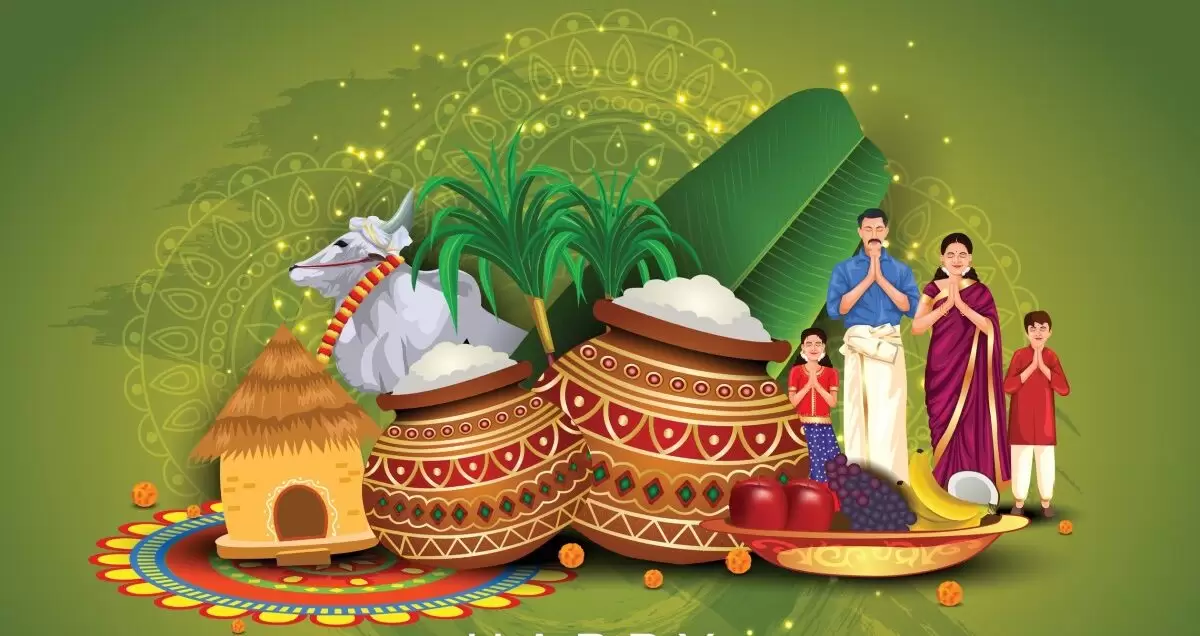
Quick answer: Makar Sankranti is the day the Sun moves into the star sign Makara (Capricorn). It is also a thank-you festival for the harvest. In Tamil Nadu it is called Pongal, and families cook sweet rice until it bubbles over. Children can draw a kolam, make a paper kite, craft a Pongal pot and write a gratitude list.
Key facts for families
| 2027 | |
|---|---|
| Makar Sankranti and Thai Pongal in India | 15 January in India per the panchang; some government lists mark 14 January |
| Bhogi (in India) | Thursday 14 January 2027 |
| Mattu Pongal, the cattle day (in India) | Saturday 16 January 2027 |
| Kaanum Pongal, the visiting day (in India) | Sunday 17 January 2027 |
| Makar Sankranti in the USA, Canada and the UK | Thursday 14 January 2027 |
Confirm the day with your local panchang or temple priest.
What is Makar Sankranti? (explained for children)
Over a year, the Sun seems to travel through twelve star signs. On Makar Sankranti it enters Makara, and families say it has begun its "northward journey", called Uttarayana.
It is also a harvest festival. Families say thank you to the Sun, the farmers, the rain and the cattle that help on farms.
What is it called in different places?
| Where | Name | What children notice |
|---|---|---|
| Tamil Nadu | Pongal (Thai Pongal) | A pot of rice and milk boiling over, and everyone calling "Pongalo Pongal!" |
| Andhra Pradesh and Telangana | Sankranti | Big muggulu (doorstep patterns) and festive sweets |
| Punjab | Lohri (the night before) | A bonfire, songs, peanuts and sweets called rewri and gajak |
| Gujarat | Uttarayan | Kites on every rooftop |
| Assam | Magh Bihu | A community feast |
| Maharashtra | Makar Sankrant | Sesame-and-jaggery sweets, called tilgul, shared with friends |
"Pongal" means "boiling over" in Tamil. When the milk bubbles over the top of the pot, it is a happy sign of plenty. Learn more on our Pongalo Pongal meaning page.
Four Sankranti activities for kids
1. Draw a simple kolam or muggu (ages 4 and up)
A kolam (Tamil) or muggu (Telugu) is a doorstep pattern, often drawn with rice flour.
- Ask an adult where to draw. Indoors, use chalk on dark paper.
- Make five dots in a row. Below it, make five more rows of five dots, so you have a square of 25 dots.
- Join the four outside middle dots (top middle, right middle, bottom middle, left middle) with straight lines to make a big diamond.
- Draw a circle around the centre dot. This is the Sun.
- Draw short lines from the circle outwards, like rays.
- In each corner, draw a small curl or a leaf.
- Colour the Sun yellow or orange with chalk or coloured rice flour.
For bigger patterns, see our guide to Sankranti muggulu.
2. Make a paper kite (ages 6 and up, with an adult)
You need a square of thin paper, two drinking straws or thin wooden sticks, tape, a strip of crepe paper for the tail, and plain cotton thread.
- Fold the paper corner to corner to make a diamond shape.
- Tape one straw from the top point to the bottom point.
- Tape the second straw across the widest part.
- Tape a long crepe-paper tail to the bottom point.
- Ask an adult to tie the cotton thread where the two straws cross.
Kite safety: fly only in an open field or park, never on a rooftop or terrace without a wall and an adult. Stay far away from power lines and roads. Use plain cotton thread only: India's National Green Tribunal banned nylon and synthetic kite string (often called "Chinese manja") in 2017, and glass-coated string cuts hands and hurts birds. If a bird gets tangled, do not pull the string; call an adult.
3. Make a Pongal pot with sugarcane (ages 4 and up)
- Take a paper cup or a small clean tub. Paint it orange-brown like a clay pot.
- Tie a piece of yellow wool around the neck. It stands for the fresh turmeric plant tied to the Pongal pot.
- Stuff white cotton wool or scrunched white tissue at the top so it looks like rice bubbling over.
- Roll brown or green paper into two thin tubes. Draw lines across them every few centimetres so they look like sugarcane, and add paper leaves at the top.
- Stand the "sugarcane" beside the pot on a paper plate.
4. Write a gratitude list (all ages)
Give each child a sheet headed "Thank you for…". Ideas:
- the Sun, for light and warmth
- farmers, for rice, vegetables and sugarcane
- cows and bullocks, for their help on farms
- someone in the family who cooks
Read the lists aloud at the festival meal; little ones can draw instead.
Three very short Sankranti stories to read aloud
Each story says where it comes from. Our Makar Sankranti and Pongal stories page has longer versions with sources.
How the river Ganga came down (from the Ramayana)
This story is in the Ramayana, a holy book. Long ago, the sixty thousand sons of King Sagara, an ancestor of King Bhagiratha, were burnt to ash by an angry sage. Only the water of the Ganga, a river in heaven, could set them free. Bhagiratha prayed for years and years. At last the Ganga agreed to come down. She was so strong that Lord Shiva caught her in his long hair, so she would not break the earth. Then she followed Bhagiratha's chariot all the way to the sea and washed over the ash, and the princes went to heaven. Every year at Makar Sankranti, many pilgrims bathe where the Ganga meets the sea, at Gangasagar.
Andal and the garland (a temple story from Tamil Nadu)
This story is told at the Andal temple in Srivilliputtur. A kind priest found a baby girl under a tulasi plant and named her Kothai. She loved Lord Krishna. Each day she wore the flower garland meant for the god before it was offered. When her father found out, he was upset. That night, the story says, the Lord told him in a dream to offer only the garlands Kothai had worn. She grew up to write beautiful songs, and many temples celebrate her wedding to the Lord on Bhogi.
Why cows and bullocks are thanked (a Tamil folk tale)
This is a folk tale, told by families, not from a holy book. Lord Shiva sent his bull, Basava, to tell people to bathe every day and eat once a month. Basava got mixed up and told them to eat every day and bathe once a month. Now people needed lots more food. So Shiva sent Basava to earth to help farmers plough the fields. That is why, on Mattu Pongal, families bathe and decorate their cattle and say thank you.
Notes for parents
- Bonfires (Bhogi, Lohri): adults light and watch the fire. Burn only dry wood, never plastic, rubber or tyres, and check local air-quality advice and fire rules. Keep children well back, tie back long hair and loose dupattas, and keep water or sand ready. In apartments, never light open flames on balconies.
- Food allergies: sesame and peanuts are in tilgul, chikki and ellu bella, and cashews, ghee and milk are in sakkarai pongal. Sesame is one of the nine major food allergens recognised in the USA. Ask before you share sweets at school or with guests, and label home-made treats.
- Cattle: children should stay calm and keep a safe distance from cows and bullocks, and touch them only with the owner beside them.
- Hot pots: keep children back from the boiling Pongal pot; the froth is very hot.
For the family puja and recipes, see our Thai Pongal puja at home guide and sakkarai pongal recipe.
Frequently asked questions
How do I explain Makar Sankranti to a young child?
Say: "Today the Sun moves into a new star sign, and we say thank you for the harvest." Then show them something real: rice, sugarcane, sesame sweets or a kite.
Why do people fly kites at Sankranti?
Kite flying is a much-loved custom in Gujarat and many other places, especially on the festival day. Use cotton thread and fly in open spaces.
What can we do if we live abroad and it is a school day?
Make the pot craft after school, cook one sweet and tell one story at dinner. Many temples and community groups hold events on the nearest weekend.
Are the stories true?
Some come from holy books like the Ramayana, some are temple traditions and some are folk tales. Tell children which kind each one is.
Sources
- Drik Panchang, Makar Sankranti and Pongal 2027 dates, via our 2027 date data (accessed November 2026).
- University of Madras Tamil Lexicon (Digital South Asia Library), entry "pongal" (boiling, bubbling; the solar festival): https://dsal.uchicago.edu/cgi-bin/app/tamil-lex_query.py?qs=%E0%AE%AA%E0%AF%8A%E0%AE%99%E0%AF%8D%E0%AE%95%E0%AE%B2%E0%AF%8D&searchhws=yes&matchtype=exact (accessed 12 November 2026).
- National Heritage Board, Singapore, Roots.sg, "Pongal" (boiling over; Pongalo Pongal; kolam; sugarcane): https://www.roots.gov.sg/ich-landing/ich/pongal (accessed 12 November 2026).
- National Green Tribunal, Principal Bench, judgment of 11 July 2017 in Khalid Ashraf v. Union of India, O.A. 384 of 2016, copy hosted by the Government of Puducherry: https://dste.py.gov.in/ppcc/pdf/Legal/Hon%E2%80%99ble%20NGT%20Orders/384%20of%202016%20dt.%2011.07.2017.pdf (accessed 12 November 2026).
- US Food and Drug Administration, "Food Allergies" (nine major allergens including sesame; FASTER Act 2021): https://www.fda.gov/food/nutrition-food-labeling-and-critical-foods/food-allergies (accessed 12 November 2026).
- Ministry of Tourism, Government of India (Incredible India), "Srivilliputtur Andal Temple": https://www.incredibleindia.gov.in/en/tamil-nadu/madurai/srivilliputtur-andal-temple (accessed 12 November 2026).
- Valmiki Ramayana, Bala Kanda, sargas 38–44, IIT Kanpur Valmiki Ramayana site: https://heritage.iitk.ac.in/valmiki/sloka?field_kanda_tid=1&language=dv&field_sarga_value=43 (accessed 12 November 2026).
- DT Next, "Legends of the festival", 13 January 2018 (Basava folk tale): https://www.dtnext.in/news/tamilnadu/legends-of-the-festival (accessed 12 November 2026).
Last reviewed: 12 November 2026.
Related guides
Share this with family and friends
Send it on WhatsApp, post it, or copy the link.
More from Festivals
- Chhath Puja 2026 in Dubai and the UAE: Dates, Arghya Times and How Families Celebrate
- Importance of Lakes in Chhath Puja: Spiritual Significance, Rituals and the Message of Water Conservation
- Makar Sankranti in Rajasthan: Kites, Holy Dips, Daan and Winter Sweets
- Makar Sankranti Sayings by Region: What They Mean and When They Are Said
- Haridwar Makar Sankranti Snan: A Guide to Har Ki Pauri, the Ganga Aarti and the Ardh Kumbh
You might also like
Pongal and Makar Sankranti in the UAE and the Gulf
Makar Sankranti and Pongal in Australia: A Midsummer Festival Guide
Makar Sankranti and Pongal in Canada: Times by Province, Tamil Heritage Month and Winter Tips