Varalakshmi Vratam 2026 Puja Timings: Four Lagna Muhurats Explained
The four lagna windows for Varalakshmi Vratam puja — Simha (morning), Vrishchika (midday), Kumbha (evening) and Vrishabha (night) — explained, with a decision table and working-day guidance.
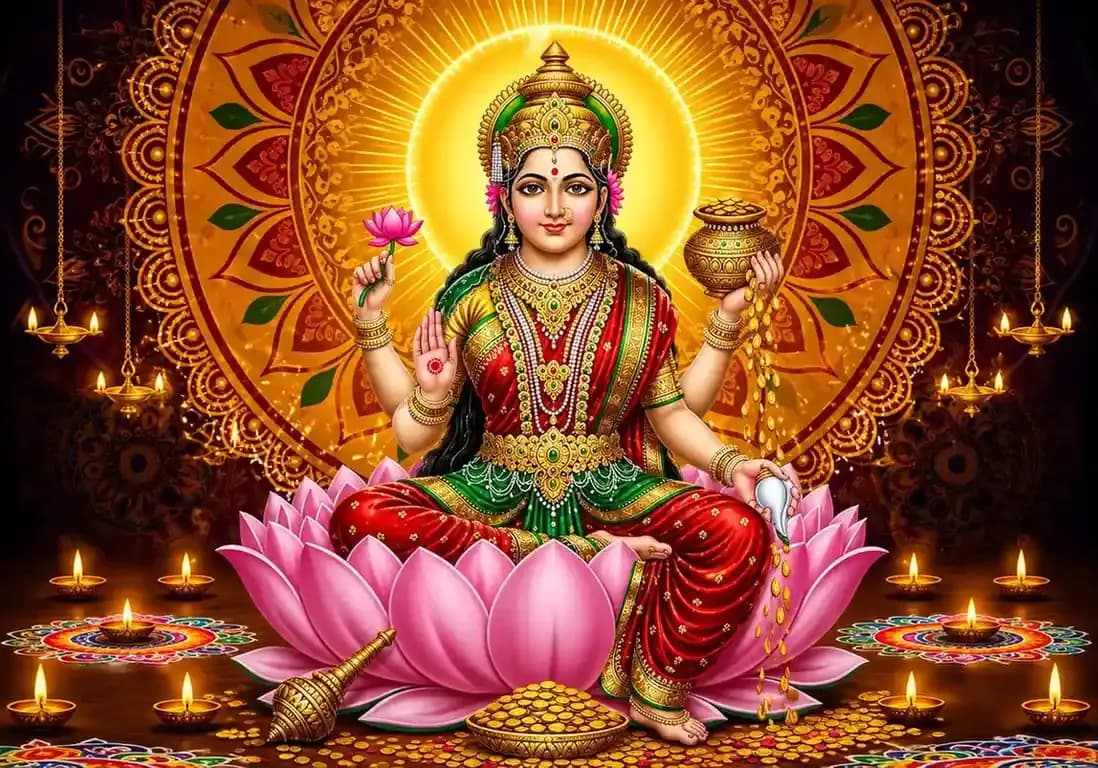
The four lagna windows for Varalakshmi Vratam puja — Simha (morning), Vrishchika (midday), Kumbha (evening) and Vrishabha (night) — explained, with a decision table and working-day guidance.
Quick answer: Varalakshmi Vratam 2026 falls on Friday 21 August 2026 in most Telugu, Tamil and Kannada panchangs, and Friday 28 August 2026 in some others; follow your family or local-temple tradition. Puja is performed in one of four sthira (fixed) lagna windows — Simha, Vrishchika, Kumbha or Vrishabha — with the morning Simha lagna traditionally most preferred. Take exact clock times from your city's panchang.
Varalakshmi Vratam is one of the most cherished vratas of Sravana Masam, observed by married women (and, in many families, by anyone devoted to the Goddess) to honour Maha Lakshmi in her boon-granting form as Varalakshmi. In 2026 the vratam falls on Friday 21 August 2026 according to most Telugu, Tamil and Kannada panchangs, and on Friday 28 August 2026 according to some panchangs. Neither is wrong — the difference comes from how each panchang fixes the last Friday of the Sukla Paksha in Sravana. Please follow your family, kula or local-temple tradition.
One question decides how families plan the whole day: when exactly should the puja be done? Traditionally the Kalasha (or the Lakshmi vigraha/photo) is worshipped during a sthira lagna — a "fixed" ascendant sign — because sthira lagnas are considered auspicious for inviting the Goddess to stay steadily in the home. There are four such windows across the day. This guide explains each one, why it is chosen, which is traditionally preferred, and what to do if none of them fits your working Friday.
What is a lagna muhurat, and why four windows?
A lagna is the zodiac sign rising on the eastern horizon at a given moment. Because the earth rotates, a new sign rises roughly every two hours, so each lagna recurs once per day. In Vedic tradition the twelve signs are grouped into chara (movable), sthira (fixed) and dvisvabhava (dual). The four sthira (fixed) signs are Vrishabha (Taurus), Simha (Leo), Vrishchika (Scorpio) and Kumbha (Aquarius). Because Varalakshmi puja seeks the Goddess's steady, lasting presence, these fixed lagnas are traditionally favoured.
Since these four fixed signs are spread evenly around the zodiac, their rising times fall at four different parts of the day — roughly morning, midday, evening and night. That is why panchangs list up to four Varalakshmi puja muhurats. You choose the one window that best suits your household, and you need only ONE of them, not all four.
The four lagna windows explained
1. Simha Lagna — the morning window (most preferred)
Simha (Leo) is the sign of the Sun, associated with brightness, dignity and the peak of the day. Its lagna rises in the morning, which is why the Simha lagna muhurat is the one most families aim for and the one most temples and elders recommend. Morning is calm, the household is fresh, the fast has just begun, and there is time to complete the puja unhurried before the day's activity. If you can manage only one window, tradition points to this one.
2. Vrishchika Lagna — the midday window
Vrishchika (Scorpio) rises around the middle of the day. This midday window suits families who could not finish preparations in time for the morning Simha lagna, or who prefer to complete cooking and decoration first and then sit for puja closer to noon. It is a fully valid sthira lagna and carries the same auspicious quality; it is simply later in the day.
3. Kumbha Lagna — the evening window
Kumbha (Aquarius) rises in the evening. For many working households this is the most practical window: the puja is performed after returning home, in the softer light of dusk, often when more family members can gather. Evening Varalakshmi puja is a long-standing practice in many Telugu, Tamil and Kannada homes and should never be seen as a lesser option.
4. Vrishabha Lagna — the night window
Vrishabha (Taurus) rises at night. Ruled by Shukra (Venus), the natural karaka of Lakshmi and prosperity, the Vrishabha lagna is especially dear to the Goddess and is chosen by families who prefer or can only manage a night puja — for example after a full working day, or when elders traditionally kept the puja for the quiet of the evening. It is a beautiful, valid window.
At-a-glance: the four windows
The table below summarises the four sthira lagnas. It deliberately does NOT print clock times, because the exact start and end of each lagna depends entirely on your latitude and longitude — a Simha lagna in Hyderabad, Chennai, Delhi, New Jersey or Sydney all begin at different local clock times. Take the precise timing for your city from a trusted local panchang.
| Lagna (fixed sign) | Part of day | Ruling planet | Notes |
|---|---|---|---|
| Simha (Leo) | Morning | Surya (Sun) | Traditionally most preferred |
| Vrishchika (Scorpio) | Midday | Mangala (Mars) | Good if morning is missed |
| Kumbha (Aquarius) | Evening | Shani (Saturn) | Practical for working homes |
| Vrishabha (Taurus) | Night | Shukra (Venus) | Venus is Lakshmi's karaka |
How to choose your window: a decision guide
Use the table below to match your Friday to a window. All four are auspicious; the goal is a calm, complete, devotional puja — not squeezing into a "better" slot at the cost of peace.
| Your situation | Suggested window |
|---|---|
| You are free in the morning and want the most traditional time | Simha lagna (morning) |
| Morning was too rushed to finish preparations | Vrishchika lagna (midday) |
| You work during the day and return by evening | Kumbha lagna (evening) |
| You can only sit for puja after everyone is home at night | Vrishabha lagna (night) |
| Elders in your family always keep a fixed traditional time | Follow the family/kula time |
A simple order for the day
Whichever lagna you choose, the flow of the day is broadly the same. Timings and small steps vary by region and family; treat this as a general template, not a rulebook.
- In the morning, bathe and clean the puja area; draw a rangoli/muggu at the threshold and near the puja spot.
- Prepare the Kalasham: a metal pot with water, adorned with turmeric, kumkum, and a coconut on top, dressed as the Goddess with a face/photo, jewellery and a saree if that is your custom.
- Arrange the naivedyam — many families make items considered special to Lakshmi; keep it simple and heartfelt.
- Take a sankalpam (resolve) and, at your chosen lagna window, perform the puja: invoke Varalakshmi, offer the shodashopachara upacharas, and tie/offer the sacred thread (toram) as per your tradition.
- Recite the Varalakshmi Vratam katha and, if your family does, the Sri Lakshmi Ashtottara or Sri Suktam (public-domain stotras).
- Conclude with aarti, distribute prasadam and tambulam, and honour married women (muthaiduva) if that is your custom.
What to do if no window fits a working day
Many devotees work on a Friday and worry that they will "miss" the muhurat. Please do not let this cause anxiety — the vratam is a devotional act, and the Goddess responds to bhakti, not to a stopwatch. Consider these options, all widely practised:
- Choose the evening (Kumbha) or night (Vrishabha) window so the puja happens after work.
- Do a shortened but sincere puja within your available window rather than skipping it.
- Ask an elder or priest to guide a simple sankalpam you can complete in a few minutes.
- In some families and regions the vratam is kept on the Friday most convenient to the household within Sravana — confirm this with your elders or local temple before shifting the day.
- For NRIs, decide first which panchang your family follows, then read that panchang's local lagna times for your city.
If you are abroad and unsure which panchang to align to, our guide on which panchang NRIs should follow walks through how to pick one and stay consistent year to year.
A note on the 2026 date
Because the muhurat windows depend on the date, remember that Varalakshmi Vratam 2026 is observed on Friday 21 August 2026 by most Telugu, Tamil and Kannada panchangs and on Friday 28 August 2026 by some panchangs. We explain exactly why the two dates arise, and how to decide for your family, on the Varalakshmi Vratam 2026 date page. Whichever Friday your family keeps, apply the same four-lagna logic on that day.
Related reading
- Varalakshmi Vratam 2026: date, meaning and full guide
- Varalakshmi Vratam 2026 puja vidhi (step-by-step)
- Sravana Masam 2026 calendar and dates
Frequently Asked Questions
What are the puja timings for Varalakshmi Vratam 2026?
Varalakshmi Vratam 2026 puja is done in one of four sthira (fixed) lagna windows — Simha (morning), Vrishchika (midday), Kumbha (evening) and Vrishabha (night). The morning Simha lagna is traditionally most preferred. Exact clock times depend on your city, so take them from your local panchang rather than a fixed all-India time.
Which lagna is best for Varalakshmi puja?
The morning Simha (Leo) lagna is traditionally the most preferred window, as morning is calm and the fast has just begun. However, all four fixed lagnas — Simha, Vrishchika, Kumbha and Vrishabha — are equally auspicious. Choose the one that lets your household perform a complete, unhurried, devotional puja.
What if I have to work and can't do the morning puja?
Do not worry — the vratam honours devotion, not the clock. Working devotees commonly choose the evening Kumbha lagna or the night Vrishabha lagna so the puja happens after work. A shorter but sincere puja within your available window is far better than skipping it. Consult an elder or priest for a quick sankalpam.
Is evening or night Varalakshmi puja acceptable?
Yes, absolutely. The Kumbha (Aquarius) evening lagna and the Vrishabha (Taurus) night lagna are both fixed, auspicious windows practised in many Telugu, Tamil and Kannada homes. Vrishabha is ruled by Shukra (Venus), the karaka of Lakshmi, making the night window especially dear to the Goddess. Neither is a lesser option than the morning.
Why are there four different puja timings?
The four windows correspond to the four sthira (fixed) zodiac signs — Vrishabha, Simha, Vrishchika and Kumbha — which rise at four different parts of the day. Fixed lagnas are chosen because they symbolise the Goddess settling steadily in the home. You need only one window, not all four; pick whichever suits your family.
Is Varalakshmi Vratam 2026 on 21 or 28 August?
Most Telugu, Tamil and Kannada panchangs place Varalakshmi Vratam 2026 on Friday 21 August 2026, while some panchangs place it on Friday 28 August 2026. Both follow valid rules for fixing the Sravana Friday. Follow your family, kula or local-temple tradition, and apply the same four-lagna timing logic to whichever Friday you keep.
Do the lagna timings change by city?
Yes. A lagna is the zodiac sign rising on the eastern horizon, so its clock time depends on your latitude and longitude. Simha lagna begins at different local times in Hyderabad, Chennai, Delhi, New Jersey and Sydney. Always take the exact start and end of your chosen window from a trusted panchang for your specific city.
Can NRIs follow the same four lagna windows?
Yes. The four-lagna framework applies everywhere; only the local clock times differ. NRIs should first decide which panchang their family follows, then read that panchang's lagna times for their own city. If unsure which panchang to align to, read our guide on which panchang NRIs should follow to stay consistent each year.
You might also like

Jagaddhatri Puja 2026: Dates, Chandannagar's Dazzling Lights & Significance

Rama Ekadashi 2026: Date, Vrat Katha, Puja Vidhi & Significance

Champa Shashthi 2026: Date, Khandoba Worship & Jejuri's Golden Festival