Pitru Paksha 2026 Start Date: Is It 26 or 27 September?
Some panchangs open Pitru Paksha 2026 on Saturday 26 September with Purnima Shraddha; others begin on Sunday 27 September with Pratipada. This calm guide explains why both are defensible.
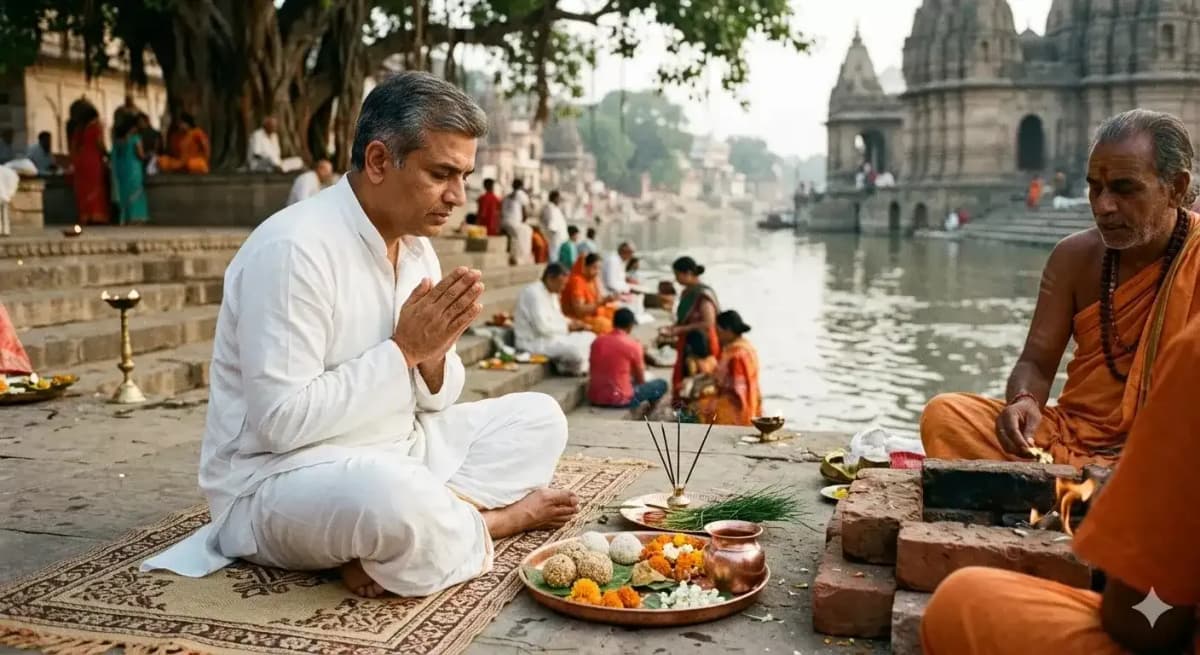
Some panchangs open Pitru Paksha 2026 on Saturday 26 September with Purnima Shraddha; others begin on Sunday 27 September with Pratipada. This calm guide explains why both are defensible.
Quick answer: Pitru Paksha 2026 begins around 26 or 27 September and closes on Sarva Pitru Amavasya, Saturday 10 October 2026. Some traditions count Purnima Shraddha (Sat 26 Sep) as day one; others start with Pratipada Shraddha (Sun 27 Sep). Both readings are traditionally accepted, so follow your family's practice.
If you have come here worried that you might observe Pitru Paksha on the wrong day, please take a breath. This is a common question, and the short answer is reassuring: there is no single "correct" start date that every household must follow. Two long-standing reckonings exist side by side, and both are honoured by learned priests and panchangs.
Pitru Paksha is the fortnight our tradition sets aside to remember and honour our departed elders through tarpan, shraddha and daan. In 2026 the fortnight falls in late September and early October, and the small ambiguity about whether it opens on Saturday 26 September or Sunday 27 September comes from how a particular tithi is counted — not from any error on your part.
- Occasion: Pitru Paksha 2026 (Mahalaya Paksha)
- Possible start: Sat 26 Sep 2026 (Purnima Shraddha) or Sun 27 Sep 2026 (Pratipada Shraddha)
- Ends: Sarva Pitru Amavasya, Sat 10 Oct 2026
- Lunar month: Bhadrapada Krishna Paksha
- Region note: Confirm the daily tithi with your local panchang or family priest
Why two different start dates?
The confusion is genuinely just a matter of where you place the boundary line. Pitru Paksha is the dark fortnight (Krishna Paksha) of Bhadrapada, running up to Amavasya. Purnima — the full moon that immediately precedes this fortnight — hosts a special shraddha for a category of ancestors, and many almanacs treat that Purnima Shraddha day as the effective opening of the observance.
Other reckonings mark the beginning strictly from Pratipada, the first tithi of the waning fortnight, which is the technically "first day" of Krishna Paksha. Both approaches have textual and customary backing, which is exactly why you will see reputable calendars printing slightly different opening dates.
The 26 vs 27 September question in plain terms
In 2026, Purnima Shraddha falls on Saturday 26 September and Pratipada Shraddha on Sunday 27 September. If your family tradition or panchang counts from Purnima, your Pitru Paksha "begins" on the 26th. If it counts from Pratipada, it "begins" on the 27th. Neither is a mistake. The fortnight ends the same way for everyone — at Sarva Pitru Amavasya on Saturday 10 October 2026.
| Reckoning | Day one | Tithi | Reasoning |
|---|---|---|---|
| Purnima-inclusive | Sat 26 Sep 2026 | Bhadrapada Purnima | Purnima Shraddha is treated as the opening rite of the paksha |
| Pratipada-first | Sun 27 Sep 2026 | Krishna Pratipada | Krishna Paksha technically begins on Pratipada |
| Common close | Sat 10 Oct 2026 | Amavasya | Sarva Pitru / Mahalaya Amavasya — shared end for both |
What matters more than the start date
In practice, the day that carries the greatest weight for most families is not day one at all — it is the specific tithi on which your ancestor passed away. Shraddha is traditionally performed on the tithi (lunar day) corresponding to the elder's death, whichever calendar-date that lands on during the fortnight. So whether your paksha "opens" on the 26th or 27th rarely changes when you personally observe the rite.
- Find the tithi on which your elder passed (many families record this; a priest can help identify it).
- Locate that same tithi within the 26 September to 10 October window using a reliable panchang.
- Observe shraddha or tarpan on that day, following your family's custom.
- If the tithi is unknown or was missed, observe on Sarva Pitru Amavasya (10 Oct 2026), which is provided for exactly this reason.
If you do not know the tithi, cannot travel, or have no one to perform it
This is where the tradition is quietly generous, and it is worth saying gently: you are not left without a path. Sarva Pitru Amavasya on Saturday 10 October 2026 exists specifically for all ancestors whose tithi is unknown, forgotten, or missed. If you cannot recall the exact day, or the fortnight slips by, this single day is traditionally held to cover every departed elder of the family.
- Unknown tithi: observe on Sarva Pitru Amavasya (10 Oct 2026), the day designed for this.
- Cannot travel to Gaya, Kashi or Prayagraj: tarpan and shraddha performed with sincerity at home are traditionally accepted; pilgrimage is an option, never a requirement.
- No male family member available: many families and priests today accept a daughter, wife or other relative performing the rites; see the linked guidance below.
- Living abroad or short on time: simple tarpan, a meal offered to others, or daan given in the elder's name are all honoured forms.
- Estranged or uncertain relationship: remembrance and offering are open to you; the tradition frames these rites as compassion, not obligation.
On who may perform the shraddha
Classical texts often describe the son performing shraddha, and in many households a male relative still does. But this is not the only accepted view. A great many families and priests today welcome a daughter, a wife, a grandchild or another relative to offer the rites, especially where no son is present. If your situation does not fit the older template, please do not feel excluded — the intention to honour and remember is what the tradition holds dearest.
A calm summary
So, is Pitru Paksha 2026 on the 26th or the 27th of September? The honest and reassuring answer is: it can be either, depending on whether your panchang counts from Purnima Shraddha or from Pratipada. Both are correct within their own reckoning. Confirm the daily tithi with your family priest or a trusted local almanac, remember that your ancestor's own death-tithi usually matters more than day one, and rest in the knowledge that Sarva Pitru Amavasya on 10 October 2026 gathers everyone in.
Related reading
- Pitru Paksha 2026: complete guide
- Day-by-day tithi calendar for the fortnight
- Sarva Pitru Amavasya 2026 — the day for unknown tithis
- Can a daughter perform shraddha?
- Pitru Paksha 2026 guide for NRIs
- Bhadrapada Masam 2026 — the month overview
Frequently Asked Questions
Is Pitru Paksha 2026 on 26 or 27 September?
Both dates are used. Panchangs that count from Purnima Shraddha open on Saturday 26 September 2026; those that begin with Pratipada Shraddha open on Sunday 27 September 2026. Both are traditionally accepted, so follow your family's or priest's reckoning.
When does Pitru Paksha 2026 end?
It closes on Sarva Pitru Amavasya, also called Mahalaya Amavasya, on Saturday 10 October 2026. This end date is the same regardless of whether you counted the start from the 26th or the 27th of September.
Why do calendars show different start dates?
Because they place the boundary differently. Some treat Purnima Shraddha (the full-moon day before the fortnight) as the opening; others begin strictly at Pratipada, the first tithi of the waning fortnight. Both have textual and customary support.
Which start date should I follow?
Follow the one your family has traditionally used, or the panchang your local priest keeps. There is no penalty for either choice, and your ancestor's specific death-tithi usually matters more than which day is called day one.
I do not know my ancestor's tithi — what do I do?
Observe on Sarva Pitru Amavasya, Saturday 10 October 2026. This day exists precisely for ancestors whose tithi is unknown, forgotten or missed, and it is traditionally held to cover every departed elder of the family.
I live abroad and cannot travel to India — is that a problem?
No. Tarpan and shraddha performed sincerely at home are traditionally accepted, and pilgrimage to Gaya, Kashi or Prayagraj is an option rather than a requirement. Diaspora families may follow either the India tithi or their local one; your family or temple can guide you. See the NRI guide linked above.
Who is allowed to perform the shraddha?
Classical texts often mention the son, but many families and priests today accept a daughter, wife, grandchild or other relative, especially when no son is present. If your situation differs from the older template, you are not excluded.
What if I miss the fortnight entirely?
Sarva Pitru Amavasya on 10 October 2026 is provided for exactly this. Even a simple tarpan, a meal offered to others, or daan given in an elder's name are honoured forms of remembrance if the fortnight has passed.
You might also like

Rama Ekadashi 2026: Date, Vrat Katha, Puja Vidhi & Significance

Champa Shashthi 2026: Date, Khandoba Worship & Jejuri's Golden Festival

Kati Bihu 2026: Date, Rituals & Assam's Festival of Earthen Lamps