Ganesh Chalisa Lyrics in Hindi with Meaning, and Jai Ganesh Deva Aarti
The Ganesh Chalisa praises Lord Ganesha in forty verses and retells the story of his birth, his elephant head and how he became the one worshipped first. Here is the full Hindi text with transliteration, a plain-English meaning of every doha and chaupai, the Jai Ganesh Deva aarti, and simple guidance for Wednesdays, Sankashti and Ganesh Chaturthi.
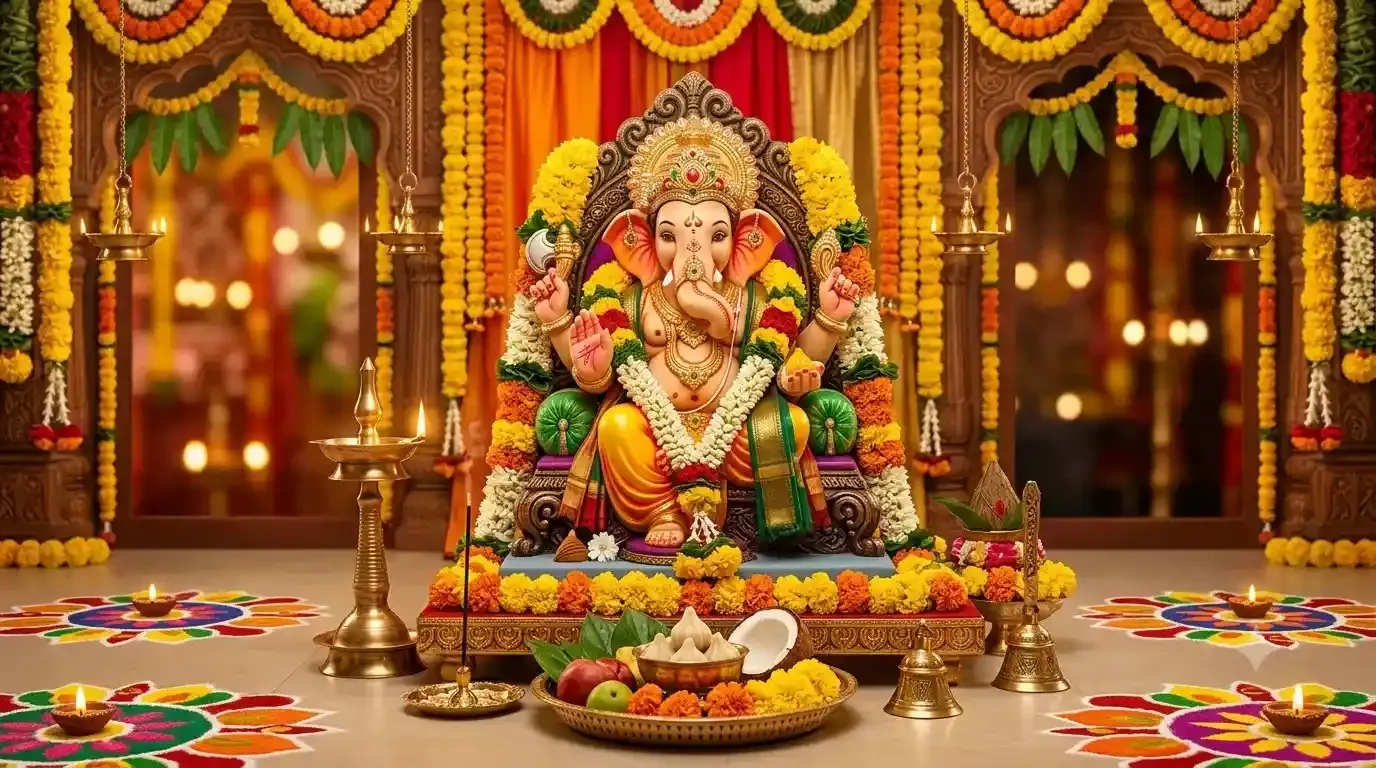
The Ganesh Chalisa praises Lord Ganesha in forty verses and retells the story of his birth, his elephant head and how he became the one worshipped first. Here is the full Hindi text with transliteration, a plain-English meaning of every doha and chaupai, the Jai Ganesh Deva aarti, and simple guidance for Wednesdays, Sankashti and Ganesh Chaturthi.
Quick answer: The Ganesh Chalisa is a Hindi devotional hymn of about forty verses to Lord Ganesha that begins "Jai Ganapati sadgun sadan". It opens with a doha, has a series of chaupais (rhyming couplets) that describe Ganesha's form and tell the stories of his birth, his elephant head and how he won the right to be worshipped first, and ends with a closing doha. As traditionally attributed, it was composed by the poet Ramsundar, whose name appears in the text. Families read it on Wednesdays, on Sankashti Chaturthi and during Ganesh Chaturthi, usually followed by the aarti "Jai Ganesh Jai Ganesh Jai Ganesh Deva". A full reading takes about ten minutes.
This guide has been restored at its original hindutone.com address. Below you will find the complete text in Devanagari and English transliteration, a plain-English meaning after every verse, the aarti with its meaning, and simple guidance on how and when to recite.
Ganesh Chalisa lyrics in Hindi with meaning
The text follows the Hindi edition on sanskritdocuments.org. Each verse is shown in Devanagari, then in transliteration, then in simple English. The meanings stay close to the Hindi and Awadhi words but are not word-for-word, so that the devotional sense comes through clearly. We number the chaupais from the first couplet after the opening doha.
Opening doha
जय गणपति सद्गुणसदन कविवर बदन कृपाल ।
विघ्न हरण मंगल करण जय जय गिरिजालाल ॥
jaya gaṇapati sadguṇasadana kavivara badana kṛpāla |
vighna haraṇa maṃgala karaṇa jaya jaya girijālāla ||
Doha meaning: Victory to Ganapati, the home of all good qualities, whose gracious face is praised by the finest poets. He removes obstacles and brings auspiciousness. Victory, victory to the beloved son of Girija (Parvati).
Chaupais 1 to 8: the form of Ganesha
जय जय जय गणपति राजू । मंगल भरण करण शुभ काजू ॥
jaya jaya jaya gaṇapati rājū | maṃgala bharaṇa karaṇa śubha kājū ||
Chaupai 1 meaning: Victory, victory, victory to King Ganapati, who fills life with blessings and brings good works to completion.
जय गजबदन सदन सुखदाता । विश्व विनायक बुद्धि विधाता ॥
jaya gajabadana sadana sukhadātā | viśva vināyaka buddhi vidhātā ||
Chaupai 2 meaning: Victory to the elephant-faced Lord, home of happiness and giver of joy, Vinayaka of the whole world and bestower of wisdom.
वक्र तुण्ड शुचि शुण्ड सुहावन । तिलक त्रिपुण्ड भाल मन भावन ॥
vakra tuṇḍa śuci śuṇḍa suhāvana | tilaka tripuṇḍa bhāla mana bhāvana ||
Chaupai 3 meaning: Your curved trunk is pure and lovely, and the three-line tilak on your forehead delights the mind.
राजित मणि मुक्तन उर माला । स्वर्ण मुकुट शिर नयन विशाला ॥
rājita maṇi muktana ura mālā | svarṇa mukuṭa śira nayana viśālā ||
Chaupai 4 meaning: A garland of gems and pearls shines on your chest, a golden crown sits on your head, and your eyes are large.
पुस्तक पाणि कुठार त्रिशूलं । मोदक भोग सुगन्धित फूलं ॥
pustaka pāṇi kuṭhāra triśūlaṃ | modaka bhoga sugandhita phūlaṃ ||
Chaupai 5 meaning: In your hands you hold a book, an axe and a trident, and you are offered modakas and fragrant flowers.
सुन्दर पीताम्बर तन साजित । चरण पादुका मुनि मन राजित ॥
sundara pītāmbara tana sājita | caraṇa pādukā muni mana rājita ||
Chaupai 6 meaning: Beautiful yellow silk adorns your body, and your sandalled feet shine in the hearts of the sages.
धनि शिवसुवन षडानन भ्राता । गौरी ललन विश्व-विधाता ॥
dhani śivasuvana ṣaḍānana bhrātā | gaurī lalana viśva-vidhātā ||
Chaupai 7 meaning: Blessed are you, son of Shiva and brother of six-faced Kartikeya, darling of Gauri and sustainer of the world.
ऋद्धि सिद्धि तव चँवर सुधारे । मूषक वाहन सोहत द्वारे ॥
ṛddhi siddhi tava ca~vara sudhāre | mūṣaka vāhana sohata dvāre ||
Chaupai 8 meaning: Riddhi and Siddhi wave the fly-whisk for you, and your mouse vehicle looks splendid at your door.
Chaupais 9 to 19: the story of his birth
कहौं जन्म शुभ कथा तुम्हारी । अति शुचि पावन मंगल कारी ॥
kahauṃ janma śubha kathā tumhārī | ati śuci pāvana maṃgala kārī ||
Chaupai 9 meaning: Now I shall tell the auspicious story of your birth, which is most pure, holy and full of blessing.
एक समय गिरिराज कुमारी । पुत्र हेतु तप कीन्हा भारी ॥
eka samaya girirāja kumārī | putra hetu tapa kīnhā bhārī ||
Chaupai 10 meaning: Once the daughter of the mountain king (Parvati) performed great austerity, wishing for a son.
भयो यज्ञ जब पूर्ण अनूपा । तब पहुँच्यो तुम धरि द्विज रूपा ॥
bhayo yajña jaba pūrṇa anūpā | taba pahu~cyo tuma dhari dvija rūpā ||
Chaupai 11 meaning: When her matchless sacrifice was complete, you arrived there in the form of a Brahmin.
अतिथि जानि कै गौरी सुखारी । बहु विधि सेवा करी तुम्हारी ॥
atithi jāni kai gaurī sukhārī | bahu vidhi sevā karī tumhārī ||
Chaupai 12 meaning: Knowing you to be a guest, Gauri was delighted and served you in many ways.
अति प्रसन्न ह्वै तुम वर दीन्हा । मातु पुत्र हित जो तप कीन्हा ॥
ati prasanna hvai tuma vara dīnhā | mātu putra hita jo tapa kīnhā ||
Chaupai 13 meaning: Greatly pleased, you granted a boon for the austerity the mother had done for the sake of a son.
मिलहि पुत्र तुहि बुद्धि विशाला । बिना गर्भ धारण यहि काला ॥
milahi putra tuhi buddhi viśālā | binā garbha dhāraṇa yahi kālā ||
Chaupai 14 meaning: "You will have a son of vast wisdom, at this very time, without carrying him in the womb."
गणनायक गुण ज्ञान निधाना । पूजित प्रथम रूप भगवाना ॥
gaṇanāyaka guṇa jñāna nidhānā | pūjita prathama rūpa bhagavānā ||
Chaupai 15 meaning: "He will be the leader of the ganas, a treasury of virtue and knowledge, the form of the Lord who is worshipped first."
अस कहि अन्तर्ध्यान रूप ह्वै । पलना पर बालक स्वरूप ह्वै ॥
asa kahi antardhyāna rūpa hvai | palanā para bālaka svarūpa hvai ||
Chaupai 16 meaning: Saying this, you vanished and appeared as a baby lying in the cradle.
बनि शिशु रुदन जबहि तुम ठाना । लखि मुख सुख नहिं गौरि समाना ॥
bani śiśu rudana jabahi tuma ṭhānā | lakhi mukha sukha nahiṃ gauri samānā ||
Chaupai 17 meaning: When you, as an infant, began to cry, Gauri looked at your face and felt a joy beyond compare.
सकल मगन सुख मंगल गावहिं । नभ ते सुरन सुमन वर्षावहिं ॥
sakala magana sukha maṃgala gāvahiṃ | nabha te surana sumana varṣāvahiṃ ||
Chaupai 18 meaning: Everyone, lost in happiness, sang songs of blessing, and the gods showered flowers from the sky.
शम्भु उमा बहुदान लुटावहिं । सुर मुनि जन सुत देखन आवहिं ॥
śambhu umā bahudāna luṭāvahiṃ | sura muni jana suta dekhana āvahiṃ ||
Chaupai 19 meaning: Shambhu and Uma gave away gifts generously, and gods, sages and people came to see the son.
Chaupais 20 to 30: Shani's glance and the elephant head
लखि अति आनन्द मंगल साजा । देखन भी आये शनि राजा ॥
lakhi ati ānanda maṃgala sājā | dekhana bhī āye śani rājā ||
Chaupai 20 meaning: Seeing the great joy and the festive arrangements, King Shani also came to see the child.
निज अवगुण गुनि शनि मन माहीं । बालक देखन चाहत नाहीं ॥
nija avaguṇa guni śani mana māhīṃ | bālaka dekhana cāhata nāhīṃ ||
Chaupai 21 meaning: Aware in his own mind of the harm his gaze could do, Shani did not wish to look at the child.
गिरजा कछु मन भेद बढ़ायो । उत्सव मोर न शनि तुहि भायो ॥
girajā kachu mana bheda bar̤hāyo | utsava mora na śani tuhi bhāyo ||
Chaupai 22 meaning: Girija felt hurt and said, "Shani, does my celebration not please you?"
कहन लगे शनि मन सकुचाई । का करिहौ शिशु मोहि दिखाई ॥
kahana lage śani mana sakucāī | kā karihau śiśu mohi dikhāī ||
Chaupai 23 meaning: Shani, hesitant at heart, replied, "What will you gain by showing me the child?"
नहिं विश्वास उमा कर भयऊ । शनि सों बालक देखन कह्यऊ ॥
nahiṃ viśvāsa umā kara bhayaū | śani soṃ bālaka dekhana kahyaū ||
Chaupai 24 meaning: Uma was not convinced, and asked Shani to look at the child.
पड़तहिं शनि दृग कोण प्रकाशा । बालक शिर इड़ि गयो आकाशा ॥
par̤atahiṃ śani dṛga koṇa prakāśā | bālaka śira ir̤i gayo ākāśā ||
Chaupai 25 meaning: As soon as the light from the corner of Shani's eye fell on him, the child's head flew off into the sky.
गिरजा गिरीं विकल ह्वै धरणी । सो दुख दशा गयो नहिं वरणी ॥
girajā girīṃ vikala hvai dharaṇī | so dukha daśā gayo nahiṃ varaṇī ||
Chaupai 26 meaning: Girija fell to the ground in anguish; that state of grief cannot be described.
हाहाकार मच्यो कैलाशा । शनि कीन्ह्यों लखि सुत को नाशा ॥
hāhākāra macyo kailāśā | śani kīnhyoṃ lakhi suta ko nāśā ||
Chaupai 27 meaning: A cry of distress rose across Kailasa: Shani has caused the death of the son!
तुरत गरुड़ चढ़ि विष्णु सिधाये । काटि चक्र सो गज शिर लाये ॥
turata garur̤a car̤hi viṣṇu sidhāye | kāṭi cakra so gaja śira lāye ||
Chaupai 28 meaning: At once Vishnu set out on Garuda, and with his discus cut and brought back an elephant's head.
बालक के धड़ ऊपर धारयो । प्राण मंत्र पढ़ शंकर डारयो ॥
bālaka ke dhar̤a ūpara dhārayo | prāṇa maṃtra par̤ha śaṃkara ḍārayo ||
Chaupai 29 meaning: He placed it upon the child's body, and Shankara breathed life into him with the mantra of life.
नाम गणेश शम्भु तब कीन्हे । प्रथम पूज्य बुद्धि निधि वर दीन्हे ॥
nāma gaṇeśa śambhu taba kīnhe | prathama pūjya buddhi nidhi vara dīnhe ||
Chaupai 30 meaning: Then Shambhu gave him the name Ganesha and blessed him to be worshipped first and to be a treasury of wisdom.
Chaupais 31 to 34: circling his parents
बुद्धि परीक्शा जब शिव कीन्हा । पृथ्वी की प्रदक्शिणा लीन्हा ॥
buddhi parīkśā jaba śiva kīnhā | pṛthvī kī pradakśiṇā līnhā ||
Chaupai 31 meaning: When Shiva set a test of wisdom, it was a race to circle the whole earth.
चले षडानन भरमि भुलाई । रची बैठ तुम बुद्धि उपाई ॥
cale ṣaḍānana bharami bhulāī | racī baiṭha tuma buddhi upāī ||
Chaupai 32 meaning: Six-faced Kartikeya set off and wandered far, while you sat and thought of a wise plan.
चरण मातु-पितु के धर लीन्हें । तिनके सात प्रदक्शिण कीन्हें ॥
caraṇa mātu-pitu ke dhara līnheṃ | tinake sāta pradakśiṇa kīnheṃ ||
Chaupai 33 meaning: You took hold of the feet of your mother and father and walked around them seven times.
धनि गणेश कहि शिव हिय हरषे । नभ ते सुरन सुमन बहु बरसे ॥
dhani gaṇeśa kahi śiva hiya haraṣe | nabha te surana sumana bahu barase ||
Chaupai 34 meaning: "Blessed is Ganesha!" said Shiva, his heart overjoyed, and the gods showered many flowers from the sky.
Chaupais 35 to 38: the poet's prayer
तुम्हरी महिमा बुद्धि बड़ाई । शेष सहस मुख सकै न गाई ॥
tumharī mahimā buddhi bar̤āī | śeṣa sahasa mukha sakai na gāī ||
Chaupai 35 meaning: Even Shesha with his thousand mouths cannot fully sing your glory and the greatness of your wisdom.
मैं मति हीन मलीन दुखारी । करहुँ कौन बिधि विनय तुम्हारी ॥
maiṃ mati hīna malīna dukhārī | karahu~ kauna bidhi vinaya tumhārī ||
Chaupai 36 meaning: I am dull of mind, impure and full of sorrow; how can I offer you a worthy prayer?
भजत रामसुन्दर प्रभुदासा । लख प्रयाग ककरा दुर्वासा ॥
bhajata rāmasundara prabhudāsā | lakha prayāga kakarā durvāsā ||
Chaupai 37 meaning: Ramsundar, the servant of the Lord, sings your praise; the line also names Prayag and Kakra Durvasa, places traditionally linked with the poet.
अब प्रभु दया दीन पर कीजै । अपनी शक्ति भक्ति कुछ दीजै ॥
aba prabhu dayā dīna para kījai | apanī śakti bhakti kucha dījai ||
Chaupai 38 meaning: Now, O Lord, have mercy on this humble one and grant me a little of your strength and devotion.
Closing dohas
श्री गणेश यह चालीसा पाठ करें धर ध्यान ।
नित नव मंगल गृह बसै लहे जगत सन्मान ॥
śrī gaṇeśa yaha cālīsā pāṭha kareṃ dhara dhyāna |
nita nava maṃgala gṛha basai lahe jagata sanmāna ||
Doha meaning: Whoever reads this Shri Ganesha Chalisa with the mind fixed in meditation will find ever-new blessings dwelling in the home and will receive honour in the world.
संवत् अपन सहस्र दश ऋषि पंचमी दिनेश ।
पूरण चालीसा भयो मंगल मूर्ति गणेश ॥
saṃvat apana sahasra daśa ṛṣi paṃcamī dineśa |
pūraṇa cālīsā bhayo maṃgala mūrti gaṇeśa ||
Completion verse meaning: In the poet's own Samvat year, given in the text in thousands (editions read the number differently), on Rishi Panchami, a Sunday, this Chalisa was completed. Glory to Ganesha, the very image of auspiciousness.
The second closing verse records when the Chalisa was completed, on Rishi Panchami. In the source it is printed just before the aarti, which is why some booklets place it there. It is usually recited quietly or skipped by families who read the Chalisa every day.
Ganesh Aarti: Jai Ganesh Jai Ganesh Deva, with meaning
After the Chalisa, most families sing the aarti "Jai Ganesh Jai Ganesh Jai Ganesh Deva" while waving a lit lamp in circles before Ganesha. The stanzas below are as printed with the Chalisa in the source; many households sing additional stanzas, and the order can vary. For a fuller study of this aarti, see our Jai Ganesh Deva aarti guide. Maharashtrian families often sing the Marathi aarti instead, explained in our Sukhkarta Dukhharta guide.
जय गणेश जय गणेश जय गणेश देवा । माता जाकी पारवती पिता महादेवा ॥
jaya gaṇeśa jaya gaṇeśa jaya gaṇeśa devā | mātā jākī pāravatī pitā mahādevā ||
Aarti stanza 1 meaning: Victory to Ganesha, victory to Ganesha, victory to Lord Ganesha, whose mother is Parvati and whose father is Mahadeva.
एकदन्त दयावन्त चारभुजाधारी । माथे पर तिलक सोहे मूसे की सवारी ॥
ekadanta dayāvanta cārabhujādhārī | māthe para tilaka sohe mūse kī savārī ||
Aarti stanza 2 meaning: He has one tusk and is full of compassion, and he has four arms. A tilak shines on his forehead, and he rides upon a mouse.
पान चढ़े फल चढ़े और चढ़े मेवा । लड्डुअन का भोग लगे सन्त करें सेवा ॥
pāna car̤he phala car̤he aura car̤he mevā | laḍḍuana kā bhoga lage santa kareṃ sevā ||
Aarti stanza 3 meaning: Betel leaves are offered, fruits are offered, and dried fruits too. Laddus are offered to him as bhog, and the saints serve him with devotion.
अंधे को आँख देत कोढ़िन को काया ।बाँझन को पुत्र देत निर्धन को माया ॥
aṃdhe ko ā~kha deta kor̤hina ko kāyā |bā~jhana ko putra deta nirdhana ko māyā ||
Aarti stanza 4 meaning: He gives sight to the blind and a healthy body to those suffering from leprosy; he gives a son to the childless and wealth to the poor.
सूर श्याम शरण आए सफल कीजे सेवा । जय गणेश जय गणेश जय गणेश देवा ॥
sūra śyāma śaraṇa āe saphala kīje sevā | jaya gaṇeśa jaya gaṇeśa jaya gaṇeśa devā ||
Aarti stanza 5 meaning: Sur Shyam has come to your shelter; make this service fruitful. Victory to Ganesha, victory to Ganesha, victory to Lord Ganesha.
The last stanza carries the signature "Sur Shyam", and the aarti is popularly linked with the poet-saint Surdas. The line about the blind, the sick, the childless and the poor is a poetic expression of Ganesha's compassion for those who suffer, sung in hope and devotion.
What the Ganesh Chalisa teaches
| Section | Theme | What devotees take from it |
|---|---|---|
| Opening doha | Ganesha as remover of obstacles | Begin every undertaking by remembering him |
| Chaupais 1 to 8 | His form, ornaments and vehicle | A picture to hold in the mind while praying |
| Chaupais 9 to 19 | Parvati's austerity and his birth | Sincere longing is answered by grace |
| Chaupais 20 to 30 | Shani's glance and the elephant head | Even loss can become the beginning of something holy |
| Chaupais 31 to 34 | Circling his parents | Wisdom and reverence for parents outweigh speed |
| Chaupais 35 to 38 | The poet's humble prayer | Approach God with humility, asking for devotion |
| Closing doha | The fruit of recitation | Steady, attentive reading brings blessings into the home |
The story of Shani's glance told here is one of several Puranic accounts of how Ganesha received his elephant head; in another well-known version, Shiva himself beheads the boy guarding Parvati's door. Our article on Ganesha stories and Puranic legends gathers these, and the circling of the parents is explained in why Ganesha is worshipped first.
How and when to recite Ganesh Chalisa
Best days and times
- Wednesday: Budhvar is the weekday most associated with Ganesha in North India. See our guide on the importance of Wednesday in Hinduism.
- Sankashti Chaturthi: the fourth day after the full moon, when devotees fast and break the fast after seeing the moon. Our page on Sankashti Chaturthi moon rules explains the custom; for one example date, see Ganadhipa Sankashti in November 2026.
- Ganesh Chaturthi: Ganesh Chaturthi 2026 was on Monday 14 September, and in 2027 it falls on Saturday 4 September. Many families read the Chalisa each day of the festival. See Vinayaka Chavithi 2026 and Vinayak Chavithi 2027 dates.
- Before any new beginning: an exam, a move, a new job or a journey. Ganesha is remembered first in every Hindu undertaking.
- Time of day: morning after a bath is traditional; evening lamp-lighting is also lovely. Any calm time is suitable.
How many times
Once a day is a complete practice. On special days some read it 3, 7, 11 or 21 times, and some take a vow to read it daily for 40 days. If you count repetitions on a mala, our japa mala guide explains how.
A simple setup at home
- Wash, sit facing a picture or murti of Ganesha, and keep the space clean and quiet.
- Light a ghee or oil lamp and an incense stick. Offer a red flower, a few blades of durva grass if you have them, and a modak, laddu or any sweet.
- Make a short sankalpa in your own words, for example: "Ganapati, I read this Chalisa with devotion. Please bless our family with right understanding and remove the obstacles in our path."
- Read the opening doha, the chaupais and the closing doha slowly and clearly.
- Sing the Jai Ganesh Deva aarti with the lamp, then share the sweet as prasad.
Durva grass is especially dear to Ganesha; our article on why 21 durva blades are offered explains the custom.
Significance and traditional benefits
Ganesha is Vighnaharta, the remover of obstacles, and Buddhi-vidhata, the giver of wisdom. The Chalisa holds both ideas together: it pictures him as the beloved child of Shiva and Parvati, and it shows him winning the first place in worship not by strength or speed but by wisdom and devotion to his parents.
Traditionally, devotees believe that reading the Ganesh Chalisa with attention:
- invites Ganesha's blessings at the start of new work and helps the mind meet obstacles calmly;
- supports clear thinking and steadiness for students and anyone facing decisions;
- brings a sense of auspiciousness and peace into the home, as the closing doha says;
- turns the heart toward humility, since the poet asks above all for devotion.
These are expressions of faith passed down in families, not promises of particular outcomes. The Chalisa is best read as an offering of love, alongside honest effort and kindness.
Tips for NRI families
- Make Wednesday the family slot. Ten minutes after dinner, with one person reading and others joining in the refrains, builds a habit children remember.
- Start children with the aarti. Most children learn "Jai Ganesh Deva" first; the Chalisa follows naturally.
- Tell the stories. The birth story and the race around the parents are lovely bedtime stories that bring the verses alive.
- Add a Sanskrit stotra. Families who read the Chalisa often also learn Adi Shankaracharya's Ganesha Pancharatnam, the Ganesha Gayatri mantra or the Ganesha Sahasranama.
Frequently asked questions
Where can I find Ganesh Chalisa lyrics in Hindi with meaning?
This page gives the complete Ganesh Chalisa in Hindi (Devanagari) with English transliteration, followed by a simple English meaning after every doha and chaupai. It begins with the doha 'Jai Ganapati sadgun sadan' and ends with the closing doha and the Jai Ganesh Deva aarti.
What are the benefits of reading Ganesh Chalisa?
Devotees believe that reading the Ganesh Chalisa with attention invites the blessings of Ganesha, the remover of obstacles, and brings auspiciousness and peace to the home. The closing doha says that one who recites it with focus will see ever-new blessings in the home and will be respected in the world. These are traditional statements of faith, not guarantees of particular results.
How many times should Ganesh Chalisa be read?
Once a day is a good and complete practice. On Wednesdays, Sankashti Chaturthi or during Ganesh Chaturthi some devotees read it 3, 7, 11 or 21 times, and some keep a 40-day sankalpa of daily reading. Steady, sincere reading matters more than the count.
Which day is best for Ganesh Chalisa?
Wednesday (Budhvar) is the day most closely associated with Ganesha in North Indian tradition. Sankashti Chaturthi, Vinayaka Chaturthi each month and the ten days of Ganesh Chaturthi are also especially popular. Morning, after a bath, is the most common time, but any calm moment is suitable.
Who wrote the Ganesh Chalisa?
The thirty-seventh chaupai carries the poet's signature: Ramsundar, the servant of the Lord. As traditionally attributed, the Chalisa is his composition. Little reliable biographical detail about him is known, and you may see other attributions in some booklets.
Can I read Ganesh Chalisa at night or without a puja?
Yes. A Chalisa is a devotional song in simple Hindi and can be read at any time, with or without formal puja. Many people read it quietly at night or while travelling. If you can, light a lamp and sit for a moment before beginning, but the sincerity of the reading is what matters most.
Editor's note
Editor's note (7 October 2026): This guide has been restored at its original address after the earlier version was lost. The Hindi text in Devanagari and transliteration follows the edition on sanskritdocuments.org, and minor variants in wording and recitation exist between printed booklets, audio recordings and family traditions; if your family or temple follows a particular book, follow that book. The English meanings are our own plain translations. Authorship is given as traditionally attributed from the poet's signature in the text. The hymn is presented as an act of devotion, with no promise of particular results.
Related guides
You might also like
Shiv Chalisa (Jai Ganesh Girija Suvan) Lyrics in Hindi with Meaning and Shiv Aarti
Lakshmi Chalisa Lyrics in Hindi with Meaning, and Om Jai Lakshmi Mata Aarti
Bhairav Chalisa: Lyrics in Hindi with Meaning, Bhairav Aarti and How to Recite