Jai Ganesh Deva Aarti — Lyrics, Meaning, When to Sing (Hindi + English + Audio Guide)
Jai Ganesh Deva is one of the most beloved Hindi Ganesh aartis, sung in temples and homes across India during morning and evening puja and every day of Ganesh Chaturthi. This guide gives you the full lyrics in Hindi and English, a clear meaning verse by verse, and simple guidance on when and how to sing it.
Jai Ganesh Deva is one of the most beloved Hindi Ganesh aartis, sung in temples and homes across India during morning and evening puja and every day of Ganesh Chaturthi. This guide gives you the full lyrics in Hindi and English, a clear meaning verse by verse, and simple guidance on when and how to sing it.
Jai Ganesh Deva is one of the most beloved Hindi Ganesh aartis, sung in temples and homes across India during morning and evening puja and every day of Ganesh Chaturthi. Composed in simple, singable Hindi, this aarti is often the first devotional song children learn to sing to Lord Ganesha.
This guide gives you the full lyrics in Hindi and English (Roman script), a clear meaning verse by verse, and simple guidance on when and how to sing it in your home puja.
When to Sing Jai Ganesh Deva
- Every day of Ganesh Chaturthi — at morning and evening aarti
- Every Wednesday (Budhwar) — the day associated with Lord Ganesha
- Before any new beginning — Griha Pravesh, exams, a new job, a new business
- On Sankashti Chaturthi and Vinayaka Chaturthi (monthly)
- At the end of any Ganesh puja, as part of the concluding aarti
Jai Ganesh Deva Aarti — Full Lyrics (Hindi)
Jai Ganesh, Jai Ganesh, Jai Ganesh Deva.
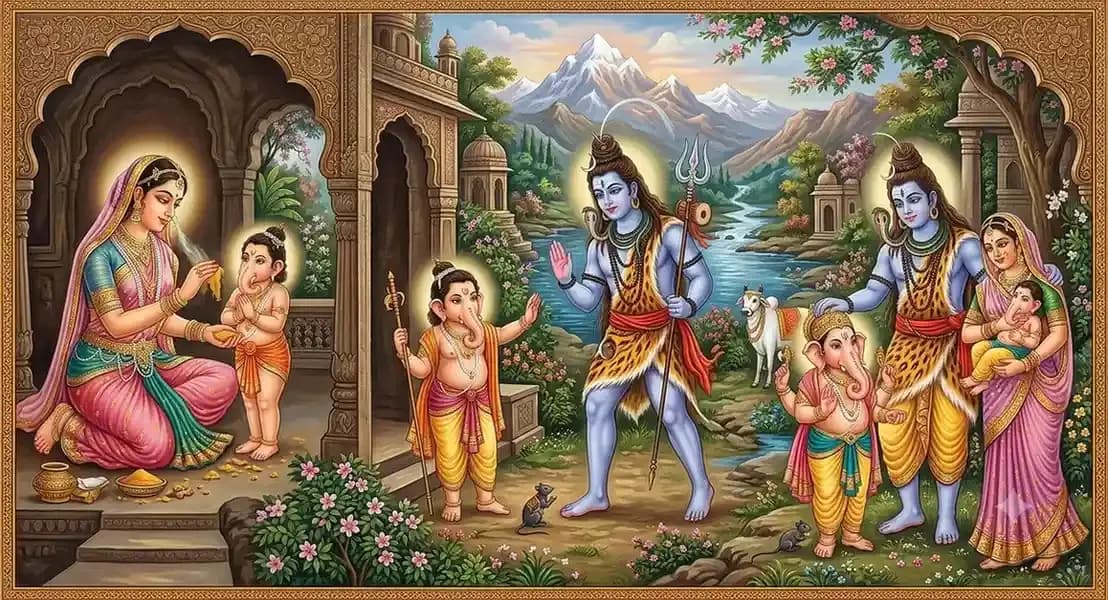
Mata jaki Parvati, Pita Mahadeva.
Ek dant dayavant, chaar bhuja dhari.
Mathe sindoor sohe, mooshe ki savaari.
Andhon ko aankh dete, kodhin ko kaya.
Banjhan ko putra dete, nirdhan ko maya.
Paan chadhe, phool chadhe, aur chadhe meva.
Ladduan ka bhog lage, sant karein seva.
Deenan ki laaj rakho, Shambhu-sut vaari.
Kaamna ko poorna karo, Jaya jai Girja-dhari.
Jai Ganesh, Jai Ganesh, Jai Ganesh Deva.
Mata jaki Parvati, Pita Mahadeva.
Verse-by-Verse Meaning
Verse 1 — The Invocation
Jai Ganesh, Jai Ganesh, Jai Ganesh Deva. Mata jaki Parvati, Pita Mahadeva.
Meaning: Victory to Lord Ganesha, Victory to Lord Ganesha, Victory to the divine Lord Ganesha. His mother is Parvati and his father is Mahadeva (Lord Shiva).
This first verse establishes the divine lineage and identity of Ganesha as the beloved son of Shiva and Parvati.
Verse 2 — The Divine Form
Ek dant dayavant, chaar bhuja dhari. Mathe sindoor sohe, mooshe ki savaari.
Meaning: The single-tusked, compassionate one, holder of four arms. Sindoor shines beautifully on his forehead, and his vehicle is the mouse (mooshak).
This verse describes the iconic form of Ganesha — one broken tusk, four arms holding symbolic implements, vermilion on his forehead, and his humble vehicle.
Verse 3 — The Bestower of Grace
Andhon ko aankh dete, kodhin ko kaya. Banjhan ko putra dete, nirdhan ko maya.
Meaning: He gives sight to the blind, a healthy body to the sick, sons (children) to the childless and wealth to the poor.
This verse celebrates Ganesha as the compassionate remover of every hardship, one who transforms the lives of devotees who approach him with sincerity.
Verse 4 — The Ritual Offerings
Paan chadhe, phool chadhe, aur chadhe meva. Ladduan ka bhog lage, sant karein seva.
Meaning: Betel leaves, flowers and dry fruits are offered to him. Ladoos are placed as bhog and saints perform his service.
This verse describes the traditional items offered in Ganesha puja and reminds devotees that even the greatest sages serve him with devotion.
Verse 5 — The Final Prayer
Deenan ki laaj rakho, Shambhu-sut vaari. Kaamna ko poorna karo, Jaya jai Girja-dhari.
Advertisement
Meaning: O son of Shambhu (Shiva), protect the honour of the humble. Fulfil the desires of your devotees, O bearer of Girija (Parvati). Victory be yours.
The concluding verse is a heartfelt prayer for protection, for the fulfilment of legitimate desires and for the removal of obstacles.
How to Perform Ganesh Aarti at Home
- Light a diya (ghee or oil lamp) and offer incense before Lord Ganesha.
- Stand facing the idol with folded hands and eyes half closed.
- Sing the aarti slowly and clearly — no need to rush. Bhakti matters more than speed.
- Rotate the aarti thali (or diya) clockwise in front of the idol as you sing.
- At the end, offer flowers, take a small piece of prasad, and touch the flame with both hands and then to your eyes.
- Conclude with three claps and the chant of "Ganpati Bappa Morya, Mangalmurti Morya".
Ganesh Aarti Etiquette — Simple Rules
- Sing with a clean body and clean mind — a bath before puja is ideal.
- Cover your head lightly if you observe that tradition in your family.
- Keep pets and phones at a respectful distance during aarti.
- Do not use the aarti flame for any worldly purpose after puja.
- Never do Ganesh aarti with your back turned to the deity or while sitting on the puja seat with your legs stretched towards the idol.
Difference between Jai Ganesh Deva and Sukhkarta Dukhharta
Both are classic Ganesh aartis, but there are subtle differences:
- Sukhkarta Dukhharta is originally a Marathi aarti composed by Sant Ramdas Swami, deeply loved during Maharashtrian Ganeshotsav.
- Jai Ganesh Deva is a Hindi aarti sung across North, Central and East India, and now virtually everywhere Hindus celebrate Ganesh Chaturthi.
- Many families sing both — Sukhkarta Dukhharta first, then Jai Ganesh Deva — for a complete devotional experience.
See our companion post: Sukhkarta Dukhharta Ganesh Aarti — Meaning.
When Children Learn Jai Ganesh Deva
Because of its simple structure and repetitive first line, Jai Ganesh Deva is often the first aarti Hindu children learn. Parents can:
- Sing one line, pause, and let the child repeat.
- Explain the meaning of one verse each evening across the ten days of Ganesh Chaturthi.
- Play a recorded version quietly in the background so the melody becomes familiar.
- Encourage the child to lead the aarti on one of the ten days, holding the aarti thali.
This is one of the most gentle and meaningful ways to keep the tradition alive in the next generation.
Frequently Asked Questions
Who wrote the Jai Ganesh Deva aarti?
The Jai Ganesh Deva aarti has been sung in Hindu households for many generations and does not have a single confirmed author in the mainstream tradition. It is a widely accepted community aarti, and slight variations of the wording exist across regions.
How many times should the aarti be sung?
Traditionally, Ganesh aarti is sung twice a day — once in the morning and once in the evening — during the ten days of Ganesh Chaturthi. On other days, once daily (typically at sunset) is considered sufficient.
Can women sing the Ganesh aarti?
Yes. There is no restriction on any devotee, of any gender or background, singing Ganesh aarti. Bhakti and cleanliness of body and mind are the only prerequisites.
What is the correct clapping pattern at the end?
A soft three-clap rhythm at the end of the aarti is traditional, followed by the chant "Ganpati Bappa Morya, Mangalmurti Morya".
Can I sing Jai Ganesh Deva if I do not speak Hindi?
Yes. Sing it slowly using the Roman-script transliteration above and read the English meaning alongside. The Divine responds to bhakti, not to fluency.
Continue Reading on Hindutone
- Ganesh Chaturthi Hub
- Sukhkarta Dukhharta Aarti — Meaning
- Ganesh Aarti Lyrics + Meaning (Full)
- Importance of Vakratunda Mahakaya Mantra
- Ganesh Mandapam Dos and Don'ts
- The Birth Story of Lord Ganesha
Ganpati Bappa Morya! Mangalmurti Morya!
May the singing of Jai Ganesh Deva bring peace, prosperity and the removal of every obstacle to your home and family.
You might also like
Top Telugu, Tamil & Kannada Ganesh Songs for Ganesh Chaturthi 2026

Ganesh Mandapam Dos and Don'ts — How to Visit, What to Offer, What to Avoid
Ganesh Visarjan in Europe 2026: Country-Wise Rules & Eco-Friendly Guide