

Ganpati Navaratri: Not Just a Festival, but Upasana and Samskara
A reflection on Vinayaka Chavithi as upasana and samskara — the Ganapati tattva, how many days to keep and immerse the idol, puja etiquette, music, and children’s samskara.
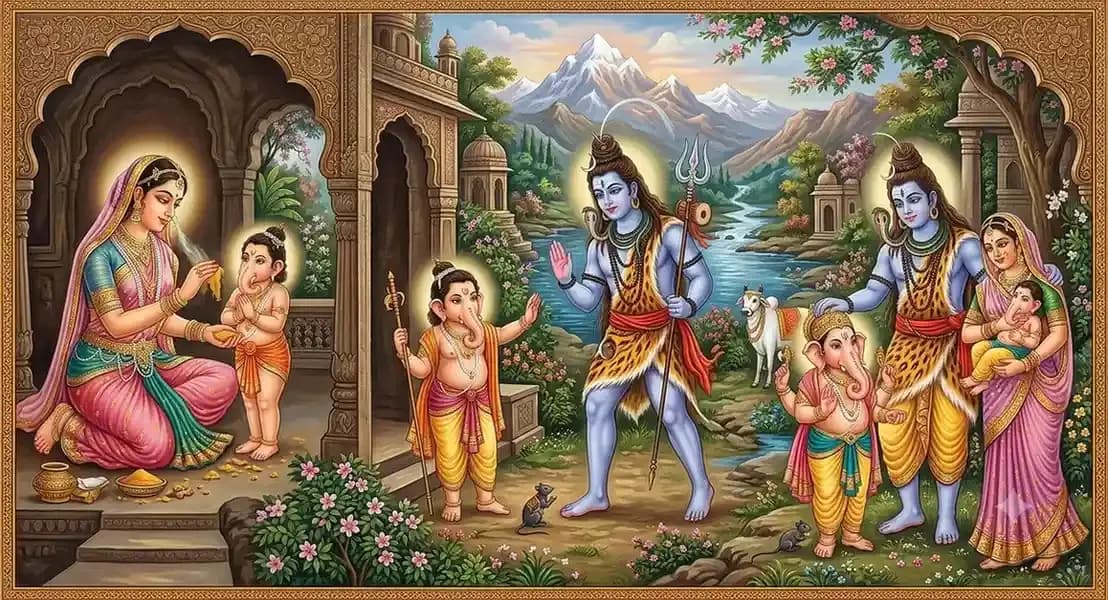
A reflection on Vinayaka Chavithi as upasana and samskara — the Ganapati tattva, how many days to keep and immerse the idol, puja etiquette, music, and children’s samskara.
As Bhadrapada Shukla Chaturthi nears, streets, colonies, apartments and temples ready themselves for Ganpati Utsav. Idols arrive, mandaps rise, decorations go up. But amid the bustle we should ask one important question — are we merely inviting Ganesha for a festival, or are we installing the sense of the Divine in our own lives? Vinayaka Chavithi is not just a community celebration; it is Ganapati upasana, discipline, devotion, samskara, and a rare opportunity to introduce dharma to our children.
What is the Ganapati tattva?
In the Vedic tradition the Ganapati principle holds the highest place. The well-known Rigvedic verse reads:
gaṇānāṁ tvā gaṇapatiṁ havāmahe kaviṁ kavīnām upamaśravastamam |
jyeṣṭharājaṁ brahmaṇāṁ brahmaṇaspata ā naḥ śṛṇvann ūtibhiḥ sīda sādanam || — Rigveda 2.23.1
The Ganapati Atharvashirsha worships him as the supreme reality itself — "Tvam eva pratyakṣaṁ tattvam asi… tvaṁ sākṣād ātmā ’si nityam." So we should not regard what we install in the mandap as merely a beautiful clay image. The worship offered while sensing the Lord’s presence in that form is the very life of the festival.
Why the Ganpati festival?
Ganesha is Vighneshwara, the remover of obstacles. Our ego, impatience, carelessness, lack of discernment, indiscipline and bad habits are themselves the obstacles in life. So worshipping Ganesha is not only praying that outer obstacles be removed; it is also praying for the intellect and discernment to recognise and overcome the obstacles within. That is why we worship him as the giver of buddhi, the giver of siddhi, and the destroyer of obstacles. Vinayaka Chavithi is not only a festival of installing an idol at home; it is the sacred day for installing discernment in our heart.
How many days, and when to immerse?
There is no single universal rule that every family must keep Ganesha for exactly nine days. Depending on regional, community and family custom, local tradition and the sankalpa taken, families worship for 1, 3, 5, 7 or 9 days, or until Anant Chaturdashi. What matters is not how many days you keep him, but with how much discipline you worship for the days you do. Through the whole period the puja, naivedya, deepa, aarti, mantra recitation, stotras, bhajans and nama-sankirtana should continue.
Statements like "the idol must not be moved on Tuesday" or "immersion should not be done on Friday" should not be taken as universal scriptural rules. For immersion, the main things to consider are the tithi, the period of the sankalpa, and family and local tradition. When in doubt, it is best to consult your family purohit or a scholar of dharmashastra to decide the tithi and time. In worship, knowledge of shastra matters more than fear. Immersion is not sending God away — the form comes and the form goes, but the tattva is eternal. We immerse the idol, not the Ganapati principle.
Mantra, archana and the devotee’s responsibility
However beautiful the decoration, if there is no shraddha in the worship the festival’s spiritual benefit diminishes. In the Ashtottara Shatanamavali, each of the names remembers one quality of the Lord. So each name should be pronounced clearly, be audible to the devotees, and the devotees should listen attentively and take part with a flower or akshata. Finishing the puja quickly should not become the goal. The purohit should recite with care, the devotee should listen with care, and the organiser should create a calm atmosphere. During the puja, loud talking and phone conversations should be kept away. The mandap is a temporary temple — honour it as a sacred place where the deity is present.
Music, dance, kolatam and children’s samskara
A festival should have joy, enthusiasm and shared participation — but that joy should rest on devotion and samskara. In the mandap, what should mainly be heard are Ganapati stotras, Vedic mantras, bhajans, nama-sankirtana, harikatha, dharma discourses and devotional music. Film songs unconnected to worship, excessive noise and vulgar dance do not befit the festival’s sanctity. Kolatam, bhajans and traditional dances performed with devotion and decorum are welcome.
Ganpati Navaratri is a rare chance for children’s dharma education. Each day, teach at least a little — one name of Ganesha, the japa of "Om Gam Ganapataye Namah", a short shloka; teach them to sit calmly during puja, to take part in the aarti, to receive prasad respectfully, and to honour elders. Children learn more from what we do than from what we say — in the Ganpati festival, the parents are the children’s first gurus.
What should a true Ganpati festival be?
In the mandap there should be cleanliness, sattvikata, punctuality, listening to the mantras, bhajan, parayana, hygiene in the prasad, dharma teaching for children, respect for elders and environmental responsibility. Above all there should be no competition — "our idol is bigger", "our mandap is the greatest" — such thinking buries the spiritual purpose. It is not the height of the idol but the height of devotion that matters; not how much noise we made, but how steadily the mind remembered Ganesha.
The immersion procession too is a journey of devotion — nama-smarana, bhajans, jaya-ghosha, discipline, and the responsibility not to trouble others. Vulgar songs, alcohol and frenzied dancing do not befit a divine festival. This time, let us make one resolve — did our child learn a new shloka? Did the family sit together for a peaceful puja? Did we learn the meaning of even one of his names? Did we resolve to give up one bad habit? Did devotion grow even a little in us? Ganesha should not leave our life with the immersion — the buddhi, viveka, discipline and devotion he grants should be installed permanently in our heart. That is the true Ganpati festival.
vakratuṇḍa mahākāya sūryakoṭi samaprabha |
nirvighnaṁ kuru me deva sarvakāryeṣu sarvadā ||
Śrī Gaṇeśāya Namaḥ. Sarve janāḥ sukhino bhavantu.
— Adapted from a reflection by Vāsu Muktinūtalapāṭi (Jñānapīṭham)
You might also like
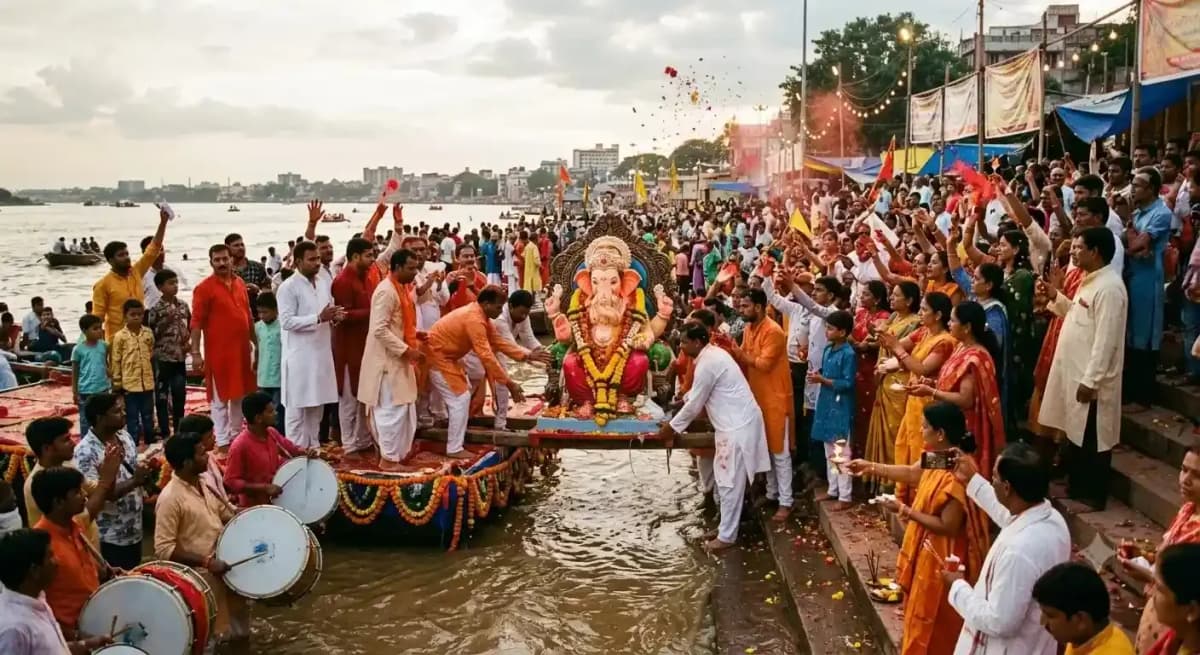
Ganesh Visarjan Mantra: What to Chant During Ganpati Visarjan (2026 Guide)

The Moon on Ganesh Chaturthi: Why It Must Not Be Seen, and the Remedy Mantra
Sankashti Chaturthi Moon Rules: Why You Must See the Moon (and Break the Fast)