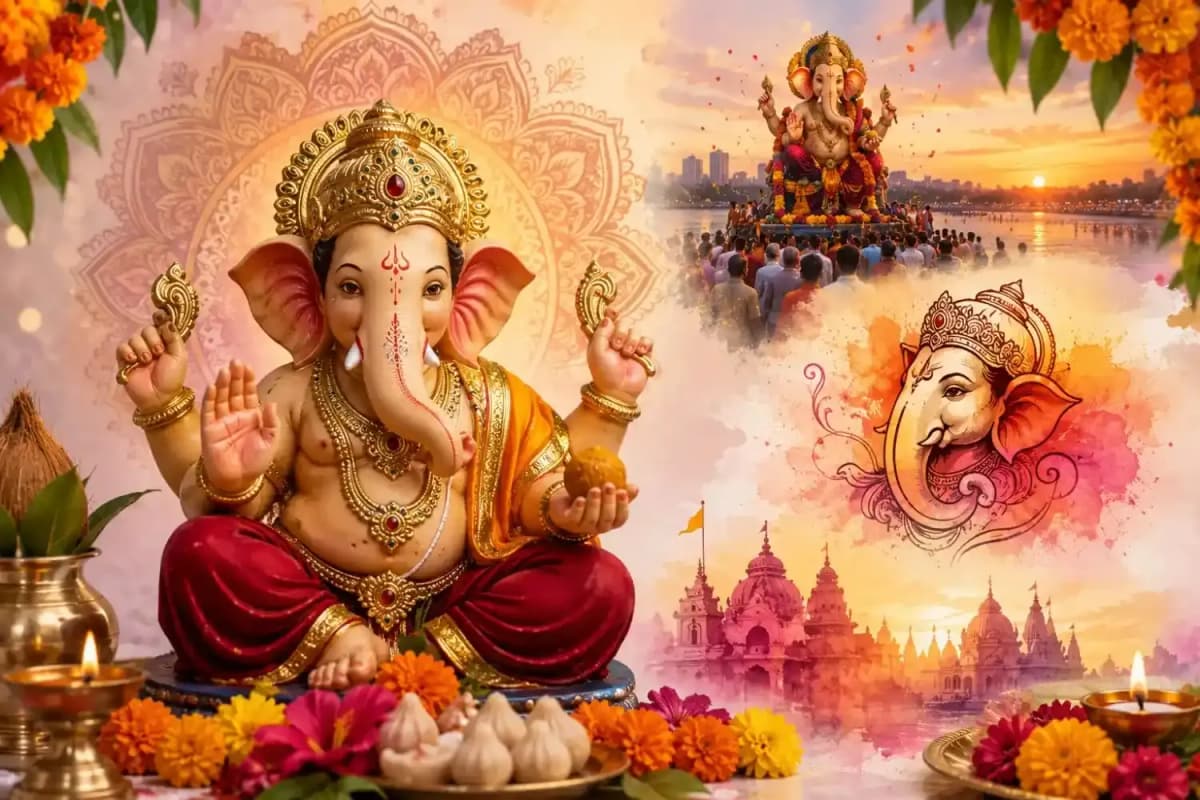
Ganesh Chaturthi and NRI Kids: The Questions Nobody Prepares You For
The conversations and school logistics nobody prepares diaspora parents for — “is it real?”, the cringe phase, visarjan tears, absence notes, prasad allergy rules.
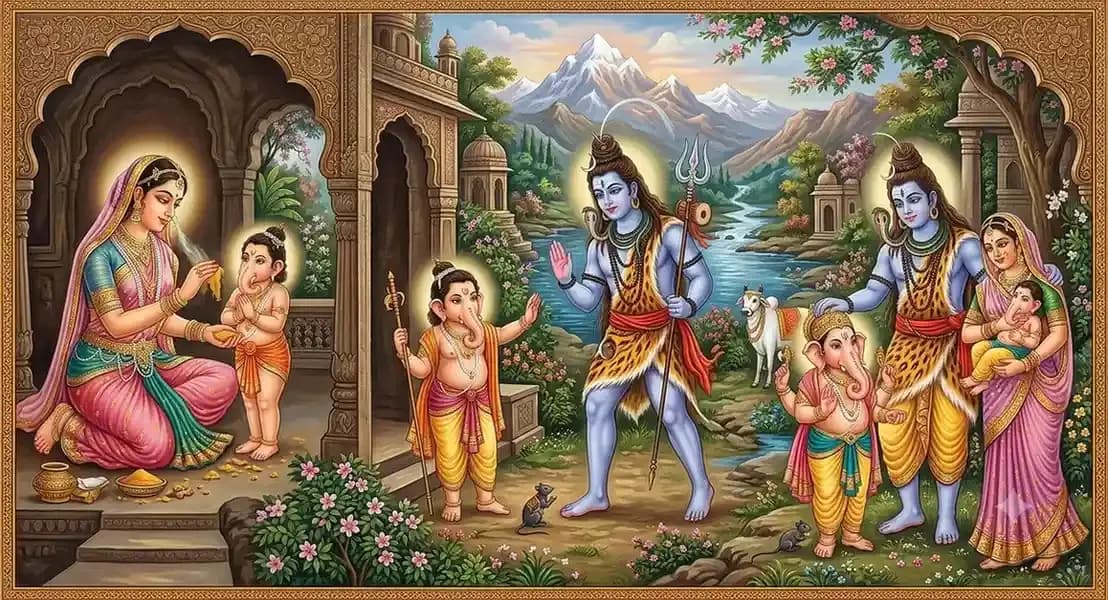
The conversations and school logistics nobody prepares diaspora parents for — “is it real?
There is no shortage of advice on crafts and colouring pages. What there is very little of is help with the moment your eight-year-old looks at the idol and asks, flatly, “Is it real?” — or the point at visarjan when a five-year-old realises what is about to happen and starts to cry. These are the parts of the festival that actually determine whether it survives into the next generation. Ganesh Chaturthi 2026 falls on Monday, 14 September, with visarjan on Friday, 25 September.
“Why does he have an elephant head?”
- At 3–6: keep it short and warm. “His mother made him, something happened to his head, so his father gave him an elephant’s head — and that made him even more special.” Small children accept transformation easily.
- At 7–10: they will want the whole story and will notice the violence. Tell it — as a story about a mother’s love and a father’s mistake being put right.
- At 11+: give them the symbolism — big ears for listening, small eyes for focus, a broken tusk he snapped off to keep writing, a trunk strong enough to uproot a tree and delicate enough to lift a grain of rice.
“Did Shiva really cut his head off?”
Say yes, that is the story — then say what the story is doing: “It’s about what happens when two people who love each other don’t recognise each other, and how far a mother will go for her child.” Do not pretend the violent part isn’t there and do not rush past it; a child who senses you are hiding something concludes there is something wrong with the story. If your child is distressed, that is a reasonable response to a distressing image, not a problem to fix. “It’s a hard bit. It bothered me too when I was your age.”
“Is it real?”
It deserves a real answer, and the honest one depends on what you actually believe — which is why generic advice fails. What does not work: “Don’t ask that” (teaches them the tradition can’t survive a question); “It’s just a story” (empties the thing you’re asking them to join); “Yes, exactly as described” if you don’t believe that (they’ll know). What tends to work is separating the layers: “Some of it is history, some is story, and some is true in the way stories are true. What’s real is that for thousands of years people have done this on this day, and we’re part of that.” If you are a believing household, say so plainly — children can hold that a parent believes something they are still deciding about. What they cannot hold is a parent who will not say.
“Why do we do this when nobody else does?”
- Numbers. “About a billion people do this. Just not many on this street.”
- Other examples. Their friends have things too — Christmas, Eid, Hanukkah, Lunar New Year. Difference stops being isolating once it is framed as everyone having something.
- Community. The most effective answer is not verbal — it is a room full of other families doing the same thing.
“Do I have to?”
A child compelled into a resented ritual learns the tradition is something done to them; a child given a real choice, and a real role if they take it, often comes back to it. A workable middle: “You don’t have to do the puja. You do have to be in the room, and be respectful. And if you want a job, it’s yours.” Non-negotiable presence with optional participation works better than the reverse. If they opt out entirely one year, that is not a failure — keep the door open and stop negotiating.
The cringe phase
Around eleven to fifteen, many second-generation children become acutely embarrassed by visible cultural difference. It is a developmental stage about peer belonging, aimed at whatever is nearest. What does not work: taking it personally, guilt, invoking grandparents, forcing visible participation in front of friends. What works: lower the visibility, not the practice (home aarti yes, posting no); give them competence (a teenager who can explain the festival well is far less embarrassed); let them bring a friend; and wait — most families report it passes by sixteen or seventeen, often with real interest on the other side.
School: the practical side
Absence. Ganesh Chaturthi is not a public holiday in the USA, UK, Canada or Australia, and 14 September 2026 is a Monday. Most school systems recognise religious observance as an excused absence — but it generally requires written notice in advance, not a morning call. A workable note: “[Child] will be absent on Monday 14 September for Ganesh Chaturthi, a Hindu religious observance. Please mark as excused religious absence. Work will be made up.”
Prasad in the classroom — read carefully. Do not send food without checking first. Nut bans are widespread in primary schools across all four countries; most Indian sweets contain nuts, and many are made on shared equipment. Dairy, sesame and wheat are common declared allergens too. Many schools accept only commercially packaged items with ingredient labels. Email the teacher a week ahead, ask what is permitted, and never send something a child might hand round unsupervised without the teacher’s explicit agreement.
Show-and-tell. The best opportunity to turn difference into status, and it works far better when the child leads — the story in three minutes, a small clay idol they made, the symbolism, a photo of a large pandal, and the visarjan idea (a guest welcomed knowing he will leave).
Visarjan with children
This is the hardest day, and almost no guide mentions it. Children get genuinely upset — they have spent days greeting a guest, feeding him, singing to him, and then he goes into the water and does not come back. What helps: tell them on day one that Bappa is visiting and will go home on a particular day (surprise is what makes it hard, not the departure); give them the chant — “Ganpati Bappa Morya, pudhchya varshi laukar ya,” come back early next year — and let them shout it; let them help with the farewell; and consider a seed Ganesha that dissolves into a pot and sprouts, so nothing disappears. Do not minimise it. What you can say: “I know. It’s sad. That’s the whole lesson — we love things properly even though they don’t stay.”
What actually makes it stick
- A job that is theirs — a standing role they own (she does the durva; he rings the bell). Ownership over years beats novelty.
- Repetition, unglamorous — the seventh consecutive small aarti in a rented flat does more than one spectacular year.
- The food — adults who grew up in diaspora households overwhelmingly name a smell or taste as what carries the festival. Cooking with them may be the main activity, not a supplementary one.
What does not seem to matter: idol size, decoration budget, how many days you keep him, or whether you got the Sanskrit right.
Mixed-faith households, and grandparents abroad
Give the non-Hindu parent a real role — cooking, lighting the lamp, carrying the idol — not an observer’s seat; children read participation more accurately than stated approval. The frame that travels: a guest has been invited, will be looked after for a set number of days, and sent off with affection and an invitation to return. For grandparents across time zones, fix the call time in advance and — better than a logistics call — ask the grandparent to tell the child the story directly. Record it; in twenty years it will be the most valuable thing in the whole festival.
Explore the Ganesh Chaturthi 2026 Complete Guide
This page is part of Hindutone’s Ganesh Chaturthi 2026 cluster:
- Complete Ganesh Chaturthi 2026 guide (hub)
- Date & city-wise muhurat
- Ganesh Sthapana (setup at home)
- Vinayaka Vrata Vidhanam (full puja)
- Ganesh Visarjan mantra
- Stories of Ganesha
- Wishes & quotes
Frequently Asked Questions
How do I explain Ganesh Chaturthi to a young child?
Keep it short and warm. For under-sixes: his mother made him, his head was replaced with an elephant’s, and that made him special. Older children can take the full story and, from about eleven, the symbolism.
Should I tell my child the violent part of the story?
Yes, and without rushing it. Children sense when a story is being managed. Tell it as what it is — a story about recognition, love and repair.
My child is embarrassed about the festival. What should I do?
Treat it as a developmental stage about peer belonging, not rejection. Lower the visibility rather than the practice, help them become able to explain it well, and wait.
Can I send prasad to school?
Check with the teacher first. Nut bans are widespread, most Indian sweets contain nuts or dairy, and many schools accept only commercially packaged items with labels.
My child cries at visarjan. How do I handle it?
Tell them on day one that Bappa is visiting and will go home. Give them the return chant, let them help with the farewell, and don’t minimise the sadness. A seed Ganesha that grows into a plant helps.
Related Reading on Hindutone
- The stories of Ganesha: Puranic legends to tell children
- Ganesh Chaturthi naivedyam for NRI kitchens
- Ganesh Sthapana 2026: how to welcome Ganesha into your home
You might also like

The Moon on Ganesh Chaturthi: Why It Must Not Be Seen, and the Remedy Mantra
The Stories of Ganesha: Puranic Legends Behind Ganesh Chaturthi
Vinayaka Vrata Vidhanam: The Complete Ganesh Chaturthi Puja, Step by Step